Paxslim Is Doubling Down On African Pride With The “Africa Only” Movement
Being African comes with plenty of social baggage, but Paxslim has chosen to respond decisively against it with "Africa Only."

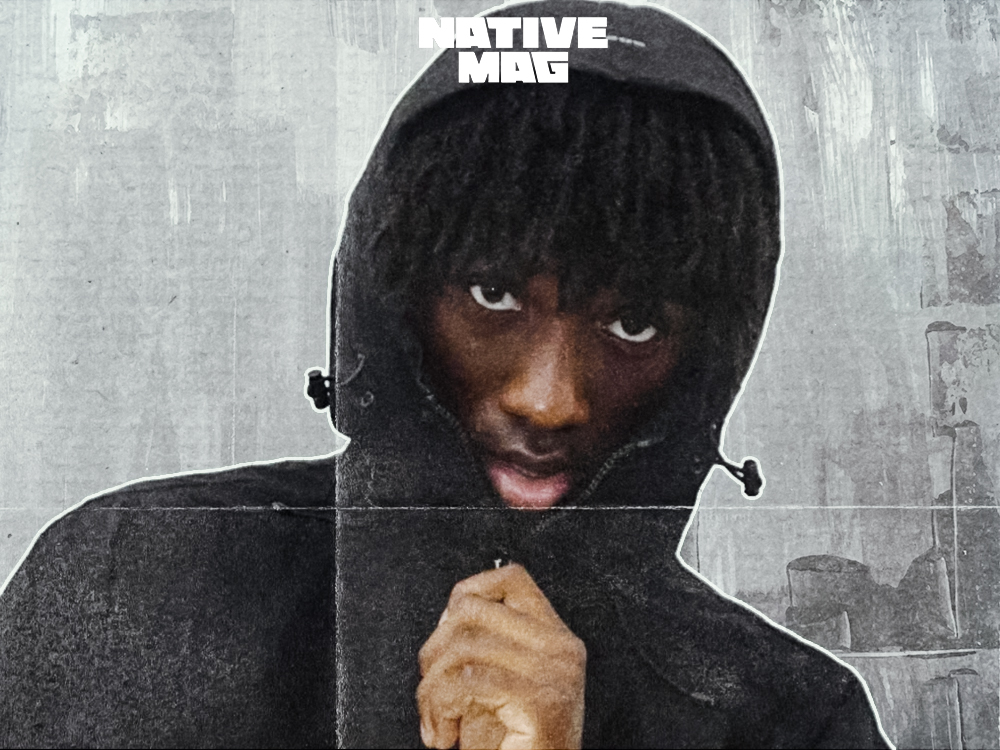
Being African comes with plenty of social baggage, but Paxslim has chosen to respond decisively against it with "Africa Only."
Across Africa and its global diaspora, young Black artists are becoming more intentional about what being African means for their work. They’re less interested in squeezing their work into ideas of what African art should look or sound like, and far more interested in building from who they are and where they come from. That closeness to home is shaping who they create for and the worlds they want their work to exist in. In other words, it has become an active way for young Black artists to organise and build community around their creative work. Nowhere is that posture clearer than in #AO, a new cultural movement driven by Paxslim.
Born in Nigeria and raised between Nigeria, Canada and Switzerland, Paxslim has spent much of his life flitting between different ideas of being African. That nomadic arc makes his tethering to his African identity super important to him. Being African comes with plenty of social baggage, but Paxslim has chosen to respond decisively against it. “Africa Only is also a full-circle moment for every kid who grew up feeling like being African was something to hide,” he tells NATIVE Mag “For a long time, African identity was distorted. Africa Only changes that. It moves us from seeking approval to owning who we are.”
The idea of Africans looking towards themselves for cultural confidence has a pretty deep history. In the early 1930s, the Négritude movement emerged among Francophone intellectuals including Aimé Césaire, Léopold Sédar Senghor and Léon-Gontran Damas. Working largely from the diaspora, they used poetry and cultural criticism to challenge French colonial assimilation and assert Black identity as a legitimate foundation for intellectual and artistic work.
In Nigeria, that thinking took different forms. The Zaria Art Society, formed in 1958, brought together young Nigerian artists including Uche Okeke, Bruce Onobrakpeya, Demas Nwoko and Yusuf Grillo, who questioned the Eurocentric art education they were receiving. Their idea of “Natural Synthesis” encouraged artists to draw from indigenous visual traditions while engaging with modern techniques. A few years later, the Mbari Club in Ibadan gave writers, artists and musicians another place to gather. Chinua Achebe, Wole Soyinka and Christopher Okigbo were among the figures connected to the club, which became a meeting point for cultural exchange and artistic experimentation. Art, in this case, was also a way of finding your people.
By 1977, that desire for connection had taken on a much larger scale. FESTAC ’77 brought artists, writers, musicians and cultural practitioners from across Africa and the global Black world to Lagos. For a brief period, the festival created a huge meeting point for people thinking about Black culture, identity and artistic exchange beyond the boundaries imposed by colonial history, a history that continues to haunt us.
As much as we are politically defined as postcolonial, we aren’t, because the ideas and racial categories produced under colonial rule have proved much harder to dislodge. Alongside the anti-Blackness rife across the continent, there is a global case of Afrophobia that continues to assert itself against us. These sociopolitical conditions have always influenced African artists, who have had to make work in the splash zone. Today, it’s within those same conditions that Paxslim is working, making #AO just as relevant and urgent.
Paxslim is tapping into a lineage that’s been revisited across generations; only now he’s routing it through the digital era’s networks and using the tools available to his generation most clearly in his music. “Africa Only isn’t something I just added to my brand; it’s who I am,” he explains, “I am Nigerian. Africa Only is me choosing to stand fully in who I am. You can hear it in my music, see it in the visuals and feel the energy when I perform,”
Across projects like 2025’s ‘DBD5 (dayz before d5ncin)’ and his full-length ‘D5NCIN,’ he has further developed the sound he’d been building, taking the language of Trap and Hip-Hop and filtering it through his own sensibilities and experiences. But the subtext constantly breaks through the trunk-rattling production. On “EVERYTHING I GOT,” he implores, “To my brothers there’s nothing impossible, never let them treat you like an animal,” before invoking Black Panther mythos on “CHOSEN ONE.” There’s a political consciousness running through the music, even when it isn’t always the thing sitting at the front because it’s forced to share space with a far more visceral kind of hunger.
In August 2026, Paxslim dropped his ‘LAMBO MUSIC’ EP. Across the six tracks–and in much of what seems to drive his music more broadly, including his new single “BINGO”–Paxslim indulges the classic appetite for luxury capital, and these consumerist aspirations occasionally scrape against the radical ideas presupposed in Africa Only, whether or not Paxslim himself positions the movement through such strictly political crosshairs. There’s some nuance in that friction. The young rapper is still making music under capitalism, with all the desires for visibility and a “bigger life” that come with it.
For some African creators, visibility can be a tricky tightrope, with a “bigger life” tied to reaching beyond the continent even as the art remains rooted in references that aren’t always legible to outsiders. In 1993, Ousmane Sembène pondered the question of looking outward rather bluntly in Férid Boughedir’s documentary, ‘Caméra d’Afrique’: “Why be a sunflower and turn toward the sun? I myself am the sun!” There’s something of that sentiment in Paxslim’s approach to #AO, which comes back to a plain truth he lays out simply: “Africa is the source.” The work can travel, but it doesn’t have to leave home looking for permission to matter. Paxslim adds, “Africa Only is a sense of reclaiming what’s rightfully ours.”
That idea of building for your own people has to exist beyond the language of reclamation, and for Paxslim, it does. #AO has become a tangible praxis: a way of building creative infrastructure alongside other artists and cultural workers. Africa Only Radio on NTS is one of its clearest extensions Launched in 2026, the series has travelled through underground scenes across the continent, beginning with Nigerian underground music before moving through countries including South Africa, Tanzania, Kenya, Ghana and Uganda. The Nigerian episode brought together Rachel of The Process Africa, Soundgasm founder Roberto, artist manager and A&R Ona, and video creator Ebube, with the mix handled by Paxslim’s longtime collaborator Haram.
The later episodes broadened the project’s reach. The Tanzanian edition featured director, musician and model Sekera, writer and creative director Ivana, producer and farmer Cloud B, and BM. The August Ugandan episode brought together artists and cultural producers including Kampire, Mwami, Tai Dai and Kalibwani.
AO Radio creates a record of interwoven scenes that are crucial to how contemporary African culture is developing. The project gives African and Afro-diasporic artists room to introduce their work and influences, while connecting them with listeners elsewhere. It mirrors what’s happening more broadly in fashion, nightlife and visual art, where a new vanguard is establishing its own gathering grounds around shared aesthetics and creating ways for those scenes to support one another.
Even with the lure of Euro-American reach looming over the creative space, #AO doubles down on the people already holding down the culture, treating them as a world complete enough to build for. The buy-in across the internet is hard to miss, too. Throw a blind dart at a young African’s IG profile right now and there’s a good chance you’ll find “AO” sitting somewhere in their bio. “AO doesn’t need to influence any African artists or creatives, because it’s who they are,” Paxslim finishes. “It’s already in them. AO is just a reminder and a badge that we can continue to wear proudly as Africa continues to grow stronger.”
Listen to ‘LAMBO MUSIC’ here.

