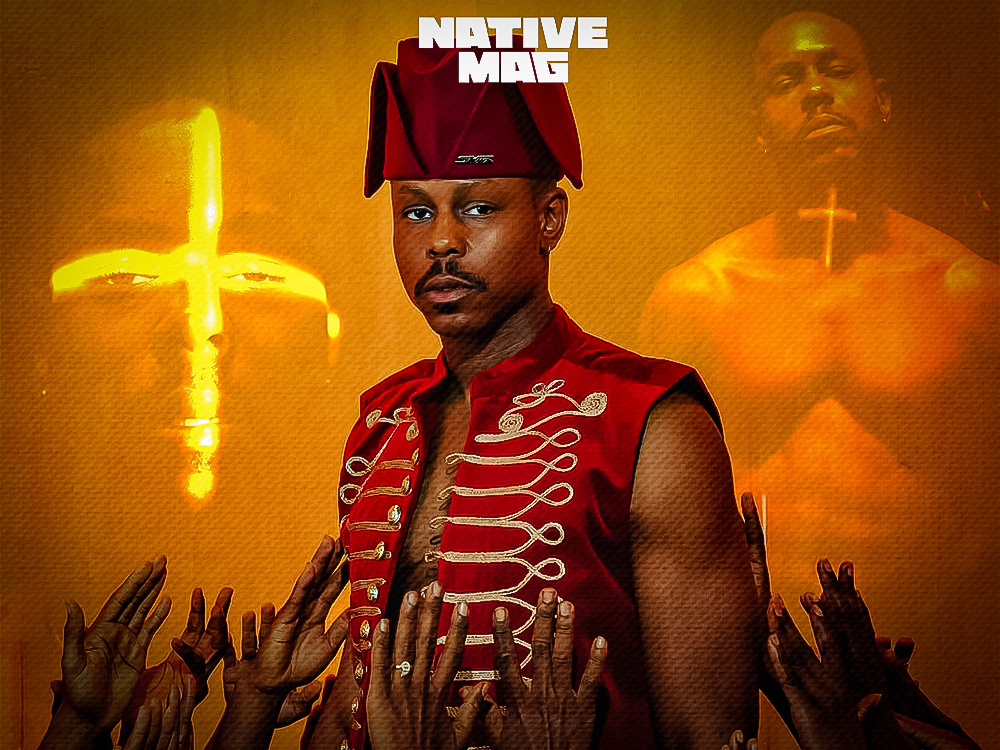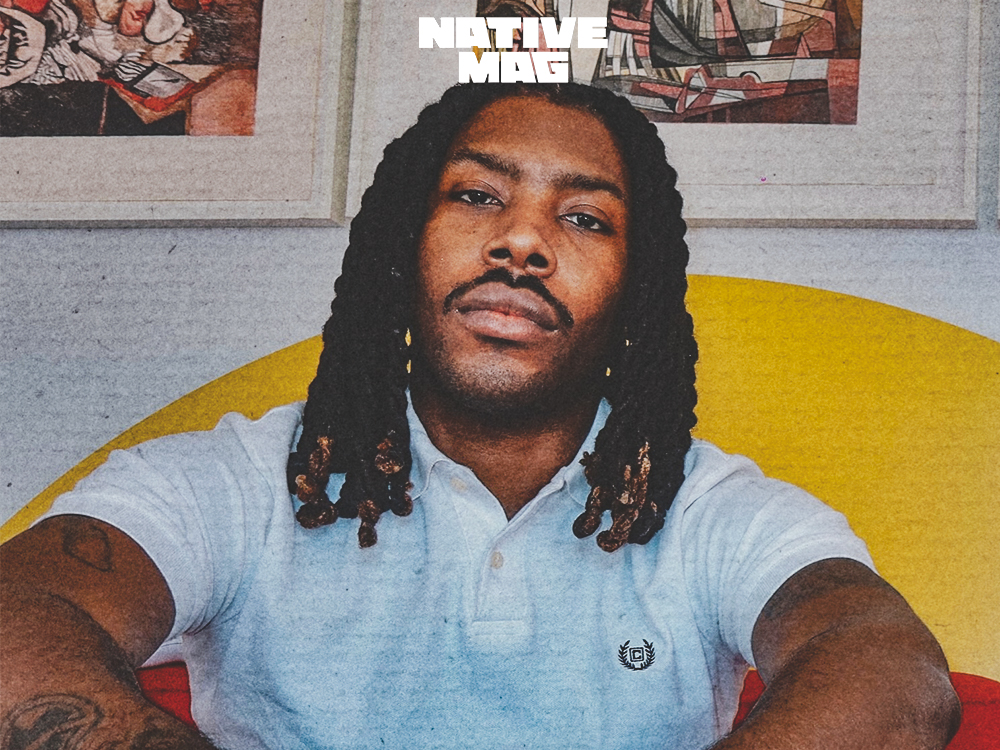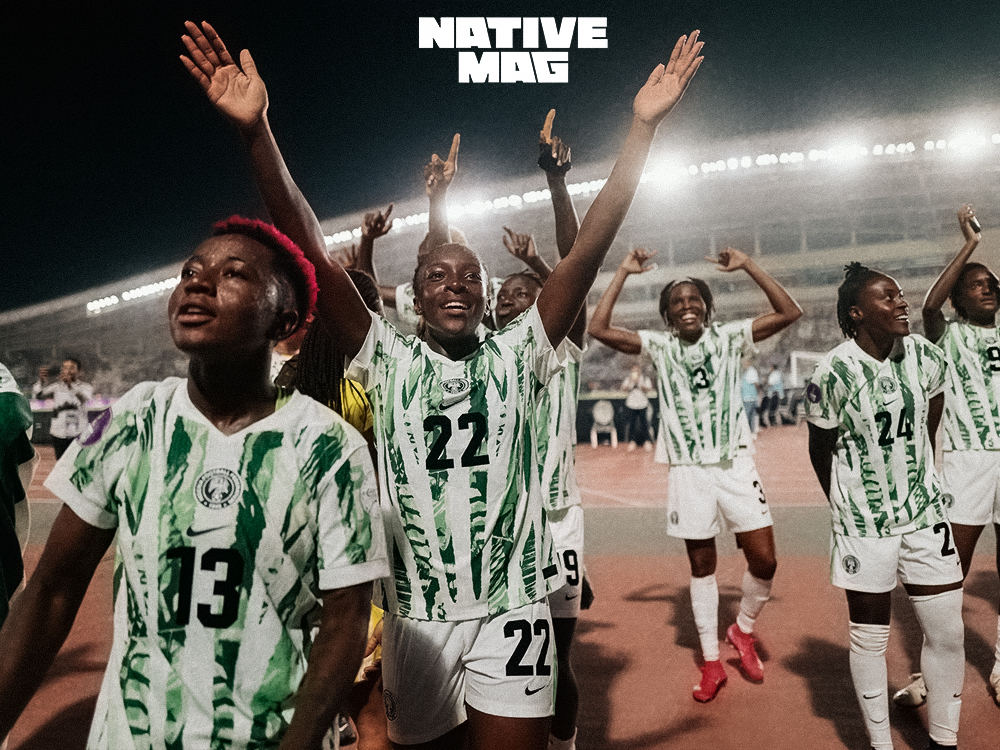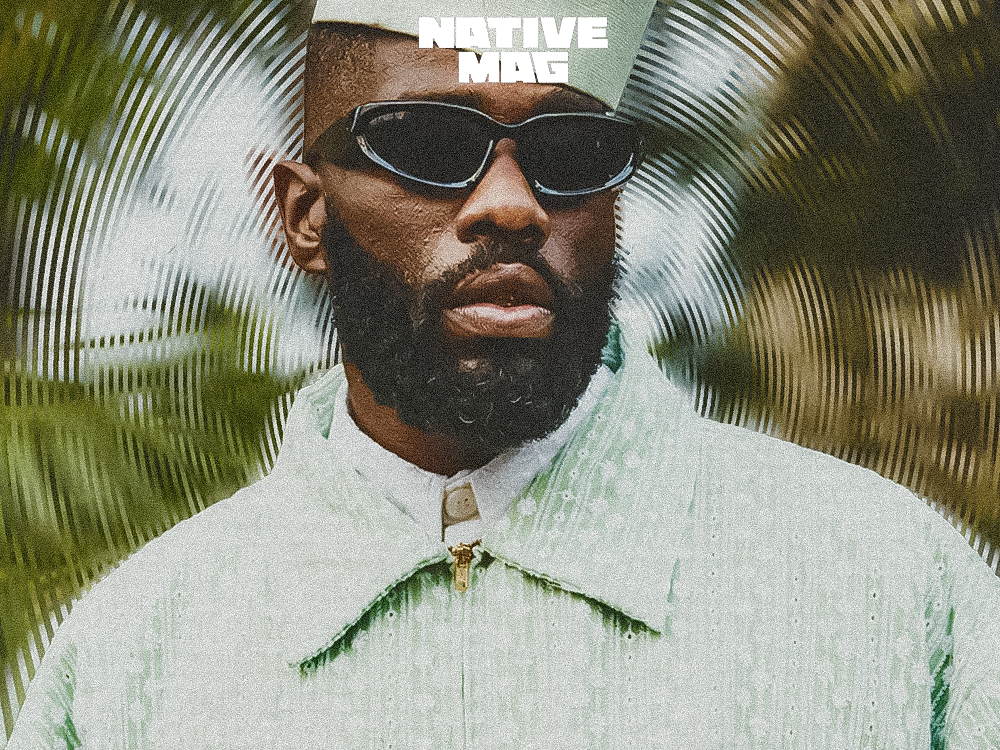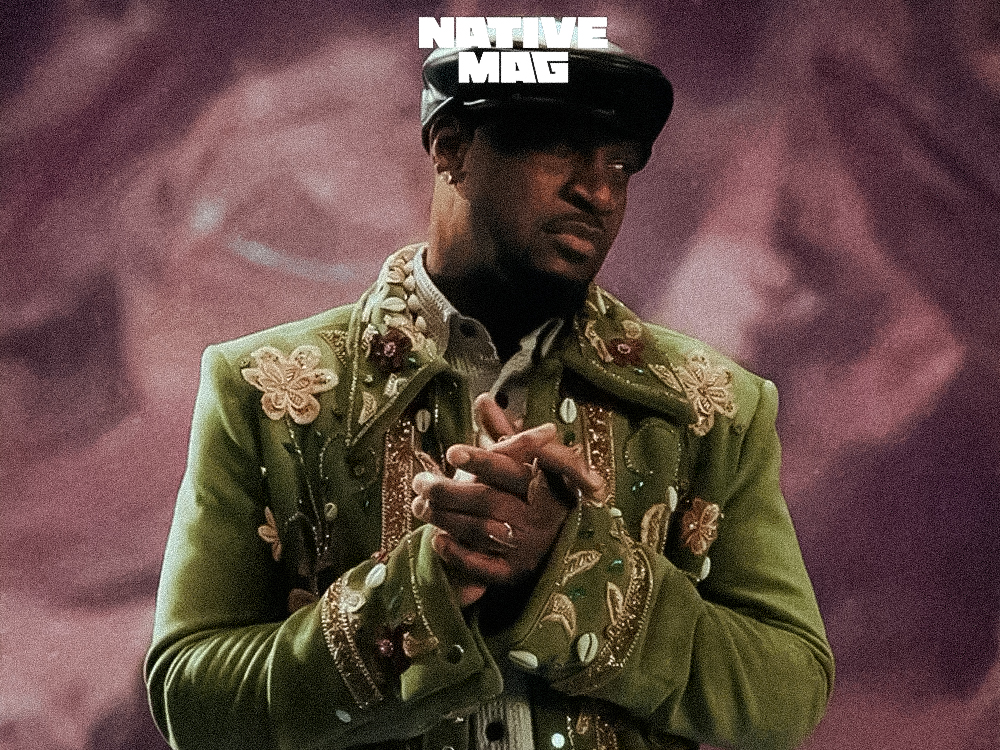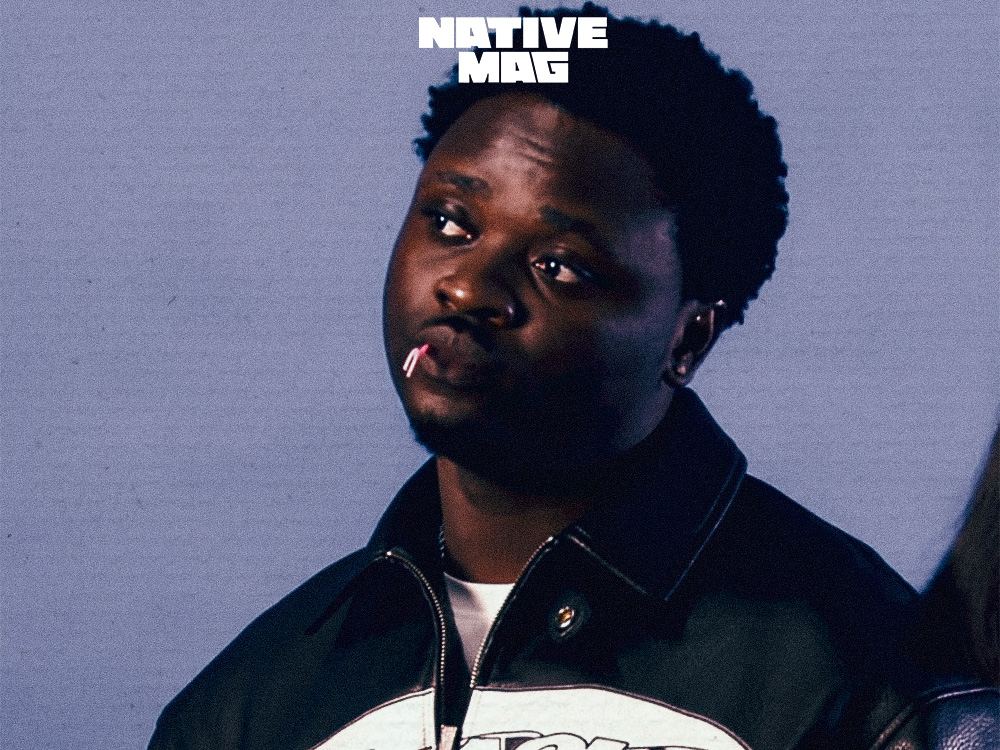
Zlatan Is Afropop’s Ultimate Symbol of Hope

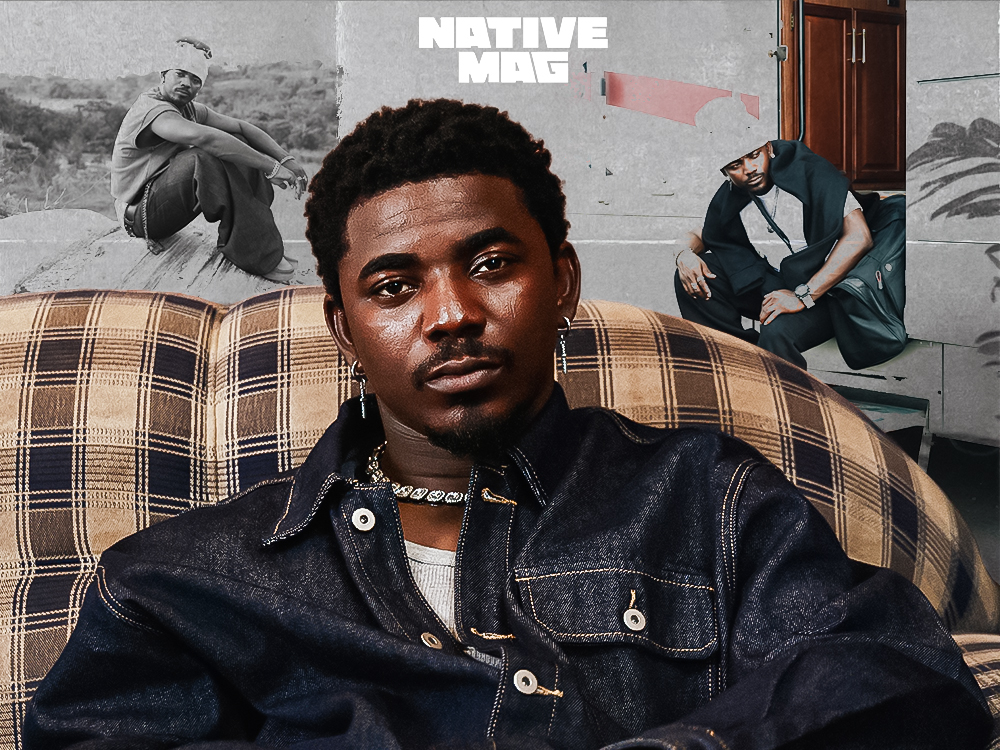
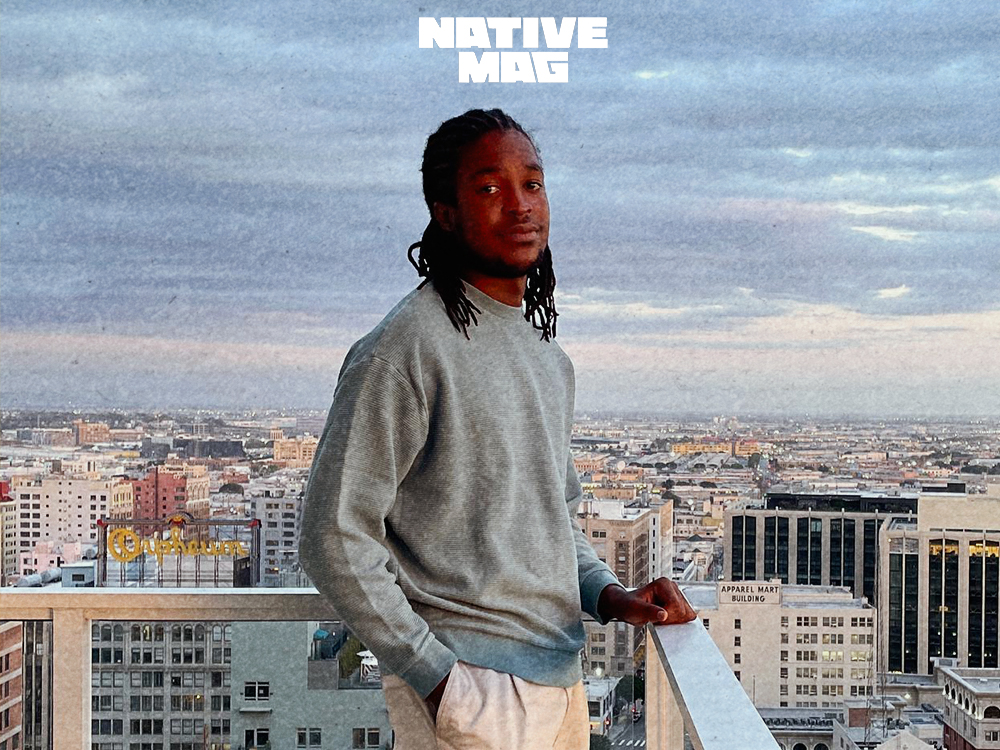
The rhythm of Zlatan Ibile’s life pulses with an urgency that mirrors the streets of Lagos, where dreams are forged in the crucible of hustle. His journey, propelled by raw talent and relentless determination, has carried him from the unassuming streets of Ikorodu to the epicenter of Afropop, where he first made waves with his debut album, ‘Zanku.’ With his latest, ‘Symbol of Hope,’  Zlatan is offering a beacon for those navigating their own paths through adversity.  In parts, this project, his third full-length album, captures the essence of a man who has transformed personal triumphs into a universal call for resilience.

From humble beginnings, Zlatan’s entry into music felt accidental, a detour from his initial ambitions to be a footballer. He recalls stumbling into the craft without a clear map. “When I began making music, I didn’t know what I was doing,” he shares. What started as an experiment ultimately evolved into a defining journey. 

His breakthrough came through a collaboration with Olamide, a moment that shifted the trajectory of his life. Expecting a fierce Hip-Hop back and forth, Zlatan was instead surprised by Olamide’s melodic ingenuity, thrown aback by a song that opened with the puzzling line,   “Oh my lord, the weyrey dey my body.” That unexpected pivot guided by Olamide’s intuition became “My Body, the master hit that broke him out. “If we had gone bar for bar, I’d probably still be in Ikorodu fighting for my life,” Zlatan admits with a reflective chuckle.

From those roots, his sound blossomed. The fast-paced Street-Pop template that defined his early work has expanded into a richer palette of stirring anthems, mid-tempo reflections, and tender love songs. “Now, I make all kinds of songs: street anthems, mid-tempo tracks, motivational songs, and even calm love songs,” he says. “My sound has definitely evolved, but people on the outside sometimes don’t see the full picture of your growth.” 

It’s been four years since he last released an album, but the Zanku boss has had his hands full. The gap between his 2021 album ‘Resan’ and ‘Symbol of Hope’ was no idle pause but a season of building. “Music is just one part of my life,” he explains, noting the weight of other responsibilities. Still, he has maintained prolificity. In 2022, he released singles and featured on collaborations; his name remained a constant draw for rising artists looking to consolidate mainstream breakthroughs. 

Other responsibilities have shaped his outlook on life. Fatherhood, which arrived in 2020, particularly redefined Zlatan’s world. “Becoming a father in 2020 was a game-changer,” he says. His son became both anchor and muse, tempering the wild energy that fans had come to expect from Zlatan. The “madness” that fueled his street anthems softened, making room for a grounded perspective..The balance that emerges between the chaos of performance and the quiet duties of home life infuses his music with new depth, resonating in “Symbol of Hope.”


Beyond the studio, Zlatan’s entrepreneurial spirit has thrived. His fashion brand ZTTW, launched online in 2017, grew into a physical store in Lagos a year and a half ago. Days are spent designing, and nights bleed into dawn in the studio. “I barely sleep–maybe three or four hours–because even when I’m not working, I can’t switch off,” he shares. This relentless cycle birthed tracks for the album, some recorded years ago, each a snapshot of his tireless pursuit.

The creative process of ‘Symbol of Hope’ was both a labor of love and an exercise in precise execution. Zlatan recorded endlessly, amassing hundreds of unreleased songs. “I never stop recording, I work like I’m a banker going to work every day,” he says. The album contains 15 tracks, each reflecting a distinct part of his journey and creative growth. Some songs were recorded years ago, while others were shaped in the studio as the project took form. Some creative decisions reflected his desire to reach a wider audience. He purposefully used more pidgin so listeners from every part of Nigeria and beyond could connect with the music. 

Collaborations are also at the heart of the project. Qing Madi’s haunting vocals on “Demons” add emotional heft, while Shallipopi and Terry the Voice ignite “Jeserawa” with street-forged energy. “Gimme Your Love,” featuring Olamide, feels like a sacred reunion, their bond transcending music. Olamide, a mentor and brother, has shaped Zlatan’s path with lessons in humility and generosity. “He’s probably helped more artists in Nigeria than anyone else,” Zlatan notes. 


For the first time in his career, Zlatan opened his creative doors to songwriters after eight years of writing every lyric himself. At first, he resisted. No one, he thought, could capture his thoughts better than he could. But he gave it a chance, and what followed surprised him. The words came alive in ways that felt eerily familiar, as if someone had reached inside his heart and rearranged his feelings into melody. “The writer just understood me,” he explains. His friend, Chinko Ekun, was present through the process, helping to complete lines that felt unfinished until they landed. 

Beyond the music itself, “Symbol of Hope” represents Zlatan’s ambition to inspire a new generation of artists and fans. He sees the album as a platform to showcase the possibilities that arise when dedication and creativity merge. “Seeing Olamide’s success made me believe I could do it too; seeing Wizkid make it at such a young age made me realize that I don’t have to be thirty-five before making music,” he says. “Now, I know many people also look up to me as their symbol of hope too. Anybody can be a symbol of hope if they inspire you to be better.”. 

In many ways, Street-Pop’s evolution mirrors Zlatan’s own. What began with raw, street-born energy morphed into a trailblazing sound that pushed boundaries and carried the pulse of the streets through each voice. Zlatan stands in the middle of that arc, both student and teacher. “Street music has come a long way,” he says. ”From Terry G to Olamide, Myself, Naira Marley, Shallipoppi, ODUMODUBLVCK, and Asake, change is constant,” he says. 


What has seemingly defined his second arc is a willingness to collaborate across the board. Zlatan particularly embraces collaboration with younger artists because others gave him chances when he was coming up. Today, the music scene is saturated, attention spans are shorter, and artists are expected to release new material constantly. Zlatan moves through it with a patience shaped by time. He finds joy in the rise of new Street-Pop artists, seeing in them the same restless fire that once kept him awake. 

Fame once came with fearful shadows. The fear of slipping back, of watching it all disappear, used to haunt him. But Zlatan learned to turn pressure into perspective. Starting his own label in 2020 was an act of gratitude, a way to give others what he once wished for. “Everyone’s on a different level, like cars in traffic,” he says quietly. “You just have to move at your own pace.” It’s a lesson he carries into every song, every night in the studio that stretches until morning. ‘Symbol of Hope’ feels like the sum of a long-winding journey, a mirror held to a boy who once failed an exam, lost a dream, and found a new dream in melody. Through it, Zlatan extends his hand to those still climbing, hoping to help them make sense of the journey. 

Review: ‘Industry Machine’ by ODUMODUBLVCK

ODUMODUBLVCK’s ‘INDUSTRY MACHINE’ arrives on the back of the most aggressive, drawn-out rollout campaign in recent Nigerian music history. Snippets from the album and its titular track date back to last year; there have been multiple linkups with Premier League stars to whom ODUMODUBLVCK, ever the football aficionado, gave branded jerseys; an entire other project, the 16-track ‘THE MACHINE IS COMING,’ released in March, intended to whet appetites of expectant fans and raise their anticipation for the album’s arrival.

The album itself underscores just how much of a sprawling opus it is intended to be—23 tracks long, fitting in 23 guests drawn from everywhere from Lagos to London, representing every genre from Afrobeat to Drill. There’s a lot of tough talk that ODUMODUBLVCK has placed behind the album, mostly in the form of half-braggadocios, half-prophetic tweets announced with his signature all-caps-locked audacity over X, so there is very little margin for failure, and he knows it. The result is an album that is very much aware of the expectations that lies before it. 

ODUMODUBLVCK succeeds in handling them mostly well. The biggest hurdle was always going to be releasing an album that can channel the ferocious and combative spirit he possesses, while holding on to the velvety melodies for which he receives the most commercial success. The tracks that attempt to balance this have always gone on to become chart-toppers and fan-favourites—“DOG EAT DOG,” “PITY THIS BOY,” “BLOOD ON THE DANCE FLOOR,” “LEGOLAS,” and now “INDUSTRY MACHINE.” 


‘INDUSTRY MACHINE,’ save for its titular track, deviates from this formula, as ODUMODUBLVCK attempts a split of his sound and personality across the album; with a handful of uncharacteristically soft-spoken, sing-songy melodies directed towards a romantic interest that must be the recipient of his renewed infatuation—“BABY RAINDEER,” “CANDY MUSIC,” “BANZA BOY,” “MY ANGEL,” and “2 PEOPLE”—while the same album harbours the usual machete-slinging, enemy-cursing, booming vigour that ODUMODUBLVCK directs towards his enemies. It makes for uneven pacing at times, but ODUMODUBLVCK’s attempt to accommodate all sides of his personality ultimately broadens his image beyond what has been painted over the three years of his popularity.

Being at the top of the game for three years, too, means that a certain level of familiarity begins to develop, with the sound and with the persona. ODUMODUBLVCK is hardly the artist to switch eras for new projects—at least not in broad strokes—so ‘INDUSTRY MACHINE’ attempts innovation mostly via its production. You see it at a glance of the album’sproduction credits. There’s a lot less from long-time collaborator UCee (“DOG EAT DOG” and “KUBOLOR”) and nothing at all from Jimohsounds (“BLOOD ON THE DANCE FLOOR”) or TrillXoe and Johnwav (“DECLAN RICE” and “FIREGUN.”) With these creators’ absence goes some of ODUMODUBLVCK’s signature ‘Okporoko rhythm,’ so production sets are a lot more novel and experimental. Declan “Decs” Roberts and Sholz possess the most production credits here, but they are only two of over twenty minds responsible for the soundscape of ‘INDUSTRY MACHINE.’

ODUMODUBLVCK opens fire on “UNAWARE,” the album’s second track, taking as little time as possible to set the record straight on his greviances. “IF YOU LIKE GYM” and “LAYI WASABI” are built on similarly menacing architecture, the perfect platform for him to launch jabs at his opposition: “Take man for joke like say I no sabi/ Layi Wasabi, joke man nothing wey you sabi,” he choruses on the latter, a song cleverly built around the popular Instagram skit maker in one of the many marketing tools deployed for the album. But ODUMODUBLVCK displays some inconsistency in his delivery: “CANDY MUSIC” sports a soothing chorus but is let down by a particularly weak rap verse. 


Across the project, the Abuja-based rapper tries to maintain a consistent level of antagonism towards his enemies, but he runs the risk of sounding repetitive. To avoid this, he brings on board several rappers who share a similar venom. Modenine arrives guns blazing on the reimagined “IF YOU LIKE GYM,” coming for rappers who outsource their lyrics: “AI help write your rhyme, Jadrolita/ Gimme a kilometre, dress back biko/ My rhyme book got a four-digit pin keycode.” Reminisce flows in sleek Yoruba on “LAYI WASABI, hitting hard against fellow rappers with a similar vigour. More than just calling for backup in his rap disses, ODUMODUBLVCKtapping into older eras of Hip-Hop accords ‘INDUSTRY MACHINE’ a genuine Nigerian Rap pedigree that eluded even EZIOKWUand ‘THE MACHINE IS COMING.’

As he sets his gaze on his rap credentials, he undoubtedly has an eye on commercial success, as in Nigeria’s music ecosystem, those are often mutually exclusive. An album this large gives some room for leeway with that, being able to fit in so many Hip-Hop numbers yet leave room for earworms that will be the staple for more casual listeners. By some combination of his congenial nature, an active team and perhaps a degree of sheer luck, ODUMODUBLVCK secures both Wizkid and Davido on his guestlist, a feat not achieved in recent years, and one that allows him to enjoy both the supportive and competitive aspects of music stanship to his advantage. 

Wizkid’s “BIG TIME” is more up to the album’s speed—delivered over a steady Hip-Hop bounce, and featuring Wizkid as close to rap as he’ll ever get. It does run a little longer than it really should, as Wizkid takes the reins, walking back old memories: “Causing kasala since when I buss up on the scene/ Make you show me something wey man e never see/ Yeah, I been dey hustle, yeah, my brother till it big/ Say mama go kpai, omo, aje, I no believe,” but nobody asks Wizkid to trim down a verse.

For “GROOVING,” ODUMODUBLVCK goes in an entirely different direction, deviating from the album’s Hip-Hop template to deliver its most Afrocentric song, over which Davido and Seun Kuti are particularly well-fitted, warping to provide a mellow groove that displays a different side to ODUMODUBLVCK. It is this same form he assumes for his softer, love-laced tracks. “BANZA BOY” begins as a solemn, heartfelt devotion to a lover: “I just wanna ride, like die/ My hands in the sky, high high/ Talk to me like you’re mine, my wife/ The look in your eye, so fine.” It’s the same impulse that he carries across to “BABY REINDEER. For a man who has built a reputation for being raw and vicious with his flow, being able to create genuine love ballads speaks to a hidden vulnerability.


INDUSTRY MACHINE’ does, however, also allow for an alarming degree of excess. It carries the weight ofthe many parts of him he wants to show and the expectation it intends to fulfil. It means a few songs become unremarkable, because of oversaturation. A few tracks across the album’s second half—”BAGGIO,” “BOMBASTIC ELEMENT,” “GHETTO MAN YUTE”—suffer from this effect. His rich feature list also means that sometimes ODUMODUBLVCK makes decisions that stifle the impact of some of his biggest coups. 

What he has not compromised on is extracting the very best verses from his guests. Skepta is underused but effective on “ADENUGA; Saweetie and Justin Quiles are immaculate on the electric “MARADONA;” PsychoYP is a perfect complement on the soft-bouncy “TIFFANY;” Ayo Maff and Smada make small but significant contributions to “EJOR;” and Patoranking and Chike bring their respective flavours to “DO YANGA” and “MY ANGEL” respectively. 

Ultimately, ODUMODUBLVCK is the centrepiece of ‘INDUSTRY MACHINE’ and he steers its direction. It is to his credit that the album maintains a level of cohesion and quality across so many tracks and contributors. ‘INDUSTRY MACHINE’ is, by some technicalities, a debut album, as ‘EZIOKWU,’ ‘EZIOKWU UNCUT’ and ‘THE MACHINE IS COMING’ were labelled mixtapes despite their marketing and arrangement suggesting otherwise. 


With ‘INDUSTRY MACHINE,’ ODUMODUBLVCK finally arrives on a project worthy enough to be uncategorically labelled an album. It’s easy to see why—the LP is robust on features, pristine in production and rhyming quality, and possessing answers to the questions of his Hip-Hop credentials that have trailed him for as long as his mainstream career. It does get bloated and repetitive in places, but ‘INDUSTRY MACHINE’ is ODUMODUBLVCK’s powerful statement of intent and a significant jolt to Nigeria’s Hip-Hop scene.

Listen to ‘INDUSTRY MACHINE’ here

JELEEL! Will Not Be Boxed

JELEEL, yeeeah!” Belched out like a battle cry on the opening sequence of “RHUDE GYAL!–so strong a contender for song-of-the-summer that it got a facelift in the form of a coveted Darkoo remix –the piercing adlib welcomes you to the wild and wonderful world of JELEEL! If you’ve been doom-scrolling at all lately, then this trademark tag has likely burrowed itself in your brain ​like an earworm, much like Rema’s anthemic “another banger!” or J Hus’ iconic “Hustla, baby.”

If not? Here’s everything you need to know about the Nigerian-American taking the internet by storm, one chaotic TikTok at a time. Buckle up, it’s about to be a bumpy ride. Enter Abdul Jeleel Yussuf, better known as JELEEL!, the stage-flipping, larger-than-life rapper, singer, and producer who has become Gen Z’s beloved Boy Next Door almost overnight. With a combined fan base of 5.2 million followers, built almost entirely online, JELEEL! has established a chronically online presence. 


On Instagram, he can be found taking For You Pages by storm, appearing often shirtless and screaming, flipping through the algorithm with raw, unfiltered energy. Over on TikTok, he’s baked a stroke-of-genius strategy into his promo rollout: injecting his explosive tracks in an unrelenting stream of viral content and trending videos. No label budget. No formula. Just pure vibes, and it’s working.

Standing tall at six-feet-two, the 29-year-old Rhode Island native is gearing up to be Africa’s next giant. A musical nomad, his sound seems to reside somewhere in ‘The Upside Down,’ a wacky blend of Rap that’s sometimes Trap, rage that rocks and rolls, and Punk that is simultaneously Afropop. Diasporic as it is homegrown, he stitches together fever-pitch emo vocals with Yoruba and English, seamlessly bridging his two worlds together. His visuals drip in nostalgic, Nollywood steeze with oiled-up, brown-skin baddies taking centre stage as love interests embracing a youthful, Y2K aesthetic.

Beyond the digital realm, JELEEL! is resonating with a cult following that craves cultural representation without creative limits. His presence is raw, his sound is rebellious, and his ascent is proof of what a new generation of African artists can achieve: a rallying movement for the misfits who seek to break the mould. One that chases the off-the-cuff approach over clout, raging against the machine of the mainstream to foster a new wave and an alternate worldview. JELEEL!’s campaign is fun, quirky, culturally rooted, and unapologetically loud. 


First off, who is JELEEL!?

JELEEL! is…Jeleel, yeah! Jeleel is a unique character. He’s a glitch in life. 

Why do you say that?

Because people don’t understand me, but they understand me. I’m a juxtaposition. When I’m singing on the track “BANANA!,” O por, o por, o por,” it shouldn’t make sense cos I’m singing so high, but I’m this big guy. I think people are l still trying to figure me out. They’re like: “Who is he? Where did he come from? Why does he sound like that? Why is he big? How can he backflip? Where is he?” I like that, though, because I don’t want to be too accessible. You see me and then you don’t, almost like a superhero. 

How does it feel to be a glitch in the music industry?

I feel like God put me on this Earth to fuck shit up in a good way, you know? I tweeted something the other day like: “Can you make it as a global act if you don’t have a machine behind you?” A lot of people were like, “No, you can’t nowadays.” Some people were like, “Yeah, you.” JELEEL! is like an anti-hero in the music industry. He shows love to everybody, but at the same time, he’s still aware of who he is. JELEEL! doesn’t make sense, but he does.

Your whole aesthetic feels like one big throwback to simpler times. Who were some of your favourite steeze icons growing up?

I’m a ’90s baby, so I like Y2K stuff a lot. I loved watching WWE. Jeff Hardy and Rey Mysterio. I loved their style. Jeff Hardy always rocked some crazy clothes. A lot of mesh, a lot of JNCO jeans, he was always on some punk shit and I loved that. I loved watching all these Nigerian guys like Danfo Drivers, D’Banj, and Terry G. I love what they wore. They had these crazy wrap-around shades that were rimless, and they always had the big ass earrings on. I love that style. I feel it’s slowly coming back.


How would you describe your sound?

Very futuristic. Growing up, I listened to 50 Cent, DMX, but also a lot of the punk guys: Sum 41, Limp Bizkit, Paramore, and Blink 182. My sound is versatile. It’s a mix of punk, a mix of Afro, a mix of disco, R&B, and maybe some trap as well. It can range from a very high pitch to a low alto. I don’t think anybody sounds like me. I’m like a unicorn; I don’t feel I’m underground. I don’t fit into any space. I’m kind of just in my world. 

You’ve been leaning a lot more into Afro-inspired sounds while still keeping that high-energy Rage DNA. What’s driving this sonic evolution?

Because I was doing the rage stuff before this, people were so shocked like: “Oh, how did he switch to this [Afro-fusion]?” And do it successfully, and be independent. I feel like I can always change my sound when I want. It’s like a superhero power. I can always shape shift. That’s not easy to do, but if I could do it once, I could do it again and again. 

You’ve built a massive following independently, with no major label backing. What inspired your DIY approach?

Every time I would work with a label or anything like that, it never would work. But every time I do it myself, it works for some reason. I think your creative vision is between you and God, and when you get a label in between that, that kind of disrupts that; you’re just doing yourself a disservice. It should never be that. I’m a creative, and I need it to just be me, God, and the masses. 

Your TikTok strategy went off. Was it planned or instinctual, and how do you see social media as part of your artistry?

Thank God for TikTok. It’s a really good algorithm that caters to people who might like the music. I was just posting memes on my music, because I felt like a lot of people needed to hear it; they didn’t know about it, and it was a way to get it out. Even from the US, being able to attack the UK or Africa is crazy. Because how are you doing that? It’s kind of crazy. 

What’s something you wish people knew about your story so far?

Doing this independently, it’s not easy. People just assume, “Because he has a million followers, he’s rich, he’s popping.” It’s not like I have an investor giving me money. Some days I won’t eat. Some days, we have to sleep in a car. Even now, I  just came to London on a whim because I saw “RHUDE GYAL!” was connecting. So I said, let me just come here and show face. You never know what could happen.  Luckily, Alhamdulillah, it’s working to my advantage. 

 How important is it for you to create across and connect, both the continent and diaspora?

When I blew up with the diving shit, I felt like a lot of people were telling me who I am and what I should do. I’m an African. I’m Nigerian. So being told to keep making rage music is going against who I am as a person. I come from a Punk background, but love Afro shit. That’s me, that’s who I am. That’s my identity, that’s my core sound. I was even doing Afro shit before the Rave shit. So, I think I’m just going back to who I am as a person. I don’t need to conform; I’ll bring the worlds together. I’m doing what I want to do, and I love that.


How does Nigeria show up in your artistry?

In Nigeria, they love me. I mean, the people do. I don’t think the labels in Nigeria like me. The labels in Nigeria love no one [laughs]. I’m doing my marketing on TikTok, and Nigeria is pay-to-play. So they probably think: “Why is this kid just posting memes to his music, and people are listening and it’s blowing up?” 

Honestly, though? Whoever understands the music, they understand it. Music for me is spiritual. I’m a Muslim, so I grew up reading the Quran. When you read the Quran, you’re reading it melodically. Whether I’m talking about nyash shaking or not, it still gives you something… like a feeling. 

Talk to me about ‘NYASH WORLDWIDE!

Yeah, I love nyash [laughs]. I thought about calling my project something else. I was like, people know the word nyash, but it’s not a worldly word. So, I thought, let me make it worldly. It’s not like, too serious, right? People be taking themselves too seriously. It’s a fun project. I’m talking about nyash and sex and gyal and love and summer vibes. So I was like, ‘NYASH WORLDWIDE!,’ that’s fun.

What’s next for JELEEL!?

I want to be the biggest artist I can be, period. And I feel like I could do that. “RHUDE GYAL!” is crossing over slowly, but I need it to be worldwide. So, I’m just really focused on promoting it and getting it to the right places. I want to help people with my music, to give people positive energy. Any way I can help people with that is a blessing. I started making music because I love to make music. It wasn’t for money or anything. I just love to create. I want to just give people hope that: “If Jeleel! could do it, I could do it.” Independently too. 

Vlisco celebrates Seydou Keïta Exhibition at the Brooklyn Museum

Popular Dutch textile printing company Vlisco was recently announced as the lead sponsor for ‘Seydou Keïta: A Tactile Lens,’ an ongoing North American exhibition of the iconic Malian photographer.  Since its inception decades ago, Vlisco has created a rich legacy in African fashion with its iconic printed fabrics, some of which have been featured in Keïta’s famous Bamako studio portraits over the years. 

Vlisco’s sponsorship of this landmark exhibition, which opened on October 10 at the Brooklyn Museum, further establishes its indubitable legacy while also reaffirming its commitment to keeping heritage alive and celebrating its impact on global creativity. 

“For over a century, Africa has inspired Vlisco’s creativity, and that bond continues to guide us today,” Perry Oosting, CEO of Vlisco Groups, shared in a statement. “Sharing a legacy with Seydou Keïta reminds us of the transformative power of African artistry to shape global culture. Working alongside Catherine McKinley, Trevor Stuurman, and Sarah Diouf reaffirms our commitment to honouring the voices and vision that define our story.”

The exhibition features some of Keïta’s small vintage prints alongside the larger modern versions. It also features never-before-seen film negatives as well as a selection of garments, jewellery, and textiles similar to those that were often featured in his images. The show runs from October 10, 2025, to March 6, 2026.

Shona’s Debut, “For Her,” Is A Tribute To Women Who Refuse To Stay Silent

To understand what drives Shona, start with her hands, not her voice. The Nigerian-born artist, born Boma Beddie-Memberr, has been drumming since she was a child in church. The drums came before the lyrics, before the beats, before the idea that music could be a career. “It started with rhythm,” she’s said before and that makes sense. Because even now, at every level of her artistry, rhythm is what grounds her.

Shona contributes to the collaborative “For Her” (deluxe) album, a collective project featuring various artists from the Voice2Rep 2020 cohort united in addressing women’s rights through music. Her two singles, “He for She” and “End the Cycle,” showcase her commitment to this important cause while demonstrating her unique artistic voice. Across these tracks, Shona transforms rhythmic foundations into powerful narratives, layering Afrobeat percussion, Afrofusion and Hip-Hop cadences into something that sounds both deeply Nigerian and borderless, contributing to the album’s broader mission of amplifying voices for gender equality.

What makes it work goes beyond the fusion, because in modern Nigerian music, fusions are not a novelty. But the intention of fusing these specific elements helps deliver the message in her music, which makes it connected to something larger: purpose.

Shona isn’t new to any of this, though to some she might seem like she’s just emerging. Her musical story started decades ago in church fellowships, long before the digital era of virality. However, she has also lived several lives outside of music — earning a B.Tech in Information Technology, a Master’s degree in Urban Design, and building a solid career with the UK’s Department for International Trade. It’s an unconventional artist profile, and she knows it. In an age that romanticizes the “all-in” creative, Shona is living proof that art can coexist with responsibility. 

On “End the Cycle,” that balance is audible. The track opens with a percussive loop that feels both global and intimate, like something you might hear at an Amapiano rave that turns into a wave of social messaging. Her delivery is calm, deliberate, and quietly commanding. She’s not scolding; she’s declaring a determination to break through the so-called glass ceiling in society that holds women back. The track’s title brings to mind the United Nations gender quality initiative, but it is Shona’s delivery that keeps it from becoming a moralizing PSA. In that sense, it transforms the message into a relatable and memorable mantra.

Then comes He for She,” where her voice turns from persuasive to urgent. It starts as a startling story of a girl who has been disadvantaged from childhood, a tale as common as time, especially in African countries, where the girl child is groomed for domestic life as opposed to boys, who are typically raised to be catered to by the girl. The track swells slowly, anchored by a syncopated Afro-house beat and a Reggae-tinged bassline that feels cinematic. She raps, while Nanya Ijeh sings the hook, urging you to lean closer and listen to her message. The song wrestles with generational trauma, with the idea that violence, emotional or systemic, is cyclical until someone dares to interrupt it. Every bar and beat points back to Shona’s belief in art as action. You can hear her Worship Artistry Diploma training from Bethel Music College in the way she treats music like a sermon.

There’s also a subtle defiance in how she moves between genres in these two singles, which also shows the versatility in her sound. “He for She” and “End the Cycle” don’t fit neatly into Afrobeats, Reggae, or Hip-Hop. It borrows from all three but obeys none. The Afrobeat elements come through in percussion and give the songs pulse and urgency. The Reggae shows up in the opening bars of “He for She,” and Hip-Hop gives her the license to speak directly, to assert herself in a field that has historically sidelined women drummers and MCs alike. While in “End the Cycle” feels like Afrofusion and trance to an extent. You can hear both grit and grace in her sound: she’s tough, but she’s not hard. There’s warmth even in her sharpest moments, as though she’s too secure in her calling to compete.

It helps that her technical chops back up her message. Influenced by drumming greats like Tony Royster Jr., Calvin Rodgers, and Carlin Muccular, Shona’s playing is fluid and conversational. She’s got Gospel’s discipline, Afrobeats’ drive, and a Jazz musician’s instinct for space.

But the real story here is the mindset, not just the music. Shona is quietly rewriting what it means to pursue music as a woman of faith, intellect, and multiple ambitions. The music industry today appears to be hyper-focused on virality and clout. Meanwhile, music with substance (both in messaging and composition) outlasts virality every time.

In the end, Shona’s debut on “For Her” Album feels less like a debut and more like a statement of philosophy. It’s the sound of an artist who’s not waiting for permission to belong, because she’s already built her own stage from where she’s bound to reach the world.

Listen to “For Herhere.

Lojay’s Debut Album, ‘XOXO,’ Is A Collage Of Feelings

Lojay’s debut album ‘XOXO’ is finally here. The long-awaited project, which had been pushed back on a number of occasions, was initially slated for a late August release after the Grammy-nominated singer first announced its imminent arrival in July. ‘I put my heart into this,’ he shared on social media shortly after the album’s release at midnight. ‘I hope you all love it as much as I loved creating this body of work.’

The “Monalisa” crooner had been working his way up to this moment all year long, building significant momentum behind what’s undoubtedly one of the more anticipated Afropop projects in recent memory. The album’s lead single, “Somebody Like You,” arrived in February, and it was followed up by the Odeal-assisted “Mwah,” which came just two months after. 

The album’s third single, “Tenner,” arrived with the album’s official announcement in July. A few weeks later, the singer showed up on Adekunle Gold’s “Bobo,” delivering the song’s standout verse before appearing on frequent collaborator Sarz’s latest release ‘Protect Sarz At All Cost.’ He also announced an upcoming tour to support his new album, kicking off with a show in London on November 18th. 


‘XOXO’ arrived with 14 tracks, including the pre-released singles, and a couple of complimentary features from the likes of Tyla, Victony and Colombian singer and producer Feid. Tracks like “Memories,” the duet with the South African popstar, “Shiver,” “Suru,” and P.Priime-produced closer “Alright” are instant standouts on the album. 

Aside from P.Priime, who the singer seemed to have developed a fruitful creative relationship with of late, Lojay enlists a a host of other producers like Black Culture, Louddaaa, TSB, Sarz, SKY, to help bring his debut album to life. 

Listen to ‘XOXO’ here

Oskido Reimagines Legacy With The ‘Afro House Heritage Project’

As one of the pioneers of South Africa’s most impactful iteration of Dance music, Oskido has had his hands on more than just vinyl and decks. Since contributing to the birth of Kwaito at the dawn of the 1990s, the artist, christened Oscar Mdlongwa, has had his finger on the pulse of South African house music trends. Omnipresent across eras, Oskido also played a significant role in the careers of household names such as Black Coffee, DJ Maphorisa, DJ Tira, Boom Shaka, and Mafikizolo. 

It’s with this impulse that his ‘Next Gen’ album saw him align with Amapiano’s upcoming stars, and now on the ‘Afro House Heritage Project (A Tribute to Legacy and the Future of Dance),’ Oskido teams up with a cross-generational cast of producers to reimagine his catalog. The first installment of the ‘Afro House Heritage Project’ attempts to figure out what new directions African Dance music can take by offering a remix pack of the Candy Tsamandebele-featuring  “Tsa Ma Ndebele.”


Zimbabwean DJ and Afrotech maestro, Dr Feel, leads the way, steering Oskido’s massive hit into new, electronic-tinged territories. While the catchy refrains remain core to the track’s foundations, Dr Feel’s production folds them into sinewy basslines, thrusting claps, and rhythmic percussion. Manoo and Atmos Wav also take the reins, with their own interpretations of the song.

These invitations to look into the past, however, aren’t signs of waning enthusiasm or inspiration. “I’ve been part of the culture and I’ve seen different genres emerging,” Oskido tells NATIVE Mag. “So, I thought to go back to tracks I did years ago and bring them back to life into what’s happening now, which is Afrohouse.” A cultural icon, musician, producer, and DJ with fingerprints across Kwaito, Tribal House, Afropop, Hip-Hop, and Gqom, Oskido’s spirit of curiosity has helped him stay at the forefront of African Dance music through the years.

 “I live and breathe music, so I like experimenting,” he says. “I like to be teachable.” That sense of openness shines through on a discography shaped by collaboration, and is palpable in how the ‘Afro House Heritage Project brings together more names like AMÉMÉ, Mpho.Wav, Nkosazana Daughter, and Atmos Blaq. “They are young people who are making waves in their scenes,” Oskido says. “I learn from them and they learn from me, so it’s a two-way street.” 


Central to this project is Oskido’s ongoing commitment to inter-generational musical conversations, most recently established through DJ Sliqe’s sampling of “Tsa Ma Ndebele Kids.” Reworked by the South African Hip-Hop DJ and producer on his Bangerville EP, the song is recontextualized and served to a brand new audience in all its 808-leaning glory. “He grew up listening to this music just like the producers on my project,” Oskido explains. “He put his own touch on it and gave it more life, and that’s the beauty of music. We have to do this more with our African music!” 

The ‘Afro House Heritage Project’ promises further exchanges of this nature by reimagining Oskido’s music in the same way he has reinvented himself across decades. “For me to be in the industry for this long, I’ve had to be able to reinvent myself,” Oskido says. “But we’re also reinventing the sound, you know? Some generations danced to this sound years ago, and now we want to share it with the world.” 

The sound he refers to influences the likes of Bacardi, Amapiano, Gqom, and Afrotech and has soundtracked everything from late nights on dancefloors to sticky afternoons at taxi ranks. Now, it’s firmly part of a nation’s DNA. The  ‘Afro House Heritage Project (A Tribute to Legacy and the Future of Dance)’ is a symbol of this journey into ubiquity, from past to present, for both the genre and Oskido himself. 

What is the ‘Afro House Heritage Project’ all about?

The project is about bridging the past with the future. I’ve taken songs from my catalog that shaped an era and reimagined them with some of today’s most exciting Afrohouse producers. The goal is to celebrate African heritage, reintroduce these classics in a global Afrohouse language, and show the younger generation that our history is not something to look back on. It’s something to remix, reimagine, and carry forward.

What is the secret to your longevity, and how do you stay relevant across so many musical eras?

For me, the secret has always been curiosity and humility. I have never stopped being a student of the game. Each generation brings new sounds, new energy, and I choose to collaborate, to learn, and to evolve with them. At the same time, I stay grounded in my own identity and roots. That balance between respecting where I come from and embracing what’s coming next has kept me relevant.


How can our heritage as Africans help us become more innovative?

Our heritage is the biggest source of inspiration. Africa has rhythm, stories, traditions, and a spirituality that the world connects with. When we tap into that, we don’t have to imitate; we innovate naturally. Innovation comes when you are confident in who you are and use your roots as a springboard to create something new and universal.

Did you stumble upon any great memories while re-imagining this music?

Yes, absolutely. Revisiting classics like “Tsa Ma Ndebele” reminded me of the magic of those sessions, the community we built, and the energy that inspired people at that time. It also reminded me of how music carries emotions. You can feel the joy, the struggles, and the dreams we had when we made it. It’s like opening a time capsule, but now you get to give it a fresh voice for today’s audience.

What does memory mean for someone who describes their catalog as a library?

Cultural memory means preserving the soul of our people and passing it on through music. When I say my catalog is a library, I mean it’s a living archive of sounds that document not only my journey but also the story of South African and African music. A library is not static; it’s a place people keep coming back to, to learn, to reflect, and to build on. That’s how I see my work.

Listen to Tsa Ma Ndebelehere

uNder Spotlight: Lusanda Found Her Voice By Being Herself

Listening to certain musicians takes you down a familiar path with their vocals. I remember the first time I heard Lusanda Ngcobo’s soothing voice as I was staring at my screen, watching TikToks in a crowded café in Harare. Before me were deadlines, a warm cup of coffee, and the noise of a slow but busy Sunday in 2023. Then her cover of OutKast’s “Hey Ya!” appeared on my feed.  Angelic, commanding in its softness, the kind of voice that makes you freeze mid-scroll. That day, the democratic tastemakers of TikTok had already spoken: Lusanda was special. The viral engagement on her post was enough evidence. 

Two years later, I found myself speaking to her as she completes her degree in Theatre and Performance, with a focus on choreography, at the University of Cape Town. Dance has played a major role in shaping the person she is, but in this fresh chapter, she is more recognized for her music. Growing up, Lusanda always kept her creative juices flowing, balancing her time between ballet classes and choir practice. 

From a young age, Lusanda nurtured her talent with ambitions of becoming an entertainer. The same young woman who sang covers from her bedroom now has credits with Uncle Waffles, Manana, and Mörda. As I stare at my screen and chat with Lusanda via Zoom, I can hear the passion in her voice and the confidence of an artist who will continue to share her gift with the world. 


Lusanda was born in Durban, arguably one of the continent’s busiest ports and a landmark celebrated as a recognized talent factory in South Africa. Over the last two decades, Durban has produced household names such as Black Coffee, Zakes Bantwini, Shekhinah, and Nasty C, with Lusanda being the latest star to emerge from the coastal city. Although her story started in Durban, she moved to Johannesburg, the country’s economic hub, in search of better opportunities. 

It was in Johannesburg that she was exposed to the arts at a young age. As a child, Lusanda grew up with marimbas, choirs, and a deep discipline in ballet. “It’s always music,” she tells NATIVE Mag. “My family’s very music-oriented, so I was always in the arts. I did ballet, modern dance, and Jazz, but my focus was dance because it required so many hours of training.”

Already conscious of her talent, Lusanda’s ambition was to make it as an entertainer. This inspired her to enroll at the University of Cape Town to study theatre and performance. Balancing music and dance, her first big break came on TikTok in 2023. A spontaneous, half-bored cover of Outkast’s “Hey Ya recorded in her living room went viral. “I think I was just me. I looked like everyone else at home, singing in their rooms for comfort or to soothe,” she says. “That’s what resonates with people the most on my TikTok and actually everywhere in my music.”

That authenticity has become her secret weapon. Even as she trains with the precision of a ballerina, Lusanda is intent on letting her two worlds–dance and music–mesh seamlessly. “Ballet has been a Eurocentric art form for many, many years,” she explains.  “So, seeing more Black ballerinas putting their African identities into it has been very interesting. Even just doing the technical moves of ballet as a Black woman is saying something.”

Her training as a ballerina equipped her with discipline and the pursuit of perfect craftsmanship. This is something she has carried on to her music. Her sound is dynamic with elements of Pop, Soul, Jazz, R&B, and even Amapiano being explored with a high level of rigor. In  2024, she found herself in the studio with Manana and Uncle Waffles working on “Echoes.” “That was one of my first official sessions,” she says, laughing. “I had nerves, but being in a space with Manana was very settling. Everything flowed, Uncle Waffles was present and putting in her inputs. I love that song because of how easy it was to make and how beautiful it actually is.”

Since then, Lusanda has been on a steady rise.  A debut solo single, “When You’re Around,” a Spotify Singles cover of “Mad World” for the EQUAL Africa program, and nods from artists she once covered have followed but it’s all underpinned by a desire to create. She describes her process as driven by melody-first. “The melodies flow usually after I hear a chord progression, and then in that melody you’ll hear a phrase, something on my mind, and I build from there,” she says. Her talent is drawing in listeners and gaining recognition, with her nod on Apple Music’s Africa Rising Class of 2025 proving she is one of the most exciting young voices at the moment. 


Still, Lusanda is thinking bigger than streaming numbers. She dreams of staging performances that combine choreography and live music. Imagine a Jo’burg ballet show where her voice glides over strings, while bodies in motion translate her lyrics into movement. “That’s the dream,” she says simply. I could hear her excitement as this would be a sentimental moment, capturing her life’s work in entertainment. 

Not slowing down on her momentum, she is in the studio writing, experimenting, and creating. Her new single, aptly titled “Progress,” captures her journey. Written over months of trial and error, the song starts with stumbling lyrics before blooming into a mantra: “Growing a garden starts with the seed.” 

When London-based, GRAMMY-nominated producer Sunny Kale sent her the beat over Instagram, Lusanda had no idea just how layered the instrumental’s history was. Alongside Kale’s production sat contributions from Charlotte Day Wilson, BadBadNotGood, and Biako, the two-time GRAMMY winner, whose fingerprints are on Beyoncé’s ‘Cowboy Carter’  and Tyler, the Creator’s ‘Chromakopia.’ Remarkably, the seed of the song had been sitting on Biako’s hard drive for six years.

Upon receiving the beat, Lusanda was hooked. “I was listening to that song every day, at least twice a day,” she recalls, “But I couldn’t write on it just yet. I was really stuck. I just had too many ideas in my head and too many things going on.” It wasn’t until she forced herself to put pen to paper that something shifted. The act of confronting the block in writing cracked her wide open, and the music began to flow.


As our time together rounds up,  I realized our conversation always came back to Lusanda’s intention to leave a mark on people beyond her music. The way she could speak for minutes uninterrupted, sharing bits from her creative process and her ambitions for the future revealed her passion for music as a craft, but there is more beyond that. Lusanda also aims to inspire people to lead with authenticity. When I asked what message she’d send if the whole world were listening, Lusanda keeps it simple: “Just do you,” she says. “There’s something that attracts people to you, and it will happen naturally. Your people will find you, and you will find your people.” 

As it is, Lusanda has announced her arrival, and the world is paying attention but she’s only just getting started. 

Listen to “Progresshere.

Best New Music: Zaylevelten Is In Imperious Form On “Zanku”

Zaylevelten’s ascent from relative obscurity to rising Rap star has been one of the year’s most exciting and inspiring transitions to witness. Thanks to his active social media presence, there’s a litany of posts online that traces the Ikorodu rapper’s gradual come-up, from recording music with a makeshift, DIY setup–using his phone as a microphone and a nose mask as a pop filter–to having his self-titled EP taken down a little over a year ago due to copyright issues, Zaylevelten has clearly put in his ten thousand hours. 

After a whirlwind year that initially took off with the viral success of “watching me,” the rapper has been building up to the release of his highly anticipated mixtape ‘then 1t g0t crazy,’ which finally arrived a week ago. The mixtape was preceded by another viral single, Maye,” which helped him garner widespread acclaim from his peers and superstars like Davido, as well as two other sturdy, self-produced singles, “Fly” and “Pawon.”


While the 12-track mixtape arrived with a host of other bangers that showcase Zaylevelten’s abundance of dizzying flows and his equally impressive production skills, it’s the perversely infectious “Zanku” that arguably stands out from the bunch. Like a few of his other releases, the rapper had teased a snippet of “Zanku” earlier in the year, and it received an overwhelmingly positive reaction from fans who couldn’t wait for the complete version. 

The full song finds a home four tracks into the mixtape, bookending a powerful opening sequence. The project gets off to a flier with a self-produced quartet of “Wenski,” the Afropop-influenced “Guide Pass,” and “Gbona,” both of which reveal an extra layer to his evolving artistry, before landing on “Zanku.”

At just under two minutes in runtime, the rapper stuffs the track with sticky ad-libs and a host of bars about his desire for guap, racks, and a host of other synonyms you could think of for money. “Legwork when dey press money for me I dey Zanku,” he raps enthusiastically over some eerie synths and Trap-influenced percussion. 


What’s most impressive about “Zanku,” and perhaps Zaylevelten’s artistry as a whole, is how effortlessly he’s able to weave multiple languages together while also burning through his infinite stack of flows. There’s an insane passage on the backend of the record where he raps in his native Igbo (“Mmadụ niile na-ekwu maka m, abụ m that good, Abụ m that good”) before fluidly switching flows again and back to English. Passages like this are not mere flourishes; they serve as cogent showcases of his innate talent and the distinctive flavor he brings with his relatable style.

Listen to ‘then 1t g0t crazy’ here.

Review: ‘Protect Sarz At All Cost’ by Sarz

For his album, Sarz assembled a who’s who of Nigeria’s music industry, but it really is just a contact list of the best and closest collaborators he has curated in his nearly two-decade-old career. Protect Sarz At All Costs is technically his debut, but this tag says little of the richness of his discography, containing three collaborative projects with Afropop-alternative artists in WurlD, Lojay, and Obongjayar; two albums as the head of his academy for music talents; and an instrumental EP, ‘Sarz Is Not Your Mate.’ 

PSAAC’ is named as a third-person acknowledgement of the highly revered status with which he is spoken about in Nigerian music circles, while its guest list offers proof of his standing among the genre’s elite. It is the music itself that ends up justifying both of these. It’s bouncy and fun-filled, versatile yet somewhat cohesive, and when it can, it takes a moment to pass a message from Sarz and his collaborators’ lives. 


Being the anthem-creating producer he is, responsible for a deluge of hits across every Afropop era, Sarz’s debut album is understandably partial to the dance floor, but there is enough room for excellent lyricism as well, especially when its more seasoned songwriters take the wheel. Lojay is particularly adept on “Loved Me Then,fitting into the same sad loverboy archetype he assumed for “Moto,” this time decrying a love that came too late and only after a change in his status: “O fimi se gara, shey you remember?/ But I no go take it personal o.” Qing Madi revisits some of the unreserved commitment of “American Love”—“Pounds and dollar dey for my Beamer/ All I need from you is love—on “In A Mustang,” one of the album’s finest moments in terms of writing and production.

A lot of what makes Sarz’s album tick is in each song finding the midway point between its artist’s individual tendencies and Sarz’s proclivity for danceable music. His earliest imprint as a producer was on a much faster, less measured era of Afropop, in which he was responsible for beats to Street-Pop luminaries like Reminisce’s “Kako Bi Chicken,” Jahbless’ “Jor Oh, and DaGrin’s “Kondo” as well as for channeling Wizkid’s explosive Afropop ethos on legendary cuts like “Dance For Me,” “Jaiye Jaiye and the co-owned “Beat Of Life.” 

Still, his versatility means he has been many things to many artists: for Niniola, a facilitator for her early House forays— “Maradona,” “Omo Rapala” and more—and thus arguably a key domino in Amapiano’s eventual takeover in the 2020s. For WurlD, Lojay, and then Obonjayar, the producer was a springboard and co-creator, crafting bespoke EPs with each artist that leaned on their individual strengths. 

‘Protect Sarz At All Costs’ expands on Sarz’s worldbuilding versatility, aiming to extract as much from its contributors as it can while maintaining a fairly streamlined vision for what it wants to sound like, and sometimes that can mean placing a few guests outside their creative niches. There’s no room for Shallipopi’s Benin-influenced Street-Pop or ODUMODUBLVCK’s signature “Okporoko Drill,” so both artists contort themselves to fit into the French-influenced “Mademoiselle,” where a nifty Shallipopi supplies a multilingual chorus and ODUMODUBLVCK, Theodora, and Zeina take on a verse each. 


Unlike what has come to be expected of DJ/Producer-led mega-projects like these, not every song is a direct cut from each artist’s discography, which means that a song’s direction can not merely be inferred from its featured artist. Often it works to excellent results, like when the Libianca and Teni-featuring “African Barbie” goes down an unfamiliar road for the pair as they take turns warding a man off the possibility of sex. “Don’t waste no time on this goodie-goodie-goodie,” Libianca croons on a delightfully catchy chorus, while her verses are more explicit: “I know you want me to give up punani/ Unfortunately, I do celibacy/ I cannot just give it to anybody.

Sometimes, though, Sarz’s decision to fit its artists into his own template does underutilize them, affecting, if not the experience of the song itself, then the feeling of what it could be with a more artist-led direction. Asake is hardly used on the chorus of the “Getting Paid, leaving Wizkid and Skillibeng to step up to convey the song’s snarly braggadocio. It’s a sharp contrast to how involved he is on the snappy “Happiness,” paired with a suave Gunna. The album seeks to move at a steady pace, so “Billions,” Sarz’s collaboration with Lojay from last year, appears here in a more percussive, danceable form and not the slow-burning version it originally was—Sarz hardly wants to slow the tempo of his debut album.

Sarz is not so keen to show off his production virtuoso that he loses sight of his primary goal of a well-curated album. He avoids complicated sets, beat switches, and jaunts into unfamiliar genres, choosing instead to consolidate on what he does best. It is a feature he has thankfully carried over from his previous collaborative projects, especially the recent Memories That Last Forever 2, an album that is closest in spirit to this one. 

Still, there are parts of the album that stagger and fail to leave lasting impressions, like the Fireboy DML-Joeboy transition from “BMF” to “Body,” two perfectly decent Afropop songs in their own right, but lacking the punch to stand out in an album of potential hit tracks. In contrast, Victony’s “Up”—bold, raunchy and built on a base of electronic music—begins with an exhilarating vigour that doesn’t slip for its entire duration. 


Like most other collaborative albums, ‘Protect Sarz At All Costs’ struggles somewhat with presenting a consistent theme across songs contributed by a large pool of artists. Sarz attempts to bypass this with an emotionally dense opening track, “Grateful,” that maps out his headspace at this time in his career, with Darwinian wisdom delivered by WurlD.” This track flows seamlessly into “Happiness” to stretch the theme of gratitude even further, but, save for the duo of “Getting Paid” and “Billions,” which project Sarz’s gratitude for life and growth into boastful anthems of strictly financial wins, the thread doesn’t run any longer than that.

There was always going to be a limit to the depth that can be conveyed on a collaborative project, and not many people would tune into a maestro producer’s album expecting philosophical richness anyway, so it makes for an excellent decision that Sarz doesn’t sacrifice sound in a chase for substance, especially when the music is as genuinely fun as it is here. 

A lot of effort has clearly gone into ‘Protect Sarz At All Costs,’ and this goes way beyond the most obvious one of the heavyweights on the tracklist. ‘PSAAC’ is a reminder, for anyone who would dare forget, of Sarz’s industry and ingenuity as a music producer, but more importantly, it is a consolidation of his credentials in his next role as curator of excellent music and musical talent. 

Listen to ‘Protect Sarz At All Costs’ here.

ODUMODUBLVCK’s ‘Industry Machine’ Is Here 

For a while now, followers of Nigerian music have been keenly aware of the concept of the ‘INDUSTRY MACHINE.’ The swaggering phrase has been an integral part of the digital vocabulary of Nigerian rapper and singer, ODUMODUBLVCK, hinting at the highly anticipated follow-up to his 2023 mixtape, ‘EZIOKWU’ which spawned several hit tracks and established his reputation as one of Nigeria’s finest Hip-Hop acts. 

In the two years since ‘EZIOKWU,’ ODUMODUBLVCK has only grown more unstoppable, racing to the top of charts in Nigeria on multiple occasions while showcasing the full breath of his amorphous Okporoko sound on songs like “100 Million” and “NOT ALL THAT” as well as on collabs like “JUJU,” “Funds,” and “Flako.” 


2025 has been an active year for the rapper with all expectations that ‘INDUSTRY MACHINE’ would arrive following the February release of his hit track, “PITY THIS BOY” with Victony. What instead arrived was ‘THE MACHINE IS COMING,’ a 16-track mixtape that found the rapper in both contemplative and combative mood with highlights on “LEGOLAS” and “WAGE WAR.”

Seven months after the the surprise drop of ‘THE MACHINE IS COMING,’ ODUMODUBLVCK has finally released  ‘INDUSTRY MACHINE,’ bringing a thrilling conclusion to months of anticipation with a blockbuster 23-track release that runs through the full gamut of the Abuja rapper’s fascination and beliefs across a variety of soundscapes. 

Throughout  ‘INDUSTRY MACHINE,’ ODUMODUBLCK glides between euphoric party starters (“BANZA BOY, “VINICIUS,” and “GROOVING”) and gritty Rap joints (“UNAWARE,” “IF YOU LIKE GYM,” and “LAYI WASABI.”).  At different turns, he reveals a new layer to his work without losing touch with the uniquely Abuja perspective that broke him through. 


Ever keen to spotlight his city, he bridges the gap between London and Abuja on “ADENUGA” with Skepta joining ODUMODUBLVCK and his AntiWorld Gangstars on “ADENUGA,” a grass to grace anthem while “TIFFANY” is a pristine Trap anthem unites ODUMODUBLVCK and PsychoYP once again. Coming two years after ‘EZIOKWU,’  ‘INDUSTRY MACHINE’ seals ODUMODUBLCK’s reputation as one of the most important acts operating out of Nigeria right now. 

Listen to INDUSTRY MACHINEhere

What To Expect From ODUMODUBLVCK’s ‘Industry Machine’

One of the more recurring talking points that comes up in regular music discourse is the concept of a sophomore slump. This is the idea that artists often produce subpar second releases, especially following the success of their phenomenal debut projects. Take the mercurial Wande Coal for example, whose lukewarm sophomore album ‘Wanted,’ could not match the ingenuity and timelessness of his classic debut ‘Mushin 2 Mo’ Hits.’ Or Burna Boy, who failed to genuinely take off ‘On A Spaceship,’ at least at the time, following the success of ‘L.I.F.E.’ 

In recent times, there have been a few artists who have defied the sophomore curse, building on the success of their debut with an equally accomplished or even better sophomore. Rema’s 2024 sophomore album, ‘HEIS,’ is the strongest in his growing catalogue yet; a dark, compact and forward-thinking project that credibly surpasses its predecessor. His label mate, Ayra Starr, also beat the curse with her coming-of-age sophomore, ‘The Year I Turned 21.’

ODUMODUBLVCK aims to add his name to this illustrious list with the release of his forthcoming album ‘INDUSTRY MACHINE.’ While the project isn’t technically his sophomore – he currently boasts over seven projects under his belt – the critical and commercial success of ‘EZIOKWU,’ his breakthrough album from 2023, makes his forthcoming album feel very much like a definitive sophomore effort. 


The rap star wasted no time building anticipation for his new album, as he began teasing it only months after the release of ‘EZIOKWU.’ The quip, ‘The Machine Is Coming,’ quickly became his favourite phrase, putting just about everyone on notice about the imminent arrival of his new album. If his countless tweets and social media antics did not do the trick, he drove home the point with a country-wide University tour and a 16-track mixtape in March, also titled ‘THE MACHINE IS COMING.’ 

A little over a month ago, the Anti-World Gangster head honcho kicked off the ‘INDUSTRY MACHINE’ era with the release of the viral “2:02 PM IN LONDON (FRESSTYLE)” and shortly after the lead single, “PAY ME.” This past week, he revealed the album cover, the full track list and also released the album’s previously teased title track. Like a few of the rapper’s hits, the single finds a sweet middle ground between his infectious, melody-driven Okporoko rhythm and the type of brazen Rap bars he’s become popular for. 

Given that this unique formula has been instrumental in propelling the rapper’s career, it’s fairly likely that ‘INDUSTRY MACHINE’ will feature a few more cuts similar to this, catering to the mainstream audience that has clearly been receptive to this sound. The rapper’s core audience, who favour some of his more straightforward Rap bangers, will likely be catered to as well, as the extensive guestlist, which features names like Skepta, Pa Salieu, Reminisce, Modenine and Giggs, strongly suggests. 

Like a few of his equally innovative peers, ODUMODUBLVCK has been working to advance his craft since his breakthrough three years ago. While his rapping and singing remain sharp as ever, he’s tried to stretch them out on more eclectic production that highlights his ingenuity as well as his range. Take “Automoto” for example, the BNYX-produced slapper placed his ferocious bars and delivery over a buzzy, Rage-rap type beat or “WAGE WAR,” one of the standouts from ‘THE MACHINE IS COMING,’ that paired his sticky melodies with some atmospheric production. 


INDUSTRY MACHINE’ promises to feature more experimentation from the rapper, as he looks to consolidate his status as one of the more imaginative rappers around. Collaborations with the likes of New York singer and producer Cash Cobain, Reggaeton star Justin Quiles and Saweetie not only indicate the rapper’s global ambitions but also his willingness to step outside of his comfort zone, creating music that showcases his ability to adapt his style across multiple genres. 

In the lead-up to the new album, ODUMODUBLVCK, in usual fashion, has been involved in a couple of skirmishes online, trading pointed jabs with a few of his peers. He sent out warning shots to some of his detractors on “PUSSY NIGGAZ,” a brutish cut from ‘THE MAHCINE IS COMING’ mixtape. The rapper would, however, be looking to settle some of these scores on the new album, as he’s clearly shown that he’s not one to back down in the face of opposition. His new moniker, the Industry Machine, describing the precision and ferocity he’s operated with since his meteoric rise, is one that perfectly encapsulates this unyielding assertiveness, a trait that has placed him in good standing, even as he prepares for another significant moment in his already distinguished career. 

Adekunle Gold Is Finding Uncharted Journeys Inside

It has been nearly a decade since Adekunle Gold first announced himself with ‘Gold,’ a record that reshaped the possibilities of contemporary Nigerian pop conventions by wholeheartedly embracing influences from Highlife, Fuji, and Juju. Back then, he was a young man staking a claim with vibrant melodies and a bold reimagining of sonic traditions. Today, Adekunle Gold speaks from a different place. The years between have given him a catalog that stretches across genres: five albums that trace his growth, and a life that is no longer only his own.  

His latest album, ‘Fuji, is a mosaic of heritage, grief, joy, and uncharted journeys. It is a pilgrimage back to the roots of the man born Adekunle Kosoko, a descendant of kings, a father, a husband, and a sonic alchemist who has spent a decade distilling his soul into music. The journey of an artist is rarely a straight line, and for Adekunle, the path has been a winding one, marked by bold pivots, fearless experimentation, and a willingness to take risks, sometimes against the expectations of those who wanted him to stay within a sound they had come to love. 


“Releasing ‘Call on Me’ was when I’d say it was the hardest for me,” he says of the pressure of making his famed sonic switches. “I released it off the back of the ‘Gold’ album, which was a predominantly Highlife sound, and then I dove right into Pop. People were like, ‘What are you thinking?’ But I did it because that’s what my soul was yearning for.” 

The act of embracing change has never been a burden for Adekunle Gold. If anything, it is a natural extension of his outlook on life. He has learned that not every battle is his to fight, and not every moment requires resistance. “Overthinking,” he readily answers when asked what he has had to let go of since his early days. “I used to think the world was against me, like it was conspiring for me to fail. What I realized is that in the grand scheme of things, I don’t matter that much for the universe to conspire against me. I’m the author of my own life.”

That perspective has shaped not just the music but the man. When he speaks of highlights outside the studio, he places family above all else. His voice softens as he recalls marrying his Popstar wife, Simi, and raising their daughter. “My family, marrying the love of my life, having my beautiful daughter, growing, living, making memories,  those are the highlights,” he says.  “I can afford to be a failed musician, but not a failed father or a man. That’s very important to me.” 

In an interesting twist of fate, family has also opened him up to other creative pursuits, providing a wider vision of what artistry can be. “I’m a man of the arts,” he explains. “I’ve designed my album covers, my single covers, sometimes my posters. I’ve been involved in my video direction. Now I’m fully designing. The earrings I’ve been wearing, that’s my design. It’s called Wave. The glasses, too. ”

The sense of intimacy he cultivates extends beyond music and design. In recent years, Adekunle Gold has built a direct channel to fans through his newsletters. For him, they are not marketing tools but bridges of friendship, honest notes sent when there is something to share. “I’ve never wanted to just take and not give back,” he explains. “My newsletter is a form of talking to people, sharing my experiences. I like my fans to know me, to know where the music is coming from, to know the depth of my being. The best part is there’s no pressure. Even when the fans want to hear from me, I don’t just write until I have something to say. I’m grateful I have that community.”

Recently, Adekunle Gold attended the Ballon d’Or, stepping into a world of football which he has always loved. “It felt so good to be in a room where footballers are celebrated,” he says. “People in the public eye are actually real people who go through things, but their life is magnified. Seeing them on stage, watching their speeches, hearing them talk about how rigorous it is to be what they are, it felt very good. Seeing Dembele win, seeing him bring his mom on stage—that was a moment I could relate to.”

This balance of personal and artistic life reaches its fullest expression in ‘Fuji’. Its story began years ago, with the song “Simile, written after the passing of his father in 2019. Adekunle Gold kept it close, waiting for the right moment. That moment presented itself on his sixth album.  “This project is the most honest I’ve been since ‘Gold’ and ‘About 30,’” he says. “I wanted to share my life in the past decade, everything I’ve experienced, my grief, my joy, having my daughter, the friendships I’ve lost, my royalty, the new confidence I’ve found. That’s what ‘Fuji,’ the album is.”


To create ‘Fuji, Adekunle Gold had to return home, not in a nostalgic sense but in a literal and spiritual journey. “ I went back to my palace. My name is Adekunle Kosoko, and if you know history very well, Kosoko was a king in the 1800s,” he explains. “He was the first person to fight the British government when they were trying to colonize. He came back as a king. I was never interested in this history before. When I dug deep in 2023, I realized I’d given my life to only music and nothing more. I wanted to understand where I come from and why I do the things I do. Every time I go to the palace, it feels like coming back to myself. That’s what gave birth to Fuji—finding uncharted journeys inside.”

The 15-track LP is as much about heritage as it is about sound. Adekunle Gold grew up surrounded by Fuji, and traces of it have appeared across his work since ‘Gold.’  With this project, he steps fully into it, presenting it as both a personal and cultural statement. “I need the world to see this beautiful sound that I grew up on,” he says. “It’s the sound of Lagos, the sound that I know. Even if you’re listening to my R&B songs, you’ll hear my tone; it’s Fuji. I’m meant to do it.”

That conviction pushed him into new creative territory, particularly on “Big Fish”, the album’s opener and most evocative track. “For the first time, I said I don’t want loops in production,” he explains. “With most Afrobeats songs, once you hear the beginning, the beat carries on to the end. I’ve been listening to Kendrick, J. Cole, and Drake, and I see how they switch flows. I wanted to try that. I made ‘Big Fish’ four times with different producers. I was heavily involved in production. I reached out to TMXO, told him exactly what I wanted. It took a while, but we got it.”


Collaboration has always been a thread in his career, and on ‘Fuji,’ he stretches it further. There are appearances from stars like Davido, but also from younger artists carving their own narratives like TK and Mavo. “I’ve done it since about 2013,” he says of collaborating with a new generation of artists. “I’ve had new artists that people don’t know about on my projects because I genuinely enjoy music. It doesn’t matter your size or reach. If you can add your emotion to a song, then by all means, you’ll be on a song with me. Collaboration serves the music more for me than optics. It’s nice to have a big artist, but when the music’s not good, it’s not good.”

If ‘Gold’ announced Adekunle Gold as an artist of promise, ‘Fuji’ presents him as an artist of depth. It is a record that looks backward to ancestry and forward to possibility. In it lies joy, grief, experimentation, and conviction. Above all, it is the sound of a man who has grown into himself. “I want people to see a man who’s not afraid, a man who’s found himself, a man who will keep on giving a gift that lasts forever, a man who’s sincere.”  

Best New Music: Sarz Is All About His Money On “Getting Paid”

It’s quite interesting that music making, a historically collaborative process, has long relegated a number of the practitioners responsible for its moving parts to the background, placing much of the focus on the recording artist. It’s understandable to see how we got here: artists are expected to bring the charm, charisma, and lyrical prowess that tends to captivate the average listener, while songwriters, engineers, and particularly producers, who are arguably as important as the lead artist in the music creation process, are simply names resigned to the credits.

The turn of the 21st century, however, heralded a noticeable shift in this dynamic, with producers beginning to step into the spotlight, actively asserting their creative authority and establishing themselves as integral, recognisable figures in their own right. While heavyweights like Don Jazzy and the late OJB Jezreel came to the fore in the early noughties, it was Sarz–who began to make a name for himself in the early 2010s– that arguably changed the idea of what a super producer is from these parts. 

The Benin-born maverick’s avant-garde spirit and tastemaking and curatorial skills, as well as his unique ability to bring the best out of his collaborators, have made him perhaps the defining producer of the past decade and a half. His solo 2019 release ‘Sarz Is Not Your Mate,’  as well as collaborative tapes with vocalists WurlD and Obonjayar, demonstrated his prowess in not only crafting individual hits but also in meticulously putting together cohesive bodies of work. He brings this ability and wealth of experience to his long-overdue debut album ‘Protect Sarz At All Costs,’ which arrived this past Friday. 

Along with a host of guest appearances from the likes of WurlD, Gunna, Qing Madi, Joeboy, Fireboy DML, Lojay, and Byron Messia, Sarz delivered a host of sturdy records, many of which showcase the ingenuity in his now-favoured minimalist approach. The album’s strongest offering comes three tracks in on “Getting Paid,” an uber-cool affair that brings together Afropop titans Wizkid and Asake, both of whom seem to have developed a creative synergy of late, and Dancehall act Skillibeng. 


Sarz provides his collaborators with an impeccable background of bouncy percussion, a captivating guitar loop, and some floating synths. Asake’s concise and crucial contribution is applied judiciously across the entire track, almost like perfectly placed punctuation marks, while Skillibeng and Wizkid, who seem to be incapable of making bad music with Sarz, both deliver standout verses that are certain to reverberate through speakers for months to come. 

Even though “Getting Paid” features a couple of A-listers, Sarz’s contribution to the record is just as integral, if not more so, to its entire appeal. His magic fingers manage to conjure a simple, buoyant atmosphere that combines different conspicuous and subtle elements, casually showcasing the type of understated brilliance that has placed him the the illustrious Afropop hall of fame. 

Listen to ‘Protect Sarz At All Costs’ here

An Alternate History Of Nigeria In Seven Songs 

It was the renowned musical firebrand Fela Anikulapo-Kuti who famously described music as a weapon. There is also a conversation to be had about music as an archival tool. Throughout human history, we have used music as a means of remembering and recounting events and momentous occasions. Nigeria is no different; 65 years after independence from the United Kingdom, one can trace a history of the country’s existence through songs and musical compositions. 

From the dreamy-eyed optimism of the immediate post-Independence era, the bitter aftermath of the civil war waged between 1967 and 1970, and decades of successive military rulership, an alternative history of the country can be gleaned from the work of musicians who have tinctured the entertainment factor of their music with a more subtle call to remembrance. In honour of Independence Day, we have compiled a list of seven songs that give a glimpse into the Nigeria of their eras and let us know a little bit more about who we are and where we are coming from.  

“Zombie” by Fela Kuti – 1976

Fela was never one to bite his tongue, and on his 1976 album, ‘Zombie,’ the Nigerian military was the subject of his ire. Comparing them to zombies on the titular track, he critiques the Nigerian military for carrying out the whims of their leaders to the detriment of everyday citizens at a time when Nigeria was in the throes of successive military regimes. This song is thought to have been responsible for the military’s attack on the musician’s Kalakuta Republic on February 18, 1977. More than 40 years later, “Zombie” has continued to be an instructive guide into the political and social structure of Nigerian society in the 1970s, giving a glimpse into a country governed by despotic authoritarians. 


“Osondi Owendi” by Chief Stephen Osita Osadebe – 1984

Fourteen years after the Nigerian Civil War ended, Highlife was once again in an enviable position as one of the leading music genres of the day, and the peerless Chief Stephen Osita Osadebe was one of its foremost practitioners. Built around a spin-tingling string and percussive section, this melodic masterpiece was built around the philosophical assertion that one person’s meat is another’s poison. Released squarely in the midst of a national oil boom that reshaped several facets of the Nigerian state, “Osondi Owendi” is a soothing, timeless classic that continues to hold steady and thrill listeners decades after its release. 

“Send Down the Rain” by Majek Fashek – 1988

Few songs have the power to establish the legend of an artist like Majek Fashek’s “Send Down The Rain.” A timeless classic of epic proportions, it launched the solo career of the Reggae star and was the soundtrack to a year of immense rainfall across Nigeria. It is perhaps fitting that the rains have returned just in time for Independence Day in homage to the Rainmaker. 

“The Way Forward” by King Sunny Ade and Several Artists – 1995

In 1995, Nigeria was experiencing severe political turmoil. General Sanni Abacha, the military head of state, had displaced the interim government installed in the aftermath of the June 12 Elections and imprisoned Yoruba billionaire and philanthropist, Chief MKO Abiola. King Sunny Ade, one of the founders of the musicians’ union, Performing Musician Association of Nigeria (PMAN), rallied his colleagues with “The Way Forward I.” This 12-minute-long tune revels in positive messaging on good citizenship and community participation, eschewing hatred of all kinds, serving as a salve for citizens in troubled times. 

“African Queen” by 2Baba – 2004

In the wake of Nigeria’s return to democracy in 1999, a creative renaissance was taking place in the country’s music industry. By merging influences from Hip-Hop, Soul, and R&B with local genres and rhythms, a generation of young musicians was reshaping the cultural landscape of the country with a sound that would reach global audiences just a few years down the road. 2Baba’s “African Queen”  best exemplified the soothing appeal of that creative experiment, delivering a strong canonical addition to the list of unforgettable African pop songs. It was Afropop just before the attention of the entire world was attuned to what was happening on the Western coast of Africa. 

“Jailer” by Asa – 2008

Nigeria’s democracy has been fanously referred to as a militarized democracy. That honest summation of events is the subtext for Asa’s breakout single, “Jailer.” Truth be told, at the time when “Jailer” dropped, it was Alt-Pop that stood at odds with what was available at the time in Nigeria, but the thematic resonance of the song’s message elevated it. Years later, it sounds as timeless as ever, pulling up a mirror to a Nigerian society that continues to fall short in its responsibility to itself. 

“Ye” by Burna Boy – 2018

Recorded in a backroom at Quilox, a popular nightclub in Victoria Island, Lagos, it’s an irony of sorts that “Ye” became the anthem of a generation of young Nigerians. Still, the reasons for its ascension to the list of top Nigerian songs are all visible upon listening to it: Nigerians are jaded and just want to have the good things of life without losing their lives and landing in mortal danger. 

uNder: Best New Artists (September, 2025)

The conversations that keep coming up during our daily newsroom more often than not revolve around platforming the music we love and the communities that surround its wider culture. Very regularly, the music that excites our team reflects The NATIVE’s vision of being a bastion of music from parts of Africa and the Black diaspora. There are exciting acts from the ever-evolving Nigerian music underground, rappers experimenting with Dance Music and Hip-Hop from South Africa, as well as emotive singers whose work blurs the boundary between Hip-Hop and R&B. 

Discovering these acts, being blown away by their skills, and sharing our community about them continues to excite us more than three years after we conceived this column as a platform to spotlight talents that represent all that’s exciting about African music. In a world where marketing budgets, ad spends, and PR placements continue to reshape the music landscape, uNder is still our way of raging against the system and spotlighting deserving acts whose works are vital to sustaining the creative spirit that makes African music indispensable. For our September entry, we have Txmmyily, Lusanda, Kwelit, and Wanavokali. This cohort is united by a thrilling sense of freewheeling experimentation that is sure to serve them well as their career progresses. We hope you enjoy discovering them half as much as we enjoyed listening to their music and writing about them. 

Kobilou

For Fans Of: Shallipopi, Olamide, and Victony.

There has never been a better time to be an artist from Abuja. In recent years, musicians from Nigeria’s capital city have surged to popularity without losing sight of the unique sonic callisthenics that distinguish them. Singer and rapper, Kobilou, is keenly aware of the strengths that mark him out as a potential era-definer. Blessed with a blistering flow and a knack for searing melodies, he has been steadily building up his profile since 2021’s “October (PS32,” a zappy Hip-Hop collab that saw him flex his lyrical prowess in tandem with IDK Young J and CloudyNotes. The next time we heard from Kobilou was on “My Woman,” an Afropop-leaning duet with Tartmon that showed a sensitivity for rhythm that has become more pronounced as the years have gone by. 

Last year, he made a big splash with ‘Kobilou Kilobizzy,’ a four-track collaboration with Mavo. Meeting on an equal footing, both rising stars explored their fascination with women, life in the fast lane, and looking fly over luxurious instrumentals that sounded retrofitted for their spastic flow. On “Swaggernometry,” all of these subjects collide for a fascinating insight into the inner workings of the duo’s mind, while “Nemesis” is a pared-down investigation into the dynamics of modern friendships that found both acts reminiscing on the highs and lows of camaraderie. 

If  ‘Kobilou Kilobizzy’ provided a glimpse into Kobilou’s process, 2025’s ‘Pretty Girls Love Lou’ offers the most extensive summation of his id. As always, he’s still inspired by romantic desires and impulses. “Waist” is a heartfelt declaration of interest in a potential lover expressed over a blend of flutes, muted drums, and twinkling chords. There is a dedication to the enduring promise of Friday nights out on the town on “Friday Night,” that sees him lean into a playboy stance, but the true gems of ‘Pretty Girls Love Lou’ are “Abj City Vibrations” and “Lagos Love,” a pair of city-specific jams that expand on the dating cultures of both cities. 


Lusanda 

For Fans Of: Shekhinah, Elaine, and Ami Faku.

Lusanda wasn’t supposed to make music professionally. As a child, she trained to be a ballerina, going on to study choreography at the University of Cape Town. Still, music was always in her life in some fashion, with teachers asking her to sing in school plays and join the choir as a young student . It was an education that played a role in shaping one of the most important new voices emerging from South Africa. To listen to Lusanda is to be entranced by the beguiling grooves she conjures from the depths of her soul, weaving her feelings on love, desire, and divinity into neatly-woven candid narratives that pack a punch. 

Like most singers in the digital era, Lusanda got her start by making covers of popular songs and sharing them with a growing community of listeners on social media. A delightfully inventive cover of OutKast’s “Hey Ya” particularly launched her to the fore, leading to opportunities to show her gift on a string of collaborations starting from 2023’s “My Ride Or Die,” a sung-rap highlight off  ‘Big Boy,’ an extended play by Tony Dayimane. If “My Ride Or Die” set Lusanda off, “Higher Power,” the emotive opener of Riky Rick’s posthumous album, ‘Boss Zonke Forever,’ catapulted her to national fame. 

Further appearances on songs like “Sundays Ate For Lovers,” “Mehlomadala,” and “Imibuzo” have shown her range and sharpened her voice, displaying her capacity for emotional rigour without sacrificing thematic balance. For all her contributions to a range of thrilling songs, Lusanda never sounds out of place on her own, delicately peeling at the layers for an intimate exploration of self that gives her songs emotional heft. In September 2024, she released “When You’re Around,” a sweeping declaration of devotion to a love interest, which found the former ballerina dovetailing effortlessly with London-based polymath Noxz. 

Ever keen to broaden the scope of her work, Lusanda returned with a new song, “Progress,” a little over one year after “When You’re Around.” Built around the same minimalist pattern that birthed her debut single, “Progress” is a document of growth, even if she’s still working her way to the finish line. Produced by Biako and Sunny Kale, it’s hauntingly delicate, capturing the tension between progress and hanging on to what one finds comfortable. Not to be tethered by the past, Lusanda is squarely focused on the future, with her delivery skating between traditionalist R&B flows and a more Hip-Hop-influenced style. 


Kwelit

For Fans Of: Nasty C, A-Reece, and Stogie-T.

Kwelit does not abide by genre-bound conventions. The Ghanaian act has mastered the art of blurring the lines between genres into abstraction. Whether experimenting with Shoegaze, R&B, Soul, Jazz, or Bossa Nova, the enigmatic rapper pulls a diverse range of influences into his universe to create music that pays homage to the specificity of feelings rather than any specific sonic style. He’s as prolific as he’s ingenious, releasing a steady stream of music since 2021. More importantly, he prefers to explore his thoughts on growing up, pain, and the experience of being a young African within highly dense album structures that give him the space to parse his feelings properly. 

He kicked off his run with 2022’s ‘WHAT YOU DOING CARL ?!,’ a free-wheeling collection of 10 songs that moved from the reverb-heavy trap-adjacent braggadocio of “F U PAY ME” to a spaced-out dedication to chasing after money on “I dey stress / RAMPAGE.” Across ‘WHAT YOU DOING CARL ?!,’ Kwelit is keen to let his listeners know that he’s in a fight for sustainability, bringing it to a close on the Soul-tinged “Save Me.” 2023 was an especially prolific year for the rapper, kicking off with the Jazz-inflected “Lone On Valentine,” a mournful look at the sobering reality of spending a day for lovers alone. A collaborative single, “Mr Anonymous,” portended the arrival of ‘Rage Bruddas,’ a joint tape with Cyril Shey and RAGE BRUDDAS that captured the dynamism of Ghana’s hip-hop underground. 

Not quite done with the year, Kwelit returned later that year with ‘PA!N,’ a sprawling 14-song tribute to the boundless limits of hurt. Largely, the subtext of ‘PA!N’ is romantic anguish, with Kwelt wholeheartedly embracing a range of sonic influences to bring this project to life. The tyler-leigh-featuring “BULLET PROOF” is a chest-thumping declaration of not being hurt by a disappointing lover. At the same time, “WHEREAREUNOW” is a teary-eyed heartbreak anthem built on a simple drum loop, clearly hinting at the emotional undercurrent of ‘PA!N.’ The stakes are drastically upped on ‘Luv*,’ his 2025 orchestral opus that has the scope of love as its primary influence. “On my way back to your arms,” regular collaborator, tyler-leigh, sings dreamily on “Back In Your Arms,” a song about renewing bonds. There’s a similar invocation to embrace love on the “Hopeless Romantic.” In other parts of the project, he continues to be as genre-agnostic as always, embracing Dance influences on “Sellin N Dealin,” showcasing a sensitivity that continues stands him apart from his peers. 


Wanavokali 

For Fans Of: Sauti Sol, SuperJazzClub, and Ezra Collective.

Wanavokali might be comprised of six members, but the sextet is in sync with each other, living up to their name, which means “Those with the vocals” in Swahili. Made up of Chep, Lena, Mella, Riki, Sam, and Ythera, they first met one another as background vocalists during the 2018 Safaricom Twaweza Live tour in Kenya. Encouraged by the chemistry between them, they came together to set up the group in 2019 with the hope of creating bigger opportunities for themselves in Kenya’s music scene. They have since established themselves as one of the most unique voices in the scene while deepening their connections with one another. “Unioshe,” their first original and collaborative project with Kenyan Gospel artist Collo G, was a widespread success that set the stage for 2021’s “Rhumba,” a celebration of the golden age of the genre with the same name. 

The positive reaction to “Rhumba” encouraged the group to work on their debut album, ‘Wanavokali: The Album,’ a breezy showcase of the synergy between the six friends that saw them put their spin on Pop, Gospel, and R&B across 11 songs. At different turns, they explore a variety of subjects without watering down the essence of their message. “Trying” is a call for a love interest to return the attention given to them, while there’s a call to action to demand a better world on “Revolution.” For the majority of its 41-minute run,  ‘Wanavokali: The Album,’  presents an integrated version of the group’s vision, providing an invigorating debut that planted them as voices to look out for from East Africa. 

Close to one year after ‘Wanavokali: The Album,’  the group released a new single, “Dunia,” presenting their take on Bongo Flava, an artistic declaration that they would do whatever they wanted with their music. A series of singles followed before the release of 2024’s “Supa Dupa,” an instant fan favourite that found the group paying homage to Rhumba like they did with 2021’s “Rhumba.” Their second studio album, ‘Vibes & Vokals,’ soon followed, with the group doubling down on their genre-bending ethos across 10 songs. The voice of actress, Nyokabi Macharia, ushers fans into the album on “Intro.” From there, listeners are immersed in a daring journey through the group’s reflections on growth, love, and faith. There is a growing confidence in the way Wanavokali orchestrate a dance anthem on the Iyani-featuring “Whine Selekta” and urge bravery on “Selina.” Following their exploits on ‘Vibes & Vokals,’ 2025 has been a somewhat quiet year for the group, who only popped up to support Kethan on “Niangalie,” in February. Still, no one can ever accuse the group of failing to live up to their name with a ‘Vibes & Vokals’ concert forthcoming.  

The NATIVE’s First Impressions Of Sarz’s ‘Protect Sazz At All Costs’

The protracted wait for ‘Protect Sarz At All Costs’ has, at times, been long and arduous. For at least two years, fans have been hanging on the promise of Sarz’s debut album, with fans eager to know what direction the producer could be heading towards on a solo project after several collaborative extended plays. ‘Protect Sarz At All Costs’ was all set to be released last year until a last-minute announcement that it was being postponed indefinitely. In truth, this album has probably been a decade-plus in the making, a map of the timespan when Sarz has been a fixture of Afropop. In the period, he has gone through several eras and epochs without losing the far-ranging vision that has made him one of the most respected producers in the genre.

In recent weeks, he has been sharing videos hinting at the belated arrival of the album, with speculation building among fans and listeners about what guests to look out for on the album. The visual teasers have been theatrical and engaging, further proof of the high standards that Sarz holds himself to. With just a few hours to the release of the album, he shared a snippet of a collaboration with Wizkid, Asake, and Skillibeng that’s sure to be a beloved track, ramping up expectations for the album. In usual NATIVE Mag fashion, we are collating opinions from our newsroom about the album. Enjoy!

WHAT WERE YOUR EXPECTATIONS GOING INTO THIS ALBUM?

Kemnachi: Given his track record, I expected an album with genre-bending innovation to highlight his versatility, while pairing that sound with star-studded collaborations. What made the anticipation even sweeter were the playful skit-like videos he dropped in the lead-up, which gave the rollout character and increased my eagerness to experience how he’d flip his signature sound with fresh perspectives.

Kofoworola: I expected nothing less than a masterclass in production, to be very honest. Sarz kind of has this way of making every release feel like a moment, so for his official debut album, I was looking forward to something bold. I didn’t want just good music; I wanted it to be a real statement, and that’s exactly what this felt like.

Boluwatife: I’d imagine the same as most people: pretty high expectations. Since he began making a name for himself many years ago, Sarz has gone on to become arguably the most respected and influential producer in the Afropop sphere. His illustrious catalogue speaks for itself, so I had even higher expectations going into this one, seeing as it’s his official debut album.

WHAT SONGS STOOD OUT ON THE FIRST LISTEN?

Wale: Very easy answer. “Getting Paid” and “BMF.” I saw a tweet where someone said what a disaster it was that Sarz and Wizkid stopped working closely together for so long. I’m probably exaggerating the tweet slightly, but Wizkid and Sarz are responsible for some of the most iconic moments in Afropop in the last 15 years, and it’s just great to hear them together again–and that Asake opener is just superb, what a guy. I also really enjoyed “BMF” because Fireboy DML and Byron Messia put on a masterclass. Fireboy DML gets a lot of slander online, but I think people forget that he has an insane capacity for melodies, and that just shines through on this song. He sets up Messia perfectly for his verse.

Daniel Akins: “In A Mustang,” with Qing Mad and “African Barbie,” with Teni and Libianca, are real standouts on the project.


HOW WELL YOU THINK THE GUEST APPEARANCES ENHANCED THE LISTENING EXPERIENCE?

Daniel Banjoko: A Sarz project just isn’t complete without guest features, and he never misses! Every collaboration feels so well-crafted, like he handpicks the exact sound each artist was born to ride. With Sarz, it can never go wrong.

Wale: The guests are the heart of ‘Protect Sarz At All Costs.’ I don’t think people are going to expect what they get on “Mademoiselle” because it’s just so inconceivable to put Shallipopi and ODUMODUBLVCK next to Theodora and Zeina. Sarz has always excelled at urging his collaborators to a higher level, but he manages to outdo himself on ‘Protect Sarz At All Costs.’ It’s very interesting to hear all the guests glide across different moods and settings here, great choices.

WHAT SONG IS THE BIGGEST SKIP?

Kofoworola: I’m not gonna lie, I think the album is solid from front to back with almost no skips. But “Happiness” with Asake and Gunna. Yeah, that one has just never synced with me, but I’ve also accepted that I’m never the one vibing to the so-called “bangers.”

Wale: It’s hard to decide on this, but I’m going to go for “Billions.” The new beat is just not working for me at all; it feels like a tweak gone too far. The genius of the original version was how certain parts of the instrumental felt spartan, allowing Lojay’s voice to soar, but that’s not the case on the album version, where it feels clogged up. I will only be returning to the single version.

WHAT SONG HAS THE BIGGEST HIT POTENTIAL?

Boluwatife: I guess the obvious answer is the star-studded “Getting Paid.” A Wizkid and Sarz collaboration is almost guaranteed to be a hit, as their extensive working history suggests. Add Asake to the mix and a killer verse from Skillibeng, and this is one of those songs that would probably become inescapable in a few weeks.

Daniel Banjoko: I’m already adding “Getting Paid” to every Afrobeats playlist I own. It’s a certified hit, and every verse is straight A+. You just know there’s no escaping this track come December.

Kemnachi: “Getting Paid” with Wizkid definitely has the biggest hit potential on the album, undeniably.


OVERALL FIRST IMPRESSIONS

Wale: I love what Sarz has created. It’s a bold vision of the future of Afropop told with contributions from across the Black diaspora. A lot of people will understandably be hooked on “Getting Paid,” but there are a lot of gems to be discovered, like “In A Mustang,” “Grateful,” and “African Barbie.” I would have loved to see Sarz tap in with Reminisce, another of his OG collaborators, but it’s a balanced album, and he deserves this moment.

Daniel A: Sarz is my GOAT, the GOAT even, that’s undeniable. But ‘PSAAC’ feels more like a safe effort than a standout moment. The production is solid across the album, but it lacks a bit of the risk-taking I’ve come to expect from Sarz.

Listen to ‘Protect Sarz At All Costshere.

ODUMODUBLVCK Releases “Industry Machine,” Shares More Details About Album

ODUMODUBLVCK has shared the title track of his forthcoming new album ‘INDUSTRY MACHINE.’  The single comes as the project’s second official drop, building on the impressive momentum garnered by the release of “2:02 PM IN LONDON (FREESTYLE),” a viral loosie that set the ball rolling and lead single “PAY ME,” which features sturdy guest verses from Zlatan and British rapper Stormzy. 

Days before the release of his latest single, ODUMODUBLVCK unveiled a portion of the album’s tracklist and the official cover, once again, teaming up with popular designer and artist Slawn, who was also responsible for creating the artwork for his 2023 breakthrough album, ‘EZIOKWU.


On the new “INDUSTRY MACHINE” single, ODUMODUBLVCK favors his infectious Okporoko rhythm, singing melodiously over midtempo percussion, even as he announces his fierce arrival. He also enlists several close collaborators who have previously contributed to his work. Producer Ucee is back behind the board, this time alongside the rapper himself, who has noticeably been racking up co-production credits on his work, while Mizzle and Juno contribute additional backing vocals. 

Along with the release of “INDUSTRY MACHINE,” the full track list of the forthcoming album was also revealed by the rapper. It features 23 tracks and a wide-ranging guest list that features high-profile names Wizkid, Davido, Skepta, Saweetie, Giggs, Modenine, and many more. 

Listen to “INDUSTRY MACHINE” here.

The 50 Greatest King Sunny Ade Songs

This week, 79 years ago, Sunday Anthony Ishola Adeniyi Adegeye, popularly known as King Sunny Ade, was born in Ondo Town on the 22nd of September 1946. Spending his formative years in Osogbo, he took a keen interest in music, particularly drums, but this was frowned upon by his family. His parents, both descending from royal lineages, thought the ambition of playing drums and making music was that of subjects, not princes. Undeterred, he hid his ambition from them, playing clandestinely with several local bands.

In 1963, King Sunny Ade fled to Lagos to make his fortune, abandoning his secondary education. First, he joined Moses Olaiya and his Federal Rhythm Dandies as an apprentice Samba drummer. During his stint with the band, he bought his first guitar and taught himself how to play. Shortly after Moses Olaiya pivoted from music to theatre, King Sunny Ade formed his first band in 1966.  This began Sunny’s extraordinary journey of popularising Jùjú, an indigenous variant of Palmwine music that emerged in colonial Southwestern Nigeria around the late 1920s.

By 1966, the genre was well established with pioneers like Tunde King, Akanbi Ege, Theoliphus Iwalokun, Suberu Oni, Ambrose Campbell, Ayinde Bakare, IK Dairo and Tunde Nightingale. In many quarters, Jùjú was perceived as lowbrow compared to Highlife, the preferred music of Nigeria’s emergent elite class. It was to be the life work of Sunny Ade and his contemporaries—Chief Commander Ebenezer Obey, Wale Glorious, Expensive Olubi and Prince Segun Adewale—to modernise Jùjú.  Sunny Ade introduced several modern musical instruments into the mix, trialed new performance modes and strategies, particularly dance choreography, evolving Jùjú into a genre that enjoyed wide appeal. 

This occurred in the  1970s, coinciding with Nigeria’s economic prosperity from the oil boom. Flush with cash, neotraditional ceremonies—birthdays, naming, weddings, and funerals— popularised by settler communities in Lagos from the 1920s had become a constant source of patronage for juju bands. Sunny Ade and his band, African Beats, grew their clientele among the Yoruba elites, hobnobbing with a wide range of patrons from wealthy traders to affluent Yoruba communities in the Diaspora and Yoruba kings. In 1977, he was declared a king by his fans after emerging at the top of a poll conducted in the dailies. This was formalised by a chieftaincy title, King of All Music, bequeathed by the Alaafin of Oyo later that year. 

With no fewer than hundreds of records to his name, King Sunny Ade is arguably the greatest living musician in Nigeria. He has distinguished himself as an exceptional singer, composer, and multi-instrumentalist. As a band leader, he has maintained African Beats through decades, holding his musicians to the highest standards. His performances, at concerts or parties, are delightful, packed with dance choreography, delightful solos, and soulful anthems. To celebrate the occasion of the legend’s 79th birthday, we have dived deep into his discography to celebrate the 50 greatest King Sunny Ade Songs of all time. Enjoy! – Dami Ajayi


50. “Alanu L’Oluwa” (1967)

Just at the beginning of the Biafran War in 1967, a 21-year-old Sunny Ade shared his first single,  “Alanu L’Oluwa, with the world. Heavily influenced by the leading Jùjú star of the day, Tunde Nightingale, Sunny’s salvo copied the maestro’s guitar work and nasalised tenor. This song’s theme is divine praise—a first in a career with many such thematic leanings—showing more ambition than promise from the eager upstart who would elevate the genre to global status. It sold only 13 copies. – Dami Ajayi


49. “Mori Sisi Meji” (1975)

Ita Faaji is a familiar description of spaces designed for relaxation in urban Yoruba life. Not quite a love song, Sunny Ade describes two beautiful ladies selling fish at Ita Faaji on “Mori Sisi Meji.The song is held by his use of M’olo as a double entendre. In its contracted form, M’olo prefixes flattery in Yoruba. Deep into the song, Molo is the musical instrument lyre, a fixture of Sakara music. In this song, Molo is a signifier for old things. Sunny is certain that Juju would win the love of these beautiful ladies and upstage Sakara. – D.A.


48. “Me Le Se” (2004)

Me Le Se” translates to “I can’t do without” in English.  For King Sunny Adé, that essential thing is giving thanks to God. A constant across his career, this tendency to defer to the divine remains ever-resonant. With riveting instrumentation accompanied by harmonising backup vocalists, he strongly advocates for gratitude. – Tomide Marv


47. “Emi A Gbadura” (1977)

One of two songs recorded in London in 1977, “Emi A Gbadura” carries the cadence of a hymn rendered in Yoruba. It is also a gentle song of divine gratitude. And after each verse, the guitars and talking drum respond vibrantly, taking centre stage in an extended, joyful play. – Eniola Ayedun


46. “Oba Ta’ye Njuba” (2008)

“Oba Ta’ye Njuba,from KSA’s late 2000s album, ‘Blessing,’ is a praise song of heartfelt thanksgiving. It is upbeat and carries the flavour of Jùjú-derived Gospel Tungba. The music video captures the ever-agile KSA, moving with youthful vigour on what appears to be an altar. – E.A.


45. “Emi Won N’Ile Yi O (Sa Jo Ma L’Owo L’Owo)” (2010)

Always the avid revisionist, King Sunny Ade found new uses for his old melodies, songs, and themes on “Emi Won n’Ile Yi O (Sa Jo Ma L’Owo L’Owo).” It opens with a voiceover of members of the African Beats band. The music itself harks back to the 1950s Jùjú Roots, which has a close affinity with Palmwine Highlife and Agidigbo melodies. – D.A.


44. “Sokoyokoto” (1987)

Between 1985 and 1988, Sunny released 15 albums on which he completely altered the sound of Jùjú, creating his signature Golden Mercury style that ‘Jealousy’ and the other LPs typified. The song was ostensibly named after a delicacy, but knowing KSA’s bawdy tendencies, you know that “Sokoyokoto” was NOT about food, abi? You’re welcome. – The Jide Taiwo


43. “Afai Bawon Ja” (1972)

An early classic, “Afai Bawon Ja” is part of a four-song medley of modern Jùjú music far removed from IK Dairo and Tunde Nightingale’s overt influences. Steeped in paranoia and an overtly conscious presence of detractors slandering, it is also a profoundly optimistic tune about triumph. – David “Elemoh” Olaoye


42. “Odun De Keresimesi” (1985)

Christmas albums are darlings of popular culture (cue in Mariah Carey). On “Odun De Keresimesi,KSA leans into his Christian roots and delivers a guitar-driven rhythm that captures the festive spirit of Christmas. He celebrates Christ as the reason for the season, urging his listeners to be grateful for surviving the year’s trials. – D.O.


41. “Ile Labo Sinmi Oko” (1971)

King Sunny Adé was at the tail end of his second contract with African Songs Limited and playing a tour in London at the time of this recording in 1971. Homesick, patriotic, and anchored by his faith, he keeps Nigeria at the top of his mind on “Ile Labo Sinmi Oko, drawing inspiration and title from the age-long farmer’s adage, which translates to “home is the place of rest after work.” – T.M.


40. “Challenge Cup” (1968)

Look away now, young people: there was a time when football fans didn’t care for your Barcelonas and Chelseas. Instead, Nigerians supported local clubs like Stationery Stores, I.I.C.C., and Enugu Rangers. Sunny had broken through in 1967, and when Stores won the Challenge Cup trophy in 1968, he recorded this song in their honour. It sold 500,000 copies. – T.J.T.


39. “Igbagbo Ndupe” (1977)

A proper reenactment of iconic Yoruba parties recorded in London, “Igbagbo Ndupe” features polyphonic melodies and extravagant guitar riffs. King Sunny Ade’s lyrical concerns vary constantly across the length of the song. He deftly moves from eulogising Yoruba values of religious tolerance and stoicism to offering age-long praise tributes to his numerous patrons, including a hotelier who also sells ice cream. Deep into this medley, watch out for an interlude where the talking drum leads the party, accompanied by a metronomic gong. – D.A.


38. “Kirakira” (1984)

Kirakira” captures the everyday struggles of the common man on the road to success. With minimal lyricism and exquisite instrumentation taking the lead, it serves as a call to keep pushing forward, reminding listeners that persistence is key to actualising their dreams. – D.O.


37. “Iya O Se Paro” (1986)

Iya O Se Paro” opens the side B of KSA’s 1986 album ‘My Dear.’ On it, he sings glowingly of mothers. The album itself signals a shift, from gentle loops and elaborate guitar work to a groovier, faster Jùjú style built on vocal harmonies and dance summons. – E.A.


36. “E Ba Mi Dupe F’Oluwa”  (1987)

In the spirit of gratitude, KSA goes before his creator, inviting others to join him in thanksgiving on “E Ba Mi Dupe F’Oluwa.He’s alive, blessings abound, and his steps are guided—all divine promises kept, and these orchestrations are beyond human reasoning per the singer. For this, KSA is appreciative and basks in the results of  answered prayers while making a covenant he vows to fulfil. – T.M.


35. “Omo Tuntun” (1988)

Omo Tuntun” sits on Side A of the ‘The Child’ album. Upbeat and celebratory, it is the sort of song you’d expect to hear at a Yoruba naming ceremony. KSA marks the joy of a new birth, congratulating both mother and father for surviving the dangers of delivery.  – E.A.


34. “Orisun Iye” (1988)

Rustic and zesty, the interplay of talking drums and guitars in praise of God as the source of salvation and the infinite provider that collects tribute and gives joy that defines “Orisun Iye” was standard fare in 1980s Jùjú music. It became codified in the genre as an economic recession, and successive heavy-handed military governments meant the Church was a place of refuge for most Jùjú-loving Christians. – T.J.T.


33. “I’m Searching For My Love” (1980)

This 1980s sprawl of a love song might almost pass for an American Country song. Sung entirely in English, it involves a romantic voyage carried by an assortment of string instruments. Guitars, the occasional throbbing talking drum, but the true star of the show is the steel pedal guitar, a foreign musical instrument coopted into Jùjú by King Sunny Ade from the late ‘70s. – D.A.


32. “Baba Orun A Mbe O” (1981)

On “Baba Orun A Mbe O,KSA seeks the face of the Lord, asking for salvation in a prayer-centred tune. He recalls his humble beginnings, pleads for divine guidance, and delivers a Jùjú anthem for Christian fellowship—it’s a soulful blend of faith, rhythm, and heartfelt supplication.- D.O.


31. “Ise Agbe” (1988)

Ise Agbe” is a cover of the popular Yoruba rhyme composed by the prolific Chief Dayo Dedeke in 1953. This song celebrates the dignity of labour, asserting that education is incomplete without farming knowledge. Like “Clean Lagos,” “Wait for Me,” “Omo L’ododo Eye,” and “Yoyo Bitters,” KSA again uses Jùjú music to advertise products and promote a social cause.E.A.


30. “A Gbe Kini Ohun De” (1982)

Ariya Special’ opens strongly with “A Gbe Kini Ohun De. It gestures at novelty—a familiar trope in Jùjú where a bandleader, egged on by their members, insists on the newness of their approach to music. Talk is cheap, yes, but King Sunny Ade and his African Beats let their musical instruments hold their brief in a cascade of concerted celestial sounds. The effect is spacey, hypnotic, and visceral. To resist their dancing invocation would be sinful. – D.A.


29. “E Dide E Mujo” (1990)

This is an experiment and KSA’s attempt at shorter songs to capture the radio. In perfect sync with strumming guitars, vibrant key chords, and eclectic percussion, “E Dide E Mujo” draws listeners into a celebratory mood. The song title calls: “Get up and dance.” The lyrics say: “Let your feelings show, let your body move /Jùjú music is so nice and the mood is alright.” Classic party rocker. – T.M.


28. “Alase Laye Alase Lorun” (1990)

As much as Sunny was worldly and keen to enjoy all of its offerings, he also kept one eye on his Christian background. So, when he made a comeback after a period of illness, he used this song to reiterate his authority as Jùjú’s numero uno, but not before acknowledging the supremacy of God. – T.J.T


27. “Ki Isu To Diyan” (1981)

Somewhere deep into this number, it  dips into a satisfying stretch of undisturbed guitar dialogue. On “Ki Isu To Diyan, KSA reflects on the labour parents extend over a child, painting a not-so-vivid picture of familial responsibility with proverbs. – E.A.


26. “Isu Joba Lori Iyan” (1979)

Opening the ‘Golden Mercury of Africa’ LP with “Isu Joba Lori Iyan,King Sunny Adé delivers a gentle yet firm warning. He urges his listeners to respect and bow to the powers that be. Paired with smooth, hypnotic instrumentals, this track sets a thoughtful, understated tone for the rest of the album. – D.O.


25. “Mo Ti Mo” (1983)

King Sunny Ade readdresses the existential angst that clouded his 1974 magnum opus here, ensuring an assured sense of creative direction and destiny. Insistently percussive, he returns with incantatory Yoruba aphorisms. This version on his Grammy-nominated ‘Synchro System’ album blends aspects of several songs from ‘Sunny Ade Vol. 1’ and ‘Sunny Ade Vol. 2’ into a smooth medley that underserves the expansive storytelling of the earlier version but retains the triumphant mood specific to creative breakthrough, if not superstardom. – D.A.


24. “Ekilo F’omo Ode” (1974)

On “E Kilo F’omo Ode,” KSA’s calm vocals issue a warning to an unnamed rival while three guitars trade riffs over shekere, bass, and talking drum. KSA opens by citing women’s culturally perceived limitations as a metaphor for his rival’s inferiority. – E.A.


23. “Yoruba”

This is for the kindred spirits. In a sound crafted to kickstart àríyá (merriment), the Jùjú maestro salutes his kinsmen, the Yoruba ethnic stock, and thanks them for their unwavering support, which is the compass guiding his journey. As the song reaches its close, KSA remarks that this song isn’t a farewell, but a promise that they will meet again in love and harmony, delivering with renewed purpose. – T.M.


22. “Jigi Jigi Isapa” (1998)

Although Sunny Ade introduced the Jazz drum kit into Jùjú music in the 1970s, its best feature came decades later, specifically, in the late 90s, at the Dockside Studios in Louisiana, where the energetic Grammy-nominated album, ‘Odu,’ was recorded. The drummer, Ali Mohammad, formerly of Sir Shina Peters and his International Stars band, was in fine form. He single-handedly turned the milder local version of “Jigi Jigi Isapa” into a jazzy masterpiece. It was a perfect introduction to the phenomenal record ‘Odu,’ and the drum work surpassed the onomatopoeic aspect of the song.  – D.A.


21. “Omode O Mela” (1980)

Originally from his 1980 ‘G.M.A.’ album, “Omode O Mela” was brilliantly re-imagined 15 years later on the ‘E Dide (Get Up)’ album. Rich in metaphor and pithy proverbs steeped in Yoruba folklore, it feels like an elder’s counsel to a bumbling youth. – D.O.


20. “365 is My Number – Dial”  (1982)

Sung entirely in English, KSA is after a love interest on “365 is My Number – Dial. He’s lovestruck and sings to this prospective partner who’s the only woman in his life, assuring that he’ll make her place permanent if she wants. He promises commitment, although reciprocity is expected. He even calls out a few digits of his telephone number in a bid to initiate communication. Like a relationship deserves a gentle but captivating approach,  KSA treats this song and message tenderly. This song has a slower pace, but it’s busy enough to swing waists and feet into controlled and graceful movements. – T.M.


19. “Ma J’aiye Oni” (1981)

Afropop is better known for its escapist ethos, for dance as an act of survival, but Sunny’s Jùjú does the same on this tune. The song starts as a hedonist creed, then lapses into poetry reminiscent of an Ifa creation myth. Watch out for the most soulful steel pedal guitar solo on this version and for the additional guitar flourishes on the version on the celebrated album, ‘Juju Music.’ – E.A.


18. “Penkele” (1983)

If the 1983 ‘Ajoo’ album or Hollywood movie “O.C. and Stiggs” didn’t draw you to this track, “Penkele,” here you go. Praise singing comes to the fore, guitars shimmer, synthesizers bolster, conga and talking drums slap, as KSA hails late Ibadan politician Adegoke Adelabu, AKA Penkelemesi. – T.M.


17. “Sunny Loni Ariya” (1986)

Sunny Loni Ariya” crowned KSA the “King of Ariya,” somewhat like Michael Jackson’s King of Pop title. Ariya, which means joyful, lively celebration, defines Sunny Ade’s musical ethos. Made for owambe functions, this song brings to life the spirit of Yoruba faaji and communal joy. Ariya was also the name of his nightclub based in Yaba, which closed in the early 2000s. – E.A.


16. “Alhaji Rasak Akanni Okoya (Eleganza)” (1985)

Long before Raheem Okoya tried his hand at making music, musicians sang plentifully in honour of his father, Chief Razak Okoya, who reached the peak of his billion Naira empire in the mid-80s, coinciding with KSA’s golden era. More importantly, this track exemplifies Jùjú’s role in social commentary and high-society patronage. – T.J.T.


15. “Ore Meji Lo Nbe L’aiye” (1986)

For many people, the fundamental difference between KSA and Ebenezer Obey was in their approach to music. While Obey was known to be introspective, Sunny was exuberant and lively to the point of veering on carefree indulgence. “Ore Meji Lo Nbe L’aiye” was Sunny at his introspective finest, musing on friendship, loyalty, and betrayal. – T.J.T.


14. “Let Them Say” (1987)

In “Let Them Say,” King Sunny Adé delivered a message of defiance against gossip and criticism. This song uses powerful imagery of divine support to encourage listeners to stay strong and not be swayed by the noise of the world. It’s an evergreen reminder to find strength within and trust in a higher power. – T.M.


13. “Kitikiti” (1978)

Jùjú in the 1970s had a mid-tempo rollicking style, which makes the ‘Sound Vibration’ rendering of “Kiti Kiti” slightly superior to the percussion-heavy take on the much-revered international album, ‘Odu.’ Furthermore, it was also expansive in length, range, and musical accompaniment and flourishes, which allows for free-spirited creativity and wholesome storytelling. Kiti Kiti and Kira Kira are kinetic Yoruba verbs describing strife, which KSA and his African Beats do not wish on their loyal listeners. – D.A.


12. “Appreciation” (2000)

“Appreciation” appears on both the locally released ‘Kool Samba’ and internationally released ‘Seven Degrees North.’ Both albums released in the 2000s carry a contagious optimism that the song “Appreciation” embodies. It is mostly about praising the divine God; little wonder versions of these songs have been co-opted by churches in Southwest Nigeria, where dance is an act of ritual, as with traditional Yoruba religion. There is a sublime interplay of percussion and strings that accentuates melodies. – D.A.


11. “Aye Nreti Eleya” (1992)

Aye Nreti Eleya,” means “the world awaits my disgrace.” It kicks off King Sunny Ade’s 1992 ‘Surprise’ album, a cheeky clapback to haters following his protracted illness and rumoured death after a busy decade touring and prolific album release schedule. – D.O.


10. “Oshodi-Oke” (1995)

In radio-friendly fashion, KSA assembles a large percussion section, talking drummers, and pedal steel guitars to accompany his flirtations with a love interest whom he likens to an original Land Cruiser due to her voluptuous body type. The Jùjú maestro, fully in paramour mode on “Oshodi-Oke, gets into a one-on-one conversation with her, encouraging her to ignore the noises of naysayers and turn a deaf ear to their counsel against their relationship. KSA, always ready to stomp the yard, asks for a dance with her: “Omode yi o le pami layo, ijo ni o ba mi jo.” But it isn’t show-off time, it’s to charm her, initiate closeness, and feel each other’s passion. He directs all of her attention to himself while he gently plants his desire for intimacy at every chance he gets. – T.M.


9. “Congratulations (Happy Birthday)” (2000)

There is hardly a Yoruba birthday party where this timeless song is not played. Timed correctly, it ushers the celebrant and well-wishers to the dance floor for a birthday throwdown. KSA’s lyrics highlight the importance of birthdays and the joy of marking them, and the need to give thanks to God for the gift of life. With his signature guitar riffs delivered with warmth, the maestro opens his arms to every celebrant, offering a song that feels personal, like he is singing just for you on your special day. Sitting at the grand outro of the iconic ‘Seven Degrees North’ album, this track is the quintessential birthday anthem. – D.O. 


8. “Chief Mrs Abiola Erelu-Fernandez” (1988)

Praise-singing is a cornerstone of Jùjú music—or any genre of Yoruba extraction, for that matter—and King Sunny Ade excelled at it. His tribute to Erelu Abiola Dosunmu—who at the time was once-widowed (Major Adekunle Elegbede) and once-divorced (Chief Deinde Fernandez)—was released during Sunny’s most dominant era in the mid-80s. It was after his stint with Island Records that had seen KSA include more guitars, more synths, and a global approach in making music, while still embodying the head-swelling exaltation of Jùjú music. The result is this delicious symphony in honour of one of Nigeria’s most glamorous figures ever, which extended to the 23rd Oba of Lagos, Adeyinka Oyekan II. It was music so exhilirating that her ex-husband took offence at his name being included on the record, and Sunny had to record another version without “Fernandez.” – T.J.T.


7. “Wait for Me ft Onyeka Onwenu” (1989)

In the late ‘80s, the Planned Parenthood Federation of Nigeria sponsored and distributed King Sunny Ade and the great Onyeka Onwenu’s “Wait for Me,” a campaign anthem promoting chastity and family planning to a rapidly growing population. Among the most iconic duets in Nigerian music history, “Wait for Me” reflected the then-First Lady, Mariam Babangida’s ‘four children maximum’ advisory at a time when the national average stood at six children per household.  This track is remembered for the seamless blend of their voices, carried by the distinctive ‘80s retro production style, their harmonies never overshadowing the message: “If you love life, you go plan am well; if you love me you go wait for me,” they sang. Their chemistry in the accompanying music video, heightened by rumours of a romance at the time, gave the song more appeal and further amplified the national message behind it. – E.A.


6. “The Way Forward I Ft. Various Artistes” (1995)

In 1995, Nigeria was experiencing severe political turmoil. General Sanni Abacha, the military head of state, had displaced the interim government installed in the aftermath of the June 12 Elections and imprisoned Yoruba billionaire and philanthropist, Chief MKO Abiola. KSA, one of the founders of the musicians’ union, Performing Musician Association of Nigeria (PMAN), rallied his colleagues with “The Way Forward I.” It is the Nigerian equivalent of the 1985 “We Are The World” moment but they were not raising funds for a cause; they were soothing Nigerians with a song. 

With delightful guitarwork and synth-laden production, groovy melodies were delivered in Yoruba, English, Pidgin English, and several indigenous languages. This 12-minute-long tune revels in positive messaging on good citizenship and community participation, eshewing hatred of all kinds. KSA showed sound leadership in initiating this project and also showed good judgment three years later when he turned down the controversial Abacha-led regime’s Two Million March concert, which, in retrospect, marked the twilight of Abacha’s dark years. 

Today, Nigeria is as divided as it was in 90s. Economic strife and insecurity challenges have worsened the paranoia along ethnic lines with cyber-minions spreading hate, vitriol, and fake news. Afropop is yet to rally its troops to deliver something similar, so “The Way Forward 1” continues to be the soothing balm for those who still care for a united Nigeria for altruistic reasons. – D.A.


5. “Eri Okan” (1983)

Eri Okan,’ KSA’s 1983 album, features songs of prayer, existentialism, and praise singing.  On the morning devotion style titular track, “Eri Okan,” KSA appeals to his inner moral compass, seeking validation in the midst of an implied audience. The thought-provoking lyrics are tempered with cascades of twangy, slightly dissonant electric guitar riffs, matching the metronomic rhythm of an easygoing loop. Many younger Nigerians likely recall this track from its use on the introduction of The Teju Babyface Show, though their parents first encountered it in the early 1980s. – E.A.


4. Easy Motion Tourist. Odu ( 1998)

Easy Motion Tourist” is a humorous song first recorded by JO Araba and his Rhythm Blues in the ‘50s. It tells the story of a child being locked out. Beneath the humour, it co-opts this frustrating experience to illustrate life’s vicissitudes. King Sunny Adé’s version, recorded for his 1998 ‘Odu’ album, keeps this song alive in a modern Jùjú template, brimming with KSA’s inventive style: interlocking guitar riffs and tremulous talking drums. This is not a song prized for its deep, consistent themes. Instead, its charm lies in its subtle shifts. It jumps from a song of praise to a complaint, and then to a heartfelt prayer, all in a seemingly random, yet captivating flow.. – T.M.


3.“Merciful God” (2000)

A timeless gospel tune, “Merciful God” resonates with both young and old listeners. It opens with thanksgiving to the Almighty God for his mercies and protection, then blossoms into an irresistible groove that calls listeners to the dance floor.  What makes it special is the harmony of the Jùjú ensemble of guitars, drums, and piano blending to create polyrhythmic melodies that are both soothing and exhilarating. It is not just a song; it is an experience, one that reminds you of a praise session in a Nigerian church where worship is layered. 

That this song was named in English might give the impression that it is entirely sung in Yoruba with deep poetry and aphorisms eulogising the virtues of the divine God. Two versions of “Merciful God” exist, and both are hugely popular. The 1987 version on the eponymous album, ‘The Merciful God,’ is a fulsome medley, while the version on ‘Seven Degrees North’ released in 2000 is brisk and bright, slightly edging its earlier version. – D.O. 


2. “Ja Funmi” (1982)

In Yoruba cosmology, ori is the seat of one’s destiny. Part arbiter, part guardian angel, it should not be confused with the hard exoskeleton that the Yoruba also refer to as ori. Sunny Ade mobilises Yoruba cosmology and deep Yoruba wisdom to dramatise metaphysical wars where one’s destiny is the protagonist on  “Ja Funmi.A colourful sense of hierarchies in wildlife is co-opted, where parrots, mahogany beans, and warthogs have consequential destinies. This foray into animism animates a consequential moment in KSA’s career. 

He had signed with Island Records in the early 1980s, with a charge to bring Jùjú music to the global center stage. The production template that made Jamaican superstar Bob Marley was deployed to curate a reverb-loaded and dub-effect-heavy version of KSA’s Jùjú. This experiment turned KSA’s typically indulgent locally-released records into sophisticated and hypnotic dance tunes that thrilled the club scenes of  Europe in the 80s. It gained KSA a cult following in the World music scene. It was not quite what Island Records projected in terms of financial gains. Still, we must agree that gambling on a lowbrow genre like Jùjú music to capture the world like the revolution-conscious reggae did is the kind of idea psychedelic drugs can suggest to woke record executives. As for the metaphysical war of destiny, King Sunny Ade won and is still winning. – D.A.


1.“Esubiri Ebo Mii” (1974)

Despair or defiance? In 1974, King Sunny Ade stood at a crossroads that could end his career. He had already defied his aristocratic family to pursue music, beaten the odds as a budding musician in the 1960s, become a superstar, and had recently sidestepped the exploitative contract with African Songs Limited (ASL) that saw him earn only 3% in royalties. In the same year, he was in court for breaching that contract, and if legend is to be believed, facing other battles of a metaphysical nature. Yet, Sunny chose defiance once again. “Esubiri Ebo Mi” was the first release on his own newly formed record label, Sunny Alade Records Ltd., and on it, he gave as good as he got: he sang of his defiance of spiritual forces and the futility of trying to hold him back. In the end, he won: ASL is a forgotten powerhouse today, but King Sunny Ade will live forever. – T.J.T.


Words by Dr. Dami Ajayi, The Jide Taiwo, Eniola Ayedun, Tomide Marv, and David Olaoye.

Skales Is Carrying A Legacy Forward With ‘Martina’s Son’

It is past ten on a September evening, and my power supply has just flickered out. On the other end of the line, Skales laughs, unfazed. It is the kind of reaction that suggests he has lived through the frustrations that come with Nigeria long enough to see the humor in them. That moment, unplanned, mirrors much of what defines his story.

For more than a decade, Skales has been part of the lifeblood of Nigerian music. From his beginnings in Kaduna State to his present place on the global stage, his journey has carried him through competitions, record label signings, and a run of hits that partly soundtracked the coming-of-age of a generation. He remembers those early days clearly, growing up across Kaduna, Jos, and Abuja before eventually finding his way to Lagos. That move set everything in motion. “I won competitions, got signed, had one of the biggest songs in Nigeria and Africa,” he recalls. “Now, we’re making waves globally. It’s been incredible.”

Among the many songs in his catalog, one continues to define him in the eyes of fans, both old and new. “Shake Body, released in 2014, refuses to fade. It is not unusual to hear it drifting from car stereos or clubs, and every few years, the song finds a new way to resurface, reclaiming space in conversations and on dance floors. Asked why the track has endured, Skales keeps his answer simple: “It’s hard to pinpoint, but it’s the power of music. When you hit the right spot, it resonates with people.”

That resonance took on fresh life recently through an unlikely source: Spanish footballer Lamine Yamal. A random video of the footballer enjoying the song led to a resurgence in its popularity. The Lamine Yamal phenomenon brought “Shake Body” to a new audience, tying Skales’ voice to the excitement of football culture and a new generation of listeners. For the artist, it was both surreal and validating. “It’s a full-circle moment,” he notes. “Every artist dreams of having a song that lasts for years, something future generations can vibe to. Being reintroduced to a new audience is an opportunity to stake my claim and keep pushing forward.”


Yet for Skales, the moment is not just about nostalgia. It is about using the renewed attention as fuel for what comes next. That next chapter is ‘Martina’s Son, an album born from the memory of his late mother, his grief, and the love they shared. The title itself is a tribute to Martina, whose presence shaped him as a child and whose absence continues to reverberate through his adulthood. “I might hate to admit it, but I was a mommy’s boy,” he says quietly. “She was everything to me. Losing her felt like she didn’t get to enjoy the fruits of her labor. ‘Martina’s Son’ is about keeping her legacy alive. It’s my way of paying her back, making her proud, and carrying her story forward through me.”

The project’s origins stretch back years, yet its final form only emerged after rounds of recording and reconsideration. “I kept changing my mind, feeling some songs weren’t right for the project’s direction. There are even songs I recorded that I’ve forgotten about,” he admits. In terms of creative challenges, Skales takes a relaxed view. Where some artists might describe sleepless nights in the studio due to the pressure of crafting an album, he speaks about ease. “Honestly, no song felt challenging in that way,” he states. “For me, music should flow freely. Overthinking it makes it less fun and authentic. With all my years in music, I’ve learned that trying too hard can make it sound forced. As long as I vibe with a song and feel it’s great, that’s what matters.”

The 16-track pack album is an attempt at keeping memories secured, it is deeply inspired by the sounds his mother loved. That direction guided his choice of features and samples. Yinka Ayefele appears on the project on “Tota E Mole, a direct nod to Skales’ mother’s taste. “Her music collection shaped a lot of what I know,” he says. “Yinka Ayefele’s music was something she jammed to. When I spoke to my producer about sampling one of his songs, he’d already worked on it before, and when I heard it, I thought, ‘This is cool.’ That’s how that collaboration happened.”

He also draws from the legacy of K1 De Ultimate, another of his mother’s favorites. The Fuji legend’s influence appears on “Colors,” which carries echoes of K1’s classic track “Show Color Medley.”  “My mom would always sing, ‘Baby mi sho color re,’ quoting his lyrics. That song stuck with me because I heard it so often growing up. Sampling it was a natural choice to connect with her memory.” 


The project’s breadth also includes  “Alcohol Na Your Mate,” a collaboration with veteran artist Faze, “Glory,” featuring rising star Fave, and the poignant “Until We Meet Again,” a moving ode to his mother as well as the Brazilian Funk-influenced  “Dance Like Lamine Yamal, inspired by the Spanish youngster’s cheerfulness. That song reflects the spontaneous side of Skales’ artistry, the willingness to seize a cultural spark and turn it into music. “I was in Europe during the viral Lamine Yamal moment,” he says about the song. “I was inspired by the energy and the story tied to it. My producer, KillerTunes, played a beat I heard on Instagram, and I was like, ‘This is it.’ I hit him up, he sent it over, and we made it happen.”

Through all these layers, ‘Martina’s Son’ plays out as a declaration of growth. Skales sees it as a turning point. “This album feels like my coming-of-age moment,” he says. “I’ve always known what I wanted, but now I’m more confident and mature in my approach. It’s about being sure of my direction and expressing it boldly.” At its core, he wants listeners to find encouragement in the music. “I want listeners to believe in themselves and love themselves more,” he explains, “I’ve struggled with inferiority complex and low self-esteem, even while achieving big things. I want people to celebrate their loved ones while they’re still here. I have regrets about not doing enough for my mom before she passed, and I don’t want others to feel that way.”

His openness about self-esteem struggles adds depth to the album’s narrative. Growing up, he often felt overshadowed by others who seemed to have more—better circumstances, more supportive families, and stronger financial backing. “I always felt I wasn’t enough, even when I was achieving great things as a teenager,” he says. It took near-death experiences in 2020 to shift his perspective. “I realized I’m all I’ve got. I started telling myself, ‘There’s nobody like you, and no one can do what you do.’ That’s when my confidence grew stronger.”


Resilience, he emphasizes, has kept him moving through the fast-changing terrain of Nigerian music. He compares it to sharpening a weapon for battle. “There’s always someone great out there, so you have to keep learning, practicing, and staying sharp,” he explains. “Like warriors sharpening their swords before battle, I stay ready by working with different people, vibing off their ideas, and keeping up with what’s happening in the industry. That’s how I evolve with Afropop and stay relevant.” 

Looking ahead, Skales is already thinking about the future with a tour in the works that will take him across Europe, Africa’s northern, eastern, and western regions, the Middle East, and Australia. ” As our conversation winds down, he expresses a quiet gratitude for where he stands today. “I’m deeply grateful for where I stand today, blessed to have come this far on a journey that’s been nothing short of incredible, carrying my mom’s legacy and sharing my story through music with the world.”

Even in the shadows of grief and the grueling requirements of an unpredictable industry, Skales continues to rise, turning pain into legacy and legacy into light, carrying his story forward one song at a time.

Listen to ‘Martina’s Son’ here.

Best New Music: Valentino Rose Leads An Intoxicating Call For Resilience On Activity Records’ Debut Single, “Higher”

It is an absolute delight to exist in the same timeline as Valentino Rose. Something about the rising singer’s incandescent vocals seems perfectly attuned to capturing the range of feelings, experiences, and emotions that young people experience in the 21st century. To complement her talents, the singer possesses a rare kind of grit, pushing herself to experiment with a wide array of sonics and styles that have marked her out not just as a talent to watch, but one to actively root for. 

In December last year, she released the two-song EP, ‘EQUILIBRUM,’ calling for a chill pace to a relationship on the playful “Go Easy” and displaying range with “Borderline,” a house-influenced track where she’s reiterating her lack of fear and willingness to fight for something or someone she believes in. 

2025 has been an interesting year for the singer who continues to ascend to new heights. She teamed up with ODUMODUBLVCK again on “TOY GIRL,” a highlight off the rapper’s surprise mixtape, ‘THE MACHINE IS COMING.’ Still, it’s her contribution to the June-released “C’est La Vie,” a collaboration with B Wise, a Nigerian-Australian rapper that perhaps offered the clearest hint of her new direction: layering her soulful, smoky verse over delicate electro-influenced instrumentals. 


It’s a direction she fully commits to on “Higher,” the debut single by Activity Records, the monthly ASC3NSION events under the Activity Fest umbrella. Working with B3AM, Jamie Black, The Phremen, and Valentino Rose, Activity Records delivers a sublime debut that’s as deeply considered as it is poignant. There is a lot to be said about the rise in popularity of a selection of house variants in Nigeria, with sub-genres like AfroTech, 3-Step, Afrohouse, and Dubstep surging in reputation thanks to a growing rave culture that has blossomed into a legitimate counterculture that’s broadening the scope of expression for several DJs and community members. 

Higher” taps into that bounce. Starting with a scintillating shaker pattern that transforms into a sturdy drumming section coated in electronic synthesizers, it pays homage to Lagos’s electronic music scene with Valentino Rose providing the song’s emotional anchorage.  Built around the refrain “I tell Mama, don’t you worry, I will make you proud,” it’s a track steeped in the language of sacrifice and hustle despite its electronic obfuscations, with Valentino’s soulful voice leading the charge. 

A generation of young Nigerians are all too aware of the sacrifices that their parents had to make to give them a better life, and together, B3AM, Jamie Black, The Phremen, and Valentino Rose provide a song that acknowledges the enormity of those sacrifices. With sacrifice very often comes the weight of expectations, and while it’s not explicitly inferred on “Higher,” the ghost of delivering a return on those sacrifices skulks around. It’s why Valentino Rose singing, “All the pain and worry/ All the sacrifice/ I go make am,” hits so hard. 


With “Higher,” Activity Records is turning our innermost anxieties into a lifting pop banger that reaches a crescendo with  the soaring hook, “Take me higher, my desire.” There’s nowhere to go but up, and we all know it.   

Listen to “Higher” here.