Interview: Makhanj Is Going All The Way To The Beginning With ‘Transkei’
For all the thorny history of Transkei, Makhanj is running towards ease and resolution in several parts of her intriguing debut album.

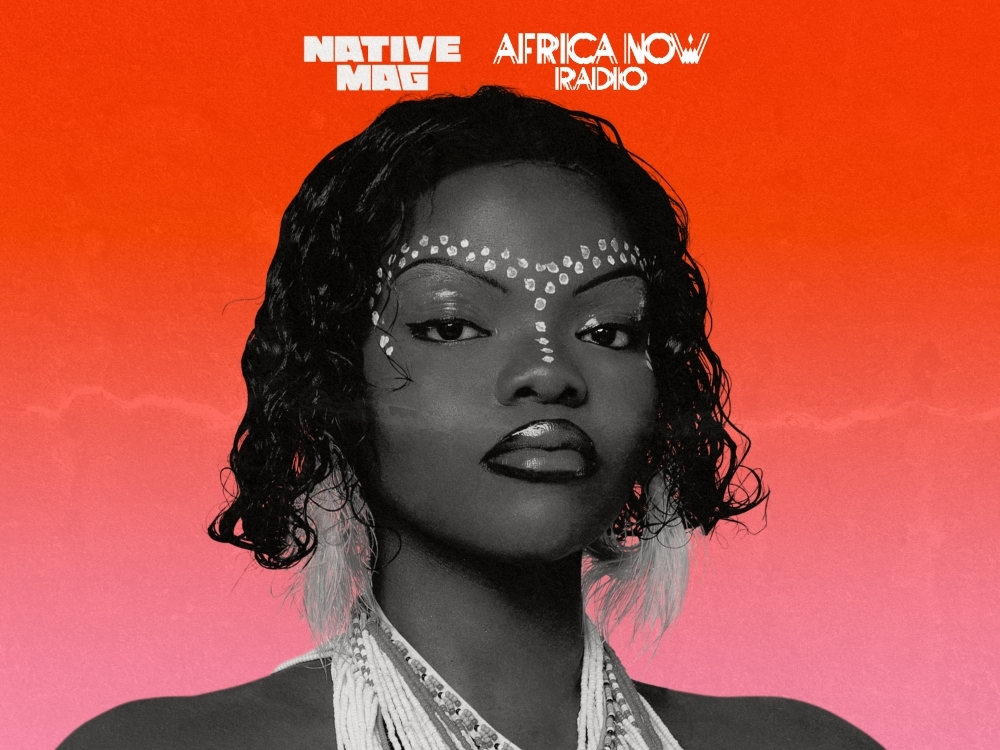
For all the thorny history of Transkei, Makhanj is running towards ease and resolution in several parts of her intriguing debut album.
The painful history of apartheid in South Africa extends further beyond the headlines that made the news across the world throughout the second half of the 20th century. From 1976 to 1994, Transkei, a nominal republic in the Southeastern region of present-day South Africa, existed independently of South Africa, cutting off a generation of men, women, and children from their communal heritage. Still, the region continued to shine as a beacon of South Africa’s present and future, providing some of the most revolutionary figures in the country’s history.
It is a convoluted legacy that South African singer, Makhanj, is passionate about and paying tribute to on her debut album, ‘Transkei.’ Across 13 songs that reverberate the multidimensional pulse of Amapiano, the singer explores identity, womanhood, and how home can mean many things for a heart that yearns for its familiarity. “As much as I’ve moved around a lot, I have to start in the beginning,” Makhanj told Apple Music’s Africa Now Radio about the name of her album.
For all the thorny history of Transkei, Makhanj is running towards ease and resolution in several parts of her intriguing debut album. It’s an honest summation of her relationship with her ancestral heritage, finding the beauty in the struggle and the strength to work through what imperfections might exist. “I just wanted to shine a light on the positive element, because there is so much to be proud of, even in that time,” she says.
This interview has been edited for clarity.
What do you think about your upbringing?
I always say I grew up in South Africa because I ended up moving around a lot. But, yes, being from Mthatha is honestly such an honor because so many great people come from there. Nelson Mandela. Thandiswa Mazwai. Just even the Transkei region. I feel like as Xhosa people, we’ve added so much in general, like as a country, as a continent, we just continue to add so much to each other but it always starts in a particular place. So, being from where I’m from, people that are so proud of where they’re from, are proud of their language, that are determined to just make a change in some way, shape or form, like I just really wanted to. Firstly I’m from there, of course as you’ve mentioned, but I just wanted to be very intentional about tapping into that and just letting people know that I’m a product of many things but this is where I’m from.
How did coming Transkei help overcome your inhibitions and preconceived notions from the industry?
I love history. I think anyone who studied law, let me not generalize, but for the most part we’ll say we like language and we like history. For me, it was so important because I’ve traveled around so much of South Africa, and I always knew I was gonna make it. I still believe there’s still so much that I need to do, and accomplish. For me, it was always like, “Which hood are you gonna rep?” I also grew up in Durban for a long time, and so it was a thing of what’s my hood? Who am I repping when I’m out there? I was like, “As much as I’ve moved around a lot, I have to start in the beginning.” Obviously we know the history of the Transkei: There is good, but there is bad, but there is so much good involved there. I think people focus on the fact that we were removed from South Africa, and then now we were brought back. There’s a whole lot of conversation around why that happened, and many things can be right and many things can be wrong at the same time. I think what I wanted to focus on is the fact that this thing that was supposed to set us back as a people, there’s so much that we ended up accomplishing in those bad times.
Even with the people that came out of there: Nelson Rolihlahla Mandela, Thandiswa Mazwai, and Oma Madikizela from the Transkei region. Just the contributions that the people from there have made, it is so easy for us to focus on why that thing happened, what was going on there, and we forget the things that these people overcame and how far they’ve come in terms of not only just this region but the people that they ended up working with. The people from KZN, the people from the Western Cape, the people from Gauteng. We all came together, we worked together, but they all started somewhere. I think for me, I just wanted to shine a light on the positive element, because there is so much to be proud of, even in that time. In the space that I was in, I was coming from the background of being heavily known as a featured artist. There was so much that I had to overcome beyond what other people are saying, that maybe they prefer me when I work with this particular person. People always have a lot to say, but before you listen to other people, you have a lot to say about yourself in the first place. So, I wanted to go back to when they termed Transkei as Transkei, and they did what they did there, and we still overcame that. I come from this place, so I can overcome whatever inhibitions I have for myself and whatever other things other people are saying about me, and I’m gonna do it in this album. I know it’s still early days, but I feel like I’ve done that. That was really what I was trying to achieve with that. Like, shine a light on the positive elements, but also remind ourselves that you can overcome things, you will overcome things, you can do hard things.
What’s the significance of “Amandla Am” as the album intro?
[It’s about] reclaiming your power. It was just a reminder of the conversations you’ll have with God or the conversations you’ll have with your mom, who is your earthly custodian essentially. And she just is like, “Whatever things that you are believing that aren’t what God is saying about you, get rid of that quickly.” The Bible says the same power that rose from the grave lives in me. So, it was literally just a reminder of that. Like, “Girl, stop playing small. If God is in you, then what are you doing believing nonsense?” It was very important for me to start it like that.
What was it like working with Babalwa M?
The great thing is Babalwa is a really great friend of mine. Like we are colleagues but we are good friends. So, we tend to work together a lot. I didn’t even ask her to be part of this project because she has so much going on in terms of music, like great things as we all know and we see. She was like, “I’m gonna be in that project whether you like it or not.” So I was like, “Okay, girl.” We’re always around each other with Stixx. It was just easy to work with her. I think for me, because we have had such great songs in the past, I was really just thankful that she took me seriously and Stixx took me seriously, and we came together and we just made this full circle.
How did you make “Baleka?”
I think that was actually supposed to be one of the last songs, and then I think the one that ended up being the last one is “Kukuwe” and “Anduyiki,” the last two, which are bonuses. The intention for “Baleka,” was for it to be the last song because it was basically a combination of going, “Okay, I’ve seen the things that have hurt me, I’ve seen the things that have made me feel a way. Let me run away from those things and run towards what is for me.” Anything that is rejecting me, let me not hold onto it, because that’s when the hurt comes. Just run towards the things that are for you because sometimes you really can blame 1,000 people, but you’re really just hurting yourself by holding on. So, just running away from what you’re used to, what’s not for you, and running towards everything that is.
How about “Phepha Abanje?”
So for me, it was just like too many things are happening around you. You can’t control all of those things. Focus on what you can control. There’s people in your path that are there to help you, and there’re people that are in your path there to do the opposite. It’s very important that you sit down and you realize it, and you let it go, and you get to where you need to go. So, essentially kind of the same tune throughout, but I love that song. Working with Atmos was incredible.
How did you approach making “Mzala?”
I was actually writing about someone I care about deeply. It’s genuinely a thing of just failing forward and failing quickly. Like, do the thing because we like to think too much about things sometimes, and I’m not saying be willy-nilly about stuff, but sometimes just do the thing, and if it doesn’t work out, do another thing until it does work out. Just stop the thing of procrastinating because it takes you longer to get to where you wanna be and to do the thing that you wanna do. As much as I was speaking to my cousin, I was also speaking to myself. I just want people to feel like, “This is our time. Our time is right now.” There are so many people that are in your way, don’t be in your way as well. You are the first person to get out of your own way before you point the finger at someone else.
If you could sit beside anyone for this album and have them listen to it, who would that be?
Dead or alive? I definitely would love to hear what Zahara had to think about this. I love Thandiswa Mazwai as well. Siphokazi, I love her so much. She sang one of my favorite songs, “Amacala.” My mom loved that song. Zolani from Freshlyground. I say all of these people because those are the people we listened to when we were driving to and from Mthatha when we were coming from school in Durban and then we had to drive back home for the holidays and things like that. So, I would definitely want to sing those songs for those people because they influenced my mom’s playlist and really influenced the kind of music that I make.

