Interview: Angélique Kidjo Wants You To Find Hope
Four decades into her glittering career as an African icon, Angélique Kidjo is still preaching a gospel of hope.

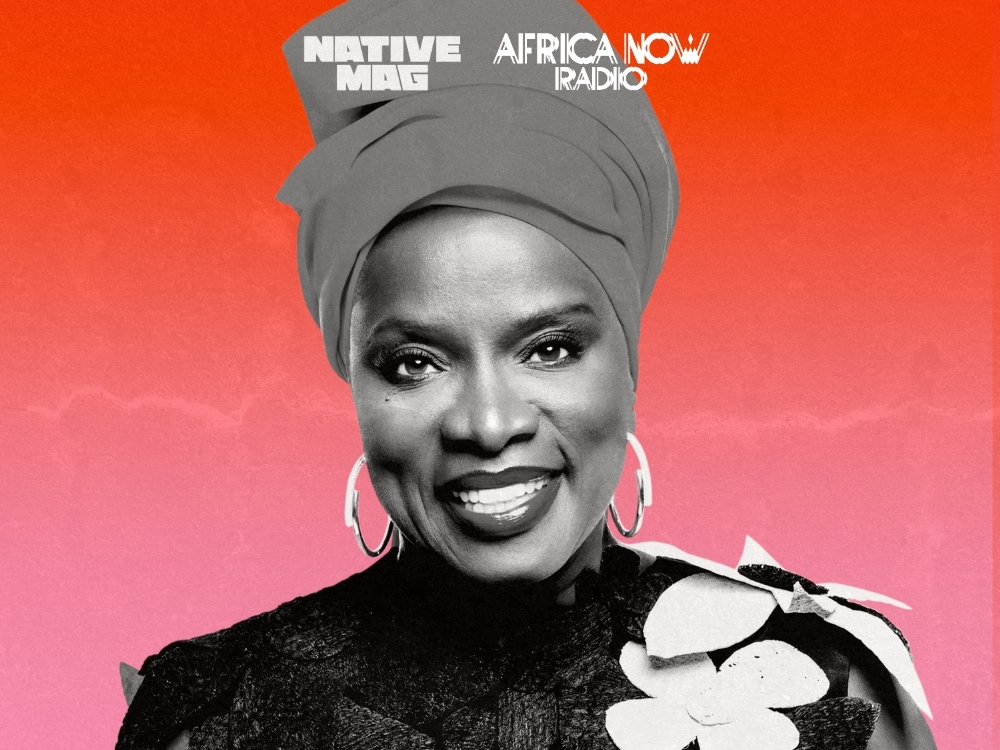
Four decades into her glittering career as an African icon, Angélique Kidjo is still preaching a gospel of hope.
Angélique Kidjo doesn’t really have anything to prove anymore, but she still keeps showing up. Four decades into a career that has seen her ascend all the heights possible with her music, the Beninese singer continues to urge her listeners towards a more humane, optimistic view of self and the world around them. Her latest album, ‘HOPE!!,’ is an extension of that goal: Five years in the making, the 16-tracker is an effusively optimistic body of work that started to take form in the wake of the passing of her mother, Yvonne, in 2021.
Out of that difficult moment rose a resolve to keep hard at her work as a link between the recent past of African music and it’s wild, unpredictable future as she says in “Joy,” her collab with Davido. “I started thinking about this album, not knowing exactly where to go with it, because I was asking myself, ‘Is it worth doing any album anymore because of the technology?’ Kidjo tells Apple Music’s Africa Now Radio. “Things are going so fast, and I like to take my time. A friend of mine said to me, ‘You have always given us so much, but we want more of you. We want more of you.’”
From the socio-political opener, “Bando,” to the reflective “Sunlight to My Soul,” the message is that hope can be a salve for the difficult times no matter how dire the situation gets. Calling on a strong cast of talents from across Africa and the Black diaspora to collaborate with her, ‘HOPE!!’ is Ms. Kidjo‘s startling homage to the strength of the human spirit and a reminder of why she’s one of Africa’s most celebrated voice.
This conversation has been edited for length and clarity.
What do you think of hope?
I think hope has always been something that accompanied me since I was a child because I heard my mom say it, talk about hope all the time. She always used to say to us, the first thing you do when you wake up is greet your body, because sleeping is like a little death, but you come out of it. Be grateful, be thankful, but also be thankful for the hope that has been given to you at birth. Without hope, there is no love. There’s no hope, there’s no perseverance. There’s no plan for the future, and we need hope at every moment of the day and the life you’re living. Life is just one thing. I mean, you have a time you spend on this earth. You need to hang on to your hope to be able to achieve yourself first. Before you can achieve anything else, you need to be hopeful.
How did you approach writing this album?
It took me five years. I started thinking about this album, not knowing exactly where to go with it, because I was asking myself, “Is it worth doing any album anymore because of the technology?” Things are going so fast, and I like to take my time. A friend of mine said to me, ” You have always given us so much, but we want more of you. We want more of you.” How do you define yourself and your parents, who have played such a huge role in your life? How will you define in ten words yourself, the relationship, and the value that has been passed on to you? That’s the hardest thing to do. So, days in and days out, I’m like, “Where do I start? So, I start with hope because I’m counting on my spirit to guide me through the words that are going to come that make sense. I have kindness, defiance, determination, joy, and a couple of words, and I put them down, and I say, “Okay, stop,” because I can’t think of anything else.
I reached out to Shungudzo Kuyimba, who is from Zimbabwe. We wrote ‘Mother Nature’ together. I said, “This is what I’m thinking. I’ve been pushed to my boundaries to think beyond music, but [I have] to dig deep into myself. Then she said, “Those words are powerful, and they kind of look like it’s you.” I said, “I don’t know me.” So I flew her to Paris, and we spent a week working on those words. While I was working on the words also, I’ve been through my archive of rhythm of my continent and started putting them down, putting some chords on it. I just gave myself the freedom to put anything that crossed my mind. With the drum machine, I’d be typing on it with my finger. My husband would be like, “It’s going to take forever.” I’d say, “Hey, I don’t know the machine, but this one I want to, I’m just going to do it. I’m going to tap, I’m going to tap on and do whatever I want.” He’s looking at me like, “I have to wait for you to finish this?” I’d say, “Yes, I don’t care. That’s what I want to do. I mean, it’s just like crazy.” I said, “Hey, those are my rhythm, and this is what I’m feeling that the drum should do, and this and that. So I can’t explain it to you, and I cannot play it like that, but I have the machine that can help me do it.” So, when Shungudzo arrived, we sat down, and we listened to the thing. Then she said, “Which word do we want to work on today?” I said, “I don’t care. Whatever comes to your mind. Let’s start writing, and we see where it takes us.” That’s how we wrote more than 20 songs. We still have songs left from this album. We couldn’t put all of it there. So we’re thinking about doing perhaps a deluxe in September.
What do you think is your mum’s legacy?
One thing my mom used to say is that we only have one life. None of us knows if there is any life after death. So while we’re here, we’ve got to do the best of it and celebrate it. When I was younger, when I got mad with somebody, I wouldn’t talk to the person anymore. My mom said, “No. That’s not the way it works. You can’t do that.” I mean, you don’t know where you’re gonna be tomorrow. If something happens to you and that person you don’t speak to, how are you going to ask for help? So, “Aye Kan” means one life. When that song comes in, I say, “Here’s mom again. She wants me not to forget, she wants me not to forget what she said. It’s that there’s only one life, you gotta celebrate it.” And you have to come back. You can make a mistake, but recognizing that mistake and coming back and apologizing, there’s nothing wrong about it. It makes you bigger.
What’s the message in “Bando” with Pharrell?
I think some people still believe that they have a say, but a system that is put in place is crushing us. [It’s] taking our freedom to speak, freedom to think, freedom to be. We can’t just sit there and not acknowledge that if we let that happen, what makes us and sets us apart as human beings will be lost forever. I have nothing against technology. Technology for me has to be a partner for human life to improve, not to crush the human spirit, and that’s what we are seeing. We made “Bando” because in the abundant, the ghetto, that’s where the trend starts. The people who have nothing, at the bottom of the ladder, are the ones that have more hope and who show us the way. Let’s go back to the essentials and see how we can use hope because we have it. We don’t have to go buy it. If we step away a little from the phone and use the phone differently to serve hope, we can get there.
Why did you collaborate with the Soweto Gospel Choir?
The first time we sang together was for the Nelson Mandela Foundation, the first show in Cape Town. When I heard them singing with me, it was like they lifted me from the ground and put me up. I wanted them to be on that song, on the album. There are a couple of songs that I didn’t put on the album yet that they are on it. I want people to feel that lift. I want people to feel that the power of the human voice is something that makes us move against our will sometimes, because “Sunlight To My Soul” is my message to everybody. When you let love come in, and you let somebody love you with all your flaws, and you love the person back the same way, nothing can stop you.”
What were you feeling while making “Superwoman?”
I dedicated “Superwoman” to Dadju’s mother, my mother, and all our mothers because they are superwomen. What they do for us, we can’t thank them enough, and it’s not just a matter of African mothers; it’s mothers around the world. I’ve seen this with my own eyes, they will do everything for their children. They are the glue that keeps our society together, and I pay tribute to them all the time. To have a young man who’s a descendant of Africa showing his love to his mother and helping me celebrate his mother and my mother and all mothers is a powerful thing. When we have men on the side of women’s issues, we move farther. We cannot succeed in doing anything without having our partner next to us. That’s what nature makes us be. That’s what God intended us. We gotta be partners with each other. That’s the way it is. So, “Superwoman” is a message from a man to a mother, from a woman to a father.

