How King Saheed Osupa Became A Timeless Pop Culture Icon
In 2026, King Saheed Osupa is revered as a maker of timeless, grounded music and a teacher in the lifelong class of the Yoruba language.

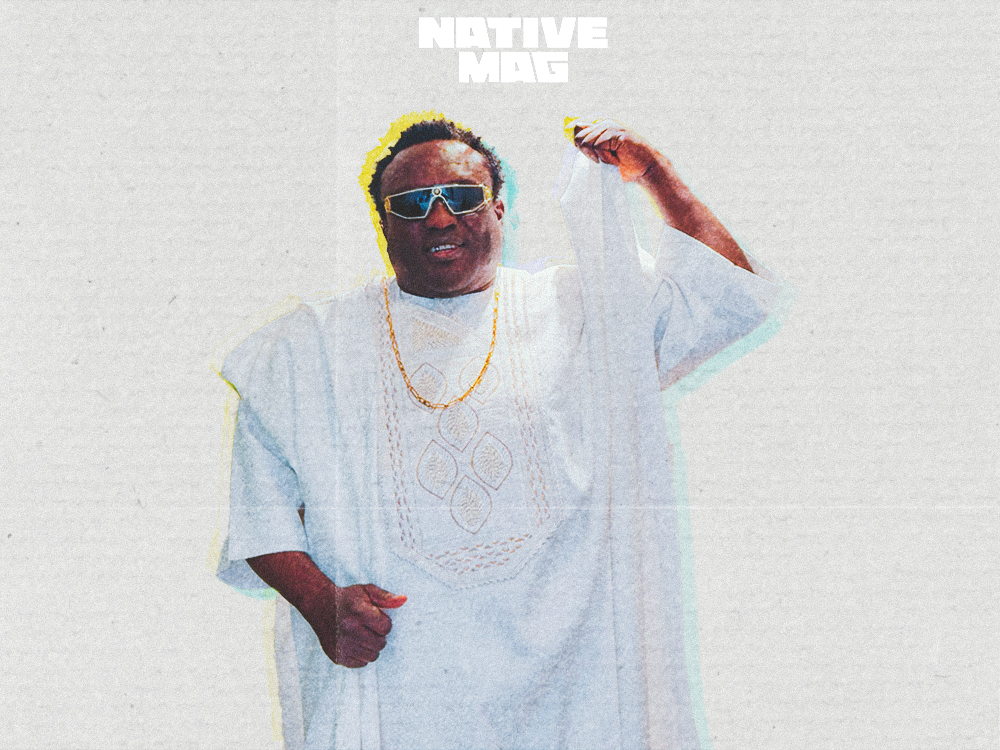
In 2026, King Saheed Osupa is revered as a maker of timeless, grounded music and a teacher in the lifelong class of the Yoruba language.
“Where is Saheed Osupa?”
Last September, Saheed Osupa was conspicuously absent at the coronation of the 44th Olubadan of Ibadan, Oba Rashidi Ladoja. This dashed the hopes of many for a performance that captured the cultural essence of the event. Ultimately, it sparked an appreciation of the Fuji star’s style as one distinctly steeped in Yoruba culture through language, orature, and worldview.
Since the time of Sikiru Ayinde Barrister, the pioneer of Fuji, the genre has produced some of the biggest stars in the history of Nigerian music. Each one has made a mark on the evolution of Fuji by infusing it with stylistic advances. Yet their success is mostly tied to how much they grasp and have been able to hone its foundational elements: Yoruba and Islamic music traditions, praise-singing, mastery of rhythms and percussion, cross-genre permutations, all primarily delivered in the Yoruba language.
True to the qualities of a Fuji master, Saheed Osupa checks all these boxes. He then niches down, forcing us to see the Yoruba language beyond being a communicative tool but as an archive of historical knowledge and philosophical perspectives. To say his lyrics are incantatory, as I’ve heard many argue, is one of the most contemptuous remarks I’ve heard about the cultural prominence of his music. Still, it implies his status as a Yoruba knowledge keeper who uses Fuji as a bank. His work, from ‘Fuji Fadisco’ to ‘Oracle,’ takes listeners on a cultural exposition.
A Man of The People
Younger Nigerians are currently buzzing with renewed interest in their indigenous cultures and languages. Artists like Asake, Adekunle Gold, and Seyi Vibez are taking global stages with the Yoruba language. In recent years, Fuji has become the new cool in the warm embrace of newer, younger consumers, some of whom are musicians innovating with it.
2025, especially in its fourth quarter, saw this world of Fuji and cultural enthusiasts gravitate towards Saheed Osupa. In the face of incessant demands, he hosted the Olubadan Appreciation Night to make up for his absence at the coronation. He was the cynosure at AG Baby’s Fuji Street Carnival, which was hosted on October 5th, 2025, to mark the launch of ‘Fuji’, Gold’s sixth album. He graced the stage with Asake at the December Flytime Fest, giving the show one of its brightest highlights. This created more publicity for the second edition of Osupa’s Exclusive All-White Agbada Party, which he hosted about a week later.
Much of the acclaim being held for Saheed Osupa is inseparable from his artful use of every linguistically possible Yoruba medium to achieve profundity. This has been a defining feature from the beginning of his career, through his own growth and the loss of Fuji’s momentum in the last decade, which kindled the fusion of Fuji and Hip-Hop, a sub-genre dominated by Wasiu Alabi Pasuma.
Starting with Saheed Osupa’s debut album, ‘Fuji Fadisco,’ he has shown a natural zest for spotlighting the Yoruba culture. In the two-track album, he pays homage to his Fuji predecessors and the extraterrestrial. He administers doses of sermonic lyrics. He self-aggrandises while reassuring himself of success in his career path. At this point, he shows his adventures in seeking out the Yoruba belief system while blending it with his birth religion, Islam. He likens himself to Ọ̀bàrà Bogbè, an odu ifa that he links to victory. In the face of adversity, he claims to have been instructed by the Iyas—the witches spiritually backing him—to turn to this odu as his nasiha, an Islamic concept that loosely means ‘advice’.
Osupa, the cultural advocate, would surface in subsequent works. “Olaju De,” the third track from his 2007 ‘Reliable’ album, is the biggest instance to point at. The song starts by sharing the sentiments of each older Yoruba generation against the younger ones: they’re active participants in eroding cultural norms with every wave of modernity. It proceeds into being a lesson in ancient Yoruba practices, commenting on how technology and the other fruits of modernity in the postcolonial era have changed them. He ends it by clamouring for the reutilisation of these systems, an argument he drives home by insisting that Oyinbo, the white colonisers we emulate, have never abandoned their culture. With that, the track became the sound for radio and television shows themed around the advocacy for Yoruba culture. In “Vanacular,” a track off ‘Non Stop (Hip-Fuji)’ album in which he features Terry Apala, he charges elders with the responsibility of teaching the younger generations the Yoruba language.
For scholars, Yoruba-centric creators, and initiatives enhancing cultural pride, Saheed Osupa is a source of reference and endless materials for knowledge expansion. Such is his contribution in this space that in 2024, he was conferred the title “Oba Afededara” by the Department of Linguistics, African Languages, and Communication Arts at Lagos State University (LASU).
“Fuji Theatre” is one of Saheed Osupa’s most popular live performances. It stands out for its opening chorus, a lengthy, illustrative proverb whose literal interpretation was puzzling. Kọ́kọ́rọ́ alátẹ, t’òun t’àtẹ ni; òwú alátẹ, t’òun t’àtẹ ni. He directed the song at Fathia Williams, who was then in the thick of her separation from her ex-husband, Saidi Balongun. Years later, Tayo Bello (Waa Sere), one of Nigeria’s top Yoruba educators, analyses the proverb—all of its symbols point to the inherence of imperfection in humans.
Similarly, Olalekan Fabilola of Másòyìnbó, a top Yoruba game show in Nigeria, often credits the impact of Saheed Osupa’s music on his language mastery as a then computer science undergraduate at Covenant University and now as a Yoruba language tutor and advocate. He would later tell him this in an episode in which he was featured. In these later years of Saheed Osupa’s career, he has built an audience faithful to Yoruba culture. For them, their fondness for him reinforces their identities as Yoruba culture advocates, alongside being Fuji fans.
Osupa, the Deity
The Yoruba music style favours functionality over creating for art’s sake. Thus, music is also tasked with the responsibility of expressing Yoruba’s didacticism, passing down lore, and preserving traditions. In matter and manner, Saheed Osupa delivers these functions with his music and, on occasion, the films he has made.
He comments on societal happenings with the Yoruba worldview as a framework for sharing wisdom and extracting lessons. This is imbued with storytelling mastery, personal experience, and innovative use of Yoruba language aesthetics. The result is works that have evergreen relevance, just like the proverbial counsel of elders that never gets outdated. Of course, this validates Saheed Osupa’s claims when he refers to himself as a messenger divinely inspired.
Realistically, he owes a part of his sagacity to the cultural model he has stuck with. This concept of relevance is directly taken on in “Ilu mi,” a track from his 2009 ‘Mr Music’ album. Culled from the Yoruba emphasis of being sensitive to one’s environment and acting accordingly, he urges fellow musicians to follow this principle by illustrating the ridiculousness of singing a dirge at a housewarming. Fans would cite this as the shortcoming of Taye Currency’s performance during Olubadan’s coronation.
For his Olufimo fanbase, Saheed Osupa’s story—replete with hardships—moves them. They relate to his struggles. It justifies why his songs are often heavily themed with ọ̀rọ̀ ìyànjú, words of relief to uplift his listeners. His breakthroughs are aspirational, a major one being when Sikiru Ayinde Barrister crowned Saheed Osupa the King of Music. The Fuji Pioneer declared no one worthier, praising Saheed Osupa for fusing melody with lyrical depth that conveyed the prudent counsel of the Yoruba language.
The history of this particular endorsement is written in supremacy battles that further tore the Fuji community into factions and intensified the lyrical war Saheed Osupa had been waging against his counterparts, particularly Pasuma. Studying Osupa’s conduct during this season of rivalries introduces one to Orin Eebu (songs of insult), a facet of Yoruba music tradition delivered with invectives. During conflicts, its purpose is to air one’s grievances indirectly.
“Kolokolo Okota,” “Akuko Omole,” “Tanta Rubber,” and “Nuclear Weapon” are some of the potent case studies of how Saheed Osupa is a master at wielding this weapon when his ire gets drawn. Much of his fight was about establishing that he was second to none (read: Pasuma) and resisting titles that reflected otherwise. In a linguistically impressive way of doing this, he once refers to Pasuma—when he was known as the Otunba Fuji—as a crab-eater and he (Osupa), a consumer of crayfish in their supremacy race. “Otunba ti j’akan to ri o ti jeyi to kan, Awa jede jede lo ku ta tun le je’mi si,” he sang.
Per the phrasing of the song, he declares Pasuma unfit to be crowned the King of Fuji. In Yoruba culture, heirs are forbidden from eating crabs lest they never ascend the throne. The shared context in the Fuji industry is Pasuma’s deputy position in King Wasiu Ayinde’s faction. As Oluwarotimi Ogungbemi and Ganiu Bamgbose affirm in Imagery in Fuji Music: Saheed Osupa as an Exemplar, being a deputy to some other king in the past is the inference of crab eating, which prohibits anyone from becoming a king. These two have since sheathed their swords, but Osupa rarely passes on self-adulating and shaming detractors. The songs of invectives are also still very much within his reach.
Like many other Fuji musicians, Osupa has had many earnest yearnings. One is to have an everlasting reign and command honour in one’s music career. “Bàbá jẹ́ kí n lẹ́yìn nídìí iṣẹ́ orin kí n gbayì títí dalẹ́,” he pleads on “Reliable Pt 2”. His prayers are being answered manifold: He is revered as a maker of timeless, grounded music. He is a teacher in the lifelong class of the Yoruba language and wisdom. The two top songs in the first quarter of 2026, Kayode’s “Aimoye” and Oshamo’s “Shina Rampe”, can be respectively traced to the fifth track off Saheed Osupa’s ‘Reliable’ album and the third of ‘Mr Music (Ore Niwon).’ More significantly, Saheed Osupa’s work is a reference point for a new generation of musicians carrying the Yoruba language further in their own unique fashion.

