Review: ‘Oriade’ by Davido
For much of ‘Oriade’ Davido maintains a laid back energy that’s really an elder’s grace.

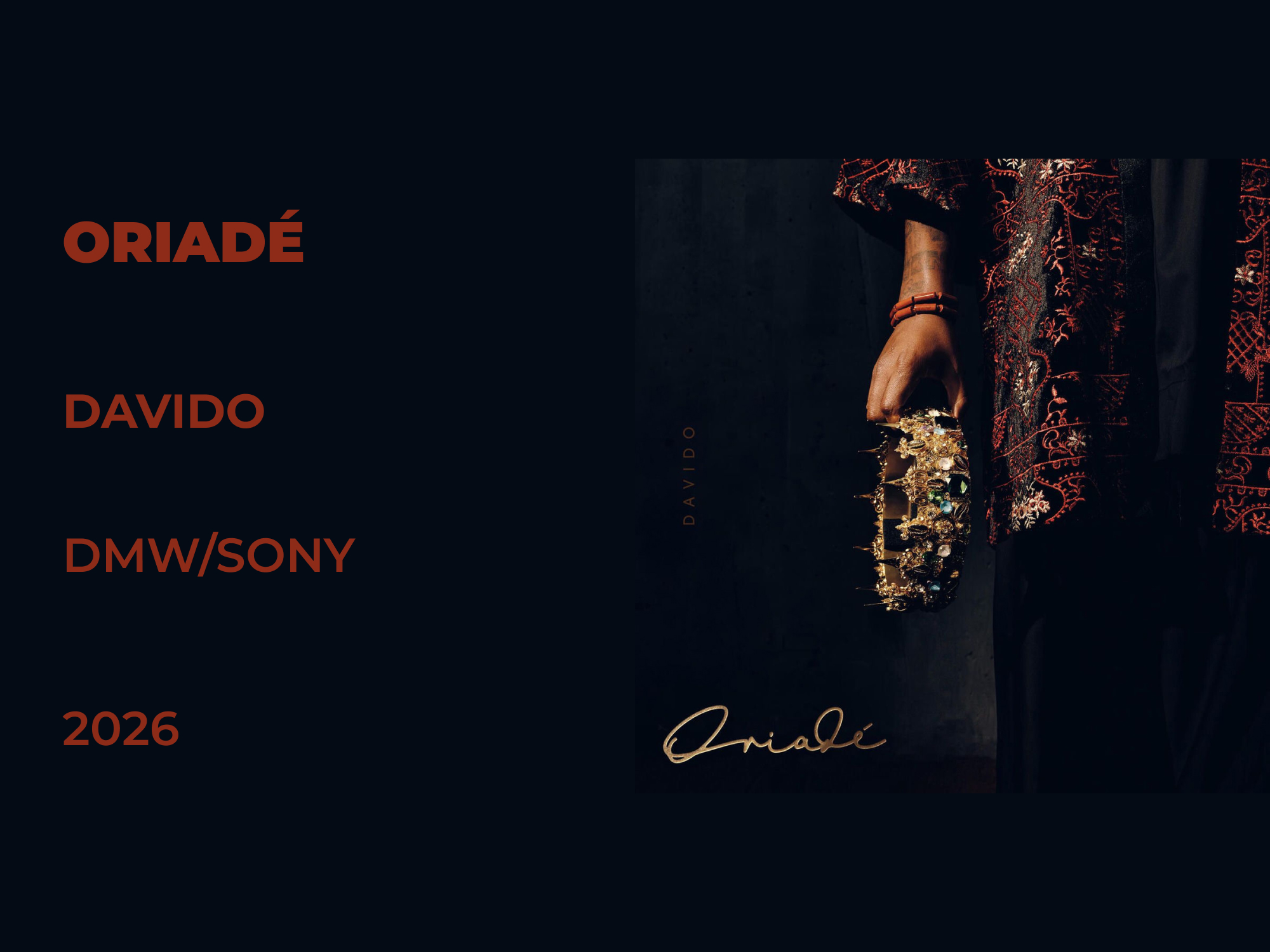
For much of ‘Oriade’ Davido maintains a laid back energy that’s really an elder’s grace.

There’s a startling realization halfway through “B4 B4,” a record from Davido’s sixth studio album Oriade. Shored amidst the complementary serenading of his protege Mayorkun and FOLA, one perceives a satisfactory level of the artistic sublimity the Afropop stalwart has been moving towards in his recent music. Where scorching, ego-fuelled dominance supplied the tools of his myth-building from early albums such as ‘Omo Baba Olowo: The Genesis’ and ‘A Good Time,’ he now favors more serene compositions. It’s akin to the gestures of a dancer whose favorite moves have been executed and now anyone who arrives the scene must make do with the physical evidence of sustained choreography: the dust in the air, sweat slick all over the dancer’s skin, the awed gaze of the bystanders who make it their duty to relay what they’ve witnessed.
In quite overstated ways, Davido’s entire career has been an exercise in the inevitable. He wants to be undeniable even when he isn’t liked. Greatness like the kind Davido desires doesn’t tarry on the banks of subjectivity. It must be inevitable, in-your-face. There’s a clip of his great contemporary Olamide saying he wouldn’t work as hard if he had a billionaire father like Davido. Elsewhere, the “Dami Duro” singer has related and emphasized the dramatic trappings of a musical passion so fiercely at odds with a more conventional, comfortable life, one secured by generational wealth. Quite tellingly, his music hasn’t shied away from his biography.
Maximalist in feeling, with extravagant sonic choices, he’s leaned into his privilege while referencing humane stories. ‘A Better Time’ was created on the back of great personal misfortune. ‘TIMELESS’ had emotional candor. ‘5IVE,’ which followed last year, was unnecessarily stuffy and lacked the sensuous layering that made its predecessor so beloved; ‘Oriade’ attempts an edit. The entire album is the document of a creator who’s sung in so many different ways and has acquired a fine means of blending these varied impulses.
Album opener “On The Road” reflects the high bar David Adeleke has set for himself, its bluesy strings nodding to Louddaaa’s signature flourishes. Davido’s delivery foreshadows the relaxed atmosphere of the entire project, as he lays down his ethos early on his first verse: “You see me living lavish, but many can’t understand it / Say I dey put hard work into practise, my body no gree me/” It’s an earned sentiment, but the artist strikes for even more character on the other side of the chorus: “I still make time for family and friends ‘cause all work and no play / Makes Davido another man with no face.”
Rather than slither into the arena of the bop, a field he champions exquisitely, Davido yet unfurls this particular album’s vision to be restrained. “Constantly” and “Julie” are peak rainy weather songs; there’s an insistence in them for the other, a seeking for fullness through romance. Produced by Pheelz, the drums exude a peculiar lightness of being. Hence it’s Davido’s voice which saturates the foreground, yet enlivened by the soaring violins and notes building from the back.
“Julie,” a name entrenched in the Afropop lexicon, gets another appraisal on ‘Oriade.’ Here, Davido strikes a pleading note, asking to be considered. If its drum and note progressions sound familiar, it’s because there’s a thematic and sonic connection to “E PAIN ME,” one of the more vulnerable moments in Davido’s oeuvre. While the newer record is somewhat on par, the record lacks enough specificity to drag it across the finish line. Fortunately, the much-heralded “B4 B4” attempts and surpasses those emotional scales. This-kinda-DMW reunion has Fresh VDM on production duties, a choice that inserts immediacy and familiarity.
A thing must be said about the openness of Davido’s creative spirit. Where his two biggest peers have made exclusivity an art, he embraces the fire of the now. From the outside it seems like a loose grip on his influence, but when one looks at the range of his collaborators (and how big they go on to become) it’s clear that Davido applies a business-like approach to such matters. And on each album, one younger act happens to burst onto higher strata of popular acceptance on the strength of their appearance.
On ‘Oriade,’ that role ostensibly belongs to Llona who enlivens the closing record “My Light” with his piercing, introspective lilt. A different kind of artist to Davido, yet both paint their tales in sweat and blood. United from their distinct positions the result is a brilliant portrayal of submission to higher authority, hence the allusion to destiny in the title. A Yoruba phrase with limited translation into English, ‘ori ade’ suggests royalty and leadership. This culturally-informed linguistic might also inform the aesthetic of the album.
“I choose growth over silence, no pressure for this side,” sings Davido in his verse. How he subverts the existential queries of Llona is like an OG sitting down over lunch with the hungry youngster, assuring him the future holds roses as equally as thorns. “Pay my dues before the paper, no fear the risk if you go take am.” These are the words of a man growing into his influence, and on the better songs on Oriade, he does so concisely, in entirely-earned words.
It’s believed in African societies that the more a person knows, the lesser they tend to speak. Experience tempers the fire of youth, an embodiment of grace becomes even more necessary than the need to prove oneself right in matters of a certain disposition. Nigerian music—and Afropop in general—is going through a transitory phase and new cultures are building amongst listeners. Amidst rapid experimentation, AI is challenging humanity’s supposed knowledge on what is real and what isn’t, broaching slyly existential terrain with its posing of the familiar and the unfamiliar.
Davido’s voice unmistakably belongs to the familiar, but even he is careful of being too familiar. We’re in a time when albums are received with less fanfare than ever, slithering out of popular conversations before long, and the artist seems to know this. ‘Oriade’ is thirty nine minutes long, which is significantly his shortest album. Even the album cover—his jewelled hands holding a crown—captures his most evasive, poetic display yet. You’d have noticed that Davido’s covers have otherwise favored a mainstream penchant for excess but here he’s direct, quietly luxuriant.
Those are qualities reiterated in Aya Nakamura’s guest showing on “Yaya,” in the breezy vibe of “Zanzibar,” and across the knocking house-nodding percussion on “I Know Who I Be,” extending his successful experiments with club-ready genres. What’s a Davido album without bops? I suspect “Already Falling” will do best in the long run: in a glossy project too slick with its own perfection, here a rough exterior is achieved; the drums sometimes lose themselves. Davido’s voice, ever charged, becomes even more engaged, working that iconic husk into a measured affinity.
For much of ‘Oriade’ the artist maintains a laid back energy that’s really the elder’s grace. Let the music do the talking, he seems to suggest. It’s quite an original response to the times from an artist who used to come under the stick for his relative struggles with longer works of art. For a time (memorably so, one must add) Davido’s magic rested on the hit; that crafty ability to weave our worlds around the audacity and urgency of one record. From “Dami Duro” to “If” and “FEM,” he’s never seemed to leave anything off the course of a track. If an adversary was taking shots, if he was heads-over-heels in love—nothing was left to later. An album, by its design, favors a certain restraint.
‘A Good Time’ depicted Davido’s growing understanding of the form, but both critics and everyday listeners agreed on ‘TIMELESS’. Color me overly impressed but there is something refreshingly humane about the creative process being so candidly expressed. Purists will decry a cheapening of art’s supposed mystique but Davido has never been anything if not collectively ours. From his early moments in the scene he relayed a spirit that gave as much as it demanded, that every cheer of “OBO!” he met in the streets would inspire a love that would inspire a hit that would make those people happy.
Now that character arrives eventually at interiority, taking back some of the space for himself. The stories and music that have come before makes this worth it. Even the rollout for ‘Oriade’ is relatively lean, featuring little of the grand gestures that accompanied ‘5IVE’ and ‘TIMELESS.’ In a nuanced way this puts little pressure on the album to become a commercial giant, only that it needs to succeed sonically. To that end, ‘Oriade’ has some of the more calculated moments of Davido’s career. Its serene exterior will likely inspire listeners to probe its content, and when they do they will find a man triumphant and satisfied
Listen to ‘Oriade’ here.

