Elestee Is Ready Now
‘Mentally, I’m Here’ documents where Elestee is in this exact moment, but it also points toward where she’s headed.

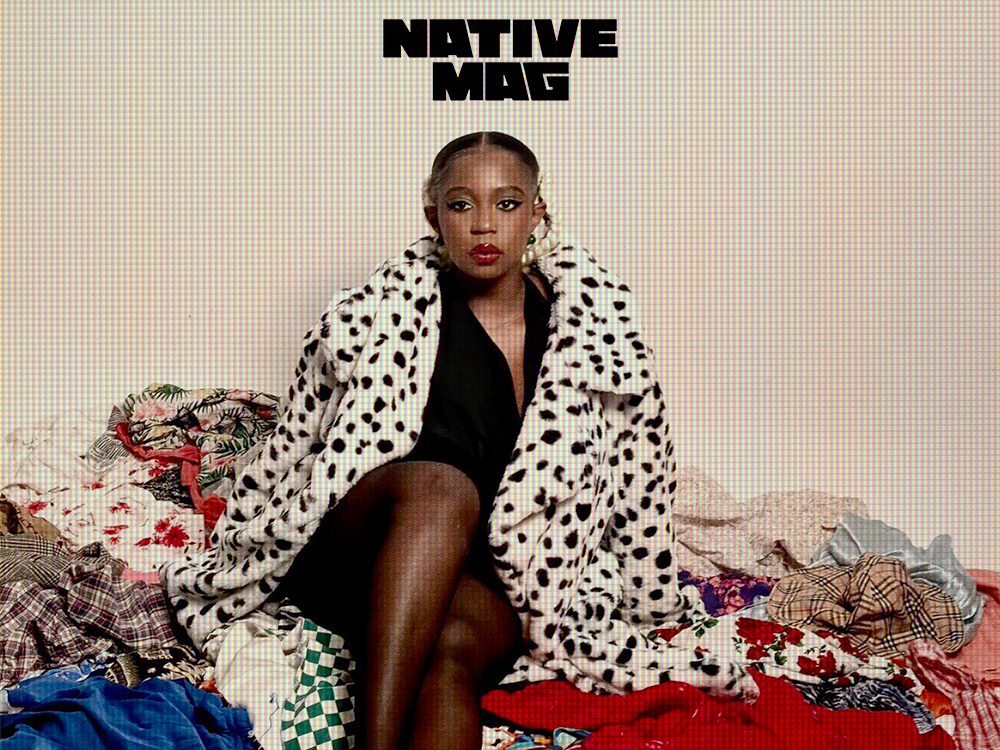
‘Mentally, I’m Here’ documents where Elestee is in this exact moment, but it also points toward where she’s headed.
The journey from underground cipher to major label unveiling is rarely linear. For Elestee, the years between opening for LADIPOE in 2018 and her official introduction under Mavin Records in 2023 weren’t a detour. They were the foundation for her becoming. When asked what that stretch of time taught her, her answer arrives without hesitation. “If you know me well, you know patience is everything for me.”
She speaks about patience not as passive waiting but as active cultivation. As a female rapper and singer operating in a landscape that doesn’t always know what to do with genre fluidity, she learned early that visibility required more than talent. Stars don’t materialize from nowhere; they emerge from years of refining craft, building community, and creating music that satisfies both personal truth and public appetite. Her stint at the Mavin Academy allowed her to expand beyond the pure Hip-Hop foundation she’d built. She began making complete songs, experimenting with Afropop, stretching into sonic territories that felt freeing rather than compromising. That development took time, and she gave it that time willingly.
Her debut EP arrived under the name ‘Lifesize Teddy,‘ a moniker that felt like both armor and announcement. The project was unapologetically alternative, sidestepping Afropop’s conventions in favor of something more niche. It was a statement of identity at a moment when identity itself was still forming. The name shift to Elestee isn’t the philosophical pivot it might seem. “Honestly, it’s not that deep,” she explains. LST was always the abbreviation. She simply spelled it out phonetically rather than leaving it as initials. The two names coexist without conflict. You can still call her Lifesize Teddy in the street; the essence hasn’t changed.
What has changed is the sound. After the alternative textures of her debut EP, the ‘Poison EP’ leaned harder into Afropop. She wanted to test herself in that arena, to prove she could fuse rap sensibilities with melodic hooks that reached beyond her initial audience. The first project was niche by design. The second was about expansion. Then came “Selina” with Major AJ, followed by continued experimentation across producers and moods. She describes the process as exploration without a fixed map, trying things simply because they feel fun. That spirit of exploration led directly to her latest project, ‘Mentally, I’m Here,’ which drops with a surprise element even she seems slightly amused by.
There’s a Pop record on the EP featuring Ayra Starr, one of the continent’s most beloved voices. For someone whose foundation is in rap and alternative production, Pop felt like foreign territory. Ayra didn’t just suggest the collaboration; she insisted. “She basically encouraged, almost bullied me into doing it,” Elestee recalls with evident affection. Ayra sent the demo from America with a simple directive. Teddy, I think you should jump on this. The response was immediate. Elestee recorded her part, sent it back, and received enthusiastic affirmation in return. The process involved multiple takes, refining until the version felt perfect. But beyond the technical execution, what stands out in her retelling is the support. Ayra made the song and thought of her immediately. That generosity of spirit meant something.
The title ‘Mentally, I’m Here’ signals introspection. It’s a project about being present in the middle of transformation, about navigating your mid-20s while the world watches. Elestee describes it as the sound of a young woman figuring out life in real time: shifting perspectives, messy love, constant re-identification, the effort required just to stay sane. Some songs affirm who she is. “On the Road” and “Designer Baby” plant flags. Others interrogate relationships from her current vantage point as both a rising artist and a regular person trying to make sense of intimacy.
She wants listeners to relate, but she also needs to express these things for herself. The assumption is that she’s not alone in this. Other young people are building careers, dealing with love in complicated ways, trying to figure out who they are within a generation that refuses easy categorization. The project offers permission to be firm about your identity, to make space for yourself even when that space isn’t automatically granted. One moment you’re affirming your worth. The next time you’re ready to explode. The tonal shifts aren’t inconsistent.
“Company” was the first song recorded, followed closely by “Liar Liar.” But the sequencing wasn’t chronological. Elestee enjoys building projects like maps, where each track leads into the next with purpose. “I like a bit of a story,” she says. “Company” first establishes context for the frustration that eventually boils over in “Liar Liar.” The journey between those two points matters. Understanding why someone reaches their breaking point requires knowing what they tolerated before they snapped.
The Pop song with Ayra pushed her furthest outside her comfort zone, not because of the genre but because of what it demanded physically. “I don’t dance,” she states plainly. “I really don’t know how to dance.” But Ayra somehow coaxed movement out of her, and now she’s coming for everybody. There’s humor in the declaration, but also real confidence. She tried something that scared her and survived. That tends to make the next scary thing feel less impossible.
The version of herself she’s stepping into next is unapologetic and very immovable. She describes this future self as someone who stands up without hesitation, who knows exactly who she is, who can move mountains without visible effort. The phrasing suggests not arrogance but clarity. She’s done with the version of herself that second-guesses or softens edges to make others comfortable. That version served its purpose. This new one has different priorities.
Her hopes for the project are split between the measurable and the meaningful. Of course, she wants numbers and stats. She’s not pretending commercial success doesn’t matter. But beyond that, she wants the music to function as a safe space. Somewhere listeners can retreat when they need to feel seen, when they need confirmation that what they’re experiencing isn’t irrational or isolated. “When your music bangs in the clubs, it’s amazing,” she says. “But when someone plays it alone, and it helps them, that’s everything.”
The final question arrives with the weight of inevitability. Women in this industry work three times as hard as their male counterparts. How does she handle that pressure? Her response is measured but pointed. “At this point, it is what it is,” she says simply. “We’re just better than them. That’s all I’m going to say.”
Elestee now stands at a threshold, no longer emerging but fully present. ‘Mentally, I’m Here’ documents where she is in this exact moment, but it also points toward where she’s headed. The girl who waited patiently, who refined her craft in relative obscurity, who learned to blend genre sensibilities into something that feels singular, is ready now.

