Skales Is Carrying A Legacy Forward With ‘Martina’s Son’
Through all its layers, ‘Martina’s Son’ plays out as a declaration of growth with Skales seeing it as a turning point.

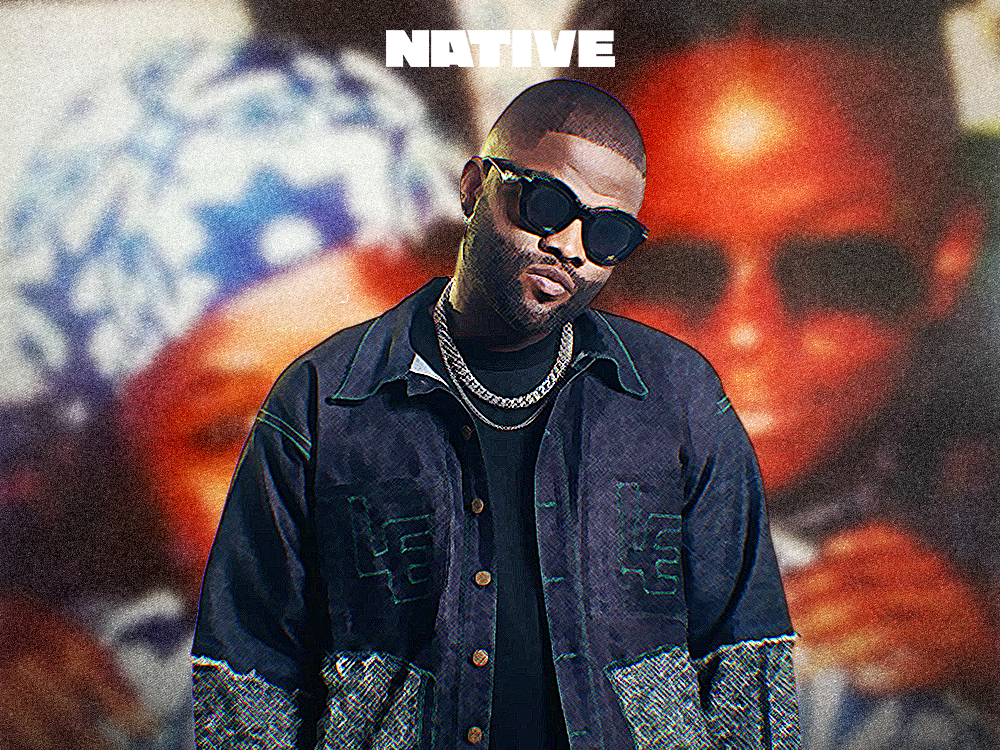
Through all its layers, ‘Martina’s Son’ plays out as a declaration of growth with Skales seeing it as a turning point.
It is past ten on a September evening, and my power supply has just flickered out. On the other end of the line, Skales laughs, unfazed. It is the kind of reaction that suggests he has lived through the frustrations that come with Nigeria long enough to see the humor in them. That moment, unplanned, mirrors much of what defines his story.
For more than a decade, Skales has been part of the lifeblood of Nigerian music. From his beginnings in Kaduna State to his present place on the global stage, his journey has carried him through competitions, record label signings, and a run of hits that partly soundtracked the coming-of-age of a generation. He remembers those early days clearly, growing up across Kaduna, Jos, and Abuja before eventually finding his way to Lagos. That move set everything in motion. “I won competitions, got signed, had one of the biggest songs in Nigeria and Africa,” he recalls. “Now, we’re making waves globally. It’s been incredible.”
Among the many songs in his catalog, one continues to define him in the eyes of fans, both old and new. “Shake Body,” released in 2014, refuses to fade. It is not unusual to hear it drifting from car stereos or clubs, and every few years, the song finds a new way to resurface, reclaiming space in conversations and on dance floors. Asked why the track has endured, Skales keeps his answer simple: “It’s hard to pinpoint, but it’s the power of music. When you hit the right spot, it resonates with people.”
That resonance took on fresh life recently through an unlikely source: Spanish footballer Lamine Yamal. A random video of the footballer enjoying the song led to a resurgence in its popularity. The Lamine Yamal phenomenon brought “Shake Body” to a new audience, tying Skales’ voice to the excitement of football culture and a new generation of listeners. For the artist, it was both surreal and validating. “It’s a full-circle moment,” he notes. “Every artist dreams of having a song that lasts for years, something future generations can vibe to. Being reintroduced to a new audience is an opportunity to stake my claim and keep pushing forward.”
Yet for Skales, the moment is not just about nostalgia. It is about using the renewed attention as fuel for what comes next. That next chapter is ‘Martina’s Son,’ an album born from the memory of his late mother, his grief, and the love they shared. The title itself is a tribute to Martina, whose presence shaped him as a child and whose absence continues to reverberate through his adulthood. “I might hate to admit it, but I was a mommy’s boy,” he says quietly. “She was everything to me. Losing her felt like she didn’t get to enjoy the fruits of her labor. ‘Martina’s Son’ is about keeping her legacy alive. It’s my way of paying her back, making her proud, and carrying her story forward through me.”
The project’s origins stretch back years, yet its final form only emerged after rounds of recording and reconsideration. “I kept changing my mind, feeling some songs weren’t right for the project’s direction. There are even songs I recorded that I’ve forgotten about,” he admits. In terms of creative challenges, Skales takes a relaxed view. Where some artists might describe sleepless nights in the studio due to the pressure of crafting an album, he speaks about ease. “Honestly, no song felt challenging in that way,” he states. “For me, music should flow freely. Overthinking it makes it less fun and authentic. With all my years in music, I’ve learned that trying too hard can make it sound forced. As long as I vibe with a song and feel it’s great, that’s what matters.”
The 16-track pack album is an attempt at keeping memories secured, it is deeply inspired by the sounds his mother loved. That direction guided his choice of features and samples. Yinka Ayefele appears on the project on “Tota E Mole,” a direct nod to Skales’ mother’s taste. “Her music collection shaped a lot of what I know,” he says. “Yinka Ayefele’s music was something she jammed to. When I spoke to my producer about sampling one of his songs, he’d already worked on it before, and when I heard it, I thought, ‘This is cool.’ That’s how that collaboration happened.”
He also draws from the legacy of K1 De Ultimate, another of his mother’s favorites. The Fuji legend’s influence appears on “Colors,” which carries echoes of K1’s classic track “Show Color Medley.” “My mom would always sing, ‘Baby mi sho color re,’ quoting his lyrics. That song stuck with me because I heard it so often growing up. Sampling it was a natural choice to connect with her memory.”
The project’s breadth also includes “Alcohol Na Your Mate,” a collaboration with veteran artist Faze, “Glory,” featuring rising star Fave, and the poignant “Until We Meet Again,” a moving ode to his mother as well as the Brazilian Funk-influenced “Dance Like Lamine Yamal,” inspired by the Spanish youngster’s cheerfulness. That song reflects the spontaneous side of Skales’ artistry, the willingness to seize a cultural spark and turn it into music. “I was in Europe during the viral Lamine Yamal moment,” he says about the song. “I was inspired by the energy and the story tied to it. My producer, KillerTunes, played a beat I heard on Instagram, and I was like, ‘This is it.’ I hit him up, he sent it over, and we made it happen.”
Through all these layers, ‘Martina’s Son’ plays out as a declaration of growth. Skales sees it as a turning point. “This album feels like my coming-of-age moment,” he says. “I’ve always known what I wanted, but now I’m more confident and mature in my approach. It’s about being sure of my direction and expressing it boldly.” At its core, he wants listeners to find encouragement in the music. “I want listeners to believe in themselves and love themselves more,” he explains, “I’ve struggled with inferiority complex and low self-esteem, even while achieving big things. I want people to celebrate their loved ones while they’re still here. I have regrets about not doing enough for my mom before she passed, and I don’t want others to feel that way.”
His openness about self-esteem struggles adds depth to the album’s narrative. Growing up, he often felt overshadowed by others who seemed to have more—better circumstances, more supportive families, and stronger financial backing. “I always felt I wasn’t enough, even when I was achieving great things as a teenager,” he says. It took near-death experiences in 2020 to shift his perspective. “I realized I’m all I’ve got. I started telling myself, ‘There’s nobody like you, and no one can do what you do.’ That’s when my confidence grew stronger.”
Resilience, he emphasizes, has kept him moving through the fast-changing terrain of Nigerian music. He compares it to sharpening a weapon for battle. “There’s always someone great out there, so you have to keep learning, practicing, and staying sharp,” he explains. “Like warriors sharpening their swords before battle, I stay ready by working with different people, vibing off their ideas, and keeping up with what’s happening in the industry. That’s how I evolve with Afropop and stay relevant.”
Looking ahead, Skales is already thinking about the future with a tour in the works that will take him across Europe, Africa’s northern, eastern, and western regions, the Middle East, and Australia. ” As our conversation winds down, he expresses a quiet gratitude for where he stands today. “I’m deeply grateful for where I stand today, blessed to have come this far on a journey that’s been nothing short of incredible, carrying my mom’s legacy and sharing my story through music with the world.”
Even in the shadows of grief and the grueling requirements of an unpredictable industry, Skales continues to rise, turning pain into legacy and legacy into light, carrying his story forward one song at a time.
Listen to ‘Martina’s Son’ here.

