Orch Is Centering Heritage And Spirit
From his stagecraft to his sound, Orch has crafted a brand that is amplified by those who truly see themselves in the art.

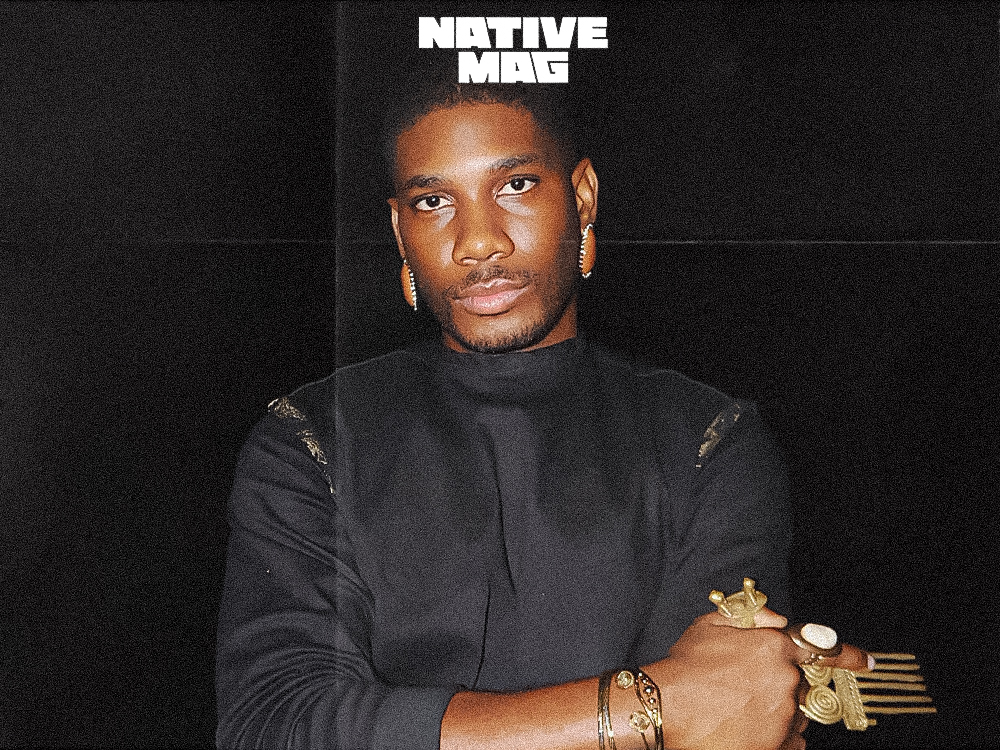
From his stagecraft to his sound, Orch has crafted a brand that is amplified by those who truly see themselves in the art.
Sometimes, we meet true creators like Orch who build worlds where every element of their artistry carves out a world uniquely their own. These true creators build a domain where their listeners are liberated, drawing culturally unbridled souls into a space where they are unrestricted. African heritage, a wonder long misinterpreted, holds a mirror to our true selves. Whatever we define as “evil” through an external lens becomes deeply beautiful when we reclaim it.
Rising singer, Orch, has built a world where we come to understand, experience, and realize that where we come from is far more unique, rich, and true to ourselves. If we find African heritage and beauty “intimidating,” it is only because we were meant to be formidable. When we become first-class citizens of our own cultural lineage, we awaken to endless possibility, where our true identity shines through our heritage, music, and culture. From his stagecraft to his sound, Orch has crafted a brand that looks distinct from the outside in and is amplified by those who truly see themselves in the art.
“Afro-preference”, as he calls his sound, describes a preference for being primarily African over adopting secondary citizenship to external influences. He does this so effortlessly, living as the true, authentic core of an African child walking the soil his ancestors trod. The fundamental question he asks: “Who were we before we became consciously inebriated? Who were we before external definitions pushed us to abandon our core identity?”
He seeks those answers through his craft. He proudly calls himself the elephant: one of the titans of the African landscape. He believes African beauty and lineage should inspire awe, so he will stand firm and conquer the sonic terrain he has set for himself. He calls on people to accept who they are, accept their culture, accept him, and walk this beautiful journey together. In this conversation with Orch, he lays bare his artistry, inspiration, and creative mindset, from breakthrough singles like “Smiling” to the forthcoming single, “Fete.”
This interview has been edited for clarity and length.
Your music draws on Fela Kuti’s Afrobeat, which you fuse with modern production and contemporary grooves. How do you approach blending these distinct eras without losing your touch?
First and foremost, I’m African before anything else, so that naturally plays into what I do. The other influences, whether conscious or unconscious, come naturally because most of what we create exists in the realm of the spirit. When those ideas come, you make room for them. It is a mix of both planned and spontaneous motives.
What inspired that sound?
I wasn’t initially a heavy listener of Fela Kuti. I actually discovered that connection through my live performances. I noticed people connecting to the energy and spirit I brought to the stage, and they began comparing it to Fela Kuti’s live performances and presence. When people pointed that out, I felt honored. I delved deeper into his work, studied it, and explored other greats like Bob Marley, Bob Dylan, Elvis Presley, and Michael Jackson. Great artistry cannot be boxed into one region; it’s the same spirit moving across different places. It’s a privilege to carry this spirit and express it through my music, performance, and fashion.
Everyone frames their sound uniquely, but some artists give it a specific name to make it feel tangible. What would you call your sound?
I call it Afro-preference. By “Afro-preference,” I mean African heritage is rooted first. From there, you can blend it with other essences and cultures, whether from Spain, Italy, or Asia, combining them with our African culture to show the beauty that results.
How does your day-to-day lifestyle feed into the boldness of your art?
I’m almost always in the studio creating. Lately, I’ve also been spending more time in the gym to prepare for the next phase of my journey. Beyond the gym and studio, family is essential. In African culture, we are very family-oriented, so I bring that grounding energy into the entire package.
You released tracks like “Wonder” and “Oyibo Instructions,” which carry significant cultural weight and sonic depth. What were the specific creative or personal sparks that led to crafting those pieces?
“Oyibo Instructions” is a direct, bold track that reminds us who we are before any Western influence. If you dissect the lyrics, it addresses mental inferiority, oppression, and overcoming division to achieve a unified spirit. Musically, it heavily features the Oja, a traditional Igbo flute, to bring out that specific energy. With “Wonder,” I was actually in a space of deep sadness, reflecting on where I was in my career. When I went to the studio, my producer listened to my ideas and suggested we turn it into an uplifting, happy song instead of a sad one. He had already built the beat before I arrived in Lagos to record, and that is how the track came together.
Are you out of that sad space now, or do you still inhabit it at times?
I don’t think I will ever completely leave that space because it forms the core of my essence. I build on it, adding elements that make people dance and enjoy themselves commercially, without ever abandoning that core.
“Smiling” has resonated deeply with listeners. Beneath the infectious rhythm and groove, what emotional core were you hoping to capture when you recorded it?
The core is remembering who you are. The lyrics reflect advice my mother always gave me: know where you are from. Regardless of where you go in life, you must anchor yourself in that identity. My producer and I dedicated the song to our mothers. It’s a deeply spiritual track; my producer created the beat while his mother was nearby, and I recorded it while reflecting on my responsibilities as the first son after my father’s passing. It reminds us to move forward in life while honoring our parents and roots.
How did the live performance session with Parlour Tapes come together, including the indoor and riverfront settings?
My producer is part of that collective and introduced them to my work. They were eager to collaborate. He handled the musical arrangements, and when I arrived in Lagos, we connected effortlessly. We recorded the indoor take first, which went viral, and then created the outdoor version by the river. That location honored the song’s themes and connected to my personal identity as a “water child.”
You refer to your fanbase as “Mami Wata” and “Papa Wate”. In parts of West Africa, that term sometimes carries negative or superstitious connotations. How do you navigate that dynamic between conservative and liberal mindsets?
It comes back to fully embracing who you are. If you don’t embrace your identity, you cannot live up to your essence. For me and those who follow my work, it’s about self-discovery. The reference is a guide to help people look inward, understand their origins, and find themselves. To clarify: nothing about it is inherently evil; it is simply about embracing heritage and spirit.
Your live performances are known for high energy and eccentric stagecraft. How do you mentally and physically prepare for the stage?
I surrender myself completely to the music. Whether I’m in the studio, on stage, or in conversation, I let the art and its spirit move through me. Some people say I go into a trance or look possessed, but it’s not something rehearsed. It is purely spontaneous.
You were born in Nigeria, built a strong presence in Ghana, and recently performed in Côte d’Ivoire. How have these cross-cultural West African experiences shaped your identity and storytelling?
It continuously expands my perspective. Performing in Abidjan recently exposed me to the local culture and the deep appreciation people there have for their roots. It feels poetic that my first international show on the continent was in Côte d’Ivoire, the land of the Elephants, while I see my presence as strength. I let these spiritual connections unfold naturally and focus on playing my part.
You are gearing up to release “Fete.” What sonic territory or emotional space are you exploring compared to your previous singles?
I want people to enjoy themselves. Culture isn’t just deep introspection; it also includes celebration, dance, food, and enjoyment. “Fete” touches on that vibrant, celebratory side of our culture.
When listeners trace your journey from your debut up to “Fete,” what do you want them to understand about you as a cultural force?
I want them to join this movement. This effort is far bigger than me, my vision, or any single country; it’s a collective cultural shift. I want listeners to feel that connection and build it alongside us.
Listen to “SMILING” here.

