Kadaria Ahmed’s ‘Double Minority’ Is A Mirror Of Nigeria’s Discriminatory Electoral Practices
‘Double Minority’ follows nine women who contested for public office during the 2023 general elections.

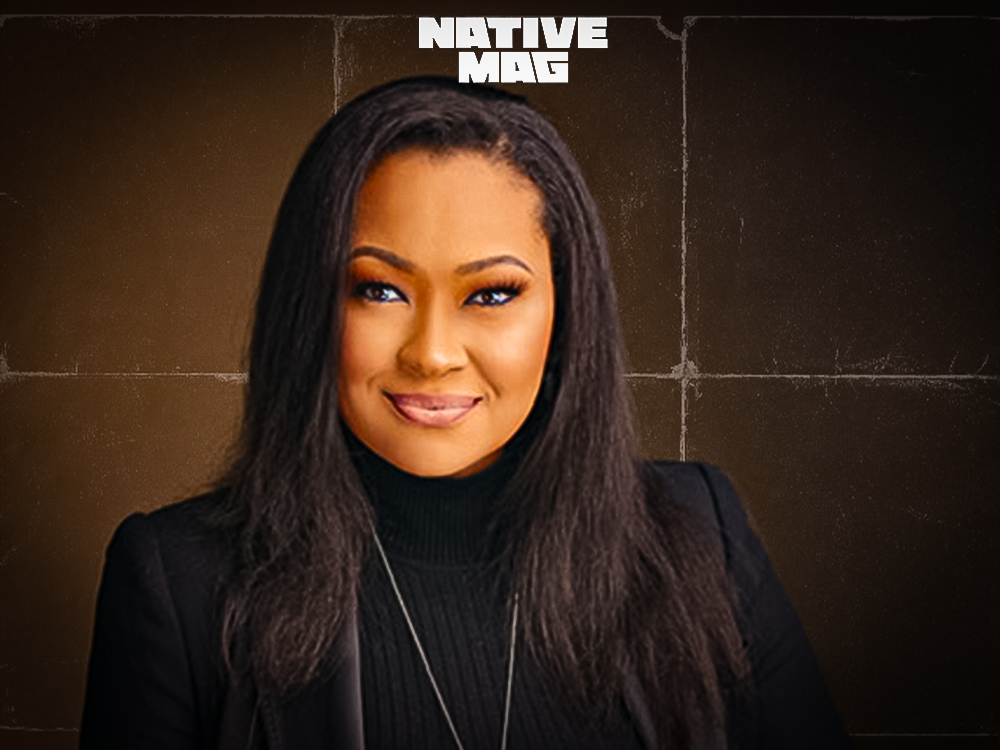
‘Double Minority’ follows nine women who contested for public office during the 2023 general elections.
There was supposed to be a peace agreement in place on November 12, 2019. Natasha arrived at the Idrinana Hotel, Lokoja, Kogi State, expecting it to be a common ground. Instead, there were ten men at the entrance telling her she could not come in. When she pushed back, they pushed her to the floor. From the ground, she saw the knife. Policemen stood nearby. They watched. They did nothing.
This is Senator Natasha Akpoti-Uduaghan telling her own story directly to the camera in ‘Double Minority,’ a documentary directed by Kadaria Ahmed. ‘Double Minority’ follows nine women who contested for public office during the 2023 general elections: Senator Natasha Akpoti-Uduaghan, Senator Ireti Kingibe, former House of Representatives member Nnenna Elendu-Ukeje, Adeola Azeez, Simi Olusola, Hauwa Gambo, Khadijah Abdullahi Iya, Munira Suleiman Tanimu, and Joyce Daniels.
They were running for elections during the 2023 election cycle, contesting in Kogi, Abuja, Abia, Kaduna, Niger, Ogun, Ekiti, Niger, and Edo States, respectively. Their regions are different, but their challenges are nearly identical. But, this film is not just about these nine women. It is about all of us, because in their determination to serve a system that penalizes them for things that should not matter, they are a reflection of every Nigerian who has ever been made to feel that their voice, their vote and presence, does not count.
The title needs some unpacking. A double minority is someone who is marginalized not for one reason but two distinct overlapping factors that compound against each other, leaving you with less room, access, and grace than anyone else in the same space.
These women are double minorities because they are women in a political system built by men for men and are operating within a broken structure, one that runs not on what can actually be done for the betterment of the country, but on patronage, culture gatekeeping, and whether a powerful man somewhere decides your name is worth backing.
Still, here is where the film stops being just about women, and starts being about all of us.
We ordinary Nigerians are also a double minority. We are marginalized and underrepresented by a government that treats its own people as inconveniences, one solely focused on its own survival and its own circle. And then we are marginalized a second time by something closer to home: our own helplessness.
Our learned belief that our votes do not matter, that the system is too broken, that deciding is a luxury we cannot afford. Women made up just over ten percent of all candidates in the 2023 general elections, in a country where they make up 49.8% of Nigeria’s population. That gap is not an accident. It is a design.In multiple ways, we have been designed out of the room. We are being failed from above and failing ourselves from within. That is the double minority we don’t talk enough about!
Senator Natasha said something in this documentary that stuck with me: “When a woman stands up for herself, without claiming it, she stands up for other women. But, I say today, when a woman stands up for herself, she stands up for every woman, every man, for every child in the society.” Political participation is never just personal; it always carries more people than the person carrying it knows.
We see this more poignantly in the legislative battles fought by political veteran Senator Biodun Olujimi. When Olujimi first introduced the Gender and Equal Opportunities (GEO) Bill in 2015, she didn’t do it alone. It required rallying women across party lines, civil society organizations, and advocacy groups to push against a heavily resistant, male-dominated chamber.
If you want proof that the system is designed to keep women out, look at the numbers from the Independent National Electoral Commission (INEC) and policy data groups. Nigeria reached its historical high for women in parliament in 2007, with 36 female lawmakers. Since then, it has been a steep, systematic erasure.
By the time we arrived at the 2023 general elections, the very cycle tracked in ‘Double Minority’ saw the number of women in the National Assembly crash to just 21 out of 469 seats. That is a staggering 4.5% representation in a country where women make up nearly half the population. In 15 states across the federation, women were shut out completely, failing to win a single seat in the State Houses of Assembly.
These numbers aren’t just statistics; they are a reflection of the exact violence, weaponized poverty, and institutional pushback that Natasha Akpoti-Uduaghan and Hauwa Gambo face on screen. Hauwa Gambo, founder of Sheroes Rising for Development Initiative, embodies the grit required to face this head-on. Gambo spent years writing and advocating for gender equity before the opportunity came to contest for office herself. When it came, she took it.
That is what We Decide means. Not as a slogan. As a practice! Simi Olusola said it perfectly: the government is the only institution that can bring about sustainable change at scale. She is right, but we only get to that government-level change when individuals first recognize the power they already hold.
The scale starts small. It starts personal. It starts with knowing that joining a political party is a decision. Voting is a decision. Writing, speaking, showing up, and staying informed are all decisions and they compound. The women in these films have the odds stacked against them in ways most of us cannot imagine, and still they are choosing every day to do something about it.
Nigeria has treated every one of its citizens as a minority at some point. It has made us feel small, disposable, and irrelevant. Smallness is only permanent if you agree to it, and the women in ‘Double Minority’ do not agree. They did not wait for permission to matter. The next election is coming; the question is whether you will still be sitting down when it does.

