Ivie Ani Is Entering A New Phase As A Cultural Guardian With A Martell Ambassadorship
As sounds from Africa continue to hobnob with global soundscapes, Ivie Ani is stepping into a new phase as a Cultural Ambassador for Martell.

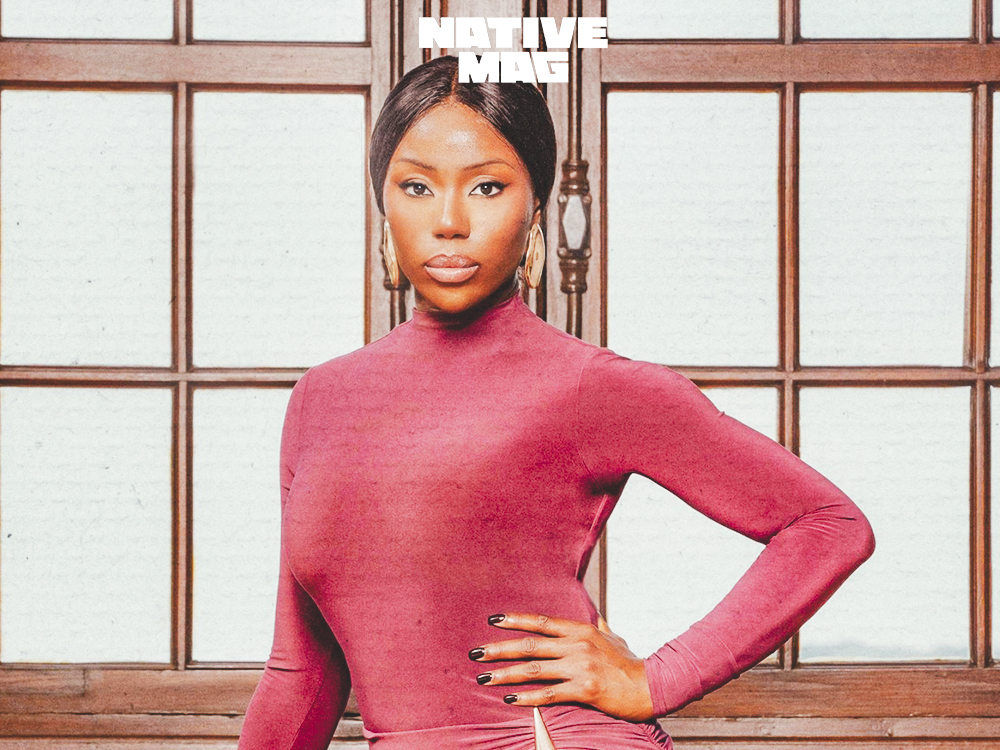
As sounds from Africa continue to hobnob with global soundscapes, Ivie Ani is stepping into a new phase as a Cultural Ambassador for Martell.
Culture is a word that has become elastic enough to hold almost anything. But when that seemingly nebulous term–which Ivie Ani defines as “a community moral code, what a society does, how they function, how they’re similar”–travels, it needs people willing to pay attention to what happens in transit. As it gathers new meanings on the go, raises critical questions about what gets altered and what gets left behind, there is a need to account for that movement.
We’re living in an era where cultural discourse is wider and more porous than ever, leaving endless runway for new hot takes and interpretations. Behind every evolution in our collective taste level are the storytellers reading its direction, giving lineage to the new. And within African culture, that contextual work is everything. As music from the continent crosses global thresholds, it’s assigned new frames. While some of this translation expands the canon, other iterations strip away the specificity that gave the music, and the culture around it, its original juice.
For over a decade, Ivie Ani has occupied that essential vantage point. “As much as we like to harp on the past and to harp on culture and just overuse the word culture even and having phrases like “doing it for the culture”, I want people to understand what culture actually is,” she tells NATIVE Mag. From following the changing tide of American Hip-Hop through the 2010s to tracking the global ascent and granular evolutions of West African Pop music, Ivie Ani has built a body of work attentive to both the music and the world around it.
Her work as a journalist, critic and on-air host has helped shape how modern art is parsed and preserved. As sounds from Africa continue to hobnob with global soundscapes, she’s kept pace with the commentary that comes along for the ride. Now, she steps into a new phase in that engagement as a Cultural Ambassador for Martell. The partnership aligns with a growing need to resource the storytellers documenting culture in real time, granting her the freedom to probe deeper as the ecosystem evolves.
This alliance couldn’t come at a more telling moment. Traditional cultural storytelling is taking some heavy hits, and the institutional backing for honest criticism is crumbling. We’ve hit an awkward turning point where journos are tasked with making sense of an industry that keeps them at arm’s length, choking off the baseline access it takes to say anything real. More so, audience and industry attitudes towards critique keep getting warped by echo chambers and stan-culture tribalism. That makes it especially significant when platforms like Martell recognise the value of journalists and cultural storytellers as people working along the continuum of the culture and helping to build its archive.
In a chat with NATIVE Mag, Ivie Ani talks about what the Martell partnership means for her as a journalist and how it’ll give her more room to do what she’s always done: protect the arts.
How do you feel about stepping into this role?
It has been a short and long time at the same time as this has been brewing, and I feel excited, even though we have been working on rolling this out for months. I am in New York, getting compliments when I walk outside and go to events on this partnership. It is a singular thing that’s happening in media where you wouldn’t necessarily expect a journalist or a writer or professional media worker to be aligned with a prestigious brand like Martell. But it still makes so much sense at the same time. So it feels very exciting for me and I think for everyone witnessing it in the industry and in my community as well.
Journos often get the short end of the stick despite all the work we do. What does a partnership of this scale mean to you?
I would not have imagined it resulting in where I am now. It is not something I envisioned while working towards it, but looking at the work I have done over the past decade and some change in hindsight, it aligns with this positioning. The purpose of this appointment is to amplify cultural storytelling and document the architects of Afrobeats and Afropop. Any institution aligning itself with wanting to directly support the arts, independent media, and culture aligns with preserving and creating culture in real time.
That is what my partnership with Martell is supposed to embody. It feels good to continue doing the work I have always done with structural support, especially now. It is not just the US dealing with a changing media landscape; it is global, and you feel the brunt of it in Nigeria as well. There is across-the-board confusion regarding what media, press, journalists, and cultural critics are supposed to be, alongside a level of disdain for real journalists, cultural critics, and writers. To see institutions upholding what it means to do that for real is affirming. I hope it inspires younger journalists, people entering the industry, and those trying to recalibrate or reorient their careers to what this landscape calls for.
What does structural support look like in practice, and what was it about Martell’s approach that made this partnership feel right?
It’s the investment in ideas and continuing to do the work I already do, as opposed to trying to attach what is not aligned with my work. Support looks like amplification and deferring to people within the culture who have been on the field documenting it. There is a level of respect. Structural support as it pertains to journalists does not only mean for independent journalists. Within the industry, staff at outlets, publications, and networks have major concerns regarding structural support. We can continue to do substantive, impactful work we care about through different mediums. Working with Martell as a cultural ambassador is one of the mediums by which I continue to do the work I am known for.
What first drew you into culture and storytelling?
I obtained my journalism degree from NYU in 2014. NYU requires a double major if you pursue journalism so that you align with a beat or topic of expertise. I wanted to pursue journalism because, during elementary, middle, and high school, people told me I was a good writer, and I loved reading. Humanities, cultural study, arts, and language always interested me. I knew I did not want to be a novelist or an English teacher, and journalism was the most practical field to pursue with those interests. I changed my second major three times: I started with music composition because I played the clarinet, changed to linguistics, and finally settled on Africana Studies—social and cultural analysis. Applying what I learned in history and social-cultural analysis to my cultural criticism, reporting, and music writing got me into cultural coverage. I grew up with a rich musical palette in New York City, listening primarily to Hip-Hop, R&B, Reggae, Dancehall, and Pop music. In the mid-to-late 2010s, I shifted coverage toward modern African music, Afropop, and Afrobeats. Prior to that, I was mostly known for Hip-Hop coverage, along with broader cultural coverage including politics, sports, societal issues, and current events. Afrobeats coverage became a major part of my cultural coverage because of my interest in history.
You’ve covered African music through a period of huge global expansion. Where do you think the conversation around Afrobeats is falling short right now?
There is a sense of urgency in marking Afrobeats as having hit its peak regarding marketability, global reach, and records that move the needle. I understand that consensus because it felt like a hard-hitting moment when Afrobeats bubbled onto the global scene, but it was piecemeal. I hope people have patience to see how the genre, sound, and culture evolve. Afrobeats and Afropop artists are doing innovative things if you pay attention and broaden your scope. People should pay attention to how the genre is merging with other genres, communicating with other cultures in the diaspora, how artists are branching out to solidify their business acumen, and how they maintain a global presence while maintaining a presence at home. People should have more patience in paying attention to granular developments in Afrobeats rather than focusing on who has the song of the summer, who won a Grammy, or who is at the top of the chart. If there is more emphasis on craftsmanship and cultural developments, people will maintain excitement for where the genre is going.
Do you feel that urgency to declare a peak is driven locally, or is it coming from the wider diaspora?
Online, the sentiment appears across the diaspora: the UK, US, and the continent. Artists are making strides, but it looks and sounds different from what we witnessed over the last decade because the genre is growing and changing. So I think I’m seeing the urgency coming from different places.
As African music travels globally, how well do you think we’re telling our own stories?
I get asked that a lot and the answer has been pretty consistent. I think it leans more towards no but people have subjective ideas of what’s good enough. Some artists, teams, labels, and executives accept the coverage they receive whether or not it is accurate or describes them, the genre, or their music well. In the US, artists and their teams are appreciative to get coverage at specific western media outlets, and the caveat sometimes is accepting that coverage without edits or acknowledgment of inaccuracies. There was an era of people confusing Afrobeat with Afrobeats, or calling Amapiano artists Afrobeats artists. The desire for global and western validation comes at the expense of accuracy, even though that validation has a tangible effect on these artists’ lives and careers. I hope for more attention to accuracy, detail, nuance, and expansiveness regarding the coverage of Afropop, Afrobeats, African culture, and African music.
We’ve seen more African sounds develop their own identities, particularly Electronic/Dance forms of it. Why do you think there’s so much debate around naming popular African music?
There is a lack of agreement on naming, and people will have issues depending on their perspective. I hope we pay attention to why certain names stick while others do not. Diluting or simplifying a subgenre’s name may happen to increase legibility to outsiders. Saying “African Dance Music” to someone in New York provides immediate context, whereas a specific subgenre name might not. There are benefits and drawbacks to that. I prefer specificity and hearing genres and subgenres named as they are, but I understand the desire to make work legible without feeling limited by the constraints of a title. Artists are not the only people who get to define art.
What conversations should critics be pushing forward right now?
It is possible to have multiple concerns, interests, and opinions simultaneously. Most conversations about the state of Afrobeats focus on chart status, global ranking, radio presence, or expectations of dominance. I want the conversation to shift toward what is happening in Afrobeats that keeps it sustained as a genre worth talking about. Value should be attached to the movement, music, and culture beyond being fodder for fan, chart, or award wars. I would hope that people just have more conversations about what they find interesting happening, who they find interesting. There’s so many things you can talk about even as a critic. I think there seems to be this connotation of critics being hypercritical when criticism is essentially about helping people understand art, understand culture, understand whatever it is you’re writing about. It’s not necessarily about your opinion of said art. It’s about making sense of that body of work.
Who do you find interesting in the industry right now?
I have to really give a shout-out to Rema because I’m not sure he gets enough credit for how experimental he’s been. I really hope that over time people see how his last album ‘HEIS’ was so evolutionary for Afrobeats and represents what the future of the genre could sound like, including cinematic scoring elements and genre fusions. Collaborating exclusively with Nigerian artists on that album as a global star was intentional. Ayra Starr also deserves credit for epitomizing an African pop star and leading a zeitgeist for young women. On the executive side, the way Muyiwa and Wale have developed Tems’ career is worth studying for people wanting a place in the industry outside of making music. Writers on the continent and in the diaspora who were documenting this work before it was popular or widely covered deserve recognition for contributing to the development of the genre.
What do you want your contribution to the Martell Culture Ambassadors platform to look like over the next year?
An extension and expansion of what I am known for: amplifying, highlighting, explaining, translating, and contextualizing music, culture, the arts, the architects behind them, craftsmanship, quality, and taste. As much as we, especially as writers or journalists or people working in media, as much as we like to harp on the past and to harp on culture and just overuse the word culture even and having phrases like doing it for the culture. I want people to understand what culture actually is. What defines culture? What are the pillars of culture? Food is part of that. Language is part of that. Music is part of that. Fashion is part of that. All of that comprises culture. A community moral code, what a society does, how they function, how they’re similar, that is what culture is.

