Interview: El Mehdi Is Claiming Space For Queer Identity In Moroccan Society
Raised between Morocco and Canada, El Mehdi grew up navigating the complexities of queerness while finding his way back to his Amazigh roots.

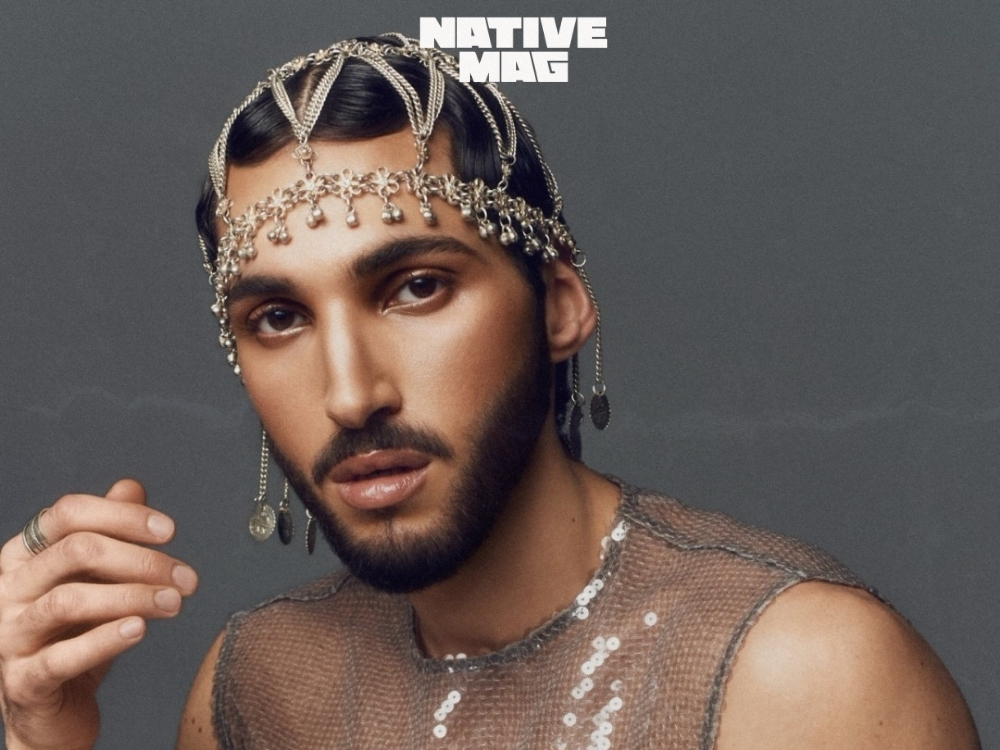
Raised between Morocco and Canada, El Mehdi grew up navigating the complexities of queerness while finding his way back to his Amazigh roots.
For El Mehdi, making art has always been about creating a space where he could be fully himself. Born in Rabat and raised between Morocco, France and Canada, he grew up navigating the complexities of culture, faith, queerness and belonging, while slowly finding his way back to his Amazigh roots. Music became one of the places where those different parts of him could exist without having to be explained or separated. His debut project, ‘SALAM,’ released this year, brings together Darija, lush instrumentation, layered vocals and Gnawa sounds to explore identity, self-discovery and what it means to reclaim a sense of belonging on your own terms.
That same search for visibility runs through El Mehdi’s work beyond music. He stars in ‘L’Héritier des secrets,’ a Moroccan feature film exploring trans identity, stepping into a story that challenges the idea that queerness is somehow foreign to African or Muslim cultures. For El Mehdi, representation isn’t about proving that queer people exist in these spaces, they always have, but about making it harder to erase them.
“I want to help tell the stories we’ve been made to believe don’t exist in our societies, even though they’ve always been there,” he explains. ‘L’Héritier des secrets’ opens the door to conversations that have long been considered impossible. Some taboos need to be challenged, and space must be made for LGBTQ+ people within Moroccan society and, more broadly, within African and Muslim communities. We spoke to El Mehdi about growing up queer between cultures, reconnecting with his Amazigh heritage, finding the courage to sing in his own voice, and insisting on his place within a culture that has sometimes told him he doesn’t belong.
What was your upbringing like?
I was born in Rabat. When I was young, my family and I lived briefly in the south of France before immigrating to Canada. We always stayed very connected to Morocco and returned every summer. But it wasn’t until the past few years that I started going back on my own and building my own community there.
I grew up in a fairly religious household. I was naturally drawn to the arts from a very young age. I started drawing when I was just two and could spend hours making sand sculptures on the beach while other kids played football. But it was made clear to me early on that becoming an artist wasn’t a possibility. I remember drawing mostly women and my parents took me to a doctor to make sure it was “normal.” For much of my childhood, I believed there was something “wrong” with me. Creating became my refuge. In secret, I built a world where I could exist freely and be myself. Drawing and writing songs felt safe because they were private ways of creating. Singing was different; it meant being heard. It meant being seen.
Another important part of my life is my Amazigh identity. I’m Amazigh on my father’s side, but the language and culture were never passed down to us. They were deliberately set aside in favour of the dominant Arab culture, which was widely seen as superior. I had very little contact with my Amazigh relatives growing up and when I did, we struggled to communicate because most of them didn’t speak Darija and I didn’t speak Chelha. To this day, I find it heartbreaking that I know so many prayers by heart, yet I can’t speak a single word of my own ancestral language. It wasn’t until I got older that I began reconnecting with my Amazigh roots and building relationships with my cousins. What moves me most is that, despite growing up apart, we share so many of the same values and ways of seeing the world.
What musicians inspired you?
There have been many influences from completely different worlds. I grew up listening to Moroccan and Amazigh artists like Najat Aatabou, Samira Said and Mohamed Rouicha. My mother was also very connected to French culture, so there was everything from Dalida to Johnny Hallyday playing at home. But my earliest memory of truly falling in love with music was hearing “Ojos Así” by Shakira for the first time. I remember playing it on repeat for hours. I was also obsessed with pop divas, both Arab and American, like Nancy Ajram, Haifa Wehbe, Britney Spears and The Pussycat Dolls.
When did you start to create music and what has the journey been like?
I started writing songs when I was very young. I would even design the artwork for each one. But I always imagined other artists singing them. The idea of singing them myself felt completely out of reach. One day, I felt the urge to hear what my songs would actually sound like. I asked around and a friend introduced me to someone with a small home studio. At first, I would bring singer friends to record my songs. But the more time I spent in the studio, the more comfortable I became around the microphone. Eventually, I decided to give it a try myself. It was the first time I had ever sung in front of anyone. The moment I did, it felt like I had opened a door I could never close. Looking back now, I realize all those detours gave me the time I needed to build the courage and confidence to sing my own words.
How do you process navigating your Moroccan and Canadian identity?
Growing up between different places and cultures, as many of us do, has given me a kind of duality. On one hand, there’s the richness of carrying multiple perspectives. On the other, there’s the feeling of belonging to several places at once, yet never entirely to any of them. I often feel too Moroccan for Canada and, in Morocco, not necessarily too Canadian, but definitely too queer. For a long time, I thought I had to choose between those parts of myself. But my work exists precisely because I don’t. Morocco gave me my roots, my imagination and my artistic language. Canada gave me the freedom and perspective to reconcile them with my identity. My music lives in those in-between spaces, not because I’m caught between worlds, but because I get to build bridges between them.
You released your debut project, ‘SALAM,’ this year, what was it like putting it together?
The songs were written and produced across Canada, Morocco and France. Some of them I wrote years ago. They evolved alongside me, but I also grew with the music. They’re what allowed me to discover and embrace myself. I realized I had the power to transform what had been imposed on me into something of my own. In many ways, they allowed me to reclaim my narrative.
It took time to bring everything together, especially as an independent artist. I’m very romantic in the way I approach art and music. Recording real instruments is really important to me, especially strings. I love layering lots of vocal harmonies and I collaborated with a Gnawa troupe on “SALAM,” “SKIN,” and “El Film.” I also see the visuals as an extension of the music, so I wanted to give them the same care and attention. The EP came together through so many different moments and places, with people from completely different musical backgrounds. Seeing all those pieces finally come together feels incredibly special.
How has the reception been for the project?
I’ve received so many beautiful and moving messages from Moroccans, North Africans and people from the diaspora sharing that they felt seen. Knowing my music can make even one person feel less alone and more hopeful is why I do this. I’ve also been deeply touched to see people from completely different backgrounds connect with the music and visuals. It reminds me that while the work is rooted in a specific culture, it speaks to something universal.
One thing I’ve noticed is that most of the love comes through private messages, while the hate dominates the comment sections. That shows how hate so often feels entitled to occupy public space and shape the conversation through fear. It creates the illusion that it’s the majority, when in reality it’s just louder.
There has also been a great deal of rejection and hostility. I think what people struggle with most isn’t queerness alone. It’s seeing it exist openly within our cultures. I was surprised to encounter that resistance in certain spaces that present themselves as progressive, where queer identities and expressions are often policed or reduced to debates about “Western influence,” as though they were foreign to our societies rather than part of our own diversity. In a way, those reactions only confirmed how disruptive our visibility still is. When the response isn’t outright hate or violence, it’s attempts to intellectualize our existence, question our legitimacy and pressure us to conform, making our belonging conditional. Either way, the result is the same: exclusion.
On the other hand, I was also surprised that some of the strongest support I received, both professionally and personally, came from African media and my Amazigh relatives. The communities I had been taught to feel most disconnected from became the ones where I found the deepest sense of belonging and acceptance.
You released a Darija version of ‘SALAM,’ why was it important for you to do that?
I used to write mainly in English. It allowed me to express myself without worrying that my parents would immediately understand what I was saying. My relationship with French and Darija is different. They’re the languages I grew up speaking at home, so they feel much more intimate and vulnerable. Recording a Darija version of ‘SALAM’ became a way of fully owning what I needed to say without being afraid of being understood. Especially with this song, it felt important to speak directly to Moroccans. At the same time, I’ve often been told that I don’t deserve a place in my own culture, that I should “leave it alone,” that I’m “not Moroccan,” or that I should “stay in Canada with the mental illness I caught there.” Singing in Darija is my way of reclaiming my language and affirming that my identity and my culture are not mutually exclusive. I am Moroccan, and no one gets to take that away from me.
You stared in ‘L’Héritier des secrets,’ the first Moroccan feature film to explore trans identity, why did you choose to get involved with the project?
For the same reason I make music: to help create the kind of representation some of us never had growing up. Even if change can feel distant, every step matters. For I want to help tell the stories we’ve been made to believe don’t exist in our societies, even though they’ve always been there. L’Héritier des secrets opens the door to conversations that have long been considered impossible. Some taboos need to be challenged, and space must be made for LGBTQ+ people within Moroccan society and, more broadly, within African and Muslim communities.me, art and culture are the most powerful ways to create that shift. Telling these stories through familiar faces and cultural references allows people to connect with realities that might otherwise feel distant. That’s what made being part of this film so meaningful to me.
Trans identity is still taboo is many African and Muslim societies, did you feel any apprehension about getting involved?
Definitely. I was very hesitant when I was first approached. But that hesitation and fear were also exactly what convinced me to say yes. Fear is often what keeps us from taking up space. And I know it’s not that simple for everyone. That for many people, it’s genuinely dangerous. That’s also why I see my dual nationality as a privilege I don’t take for granted. If it allows me to speak more freely and help create space for those who can’t safely do the same, then I want to use it.
Listen to ‘SALAM’ here.

