How Uzo Njoku’s ‘An Owambe Exhibition’ Stirred a Reckoning on Tribalism
To fully grasp the current landscape, one must come to terms with the fact that tribalism in Nigeria is more of a feature than a bug.

To fully grasp the current landscape, one must come to terms with the fact that tribalism in Nigeria is more of a feature than a bug.
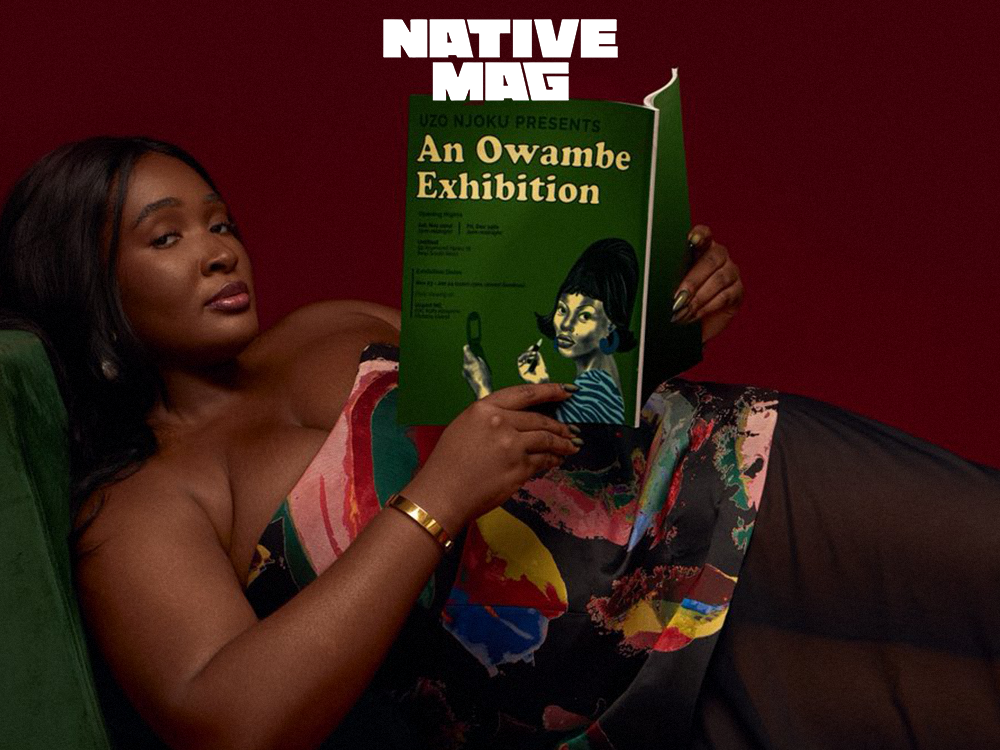
When Uzo Njoku, popularly known as UzoArt, announced her Owambe Exhibition in August, it was meant to be a homecoming, a love letter to Lagos. She imagined it as a celebration wrapped in fabric, patterns, color, and nostalgia. After years of showing in New York and Washington, D.C., the Nigerian-born visual artist wanted to return with something that felt inclusive, loud, and familiar. It was to channel a visual celebration where art, music, fashion, and the spirit of a Lagos weekend met.
However, on social media, the announcement didn’t land as an impressive innovation. It was viewed as a provocation. Within hours, Uzo’s name began to trend. Her exhibition posters, featuring her signature Ankara-inspired motifs, were torn apart and analyzed in a negative light. Tweets accused her of appropriating Yoruba culture, others called her an outsider trying to profit off heritage, and petitions emerged demanding the cancellation of her show. What began as a creative statement quickly morphed into a digital war zone with hashtags, quote-tweets, and digital attacks that exposed an uglier underlying issue within Nigeria’s online community, tribalism.
In the days that followed, Uzo was called names, doxxed, slut-shamed, and digitally dragged for daring to title her show after a Yoruba cultural expression. “They tried to make me beg,” she tells NATIVE Mag, adding that she realized it wasn’t really about the show anymore, but about control. Njoku’s experience mirrors something much larger than a single controversy. It’s a reflection of how, in Nigeria’s internet space, tribalism has been emboldened to become both a weapon and a wound.
In August 2025, UzoArt shared her vision, a solo homecoming exhibition in Lagos, running from November 23 to January 24. She explained her long-term frustrations, stating that two years earlier, she had returned to Nigeria for a show only to discover local buyers were hesitant to invest in her gallery-priced work despite her success abroad. She resolved to bring art closer to Nigerians, not just to galleries, but to work on fabrics, patterns, immersive installations, and merchandise that people could touch, wear, and own.
However, the moment she revealed the name, “An Owambe Exhibition,” the backlash erupted. Owambe is a Yoruba slang for elaborate parties. Critics accused her of appropriating Yoruba culture, trying to erase heritage, and mixing up Igbo insignia with Yoruba fabrics, and deploying clever subversion masked as art. The Yoruba Progressive Elites Forum (YPEF) threatened to file for a court injunction. A petition circulated on social media demanded the cancellation of the show. Some even claimed she was embedding coded symbols of separatist ideology.
In the days that followed, notable names began to spring up, appearing to endorse the criticism. Lagos’ Oba Rilwan Akiolu reportedly issued a denunciation, calling the show a “disrespect” to Yoruba heritage and promising to mobilize against it. The letter of disapproval had been posted on X by Lagospidia, an account known for making and promoting tribally motivated posts. The palace later denied direct involvement but confirmed that tensions existed. For Uzo, what was meant to be a joyous return now looked like chaos.
Once the backlash hit, Uzo says the vitriol came fast and brutal. “There were so many people calling me monkey, animalistic, reducing me, wanting me to beg,” she reveals. “They tried to scapegoat me for political [rhetoric], they’ve tried to humble me.”
Going further, Njoku shared how the attacks touched deeper corners. “They put out articles saying I’m an IPOB terrorist, generating AI nudes of me and spreading them,” she sayss. “Thousands of people stormed my Google page to input one star, tarnishing my image at home and abroad.” The volume and intensity of the malice proved that it wasn’t just disagreement. Uzo says it highlighted how easily social media can become a weapon for tribal gatekeeping. She was not simply criticized; she was dehumanized.
Uzo’s experience is not an isolated event. It fits into a broader pattern where Nigeria’s digital space is rife with tribalism. Many Nigerians on social media operate within ideologies that reinforce ethnic loyalty. A creative who ventures outside their tribe risks being called a traitor, or worse, an appropriator. This policing is especially aggressive when cultural symbols are involved.
When Uzo’s show was announced, some social media users claimed she intended to “rebrand” Yoruba heritage into Igbo symbolism. An X user named Ariremako accused her of combining Yoruba textiles with Biafran flag colours. Such narratives stick precisely because they tap into the bitter history of cultural erasure in Nigeria
Digital mobs wield disproportionate power. Petitions, legal threats, and spurious palace statements are amplified when social media users rally. In Uzo’s case, YPEF threatened court injunctions, while traditional rulers like Omotooyosi Akinleye, the Olukosi of Ilukosi-Ijesa in Osun State, mobilized vows of collective sanctions. The overarching problem with this kind of attack in the artistic sphere is the real cost it imposes. Artists may avoid cross-ethnic exploration or cultural fusion for fear of being attacked. In that sense, online tribalism becomes a form of creative censorship.
It doesn’t help matters that the insults, doxxing, and smear campaigns bleed into real life, affecting reputations, mental well-being, funding, and security. Uzo shared that she’s had to expand her budget for protection, having to pay for private security, DSS, and police protection.
Despite the storm, Uzo remains committed to the show, though she admits she’s had to make changes. One of the most significant shifts is that the show is no longer entirely free entry. Instead, access is tied to purchasing a piece of her fabric collection and an online registration. Her team is building a system to manage that process.
“There’s a new system where attendees will have to buy fabric from my collection to be allowed in at the entrance,” she explained. “For those who want to get free fabric, you will have to upload details that show that you are a creative on the website.”
Security concerns, death threats, and logistical risk forced her hand. Nonetheless, in her view, this compromise is better than cancellation. She wants to hold onto the spirit of inclusivity. The exhibition will be immersive, vibrant, and accessible in multiple ways: spotlighting paintings, wearable art, fabrics, merchandise, installations, and walk-in experiences.
This crisis has sharpened UzoArt’s vigilance. She’s more aware now of how titles, textiles, and iconography might be misread through tribal optics. But she also rejects shrinking her vision. The show remains rooted in the ideal of a Nigerian melting pot she believes Lagos embodies.
To fully grasp the current landscape, one must come to terms with the fact that tribalism in Nigeria is more of a feature than a bug, albeit debilitating. Nigeria’s history is rife with ethnic tension, from political appointments to regional imbalances. Digital tribalism is a microcosm of the age-long one practiced in the country. On platforms like X, the pace is daily, and content is immediately judged through a tribal filter.
Conversations are increasingly devoid of nuance. Once a creative is flagged as belonging to ‘the wrong tribe,’ most subsequent comments shift from art to identity. That shift is where tribalism does its worst work. When “An Owambe Exhibition” crosses this phase, it might do more than open a show. It could become a push towards fostering the growth of art away from tribal antagonism disguised as culture preservation.
As it is, Uzo Njoku’s upcoming exhibition has gone beyond embodying the features of an average art show. It represents proof of how deeply divided Nigeria’s online spaces have become and how fragile public conversations around identity can be. Yet, it also shows the persistence of artists who continue to create in spite of noise, fear, and hostility.

