HOW REALITY TV SHOWS HAVE BECOME A TRANS-DIASPORIC CONVERSATION STARTER ON BLACK LOVE
Black audiences have turned Black dating shows into some of the internet's most active sites for debating what Black love looks like.

Black audiences have turned Black dating shows into some of the internet's most active sites for debating what Black love looks like.
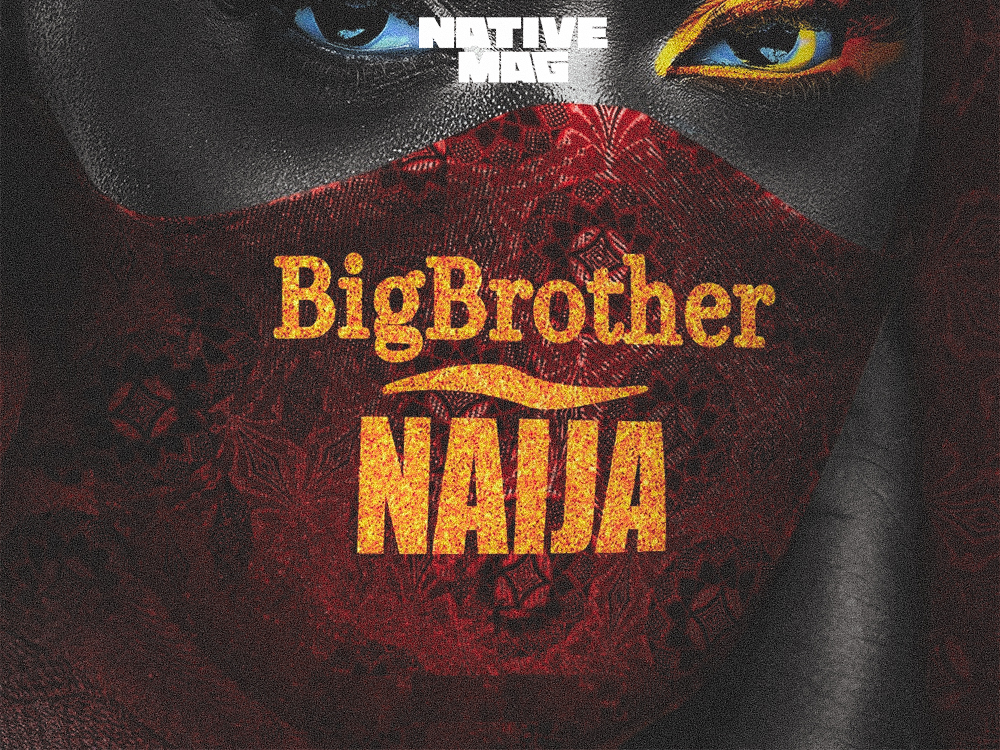
While browsing through my favorite Snapchat channels sometime in late June, I stumbled across the statuses of classmates conducting a surgical analysis of the current affairs between contestants of ‘Love Island USA.’ Nigerians are notorious for consuming reality TV shows, case in point the ‘Big Brother Naija’, ‘The Real Housewives of Lagos’, and now, an international dating show filmed thousands of miles away. There were hot takes, memes, threads, relationship analyses and predictions, all directed at people the analysts have never met and will probably never meet. Simply put, why has a trans-diasporic dating show become closely associated with thousands of Nigerians and the wider Black audience?
The fact that it didn’t start and finish with a specific season or group of competitors makes the obsession worth investigating. Black audiences have increasingly used love choices made by strangers as a platform to discuss representation, gender, racism, compatibility, and desirability in a variety of dating forms. During Season 6 of ‘Love Is Blind’, AD was exposed to objectifying words and behaviors from other competitors. Her body became a hot subject of conversation, dominating her personality and autonomy.
This stereotyping reflected important cultural ignorance and the stereotyping of the bodies of Black women. TV has always portrayed Black women as angry, overbearing, lazy, humorless and expected to conform to white beauty standards. Black men aren’t treated differently. Reality TV often portray them as uncontrollably hypersexual. They’re reduced to non-chalant and thirsty species, ready to have children in any city and mark their kingdom among multiple weak, needy, man-sharing women while avoiding responsibility.
As NATIVE Mag, in partnership with Bumble UK, noted during Black History Month in 2020, white relationships in the mainstream media were seen as content, healthy, and stress-free. Black romances, on the other hand, were categorized as either nonexistent or limited to stereotypes. However, it seems the zeitgeist has now changed among Black people. A cursory search on X about conversations by Black audiences on ‘Love Island’ would reveal a mix of memes, threads and commentary that analyse attraction, compatibility, rejection, loyalty, vulnerability and emotional intelligence.
The relationships and couples in ‘Love Island’ do not exist in a vacuum. Online and offline, relationships are rarely ever seen as just relationships. What viewers perceive those ties to represent has changed. In the 2020s, shows like ‘Love Island’ or ‘Pop The Balloon,’ focus more on what these coupling and relationships between contestants represent. A Black man choosing one woman over another can become a conversation about colourism or Eurocentric beauty standards.
A Black woman who is always overlooked is rarely seen as simply unlucky; viewers often read her experience as confirmation of broader patterns of desirability that have long shaped Black women’s lives. Likewise, when a contestant dates outside their race or appears to favour a particular type, audiences start to ask whether those preferences are genuinely individual or products of social conditioning.
Social media then fills with debates over whether certain women are consistently treated as less desirable, whether Black men are held to different expectations, or whether contestants are reproducing stereotypes they have inherited about beauty, masculinity and femininity. Nationality adds another layer to these discussions. Audiences watching a British dating show, or a South African one like ‘Love Never Lies’ interpret contestants through familiar cultural lenses.
Online reactions oscillate beyond the individuals involved to make claims about “Black men,” “British Black women” or “African women”. In doing so, viewers transform private relationships into symbols of national identity and cultural belonging. Contestants in these shows then become a means of expression for the viewers to come face-to-face with conversations surrounding what they’ve understood as desirability, romance, and colourism; conversations that have been in existence, and buried, way before they made their way somewhat to reality television shows.
This may be the ultimate reason why modern Black dating programs are so important. The question of whether Black people are visible on television has given way to one of what that visibility entails. It makes sense that earlier discussions about representation focused on the lack of Black intimacy in mainstream media or the stereotypes that predominated when Black people did show up. With more Black participants taking center stage on dating TV, viewers now have another challenge: interpreting what they see.
The perfect case study is Nigeria, home to the most populous Black population in the world, where its people have not engaged in this trend passively. In 2025, BBC reported on how passionate Nigerians were for the 2025 edition of ‘Love Island.’ One of the persons interviewed for the article, Olamiposi, noted how she came across a WhatsApp group while searching social media for a chance to cast her vote for her favorite Islander at the time, Huda Mustafa. This was because voting is not permitted for those outside of the United States.
Two individuals, one from Nigeria and the other from the UK, co-founded the group she joined. About 150 of the 200 participants in the discussion were Nigerian, according to Olamiposi, further noting the diversity of other members of the group who were from the US, Ghana, Kenya, and the UK. Strategically, the WhatsApp group was able to pool monies to obtain American phone numbers for non-residents so they could vote.
More than this, Nigerian audiences of the popular regional reality TV show, ‘Big Brother Nigeria,’ placed campaigns for the contestants, voted for couples, defended contestants, and predicted relationships even after the show. It is not that other audiences don’t do this but the uncommon emphasis on shows like this, as rightly captured by Dr. Wendy Osefo, a Nigerian-American sociology lecturer, for BBC, is that, “The biggest reality TV is our political system.”
This comparison is not wrong. These reality dating shows intertwine with the average Nigerian life to produce and celebrate big personalities/celebrities/politicians (as proven by Olandria’s visit to Lagos back in May and the paparazzi that followed), dramatic plots (like a courier service choosing not to call you to pick up your package and intentionally choosing to be an asshole and have you pay extra to pick it up), betrayals (like where Nigerians complain of hardship at the hands of the government yet choose to hike the price of public transportation because of heavy rainfall), and promiscuity.
When the season is taken out of the picture, the importance of this involvement becomes more apparent. The couples either stay together or break up, the competitors finally depart from the villa, and the daily disputes about who should be with whom eventually become less urgent. But what’s left are the audience’s level of engagement and the dialogue it generated. This intensity is disproportionate to the stakes of a dating show until you account for how rarely Black audiences have been offered complex, sustained portrayals of Black intimacy anywhere else on television.
Few genres of reality television generate the kind of emotional investment that dating shows do. They ask audiences to choose favourites, celebrate new romances and mourn heartbreaks alongside the contestants. However, when Black people are at the centre of these stories, that investment often becomes something deeper than ordinary fandom. Black characters were either absent from romantic narratives altogether or confined to narrow stereotypes that rarely allowed them to experience love with the same complexity routinely afforded to white couples.
While representation has improved, genuinely nuanced portrayals of Black intimacy remain comparatively rare. As a result, every visible Black relationship carries a symbolic weight that extends beyond the couple themselves, which, if you ask most viewers why they watch such shows, male and female alike, they simplify it with phrases like “I love love,” “for the entertainment and love”, and other reasons along these lines. This does not mean every Black contestant is consciously representing an entire community. Rather, it reflects the way audiences engage with visibility. When opportunities to see Black love on mainstream television have historically been limited, each new portrayal is often expected to carry the burden of representation.
This phenomenon is bigger than ‘Love Island’ to cover a variety of such shows with similar offerings. Black audiences across the diaspora have turned Black dating shows into some of the internet’s most active sites for debating what Black love looks like because these shows have become rare, highly visible spaces where questions about desirability, colourism, masculinity, femininity and belonging can be argued out in public, attached to strangers rather than to the people actually in our lives. When watched this way, the genre stops being a guilty pleasure and starts looking like a mirror Black audiences would keep returning to because arguing about it collectively is one of the few ways we get to define, in public and on our own terms, what getting it right would even look like.

