How Nigeria’s Most Restrictive Universities Became Unlikely Music Incubators
In Nigeria’s private universities, restriction has been creating artists who have had to want it badly enough to find a way.

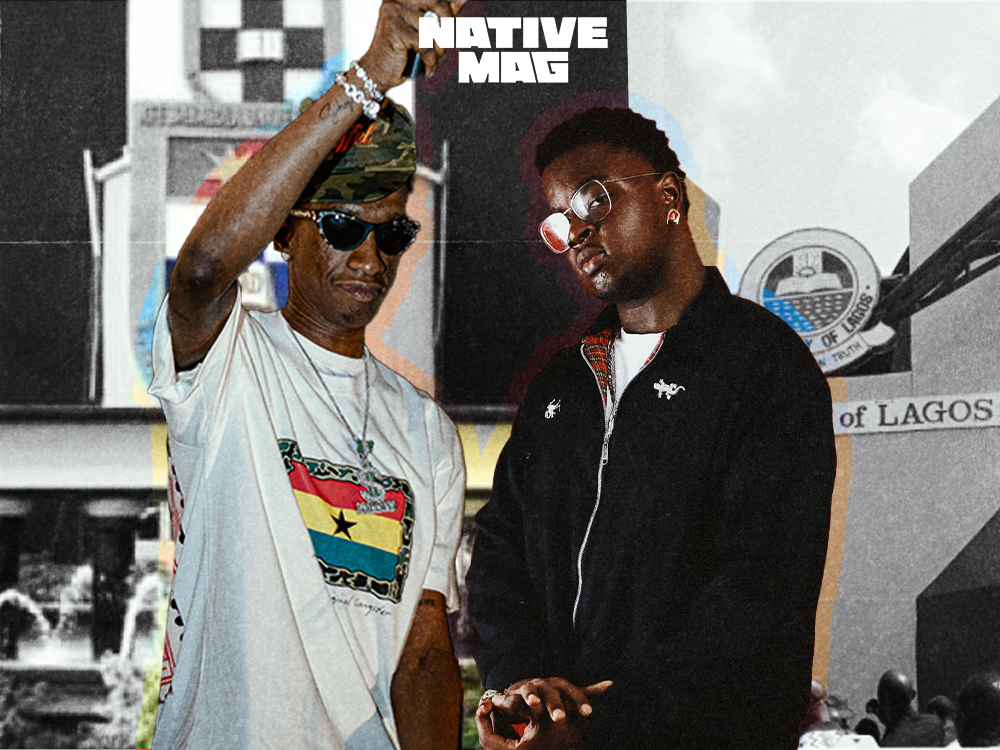
In Nigeria’s private universities, restriction has been creating artists who have had to want it badly enough to find a way.
There is an image most carry of where Nigerian music comes from. It involves open campuses and student unions, the kind of freedom that public universities have always traditionally offered. Institutions like University of Ibadan, University of Lagos, University of Benin have long been regarded as breeding grounds for talent, places where creative culture is allowed to breathe and find its first audience in the noise of a departmental show, a freshers night, a hall week where established artists perform and emerging ones open for them. For decades, the Nigerian music industry has drawn from that well.
But something else has been happening, quietly, on the other side of the fence.
Inside the gated, faith-based, rule-heavy world of Nigeria’s private universities, a different kind of creative culture has been forming–one built not on freedom but on its absence. In this case, it is not that restriction creates artists. The argument is that in Nigeria’s private universities, restriction has been creating very specific kinds of artists: ones who have had to want it badly enough to find a way anyway.
The template was established over a decade ago. In 2011, a young Davido skipped his studies at Babcock University to join the Lynxxx and Friends Tour in Ibadan. When his father saw the performance air on Soundcity TV, Davido got in trouble. Known for its strict regimentation of student life curfews, dress codes, and faith-based rules governing everything from what students wear to where they go, Babcock was not designed to produce Afropop superstars.
Yet, Davido’s father eventually struck a deal with him: attend lectures from Monday to Friday, and he would build him a world-class studio and fund music videos on weekends. The negotiation between music and institutional control began there, and has not stopped since. What Davido established has become a pattern so consistent it now looks like a pipeline.
At Afe Babalola University in Ekiti State, that pattern is most visible and most organised in its current iteration. Rising Afropop superstar, Mavo, is a 21-year-old student of optometry at ABUAD. On some days he is studying for his degree; on other days, he is an ascendant force in Afropop who comes up with radio bangers in his dorm room in his free time, preferring to hunker down with his music while his peers go to football pitches to blow off steam. For his first four years in university, all he did was write music and record while building an expansive digital vault of songs. When the time came to start releasing music professionally in 2023, he had over 300 songs ready to go.
Behind that output is Wana, the producer and engineer whose fingerprints are on the records that defined Mavo’s early sound. From “Escaladizzy” to “MONEY CONSTANT,” “Formula 1,”’ and “Hey Mama,” Wana’s production sits at the centre of what has become one of the most compelling sounds in Afropop right now. Two people, a dorm room, coasting alone on the kind of creative proximity that only comes from being in the same restricted environment with nowhere else to put the energy.
As it is, Mavo is not operating alone. Kobilou-born Kaobichiadina Jesse Nwamba-is also a student at ABUAD and has been building alongside him. In August 2024, Kobilou and Mavo released a joint EP, ‘Kobilou Kilobizzy,’ which peaked at number 72 on the Apple Music Charts and accumulated over 150,000 streams across platforms. His sophomore EP, ‘Pretty Girls Love Lou,’ followed in September 2025. Both are signed to the same management, Kilogbede Records.
Photographer Peeko HD has been building a digital archive for the Nigerian streetwear scene, placing his subjects in raw and unfiltered natural environments, and fostering close relationships with key figures including Egertton, Mavo and others. Around these artists, a visual language has developed as deliberately as the music. Mavo’s page moves between moody low-lit shots and sharp cinematic moments–graphic tees, oversized fits, sunglasses as a signature–a world being built image by image alongside every release.
Egertton pushes it further: leather jackets, chain accessories, the circle-studded beanie as a recurring motif, theatrical colour against dark backdrops. The Alté aesthetic–streetwear inflected with archival references, genre-defying in its styling logic–has found a new generation of practitioners in these campus environments.
Mavo even created ‘Bizzypedia,’ his own dictionary of slang to describe his sound and world, a language as specific and deliberate as the clothes. Redhotsasa, a student at ABUAD captures the environment that makes all of this possible: “The school environment encourages creatives. They allow artists to promote their songs at parties and allow student producers to get in with their materials.” The campus is not just where the music gets made. It is where it first gets heard and where the visual identity that travels with it gets built.
In private universities, the hostel becomes the first studio and the first stage. Performances happen during free periods, in the windows between one institutional demand and the next, during holiday breaks when the grip loosens slightly. The restriction does not suppress creativity, it concentrates on it.
The public university story looks different but arrives at the same destination. Zaylevelten–alternatively known as Tenski, the producer behind some of his own records–is a UNILAG alumnus who built his creative identity in the more open environment of a public campus. At public universities, the institutional infrastructure works in the artist’s favour rather than against them. Freshers nights, hall weeks, and departmental events are avenues to sharpen their skills. Established artists perform at these shows and before the main act takes the stage, the emerging ones go first. That ladder is not incidental. It is how the underground community builds itself, how new artists find their first real audience, and how the music begins its journey toward the mainstream.
What has changed is the infrastructure through which all of this travels. Social media, streaming, and the collapse of the barrier between underground and mainstream have given the dorm room a highway to everywhere. Mavo writing a song at ABUAD, Wana producing the beat in the same building, Kobilou releasing a joint EP from the same campus, Egertton developing the visual language around it–amd all of it moving from Ekiti State to the rest of Nigeria without asking anyone’s permission.
The pattern holds across private campuses. At Bowen University, infrastructure for creative expression is being created: a music studio students can pay to use, a talent competition called BGT (Bowen Got Talent), a dancing group that once rehearsed at 7am on Saturdays and performed at chapel services and school dinners. Zibi, a student at BOWEN, describes it as “such a huge deal.”
Still, the same institutional forces that concentrate creativity also compress it. When the school management shifted curfew from 10pm to 9pm, the rehearsal culture that sustained the dancing group began to collapse. The group’s anchor graduated and the creative club went inactive. The last BGT produced a winning group who are now graduating. Onyeka, another student at BOWEN puts it plainly: “It is almost impossible to have a creative event in Bowen. A lot gets planned out for the session but Bowen constantly debunks all. The only one that happened this session came under sport and almost got cancelled on the day.”
Private Nigerian universities did not set out to build a music scene. Some created the conditions for one without realising it. Others have spent years trying to contain what they cannot fully see. What none of them could control was the hostel at 2am, the laptop, the beat, the 300 songs written in the margins of an optometry degree. The gate kept a lot of things out. It could not keep the music in.

