How ‘Made In Lagos’ Created A Blueprint For An Era
‘Made in Lagos’ shifted the culture and stretched the limits of what African music could be. Five years on, the blueprint still holds.

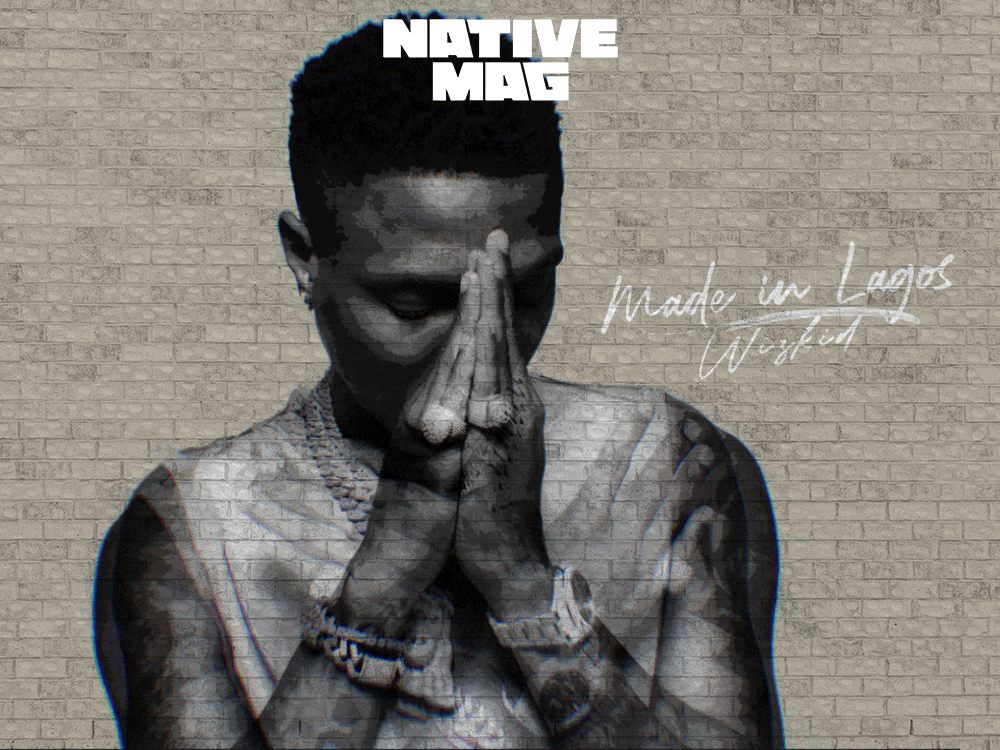
‘Made in Lagos’ shifted the culture and stretched the limits of what African music could be. Five years on, the blueprint still holds.
It’s been five years since we got ‘Made in Lagos,’ an album widely considered to be one of the most conceptual and impactful albums of the Afropop-to-the-world era, and arguably the greatest Nigerian album ever made. Yet this moment was more than 14 years in the making.
When Wizkid emerged in 2010 with ‘Superstar,’ he became the face of a new generation, an emblem of the “Naija Pop” renaissance that fused swagger, melody, and streetwise optimism. The album’s resonance was instant and enduring, cementing its place as a new-school classic and positioning Wizkid as one of the brightest talents Nigerian music had ever seen. At the time, this writer was a nine-year-old boy somewhere on the outskirts of Lagos, echoing the lyrics about what it meant to be a ‘Superstar.’ Since then, Wizkid has been in constant motion, evolving and deliberate in his quest to redefine what it means to be a global superstar whose art transcends borders without losing its essence.
After Drake’s chart-topping “One Dance” in 2016, Wizkid became Nigeria’s most visible pop export. His third studio album, 2017’s ‘Sounds From the Other Side,’ extended his global footprinr, featuring collaborations with Drake, Chris Brown, Major Lazer, and TY Dolla $ign. Yet while it opened international doors, it alienated parts of his home audience.
Unlike his sophomore project ‘Ayo,’ which leaned into Yoruba percussion, street lamba, and traditional dance rhythms—rekindling his domestic connection with hits like “Jaiye Jaiye,” “In My Bed,” “On Top Your Matter,” and “Ojuelegba”—‘SFTOS’ felt, to many Nigerians, like an experiment made for Western ears making the album a niche triumph and not the homegrown resonance that defined his earlier sound.
But true visionaries rarely remain still. To become the defining global Afropop star of his generation, Wizkid needed to reimagine, not replicate, his past, as the saying goes, “to play the orchestra, one must turn their back on the audience.” So, Wizkid went quiet. For a while, he took a step back from full-length projects, appearing only on select collaborations while refining what would become his magnum opus. In December 2019, ‘SoundMan Vol. 1,’ a surprise EP credited to Starboy rather than Wizkid, arrived as a quiet revelation that was built around silky, percussive production from Kel-P and London. It previewed a new sound: smooth, Afro-fusion elegance steeped in calm confidence and global fluency, while retaining the percussive elements that characterized his previous eras.
By the time ‘Made in Lagos’ finally dropped in October 2020, Wizkid had mastered restraint as power. To fans and skeptics alike, this album wasn’t just another release, it was a cultural reset that was going to redefine the soundscape and scalability of Afropop as a movement. While some at home initially struggled to accept his sonic evolution, the album soared abroad, breaking into global airwaves and earning co-signs from major pop culture figures.
‘Made in Lagos’ redefined what a crossover hit album could sound like on a level we hadn’t experienced. It was authentically Lagos, yet fluid enough to resonate everywhere. The features—H.E.R., Damian Marley, Skepta, Burna Boy, Tay Iwar, Projexx, Ella Mai—mirrored Wizkid’s cosmopolitan range, reinforcing his global Pop appeal. But it was “Essence,” featuring Tems, that became the global breakout. The Trojan record infiltrated American radio, climbed international charts, and reshaped Afropop’s image abroad. When the Justin Bieber-assisted remix of the song and ‘Made in Lagos’ (Deluxe) arrived in August 2021, “Essence” peaked at No. 9 on the Billboard Hot 100, spending 35 weeks there, making history as the highest-charting Afrobeats record ever at the time.
Culturally, ‘Made in Lagos’ evolved into a movement. It marked a turning point, effectively transforming Afropop from an “emerging market/genre” to a global mainstay, proving the sound’s commercial viability and cultural power. Its impact was not only in numbers but in energy back at home. 2019, leading into 2020, was a period dominated by street-leaning records from acts like Naira Marley and Zlatan, as well as the Street-Pop wave. Wizkid’s polished revolution on ‘Made in Lagos’ was an antithesis that packaged intimacy and the rhythms of Lagos into a universal sound, building a blueprint that would serve many in the years in to come.
For many of his colleagues in the industry, especially younger acts on the come up, ‘Made in Lagos’ became a lesson in sonic minimalism, global storytelling, and mood curation. Every track on the album felt deliberate, with personal favorites like “No Stress,” “Blessed,” and “Ginger” radiating composure, while “True Love” and “Grace” glowed with the quiet fire of maturity.
The album opened new doors not just for Wizkid but for Afropop as a whole. Suddenly, radio programmers, festival curators, and global labels were paying attention, not as a trend, but as a culture. The sound of Lagos had found its most elegant translator through its most elegant representative. Two years later, Rema’s “Calm Down” pushed the genre to even greater heights, standing as a natural successor to “Essence.”
Still, everyone admits that it was Wizkid’s album that proved Afropop could dominate globally without compromise, that African rhythms, moods, and emotions could travel the world on their own terms. For Wizkid, ‘Made in Lagos’ wasn’t just music, it was a reclamation of self. After years of experimentation and evolution, he’d found a balance between global appeal and cultural identity. The project’s essence—lush, meditative, layered—mirrored Lagos itself: a fine blend of composure and beauty.
Five years later, ‘Made in Lagos’ still stands tall, not merely as a record of achievements, but as a redefinition of possibility, representing patience, evolution, and faith in one’s sound. For every young dreamer from this part of the world, it’s proof that greatness can be quiet, and influence can be soft-spoken. For this writer, now in his twenties, documenting the culture that shaped his childhood, it remains a personal compass. The same kid who once sang along to ‘Superstar’ on the outskirts of Lagos now writes about the music that gave his generation its voice.
And Wizkid? He’s still standing tall. Still calm, still confident. Five years after, he’s navigating another golden age and releasing some of his finest work yet, still anchored in Lagos, guiding us through an odyssey of mood, melody, and fusion. He remains the same boy from Ojuelegba, only now a global figure whose sound has outgrown geography but never forgotten home. ‘Made in Lagos’ remains more than an album; it’s a testament that shifted the culture and stretched the limits of what African music could be. And five years on, the blueprint still holds.

