How Afropop Comes Alive For Detty December
While Detty December is characterised by a packed schedule of social events, the festivities thrive on the vibrant energy supplied by Afropop.

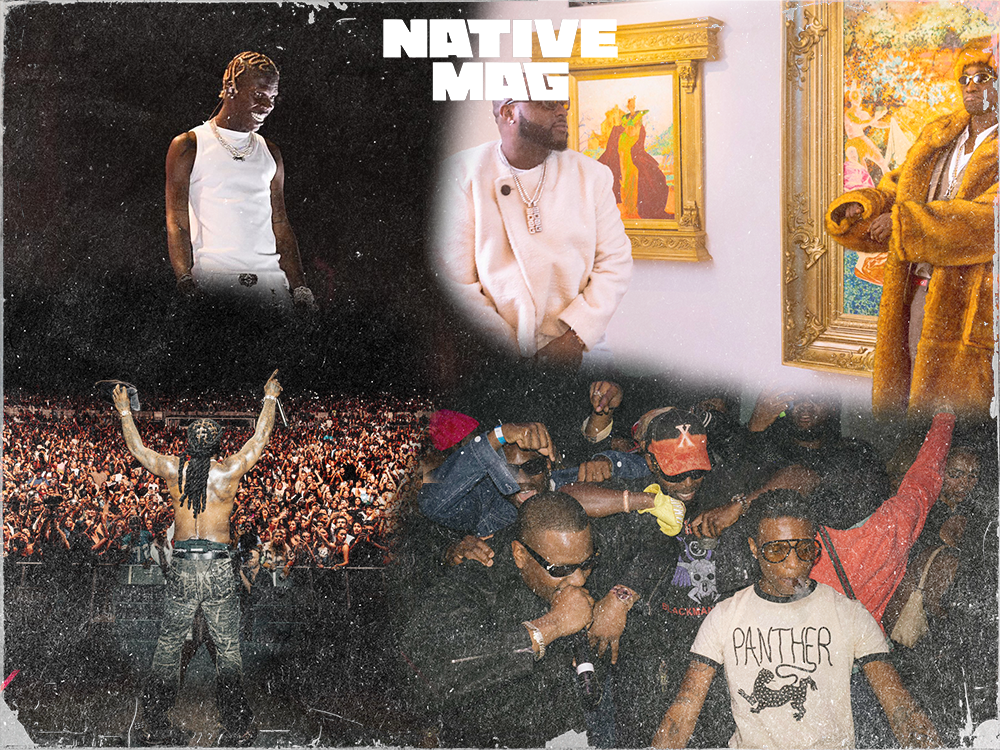
While Detty December is characterised by a packed schedule of social events, the festivities thrive on the vibrant energy supplied by Afropop.
Very few things speak to the pulse of a metropolitan city quite like its music. Very often, the sonic landscape of a city reflects its cultural heritage, social dynamics, and prevailing moods. Take Chicago, for example, the home of House music, an energetic genre that evolved from the remnants of Disco in the early 1980s. The genre’s pulsating rhythms reflect Chicago’s industrious spirit and the desire of marginalised communities for an ecstatic, unifying form of escape. Or Hip-Hop, which is inextricably linked to New York’s identity, mirroring the cadence of its street chatter and the ambition of its towering skyline. In this way, the music a city produces and embraces becomes a crucial lens through which to understand its social architecture.
Similarly, Lagos, the de facto home of Afropop, embodies the genre’s vibrant energy and vice versa. Over the years, this creative synergy between Lagos and Afropop has developed into a reciprocal relationship. The city provides the raw materials: vibrant nightlife, a blend of traditional and contemporary influences, and a high concentration of creative talent, while the music captures and processes these elements into globally consumable art. This equally beneficial dynamic has played a key role in fueling one of the city’s glitzier phenomena in recent years: Detty December, a seasonal spectacle that has evolved into a significant cultural and economic engine.
While Detty December is characterised by a packed schedule of social events and celebrations, coinciding with the return of Nigerians in the diaspora, these month-long festivities crucially thrive on the vibrant energy supplied by Afropop’s most spirited music. Over the last few years, as the year-end festivities have grown to attract considerable attention, Afropop stars have also responded to this shift, strategically releasing songs during this period to capture the zeitgeist. This recent practice is driven by the hope of securing the now coveted “Detty December Anthem,” which translates directly into high streaming numbers, widespread radio airplay and enhanced cultural relevance.
In a move that pre-empted the broader return to post-pandemic social and nightlife, Ghanaian producer Nektunez and Goya Menor collaborated in mid-2021 on “Ameno Amapiano (Remix),” a buoyant club banger that would become inescapable by the end of that year. Multiple remixes from Dance heavyweights like legendary French DJ David Guetta and popular American House remixer Todd Terry helped the single gain even more global renown, making it the unofficial anthem of 2021’s Detty December.
Another relatively unknown name at the time, Portable, also got his big break with the Poco Lee and Olamide-assisted “ZaZoo Zeh,” another lively anthem that took over festivities in late 2021. The viral sensation quickly became Afropop’s chief disruptor, releasing a truckload of music, many of which showcased his raw but undeniable talent, in a short period of time, while simultaneously landing in a string of endless controversies. His freewheeling spirit has helped sustain his relevance, securing a milestone Billboard entry when he featured on Skepta’s “Tony Montana.”
The following year, Asake’s whirlwind entrance onto the scene ensured that listeners were enthralled throughout the year, and specifically during the festivities, thanks to the timely release of his party-ready debut album, ‘Mr Money With The Vibe,’ which arrived in September of 2022, providing the perfect soundtrack and high-octane energy for a season defined by non-stop parties and concerts. In line with his tradition of late releases, the lead single for Wizkid’s fourth studio album, “Bad To Me,” also arrived just in time for the festivities, signalling a play for extended social currency during Detty December.
As Asake continued his dominant run throughout the year, another remarkable street-pop alchemist, Seyi Vibez, was making a parallel ascent. After years of building a solid underground following, the release of his debut album, ‘Billion Dollar Baby,’ in early December proved to be a watershed moment in his career. “Chance Na (Ham),” the album’s centrepiece, quickly generated buzz and comparisons to Asake. However, the track became significant in its own right, proving to be a critical launchpad that solidified his unique space in Afropop’s expansive landscape.
While some of the genre’s mainstays dominated the airwaves, a relatively unknown Kashcoming, at least at the time, also made a play for the season with “Vibes on Vibes,” an energetic, late-year release that gained some traction but ultimately failed to achieve widespread popularity. He came swinging the following year with “How Low,” a fun, bubbly cut from his debut project ‘On A Low.’ A cross continental remix with Zlatan and Rayvanny ensured the single properly simmered till the end of the year, peaking during the Detty December festivities.
By 2024, Kashcoming had honed an Amapiano-influenced style perfectly suited for the fervour and exuberance of the Detty December season. He cemented his successful year-end run with another hit, “All My Money,” a standout energetic track from his end-of-year project, ‘More Kaschoming Vol. 2 (Deluxe).’ His growing star power and sensibility for December hits were further underscored by his feature on DJ YK Mule’s “Oblee (Remix),” which became the defining anthem of that season.
This year, the singer has already made another play for the festive season with his recent release “Hello Hello.” It’s, however, the featured artist, Mavo, who is likely to be this year’s main attraction for Detty December. The 23-year-old rising star has experienced a meteoric rise over the last couple of months, resulting in numerous collaborations, many of which have the potential to become THE song of this Detty December. There’s “MONEY CONSTANT,” his recent collaboration with Wizkid, which seems destined to be the anthem of the season, barring any surprise last-minute drops. Ckay’s “Body (Danz),” which currently sits at number No.1 on the official Turntable Top 100 chart, also stands a chance, but it appears to be more of a viral online hit rather than a genuine party starter.
Davido also tapped in with the young singer, featuring on the remix of his hit single “Shakabulizzy.” The song already had significant momentum, and on paper, a feature from a pop titan like Davido should push the song further into mainstream consciousness; however, the 30BG huncho’s contribution to the single will likely not redefine the song’s trajectory. Burna Boy likes to play to his own tune, but even he hasn’t completely resisted the temptation to secure a December hit.
A few months after the release of his seventh studio album, ‘I Told Them..,’ he featured on the remix of Phyno’s “Do I,” giving extra firepower to what quickly became a festive hit. “Bundle by Bundle,” the high-energy lead single from his most recent album ‘No Sign Of Weakness,’ also came smack in the middle of December 2024, just in time for the holiday season’s extravaganza. While nothing currently indicates that the 11-time Grammy nominee is releasing new music for this year’s festivities, precedent suggests that one can never say never.
Several other artists will likely join the fray, adding to the already competitive landscape of the festive season. There are rumours of new music from Asake, and if that arrives before the end of the year, his track record suggests it could become an immediate sensation. Seyi Vibez, who has consistently become a fixture of Detty December since his breakthrough, has turned in another late-year release titled ‘FUJI MOTO,’ which could also potentially soundtrack the holiday season.
The sheer volume of these strategic late-year releases proves the evolving landscape of Afropop and how it sometimes responds directly to the specific needs, energy, and heightened demand of the city that predominantly houses it. It also highlights a critical intersection between artistic output and seasonal cultural economics within the Afropop scene. Unlike Americans and Europeans who crave the bliss of summertime, with their artists providing the soundtrack for this period of sun-drenched relaxation, Afropop’s peak season has proven to be much further into the year, and the genre’s stars also now duly oblige, providing rife, party-ready tunes that give the season immense spark and colour.

