How 3-Step Became The Definitive Sound Of The Moment
As the rhythm spreads from Johannesburg to Lagos, London, Nairobi, and beyond, it is being embraced and celebrated.

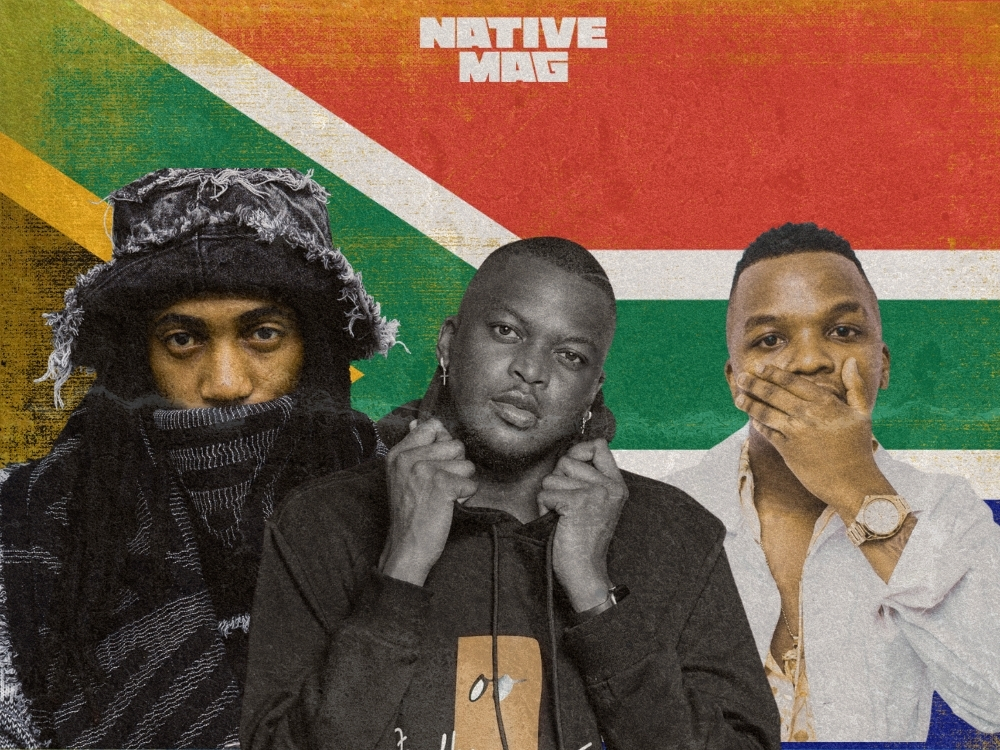
As the rhythm spreads from Johannesburg to Lagos, London, Nairobi, and beyond, it is being embraced and celebrated.
With Contributions from Lerato Motaung and Sera Etta
Over the last three decades, South Africa’s vibrant Electronic music scene has proven itself a constant wellspring of global genres. In recent times, it has once again produced a new rhythmically complex sound that’s taking the world by storm. Dubbed 3-Step, a name that mirrors its sound, the most immediately recognisable feature of the sub-genre is the three-kick drum per bar, an intentional departure from the ubiquitous four-four or four-on-the-floor beat that characterises House music.
By removing one of the four kicks per bar, an elastic groove is created, and a bounce that is both grounded and unpredictable. This emerging subgenre is rapidly gaining global traction, championed by a new generation of producers while sparking debate among industry veterans. It’s a subgenre defined by what’s present and the power of what’s intentionally left out.
The tempo of this emerging sound typically falls within the 113-120 BPM range, which is slightly slower than many Afro-House tracks. But it’s not just about rhythm. The production layers are quite textured, featuring log drums and basslines familiar from Amapiano, sharp percussive hits from Afro-Tech, wide pads that lend breath and air, and soft stabs of horn or synth. In other words, each component matters, and the spaces between matter even more. The groove feels like a conversation between drums, melody, and the silence that surrounds them.
Johannesburg’s Thakzin, born Thabang Mathebula, has emerged as one of the central figures behind the rise of 3‑Step. In multiple interviews, he describes 3-Step not simply as a new sound but as a mindset; an approach to rhythm and culture, rooted in South Africa’s dance-floor traditions, yet open to mutation and experimentation. In a discussion with Spotify, Thakzin outlines 3-Step as more than just a stylistic approach, invoking spirituality, ancestral rhythm, and a sensibility of “healing” through music, drawing on imagery of sangoma drumming and trance states.
Before crystallising the 3-Step sound, Thakzin (then known as DJ Thak’zin) established himself in the Afro-Tech niche of House music. His discography before 3-Step’s rise includes tracks like “Bona,” “No Fear,” “OK Dance,” and his ‘Kakapel‘ EP that was released in 2020. The COVID-19 lockdown era provided him enough time to start searching for novelty, as it was quite easy to get bored with so little to do at the time.
Thakzin spent much of the COVID-19 lockdown era on his YouTube channel, documenting his experiments with the sound that would go on to be 3-Step. Almost a year after the world was back outside, Thakzin released the track widely cited as the breakout moment for the sound, “The Magnificent Dance,” which helped crystallise the rhythm and brought wider attention to the genre. While the fetish for “origin” may always be contested, Thakzin’s role in shaping and naming the 3-Step movement is firmly recognised. He released “Possessed” in mid-2023 and “Burning Bush,” a joint effort with Morda, later in September, and both tracks have gone on to be genre classics to this day.
In 2023, Thakzin was featured on DJ Kent’s “Horns In The Sun” and Oscar Mbo’s “Yes God,” two ever-present tracks on every fundamental 3-Step playlist. In just a few short years, Thakzin has moved from quiet experimentation to becoming one of the most decisive architects of South Africa’s newest Electronic pulse.
Every emergent genre comes with debates, and 3-Step is no exception. There was a high-profile dispute between Heavy K (Mkhululi Siqula) and Prince Kaybee (Kabelo Motsamai) in August 2025 over who “invented” the genre. Although Thakzin remains formally recognised for the subgenre popularisation, 3-Step has some of its earliest roots in unofficial DJ mixes and live sets, blasting at grooves or from the subwoofer in the taxi on the way to school.
While Heavy K’s acclaim stems from his substantial market share of early unofficial 3-Step DJ mixes, Prince Kaybee released “Ebabayo” on digital platforms in 2021, one of the first official records in close sonic proximity to what we recognise as 3-Step today. This spat reflects how 3-Step is now big enough to attract legacy claims and, by extension, cultural currency. Institutionally, award ceremonies and streaming platforms are now recognising artists operating within 3-Step, further cementing its place on the scene. While Thakzin may be the lodestar, 3-Step has found multiple outlets and offshoots through other DJs and producers.
One such ambassador of the sound is Dlala Thukzin. His background in Gqom and Amapiano means his 3-Step production traces those roots: driving percussive rhythms, log drums, and bounce. Dlala’s 3-Step offerings usually feature sonorous vocals, vivid synths, and dancefloor urgency as seen in “VAR” with Goldmax, “Ama Gear” with Funky QLA and Zee Nxumalo, and “iPlan” with Zaba and Sykes.
Atmos Blaq, fondly referred to as the “Lastborn of Afro-Tech,” opened his catalogue with a House remix of Afro Pupo’s “Venus” in 2019. From 2019 to date, he has racked up an impressive catalogue that features an array of Thakzin features and a culturally-important breakthrough single. This single, “Kwa Mama,” achieved two important things: it gave the sound significant visibility, as he was already an established DJ and producer before his first 3-Step track, and it established the start of his 3-Step legacy with an instant banger. His contribution to “Ubuntu Groove” cemented that ascent, weaving 3-Step’s percussive, swung style into his sets and production work. Despite being barely 24, Atmos Blaq has already secured high-profile cosigns from industry heavyweights like Black Coffee, Shimza, and Keinemusik, and his compositions have been featured on primetime South African television.
MÖRDA and Oscar Mbo are also very important contributors to the subgenre, featured as co-contributors on “Mohigan Sun” and “Yes God,” two all-time tracks within the subgenre. Also within this legacy bracket are “Burning Bush” by MÖRDA and “Vuka” by Oscar Mbo, JAZZWRLD, and Thukuthela. Other stars like Jnr SA, Dankie Boy, CIZA, Argento Dust, Zeh McGeba, Musa Keys, and DJ Kent are other prominent names who have made important contributions to the growth of this once-niche sound. Thus, the adoption of 3-Step by these DJs is not merely a case of riding a trend; each brings their own history, influence, and regional context into the genre, shaping its diversity and adaptability.
As with every global sound, 3-Step has found its way to Lagos. You could describe Lagos as the continent’s dancefloor, and you’d not be wrong at all. The Nigerian EDM scene is currently experiencing its biggest bloom, and this growth has been exemplified by an increasing spotlight on subgenres like 3-Step and DrumNBass in the country. Other indicators of this growth include the development and proliferation of parties focused on 3-Step and similar sounds, as well as the presence of both international and homegrown 3-Step DJs on the lineups of some of the country’s biggest raves.
Since movements like Sweat It Out broke out, more EDM and Afro-House outfits have sprung up, and two of them, Monochroma and Group Therapy, have been notable for consistently platforming 3-Step at their editions. Apart from the presence of 3-Step on the set plan for almost every edition of these raves, internationally renowned 3-Step DJs have been featured on several editions. Thakzin headlined Monochroma in February of 2025 in what many remember as one of the best nights of the rave scene as he spun original and unreleased 3-Step music for hours, while the Lagos crowd simply defied the pouring rain and took it all in.
Since its inception in 2024, Monochroma has also hosted JNR SA, Dankie Boi, Goldmax, CIZA, Drumetic Boyz, Zulu Mageba, and, very recently, DJ Vitoto. Group Therapy’s 2025 roster of headliners also included 3-Step heavyweights like Dlala Thukzin, Atmos Blaq, Prince KayBee, Funky QLA, and Argento Dust. This robust mix of the old guard and contemporary trailblazers ensures that Lagos has access to a diverse range of this subgenre’s flavours, and seeing that excess is the city’s defining character, Lagos went on to host Desiree, MÖRDA, Oscar Mbo, Dlala Thukzin, Distruction Boyz, and JNR SA alongside Blak Dave, Aniko, and Proton in December.
Since its continental breakthrough, every major name in 3-Step has gotten on a flight to spin a set in Lagos, and this is impressive considering the context within which they’re making this happen: a new emerging sound, four-and-a-half thousand kilometres from its birthplace, crazy economic realities, in a country that frowns at the queer communities that have kept EDM alive.
The current appeal for 3-Step music in the global Afropop capital is the byproduct of an interesting coincidence: the elastic groove of 3-Step’s setup fits perfectly when transposed onto popular Nigerian genres. Lagos-grown selectors who have hacked this technicality have consistently delivered electric sets while balancing the sound’s originality with its appeal to the audience. Some of these memorable 3-step sets include Blak Dave and Proton’s B2B at Monochroma in September 2025, Aniko’s Monochroma set in November 2024, Proton and Sigag Lauren’s B2B and Blak Dave’s headliner set at “Blak Dave and Friends” in July.
As a consequence of largely positive feedback from the early 3-Step sets in 2024 that were experimental at the time, a rapid proselytising of this sound happened, with a “3-Step remix” catalogue of Afropop bangers developing. Prominent examples of this include the “Oblee 3-Step Remix” by KEVIN LNDN and Abiodun, Jesse Alordiah’s “Escaladizzy 3-Step Remix,” and “Fokasibe” by Naija Housa Mafia.
This novel subgenre currently has a small catalogue of original compositions by Nigerian DJs, and David Olubaji owns a large share of that cake. His first EP, ‘The Third Step,’ was the first 3-Step project by a Nigerian DJ and was released under his moniker, Blak Dave. “Igoke,” one of the standout tracks on the EP, is currently a crowd favourite and is well on its way to becoming a defining tune for the subgenre in the Nigerian space.
Blak Dave transitioned to music after a decade in the tech world, and has since become a leading purveyor of Afro-House and 3-Step in Nigeria. In addition to his aforementioned contributions to the sound and co-running Monochroma with his friend Proton, he owns the Blak Dave And Friends brand. This rave almost exclusively features 3-Step headliner sets. To put his behind-the-scenes contribution into perspective, he executed a Thakzin headliner for Monochroma in February, then delivered a JNR SA headliner for another Monochroma edition in April, and another JNR SA headliner for Blak Dave and Friends.
View this post on Instagram
An interesting decision Blak Dave has made is to make his discography serve as the backbone of the scene he is building. After his EP, he has released two more 3-Step singles: “Keshi” with SoundsOfAce in November 2025, and a feature on “Attack” with DJ Six7even in December. Another important contributor to this subgenre is Jamie Black, who displayed his dexterity on “Fokasibe” as part of the Naija House Mafia group and “Ogba” from the “Flow” EP. Other very notable mentions are KEVIN LNDN, who made the “Hot Body 3-Step Remix,” the “Hey Jago 3-Step Remix,” and collaborated with Blak Dave on the entirety of his ‘The Third Step‘ EP.
According to Blak Dave, 3-Step’s amorphous structure is crucial to the positive reception of the sound in Nigeria: “The bounce, the omitted fourth kick gives it a bounce that Naija melodies can flow smoothly with,” he explains. “That way our DJs have found a way to mash up and spin off 3-Step remixes of hot jams.” He is not wrong. Aniko and Adeyi shared a set at Group Therapy Abuja, and one of the highest points of the night was when they spun the “Escaladizzy 3-Step Remix,” sending the crowd into a frenzy.
View this post on Instagram
Though rooted in Johannesburg townships, 3-Step has begun to travel: London DJs, continental African markets like Nigeria, Kenya, and Uganda, as well as streaming playlists, are all pointing to its growth. The fact that the rhythmic novelty lends itself to dance-floor delirium, and that its hybrid nature draws from Amapiano, Afro-Tech, and Deep House, means it has crossover potential globally.
While 3-Step is still relatively fresh, there are several notable instances where the subgenre has been showcased on significant stages. Thakzin’s inclusion on Beatport’s Next Class of 2025, and on lineups like Montreaux Jazz Festival and Ultra South Africa, hints at club and festival circuits recognising his sound and, by extension, 3-Step. According to public streaming data reports like Spotify’s Wrapped, Apple Music’s Replay, and YouTube’s Recap, 3-Step tracks like CIZA’s “Isaka II” with Tems and Omah Lay, and “iPlan” by Dlala Thukzin have become continental hits, thanks to streaming success and social media-driven exposure. In less than five years, 3-Step has moved beyond intimate township or club sets, now being featured within large-scale DJ performances, festivals, and cross-continental streaming moments.
Ultimately, the emergence of 3-Step marks another evolution in the rich lineage of Dance music, and at its core is Thakzin’s structural innovation, his desire to blend cultural inheritance with industrial club energy, and a rhythm that feels both fresh and grounded. As the rhythm spreads from Johannesburg to Lagos, London, Nairobi, and beyond, its acceptance is no longer niche; it is being embraced, cosigned, contested, and celebrated.

