Godwin Is Expanding the Frame With ‘RENDITIONS’
While his recent releases mark a step forward, Godwin is building on years of quiet development.

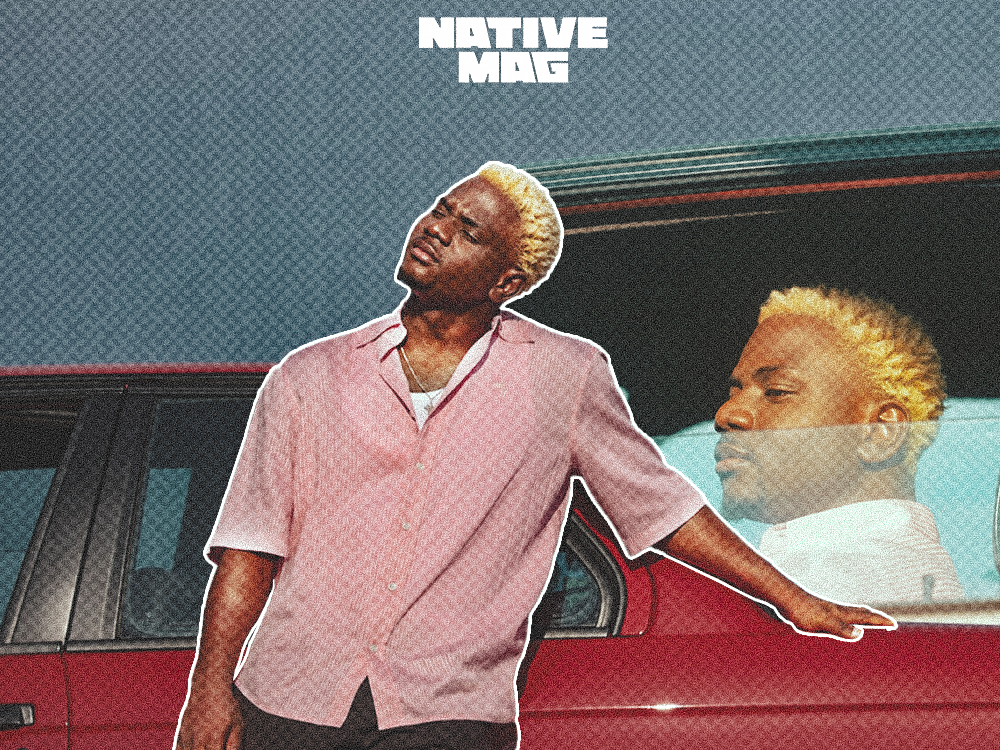
While his recent releases mark a step forward, Godwin is building on years of quiet development.
Godwin is entering a defining stretch in his creative journey. Between the release of ‘RENDITIONS,’ a piano-led reinterpretation of Nigerian classics, and Crocodile, a documentary chronicling a decade’s worth of work with his brothers in The Critics, his work is finding new visibility across both music and film. While these recent releases mark a step forward, they build on years of quiet development. Starting as a filmmaker in Kaduna, Godwin’s early work with The Critics established a practice rooted in consistency and self-direction, which are elements that continue to shape how he approaches his art today.
Now leaning more fully into music, that foundation carries through in his process and output. Before ‘RENDITIONS,’ Godwin had been building a body of work through ‘Road to Nirvana’ and ‘Atonement,’ where grief, faith, and memory were explored through stripped-back, narrative-driven songwriting. Alongside these releases, he started sharing piano-led reinterpretations of Nigerian classics online, gradually building an audience drawn to their simplicity. What began as loose, personal recordings slowly grew into something people kept returning to. ‘RENDITIONS’ emerged from that period, gathering those moments into a more intentional body of work while holding on to the intimacy that shaped them.
We caught up with Godwin to talk about his evolution, creative discipline, and what lies ahead.
You started as a filmmaker in Kaduna. How did growing up and working in Kaduna shape your creative approach?
Kaduna is where I spent my formative years, and even though I’m still quite young, it’s been all that I’ve really known. It has had a huge impact on me. More specifically, I’m from a place called Kudenden. It’s very small, almost like a village. People aren’t necessarily exposed to art or its possibilities, but they are very open-minded. When my brothers and I started exploring filmmaking, people didn’t fully understand what we were doing, but they supported us. They would watch our work and give simple feedback, like pointing out parts they liked. That kind of encouragement helped build my confidence as an artist, and the same goes for my brothers. The sense of community in Kudenda made us feel like we could do anything. We genuinely believed we could conquer the world.
Looking back at those early filmmaking days with The Critics, what was driving you then, and how has that motivation evolved?
That period was very important because it introduced me to consistent creation. It became a routine, a part of who I am. At first, it was simple; we could wake up and decide to shoot something. But as we grew, we realized there’s structure involved. You need budgets, planning, and coordination. That understanding of structure has helped me now, even in music. I already know what works for me. Film, music, and art in general are all connected. So, those early experiences have shaped how I approach everything creatively today.
You’ve been balancing filmmaking and music for years. How do those two sides of your creativity interact now?
My music is very visual and story-driven, and I also direct my own videos. There’s a natural overlap between the two. The skills I’ve learned over the years intersect in a way that allows me to express myself fully without abandoning one for the other. Right now, I’m prioritizing music. I haven’t made a film in about three or four years, but I still find ways to enjoy both within my journey.
The ‘RENDITIONS’ EP revisits some iconic Nigerian classics. What drew you to these particular songs?
Before I fully transitioned into being a musician, I used to make a lot of renditions, like my own versions of songs. These were mostly songs I grew up on. Nigerian music, Pop songs, all kinds. I would slow them down and play them on the piano so people could better understand and appreciate the lyrics. I didn’t change much beyond the tempo. I had a very small piano, but it helped me experiment and build confidence. I posted snippets online without expectations, but some went viral. People started asking for full versions, especially for special occasions like weddings. While I was on tour recently, the idea came back, and we recorded full versions on the road, in hotels, and whenever we had free time. The songs we chose were among the most requested, and they hold deep personal meaning. They represent my early musical experiences and highlight the richness of Nigerian music.
Was there any track on the EP that felt too big or intimidating to touch at first?
Not really. When I was younger, I had a mindset of wanting to make something even better than the original. I always aimed to create versions that felt uniquely mine so people could immediately recognize them as my interpretation. There was one song I made out of pure curiosity. I saw an interview where someone said they didn’t like people covering their music, so I decided to make a version anyway. That was more of a playful moment.
These songs have meant a lot to many people over time. What do you hope your versions add to the conversation around them?
I think they remind people that we come from somewhere, that there’s a rich musical history behind what we have today. For those who know the originals, it brings back nostalgia. For new listeners, it introduces them to that era of Nigerian music. It’s about appreciation. Going back and reconnecting with the music and the memories attached to it.
The documentary Crocodile captures your journey with The Critics over more than a decade. What did seeing your story on screen reveal to you about yourself?
Watching it on a laptop is one thing, but seeing it on a big screen with an audience is completely different. It gave me a deeper understanding of myself and my brothers. Sometimes we live our lives without fully understanding each other’s perspectives. The film provided context. It helped me see moments I may have misunderstood before. It brought me a lot of happiness and clarity. It also reminded me that we’ve come a long way and that we have every reason to hope for a bright future.
How did it feel seeing your film on a global stage like the Berlinale?
It was amazing. When the director from New Zealand first reached out, we actually ignored her for months. Eventually, we connected, understood her vision, and worked together over time. At that point, we weren’t thinking about global recognition. It was just our lives. When the film got that level of exposure, it was incredibly rewarding. It felt like a dream we had always hoped for.
What’s next for you creatively? Is there a new direction or part of yourself you’re excited to explore?
An album. That’s what I’ll say for now. We’re working on the next project, and the past few months have been really inspiring. It’s pushing me to think beyond what I previously imagined. I’m excited to explore all the possibilities with this next body of work.
Listen to ‘RENDITIONS’ here.

