Review: ‘Mushin 2 Mo’Hits’ by Wande Coal
‘Mushin 2 Mo’ Hits’ showcased Wande Coal’s range as a pop singer, he could conform within genres in the right environment.

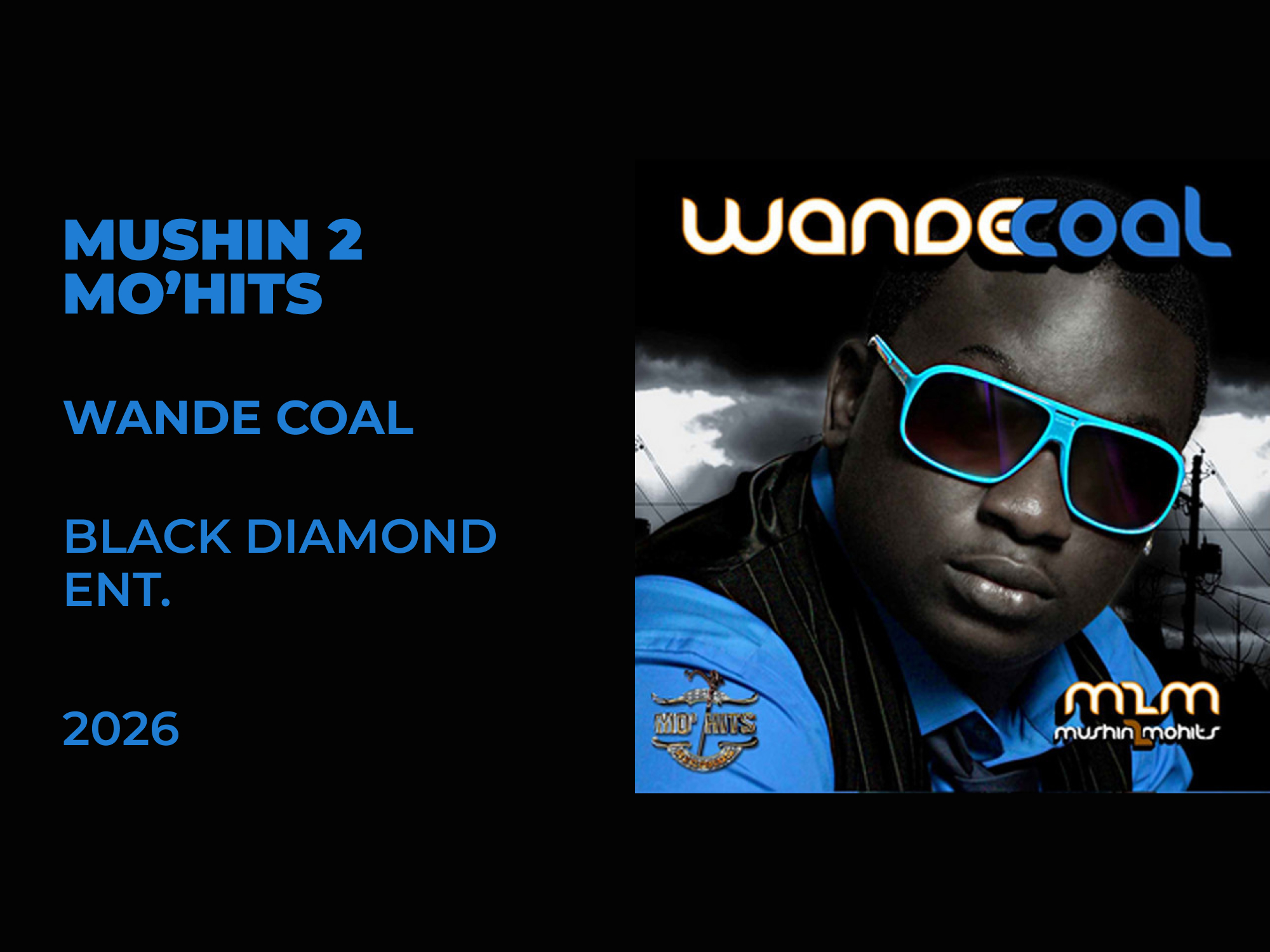
‘Mushin 2 Mo’ Hits’ showcased Wande Coal’s range as a pop singer, he could conform within genres in the right environment.

Without a doubt, ‘Mushin 2 Mo’ Hits’ is a classic Afropop album, and Wande Coal is an Afropop legend. These declarations require that you discard both the title of Wande Coal’s third album, ‘Legend or No Legend,’ and the late appearance of ‘Mushin 2 Mo’ Hits’ on streaming platforms in October 2022, coming over 13 years after this stunning debut album first appeared in the collective consciousness of Nigerians.
In essence, ‘Mushin 2 Mo’ Hits’ represents two locations and a direction of travel. Those coordinates start with Mo’ Hits, the independent record label incorporated in Nigeria in 2006. Jointly owned by Don Jazzy and D’Banj, London returnees who relocated to Lagos ostensibly to make their fortune from the remains of the moribund music industry left in the wake of Nigeria’s post-military Fourth Republic.
Political dawns–especially the kind following a national-scale austerity and a visceral near-death experience on a personal level–often stimulate citizen optimism and cultural production. In the interregnum between international record labels checking out of Nigeria and the brain drain of A-list contemporary musicians like Mike Okri, Adewale Ayuba, Esse Agbesse, and Evi Edna Ogholi abroad, Hip-Hop from America, spewing from the radio, held the fort, capturing both the attention and imagination of the Nigerian youth.
When D’Banj arrived on the scene with his French harp, the charisma and aura he displayed were reminiscent of Fela. His 2005 debut album ‘No Long Thing’ was followed by a sophomore record ‘RunDown Funk U Up.’ All records were produced by Don Jazzy, a then-quiet multi-instrumentalist, styled and mannered like an Italian mob boss. Jazzy was a child prodigy, the son of a music executive, who mimed Blackky’s “Can I Have a Dance” at early ‘90s children’s parties. As a young adult, Jazzy played the bass and keyboard for London-based Juju bands led by Jide Chord and Solek. Jazzy also produced songs on UK R&B upstart Lemar Obika’s debut album ‘Dedicated’ and for music collectives Big Brovaz and JJC. Indeed, he and D’Banj were briefly part of the 419 Squad.
Arriving in Lagos with D’Banj in 2005, Don Jazzy’s credentials as a producer preceded him. His production was cutting-edge, showing an unusual range and expertise across Black Diaspora music. He was comfortable spinning fast-paced Juju rhythms on “Mobolowon” and pairing Boom Bap with the kind of synth bombast that would give both Pharrell and Timbaland pause. Just listen to D’Banj’s “Run Down (Funk U Up)”—two decades post-release, and not a single note of his exuberant production has aged.
In 2007, Mo’ Hits released ‘Curriculum Vitae,’ an anthology album by Mo’ Hits All Stars, comprising D’banj, Wande Coal, Dr SID, D’Prince, and Kayswitch. Produced entirely by Don Jazzy, it was a statement-making album, full of energy and showcasing musical talent, to disrupt the scene’s sonic status quo. It was clear then, as it is now, that there were two exceptional talents on that album: Don Jazzy, orchestrating plays behind the production console and the newbie in the studio booth, Wande Coal, whose vocal range across the album was outstanding. Coal, in particular, was featured on most songs and was soul-stirring on his standalone record, “Ololufe.”
The question, for many, though, was who exactly was Wande Coal?
Then, he was a little-known, cherubic-faced, dark-skinned lad in a red shirt, vigorously breakdancing in the video for “Why Me,” the lead single from D’Banj’s sophomore album. His breakthrough song “Ololufe” was an unusual love song for its time. It opens with plaintive piano chords; Wande Coal hums a melody before deploying his beautiful tenor. His first words establish the kind of love song it would be: the love-drenched, falsetto-topping, crying-in-the-rain variant. The “my-girl-wants-to-leave-me-and-I-can’t-bear-it” type of love song, but not the American-sounding type, depicted with a music video, where a singer strips himself on a green screen transformed into a desert in the final version, crooning to emphasize his rippling muscles. There is something more urgent and less theatrical about this song, something of a final plea. A lover is on the cusp of leaving a relationship that the singer cherishes.
This song–its persuasive lyrics, pitch, apologetic yet reconciliatory mood, even its spare melody–are all in service of a need: this elevator pitch to convince this lover not to leave. “Ololufe j’owo mayi lo,” the apologetic chorus begins and ends in Yoruba while the verses are delivered in crisp English. The switch from English to Yoruba in the chorus gives pause but also adds to the song’s mystique. Wande Coal’s words in Yoruba translate to LL Cool J’s refrain, “Baby, don’t go,” from the 2002 duet with Jennifer Lopez, “All I Have,” which in fact samples Joe Thomas’s “Stutter.” So, there is still an undertone of American influence here.
“Ololufe” was a massive radio hit. It was clear to every listener that they were witnessing a pure expression of God-given talent. His impeccable vocal abilities stoked anticipation for his debut album, but Mo’ Hits had another record in mind: D’Banj’s third album, ‘The Entertainer’, comprising songs like “Mo Gbono Feli Feli,”,“Suddenly” and “Fall in Love.” As always, all ten tracks were produced by Don Jazzy and gestured toward Afrocentric production. Delirious Palmwine highlife guitars and an abiding African sonic vocabulary subdued his flair for heavy American Hip-Hop influences.
Even then, D’Banj was on his last legs as Mo’ Hits’ frontman. He had lost his French Harp, embracing, perhaps too keenly, the sex-symbol status bestowed upon him by his teeming fans. D’Banj hoped to scale his reach from entertainer to entrepreneur. Koko, a phrase from “Tongolo,” his debut, was given to his different enterprises: Koko mobile and Koko mansion being the more prominent examples. All in all, D’Banj’s exciting run would serve as the precursor for the emergence of Wande Coal.
Mushin is a densely populated suburb located on the Lagos mainland. It looks inconsequential but holds a place of pride in Nigeria’s music history. A slummy residential area congested with tenement-style low-rent houses, humorously called “Face Me I Face You,” its most abiding fixture is the rail tracks running from Oshodi down to Yaba enroute to the Iddo terminus.
On those rail tracks at Idi-Oro, the mutilated remains of musician Israel Njemanze, vocalist of highlife band Three Nights Wizard, were deposited by his band members who murdered him in the 1950s. It was before Nigeria’s independence from British colonial rule, before the reign of Juju music in South-West Nigeria in the mid-sixties, when aspiring Juju superstars King Sunny Ade, Chief Commander Obey, and Apola King Idowu Animashaun all resided in Mushin. It was also before Fuji emerged from Were/Ajisaari, modernized from its Islamic origins toward secular music pioneered by Sikiru Ayinde Barrister, who at some point also lived in Mushin.
In the 2000s, Mushin was even more densely populated with negligible social amenities and little government oversight. Agberos–state-sponsored thugs–were agents of social justice and transport workers, enforcing order violently on danfo and okada drivers. Landlords of dilapidated houses were answerable to their pockets, hiking up rent prices as they wished. Drainages were clogged with plastic waste and sewage, but life flowed. The muezzin woke the faithful (and inadvertently everyone else) for Fajr before dawn.
Music from the stalls blared into the humid noons, with the latest Fuji live albums from upstarts like Obesere, Sunny T, Pasuma and Remi Aluko playing on repeat. This was the Mushin Oluwatobi Wande Ojosipe knew like the back of his hands, the Mushin he came of age in, the Mushin from which Mo’Hits discovered him, the Mushin from where he would be freighted into stardom. By calling his debut album ‘Mushin 2 Mo’Hits,’ he was tracking the journey of music stardom that his older peers travelled.
In 2007, Kennis Music’s hegemony on contemporary Nigerian music was under attack. Kennis Music’s biggest star, Tuface, released his second and final solo album with the outfit, ‘Grass to Grace,’ an outstanding record, no less, but lacking both the alchemy and reception of his debut. Paul Play Dairo, also formerly of Kennis Music, produced and recorded ‘Hitsville,’ a detour from his gospel-leaning Highlife standards to dancehall-tinged Afro-R&B songs. P-Square released ‘Game Over,’ their third album, produced by J-Martins, consolidating the massive gains from their phenomenal sophomore album, ‘Get Squared’. Timaya would also release his debut album ‘True Story,’ produced by K-Solo.
One year later, 9ice released his outstanding ID Cabassa-produced second album, ‘Gongo Aso.’ K-Solo and Timaya teamed up for his second album, ‘Gift and Grace.’ Singer, songwriter, and producer Terry G, with mannerisms reminiscent of Reggae’s sonic architect Lee Scratch Perry, was on the rise with his vibrant production. As was Don Jazzy, who had single-handedly produced Mo’Hits All Stars’ ‘Curriculum Vitae’ in the previous year and D’Banj’s ‘The Entertainer’ in 2008. It was game over for Kennis Music as every singer, producer and record executive scrambled for the top dog position.
Wande Coal had courted and teased an audience with his vocal pyrotechnics on the Mo’Hits All Stars’ ‘Curriculum Vitae.’ There was rumbling in the grapevine that a Wande Coal album was on the way, which made it all the more exciting for pundits trying to guess the album’s sonic direction. Would we expect an R&B crooner with the strongest vocal performance in Nigerian male music of his generation or a Pop star who would keep the dancehalls busy?
“Bumper to Bumper,” the lead single of ‘Mushin 2 Mo’Hits’ cleared all doubts. Wande Coal rejected the Afro-R&B straightjacket and instead aimed for the Afropop canon. In retrospect, it was a good bet to hedge, to think beyond the plush comfort of spewing competent, soulful love songs and reach for the elusive alchemy that Pop music demanded. Looking to the Western canon, Wande Coal merged all the possibilities of American Pop music with a Nigerian sensibility. Like the American rapper-turned-singer T-Pain, Wande Coal was also a disruptor, but Autotune would not be his superpower; melody was. Wande Coal brought an incantatory verve to his songwriting, something close to melodious rap, powered by a frenzy that made stardom inevitable.
Arriving in November 2008, “Bumper to Bumper” made the mechanics of dance its central thesis. In fact, it is a dance instructional advising how to position yourself and your partner on the dance floor, which, in Wande Coal’s reckoning, is packed like Lagos roads at rush hour. Jazzy’s production glides over Wande Coal’s staccato dance instructions. What stands out beyond the graphic sexual innuendo is that the metaphor is authentically anchored to citylife.
It is this kind of inventive and playful language that makes ‘Mushin 2 Mo’ Hits’ stand out. On “You Bad,” Wande Coal sings: “Talo l’omo before they call me gbomogbomo,” Gbomogbomo is a child kidnapper in Yoruba. Of course, Wande Coal was not alluding to children; a beautiful lady was in his line of sight, and he intended to court her by announcing his intention, which he confidently assumed aligned with hers. The fluid performance with language also powers the subversion from which the song title is also derived: bad is good or bad is the new good.
In “Who Born the Maga,” Maga, a term popularised by the online fraud Yahoo, describes his detractors, real and imagined, who attempt to hinder his career progression and successes with Mo’ Hits. Nothing is exempt from his wordplay, not even songs sung in primary schools at lunch break, which he borrows from in “Se Ope” or “Ten Ten,” a playground game similar to hopscotch popular with girls. On every song, Wande Coal’s lyrical improvisation matches Jazzy’s edgy, forward-thinking production, steeped in a West African ethos without being unduly folksy. Across 16 songs spanning 64 minutes, they are both relentless, outperforming each other at every turn.
Wande Coal’s thematic concerns swing from sociopolitical commentary on “Se Na Like This” to unbridled euphoria about his future on “That’s What’s Up” to evangelical thanksgiving on “Jehovah,” but always return to his primary preoccupation: professing love to pursue sex. From the album’s opener, “I Know You Like It,” he teases, “I know you like/I know you like the way I give it to you baby.” Similarly, “You Bad” pays homage to diverse body types embracing body positivity while hinting at sex.
“Kiss Your Hands,” featuring rapper Ikechukwu, stands out as a song about serenading without immediately demanding sex. Wande Coal coasts on a high falsetto, edged by heavy, precisely-patterned percussion, courtesy of Don Jazzy’s production. Kissing hands is a Western gesture, no doubt, but Wande Coal pursues it beyond its immediate symbolism. In retrospect, “Kiss Your Hands” is the most foreign-sounding record on ‘Mushin 2 Mo’Hits.’ This is remedied by a remix of the song featuring Ghanaian duo R2Bees, released shortly after the album’s launch. This Afrocentric version was the toast of the dance floor, an ace up the sleeve of disc jockeys to date. From its dramatic start to its thorough-going coda, Wande Coal is at his most irreverent. Somewhere between rap and toasting, he delivers improvisational lyrics rooted in the spirit of a breakaway freestyle.
‘Mushin 2 Mo’ Hits’ showcased Wande Coal’s range as a pop singer. He could conform within genres, and he could let conformity slide in the right environment. He could falsetto like Michael Jackson or sing-rap like T-Pain, if he was attuned. But every time he performed, his idioms and ethos were ultimately Nigerian—as was his primary audience.
In the 2000s, the equivalent of a music album going platinum on the Obafemi Awolowo University Ile-Ife Campus was every stall in New Buka playing that album at the same time. It was not unusual in 2009 to walk past different stalls at New Buka, each playing different tracks from Wande Coal’s debut album throughout the day, creating a choral loop of listening to every song on the album at the same time.
Every New Buka stall obtained copies of the albums from music stalls that sat on wheelbarrows at Lagere, Ile-Ife. Those CD albums travelled from Alaba Market in Lagos, where pirates copied them and later became legitimate through an unusual union between musicians, record labels and their former pirates. Strange bedfellows no doubt, but it was exactly what was needed at that phase of the genre’s development. Contemporary Nigerian music leveraged the pirates’ business model for mass reproduction and distribution, submitting their creative work for a sizable advance.
In 2009, Afrobeats was two years from being so named. Music blogs were fast becoming an alternative way of releasing music. Product placements and brand endorsements were providing alternative income to Nigerian musicians, as was revenue from touring locally. Mo’Hits had an advantage in their impressive roster of talented musicians but an Achilles’ heel: Don Jazzy. No matter how hard he worked, he found it difficult to produce more than one album a year. After Wande Coal’s ‘Mushin 2 Mo’ Hits’ came Dr SID’s joyous ‘Turning Point’ in 2010, which was even more fluent in the contemporary Nigerian-speak of ‘M2M,’ with Don Jazzy surpassing himself with exquisite production. At the time, it would have seemed impossible to improve, but Jazzy outdid himself in the early 2010s, the twilight era of Mo’ Hits.
In 2011, a young man of slight build who grew up in Surulere, a few miles from Mushin, would release his debut album, ‘Superstar,’ which reinterpreted the zest of Wande Coal’s ‘Mushin 2 Mo’ Hits’ for a younger audience, with an emphasis on catchy sing-along melodies. If Wizkid is the first apostle of Wande Coal, he is neither the last nor the most pious. Oxlade, Victony, and Fireboy DML, though from a younger generation, wear Wande Coal’s influence to varying degrees. All united by the irreverent exploration of the falsetto in animating earthy Nigerian lyrics and slang. None of them can deny the influence of Afrobeats’ vocal priest, Wande Coal, or his seminal dissertation, ‘Mushin 2 Mo’ Hits.’
Fireboy DML’s global breakthrough song, “Peru”, perhaps best expresses Wande Coal’s Afrobeats vision. Playful, earthy and surprising, it relies on relentless exploration of a melody with a joyous lyrical bounce. Fireboy DML pays proper tribute once again to Wande Coal on his record, “Wande’s Bop,” explicitly named for him. Around the same time, Ayra Starr, signed to Mavin Records, released the single “Jazzy’s Song” on her second album, which interpolates the melody of Wande Coal’s “You Bad.” Both “Wande’s Bop” and “Jazzy’s Song” complete the loop of Mo’ Hits’ legacy: Wande Coal’s ‘Mushin 2 Mo Hits.’
Ultimately, Wande Coal became an independent artist and released an underwhelming sophomore record, ‘Wanted,’ in 2015. His fourth album, ‘King Coal,’ has just been released to mixed reviews. The jury may be out on his entire body of work, but it is indisputable that ‘Mushin to Mo’ Hits’ was a debut full of light, delight and talent, and Wande Coal’s professional relationship with Don Jazzy on the record is one of Afrobeats’ most enduring legacies. It told several stories at the same time: the indestructible nature of talent; the relentless joy that music expresses; that music could be both a relic of time and a time machine; and that great beginnings can sometimes just be that: great beginnings.
Listen to ‘Mushin to Mo’ Hits’ here.

