Dammy Twitch Was Always Fated To Make ‘Call of My Life’
Directed by Dammy Twitch, 'Call of My Life' is staking its claim as a turning point for romcoms in Nigerian cinema.

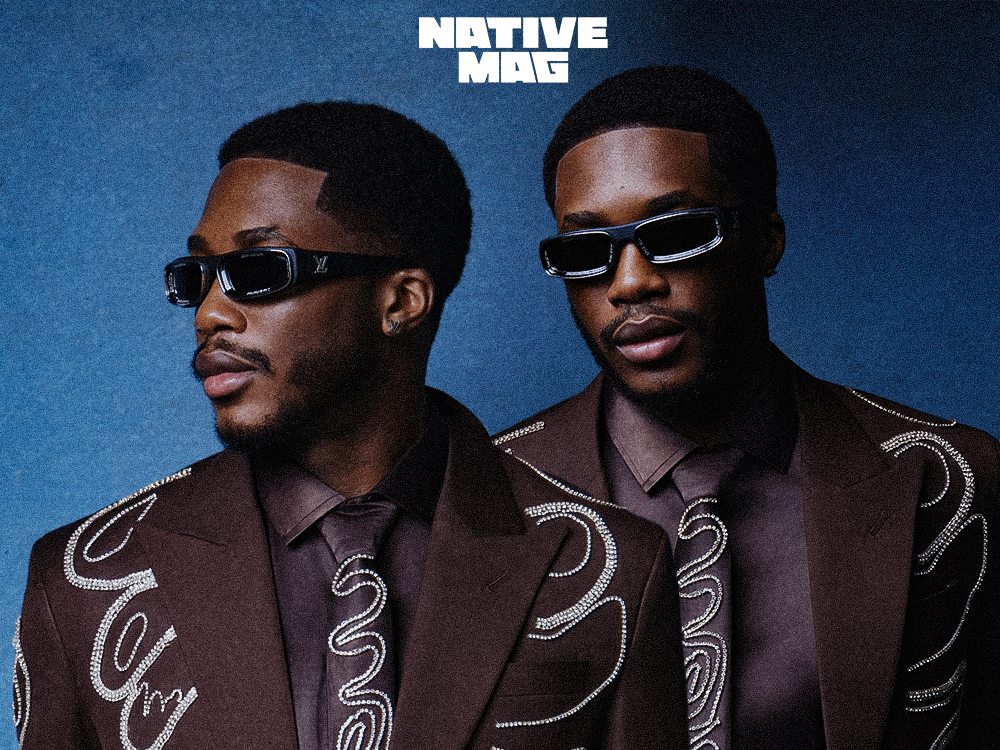
Directed by Dammy Twitch, 'Call of My Life' is staking its claim as a turning point for romcoms in Nigerian cinema.
At the IMAX Filmhouse in Lekki, an entire cinema room groaned in unison, for what must have been the hundredth time, as audiences sat in the dark, watching Oluwadamilola Owolabi Apampa’s latest film, ‘Call of My Life.’ For nearly the whole film, its two protagonists, Soluchi (played by Uzoamaka Power) and Eli (played by Andrew Bunting), had been robbing the audience of a kiss, pulling back at every moment it seemed within reach. With the story nearing its end, the crowd was ready to tear through the screen and drag the two together themselves. When the kiss finally came, the room erupted into cheers. Their love, at last, was sealed.
Directed by Apampa, or as most know him, Dammy Twitch, ‘Call of My Life‘ is staking its claim as a turning point for romcoms in Nigerian cinema. Blessing Uzzi produced it under Bluhouse Studios. It’s a rom-com, a love triangle, and at the center of it is Soluchi, a bright-eyed young woman who wears her heart on her sleeves.
The film opened on May 15 with over ₦70 million garnered in its opening weekend, a feat for a non-December release. By the third week, that figure had climbed to ₦397 million. The accolades followed: highest-grossing romance film of 2026, second highest-grossing Nollywood film of the year, and the fastest Nollywood title to cross the ₦300 million mark in 2026. The numbers speak for themselves, but the joyful audiences and their positive word-of-mouth feedback are louder.
On a rainy Friday late in May, I set up shop in the office of the thirty-year-old photographer, music videographer, and filmmaker, tucked away somewhere in Lekki. The room is warm, a contrast to the cold drizzle tapping against the windows outside. After a short wait, Apampa walks in wearing a boyish grin, bouncing with the glee of a man who just put a directorial feature into the world. He’s in baggy pants, a ‘COML‘-branded T-shirt, and a face cap. We start in a warmly-lit sitting room, just across from a proper studio photography set, then move upstairs to an office with a ceiling fan turning lazily overhead. The whole space was designed to feel familiar, Apampa tells me, settling into the couch with his head on a pillow, as though the room were built around him.
Growing up in Oluyole, Ibadan in the early 2000s, Apampa was drawn to the arts early. He spent afternoons playing games at a neighbor’s house and buying CDs of series like ‘Smallville,’ ‘Merlin,’ and Legend of the Seeker.’ “We grew up watching ‘Super Story,’ ‘Fuji House of Commotion,’ ‘Papa Ajasco,’ and the likes,” he says. He lived with his mother and two sisters, and the bond between them was close.
At Redeemer’s University, where he studied economics, academics were never really the priority. He spent his first three years taking pictures of his friends and working under someone in the industry doing behind-the-scenes coverage. He would take a bus from Redeemer’s to Berger, then on to Ikoyi, and he did it often enough for the route to become muscle memory. He photographed everything that caught his attention: grass, makeup artists, and parked cars. He then posted the images to a blog alongside philosophical musings about what he’d seen.
One of his blog posts, featuring vintage cars, grandfather clocks, and analog cameras, reads: “A keyhole is more than what it appears to be. It appears to be this oddly shaped metal on a door that is responsible for opening and locking a door. Little do you know that this is the link between two rooms. Two worlds in this case.”
Little did Apampa know he was foreshadowing his future. The boy with the blog and the bus route would eventually live between two worlds. He would become a music video director, his lens reaching far beyond Ikoyi. His videos would carry him across countries and into rooms with icons like Davido and Angélique Kidjo, and onto sets for brands like Google and Coca-Cola. In time, the music videos would eclipse his photography. At age 26, Forbes would place him on its 2022 30 Under 30 list as one of Africa’s most recognizable young creatives. He would become a celebrity and, in 2026, release a debut feature film that made history. But all this was still on the other side of the keyhole.
After graduating in 2016 with a second-class upper degree, the work began. Armed with a car his mother had gifted him, a camera from his uncle, an economics degree, and all the behind-the-scenes experience he’d been collecting, he stepped into the world. His work led him to Ichaba, an artiste based in Ibadan who happened to be Director Q’s brother. “At the time, I already knew how to edit, so I was valuable as an editor, someone who’d be assisting Director Q on set, and someone who had a car,” Apampa says with a grin. “Before he went to any set, he had to wait for me.”
Under Director Q’s guidance, he learned the basics of music videos, laying a foundation he didn’t yet know he’d build an entire career on. His first music video was unofficial. It was Yonda’s “Las Vegas,” featuring Burna Boy. “I happened to be at the right place at the right time,” he says. “Yonda just made the song with Burna Boy and they wanted to shoot the video—next thing, I’m in Burna Boy’s house and we’re shooting at his backyard.” All those years assisting Director Q, started to pay off there. The videos that followed, “Aje” by DMW and “Wonder Woman” by Davido, confirmed what was becoming obvious: he was here to stay.
One of the artists he would work with most extensively was Davido. In 2018, they met at the Lagos Marathon. Davido needed a music video director, and Mayorkun’s manager connected him to Davido’s camp. That introduction earned him his first paycheck in foreign currency. From there, they traveled to make videos in Ethiopia, then another country, then another.
There are elements that make a Dammy Twitch video stand out: cinematic angles that belong in a feature film, lighting that sculpts rather than fills, sunlight pooling across faces, shadows stretching into stories. In three minutes or less, a song becomes a world you could walk into. His video for Tekno’s “Wayo”—produced under his company Polar Films Production and featuring Uzoamaka Power—is a case in point: every shot carries weight, every texture earns its place on screen.
When I liken his visual sensibility to that of an international music video director, he shifts in his seat, and lets out a laugh. “The work I’ve done inspires me,” he admits. “My journey. Ibadan inspires me. I think inspiration comes from what you consume, and how much you consume them, but traveling widely definitely helped.”
Our conversation is interrupted by a phone call from Anita Ashiru, one of Nigeria’s leading production designers. She cracks a joke about some giveaways Apampa did in Ibadan for ‘Call of My Life,’ and he fires one back without missing a beat. The rhythm between them is well-worn, you can tell they’ve been doing this for years. It’s the same story with nearly everyone in his orbit, including Blessing Uzzi. They are people who grew alongside him, and the trust between them is the type that forms over time and too many late nights to count.
“I always knew I’d go into filmmaking, even before I started shooting music videos. I just didn’t think it was possible back then,” he says. “When I finally became ready, I told my producer that I wanted to do a short film first.” That short film came in 2023: ‘I Hate It Here,’ an unreleased work about the impact of domestic violence on a child. It was his first step into film, small in scale, but enough to teach him what a feature would demand. From there, ‘Call of My Life’ was born.
When Apampa talks about the film’s reception, his face opens up: all smiles and easy laughter. The visual elements that define ‘Call of My Life’ are the same ones that have been in his work all along. Apampa constructs a Lagos of dreams and beauty through the eyes of his protagonist. Soluchi wears outfits that speak before she does: colored pantyhoses, stripes, bold prints that shift with her moods. She indulges in popsicles and swings in a playground with her lover. There’s a childlike openness to her, something most Nigerians have had sucked out of them, and it’s what Apampa tries, and succeeds, in capturing on screen.
When I ask about his influences, he mentions a few names but it’s Ozu, the mid-century Japanese director known for framing ordinary life with patience, that he keeps circling back to. “People online have been saying they want to live in COML‘s world,” he pauses. “I shot ‘Call of My Life’ like Yasujirō Ozu.”
But building a world people want to live in is only half the work. You have to invite them in, too. He liked romance. He thought the people who didn’t were free to look away, that it was time to make space for those who do. That belief became the spine of the team’s entire campaign, borrowing a page from Hollywood rom-coms where the characters’ love story bleeds past the screen and into the real world.
The team ran a contest offering two winners the chance to watch ‘Call Of My Life’ together at the cinema. They brought in influencers, media platforms, and music artists for watch parties. They featured in panels and fun YouTube shows. It was cheesy; they understood that people didn’t just want to watch love stories. They want to feel like they’re inside one.
Nollywood and Nigerian music have always been in conversation, but lately the exchange feels more deliberate. Artists and personalities have crossed into film before: Burna Boy produced ‘Three Cold Dishes,’ Tiwa Savage starred in ‘Water and Garri,’ and Ladipoe was a character in ‘Christmas in Lagos,’ among others. For ‘Call of My Life,’ Cobhams Asuquo handled the music score with a tenderness that invites and heightens the romantic tension across the film’s one-hour-and-fifty-four-minute runtime.
Speaking about his approach, he described drawing from classic Hollywood orchestral arrangements alongside his roots in traditional African highlife and Fela-inspired Afrobeat, wanting “these two sonic elements to coexist naturally in the same world, rather than sounding like an experiment, because that duality defines the modern Nigerian romantic experience.” Asuquo credits his influences to Hallmark films and ‘When Harry Met Sally‘ to the specific textures of Nigerian romance: the bustle of Lagos streets, the quieter pull of village settings, and as a blind artist, he was equally driven by the need to truly hear the story, ensuring the score sat holistically within the film rather than ever calling attention to itself.
For all the noise surrounding his name, Apampa does not want to be a celebrity. He prefers to stay behind the camera and enjoys being in countries where no one recognizes him, understanding that visibility comes with the territory, but it’s not what drives him. “My celebrity status didn’t come at any particular time,” he says. “Music videos just take you to places you won’t typically go.” Most days, he’d rather be home. Most days, he isn’t even aware of how many people know his face.
In his free time, he watches music videos, dives into YouTube rabbit holes, and revisits films by his favorite directors. He is single, but he wants to get married someday. “I love love, my favorite romcoms are ‘You’ve Got Mail’ and ‘My Best Friend’s Wedding.’” He pauses, then grins. “On the internet, people have been arguing about whether they’re Kalu or Elu. I’m Elu.”
When I ask him what he’d choose between photography, music videos, and filmmaking, he says all of it. When I press him—gun to his head—he says photography. Then he catches himself, and changes his answer to music videos. He tells me that ‘Call of My Life’ is only the beginning and he’s intent on making genres that are unpopular in Nollywood with the certainty of someone who knows the next thing is already forming, even if he can’t name it yet.
When I ask him what success for Call of My Life looks like, he doesn’t reach for a number alone.”If we make one billion in the cinema, we would have succeeded,” he says. Then he leans forward. “But on a deeper level, I want people to be able to go to the cinema. To get that communal cinema experience and joy—watching it with your family and friends. If ‘COML’ does more than ten or twenty thousand people in the cinema, then I think we have succeeded.”

