CKay’s New Era Is Bigger and Bolder
The newer phase of CKay's career has been marked by a noticeable shift in presence, not just in how his music sounds but its presentation.

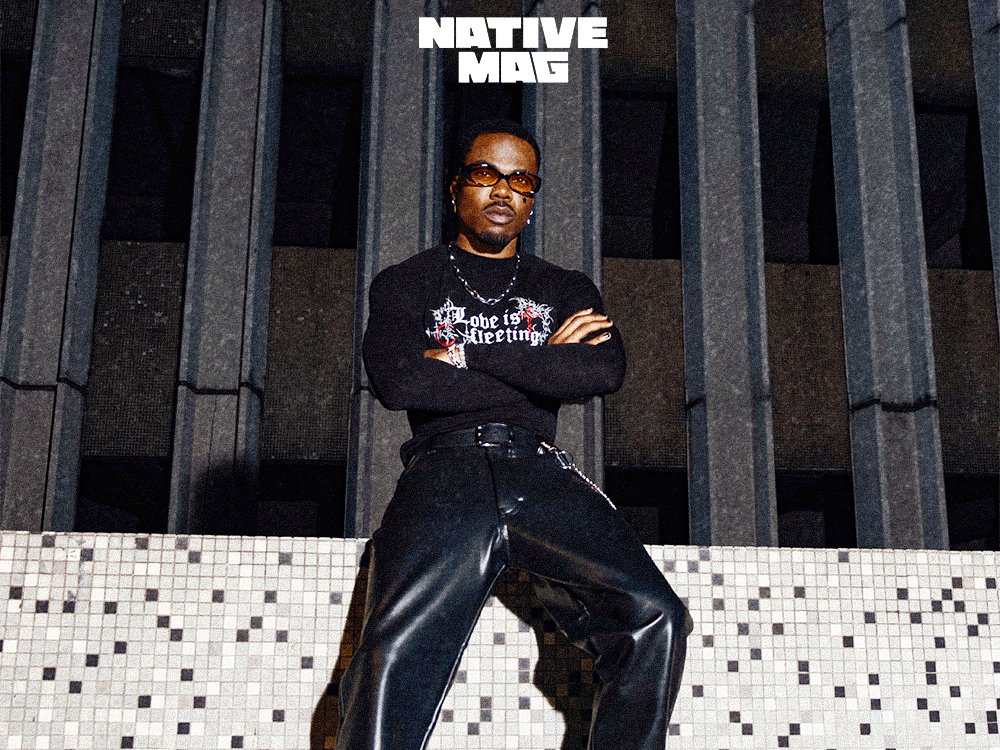
The newer phase of CKay's career has been marked by a noticeable shift in presence, not just in how his music sounds but its presentation.
For a long time, the world experienced CKay through intimacy. His music carried a softness that felt immediate and unforced, built around emotion that sat very close to the surface. The writing did not hide vulnerability, the production left enough space for feeling to breathe, and his voice often sounded like it belonged in private listening rather than public consumption.
When “Love Nwantiti” broke globally, that identity locked in quickly. The record did more than introduce CKay to a wider audience. It defined how he would be perceived for years after. It moved through TikTok, entered mainstream charts across continents, and became one of the most recognisable Afropop crossover records of its time. With that kind of reach, the image formed early and stayed fixed. CKay became the artist of softness, the voice of emotional openness, the figure associated with romantic directness in music that felt personal.
The challenge with that level of visibility is that it often freezes artists inside their first widely received version. Even when the music begins to shift, perception takes longer to adjust. That is where CKay’s trajectory becomes more interesting, because while public attention remained anchored to that early emotional framing, the music itself had already started moving into a different space.
The shift did not happen abruptly or through reinvention. It happened gradually through production choices and the environments the music started to belong to. The emotional core remained, but it stopped being the only layer that defined the sound. The records began to feel heavier and more designed for shared spaces rather than isolated listening.
“BODY” was where that change became fully visible. The record still carried CKay’s melodic instincts, but they were now placed inside a structure built for movement and energy. The Mara-inspired bounce gave it a different kind of momentum, while the percussion and rhythm leaned toward club functionality rather than emotional stillness.
What stood out was not just the sound itself but how naturally it arrived. There was no sense of forced transition or calculated repositioning. The record felt like an extension of his foundation rather than a departure from it, and that is why it worked. It did not erase what came before; it expanded it into a different environment where emotion was still present but expressed through rhythm and energy rather than quiet reflection.
The response reflected that shift in a very clear way. “BODY” became one of the most dominant Nigerian records of its cycle, spending more than fifty days at number one on Spotify Nigeria’s Daily Top Songs chart and setting a platform record in the process. Beyond the numbers, what mattered was how the song existed in everyday life. It became a constant presence in nightlife spaces, in clubs, in parties, in cars, and in public environments where music is experienced collectively. That kind of reach moves an artist out of a narrow emotional association and places them into a broader cultural space where their music is not just heard but lived with. For CKay, it signalled that his reach was no longer limited to the emotional softness that first defined him publicly.
At the same time, the newer phase of his career has been marked by a noticeable shift in presence, not just in how his music sounds but in how his music is presented. The visuals are darker and more intentional, the styling carries more weight, and the performances feel less reserved. There is a stronger sense of control in how everything is framed. Even when the music leans into emotion, it no longer presents vulnerability as its defining centre. Instead, emotion sits alongside every other emotion his music tends to portray.
What makes this evolution stand out is how it unfolded alongside a broader shift in Afropop production trends. As Amapiano influence expanded across the continent and became one of the dominant sounds shaping mainstream output, many artists leaned fully into its structure and rhythmic identity. CKay’s approach was more selective.
Rather than fully absorbing the dominant wave, he built around a combination of Mara-inspired rhythm and Nigerian club energy, creating something that still feels connected to his melodic instincts but not dependent on any external sound trend. The result is music that functions in club environments without losing individuality and authenticity, and that balance is what separates it from more trend-driven records that often fade once the sound cycle shifts.
That distinction becomes clearer when you listen to the newer catalogue. The songs are built for movement, but they are not stripped of emotional clarity. The hooks remain strong, the melodies still carry familiarity, and the production supports both energy and mood at the same time. The difference is in density. The newer records feel more layered and more intentional in how they occupy space. They are not trying to replicate past success or chase external validation.
A lot of artists struggle with that stage of their career because global recognition often comes with pressure to maintain a specific identity. Once an artist becomes known for a particular emotional tone, there is an expectation that they continue delivering that exact feeling repeatedly. CKay avoided that trap by not abandoning his original emotional language, but he also did not allow it to limit him. Instead, he stretched it into different contexts, placing it inside rhythm-heavy production and letting it coexist with a more confident sonic identity.
“African Girls” continues that trajectory. The record fits comfortably into his current sound world, with production that feels more expansive and delivery that sits firmly in control. It does not function as a reinvention moment or a sudden pivot. It sits within a pattern that has already been forming for several releases, where CKay’s music increasingly operates with clarity and intent rather than exploration. The emotional undertone is still present, but it is no longer the only point of focus. The music now carries structure and a stronger sense of atmosphere that aligns more with nightlife environments than with the isolated emotional spaces of his early work.
What defines this current phase is how settled it feels. The music no longer sounds like it is searching for identity. The choices feel deliberate, and the execution feels grounded in experience rather than experimentation. There is a clear understanding of how melody, rhythm, and atmosphere interact within his work now, and that understanding shapes every release. The result is an artist whose current output no longer relies on past references to be understood. The music carries its own explanation in real time, shaped by growth that has already happened.

