‘Black Market’ Is An Ambitious Rethinking Of Nollywood’s Standards
With ‘Black Market,’ Nora Awolowo is expanding her wingspan and hoping to further put her imprint on Nigerian cinema.

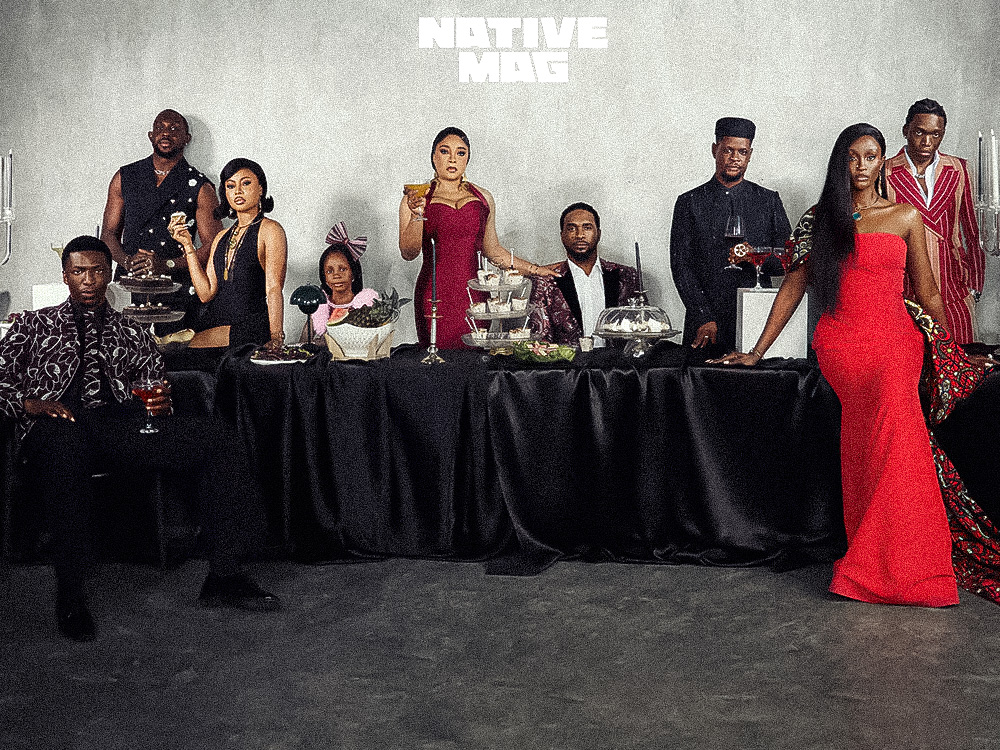
With ‘Black Market,’ Nora Awolowo is expanding her wingspan and hoping to further put her imprint on Nigerian cinema.
The most interesting tenet underpinning ‘Black Market’ is the tension between survival and morality. It places its characters in a grey area where illegal activity can be understood as a response to economic pressure, but also understanding that pressure does not erase the consequences of their choices. For the movie’s premiere, Nora Awolowo envisioned a spectacle that would break away from the conventional cinema experience, turning Black Market into a major cultural moment for Nollywood. Becoming the first-ever Nollywood film to be recognised by Guinness World Records for the “largest attendance at a film screening” and the “largest audience at a film premiere,” the film has taken Nigerian cinema beyond the screens and into the record books.
Nora Awolowo is no amateur in film production, over the years, she has built a diverse portfolio of shorts and documentaries before trying her hands at features. Across efforts like ‘Life at the Bay’ and ‘Baby Blues,’ she has established herself as a filmmaker drawn to stories rooted in real-life experiences. Her work on ‘Nigeria: The Debut’ earned her a Best Documentary win at the 2023 AMVCA, while her cinematography on ‘Lisabi: The Uprising‘ earned her a nomination for Best Cinematography at the AMVCAs.
In 2025, Awolowo co-produced ‘Red Circle,’ grossing over ₦100 million at the Nigerian box office. The achievement made her the youngest Nigerian producer to reach that milestone, marking another significant achievement in her career. With ‘Black Market,’ she’s expanding her wingspan and hoping to further put her imprint on Nigerian cinema.
This interview has been edited for clarity.
What was the first version of the ‘Black Market’idea, and what made you want to pursue it?
The basic idea has always been to make relatable films. ‘Black Market,’ for me, was a concept inspired by things I vaguely observed and experienced growing up, but initially, I didn’t have a fully formed picture of what the entire narrative arc or character journeys would look like. I brought the original story concept to Fatimah Binta Gimsay and Abdul Tijani-Ahmed, and together they expanded it into a suspenseful thriller centered on survival, sisterhood, and the hidden realities of operating along tight border networks.
Once you and Fatimah decided to make the film, what did the process of getting it off the ground look like?
Definitely! It was mostly standard set stuff, nothing crazy. Trying to line up actor schedules was tricky, and filming in Abeokuta had its own crazy moments, but we figured it out as we went.
You produced the film while also serving as its Director Of Photography. How did those two roles work together for you?
Balancing the roles of Producer and Director of Photography meant overseeing high-level production operations while maintaining strict creative and visual standards. On set, key crew members like Producer Nicole Ofoegbu and Line Producer Emily Odungide handled daily execution and logistics during the shoot, allowing me to focus on the visual storytelling and camera work. Executive producers FilmOne Studios, Signet Ring Studios (Omowunmi Dada), Susan Pwajok, and Mike Afolarin provided key support throughout the production.
When did the idea for the record-breaking screening attempt come about, and what did it take to make it happen?
The idea originated from a desire to move beyond conventional premieres and create a monumental cultural event for Nollywood. I initially shared it with Fatimah Binta Gimsay and Abdul Tijani-Ahmed, after which Susan Pwajok, Mike Afolarin, and Omowunmi Dada came on board as executive producers. From there, we brought on FilmOne Studios as production partners, partnered with Switch Visuals Productions, and secured official government support from the Lagos State Government through the Ministry of Tourism, Arts and Culture. Executing a massive screening at Tafawa Balewa Square (TBS) required extensive planning to coordinate the overall venue setup, manage technical logistics with Homeland and Nelson Jack, and ensure robust security and crowd flow for tens of thousands of attendees. None of this would have been possible without our incredible brand partners and sponsors, including Swoop, Playstreet, Diego, Chivita, Airtel, Bolt, Shuttlers, Zenith, and MTN. Nonso Mbaegbu was on top of operational coordination and partner execution throughout. Meanwhile, the PR and marketing team at Zebra Stripes Networks was on top of driving influencer campaigns, issuing media press releases, and executing multi channel marketing campaigns that rolled out across platforms to mobilize attendees and make history.
Looking back at the entire journey, what part of the process was most memorable for you?
The most memorable aspect was witnessing 51,258 people gather at Tafawa Balewa Square on September 26, 2026, to watch the film together in real time. Experiencing the crowd’s reaction, seeing months of collaborative work come to life on such a massive scale, and watching the Nigerian public show up in full force created an unforgettable collective atmosphere.
Now that ‘Black Market’ has gone from an idea to a finished film and then to a record-breaking screening, what does the journey mean to you?
This whole thing really showed what’s possible and honestly, it just proves that aiming big really pays off.

