Adey Still Has His Fingers On The Pulse Of Popular Music
People might be more familiar with Adey’s production work but his range is unmissable whether as a producer or an artist.

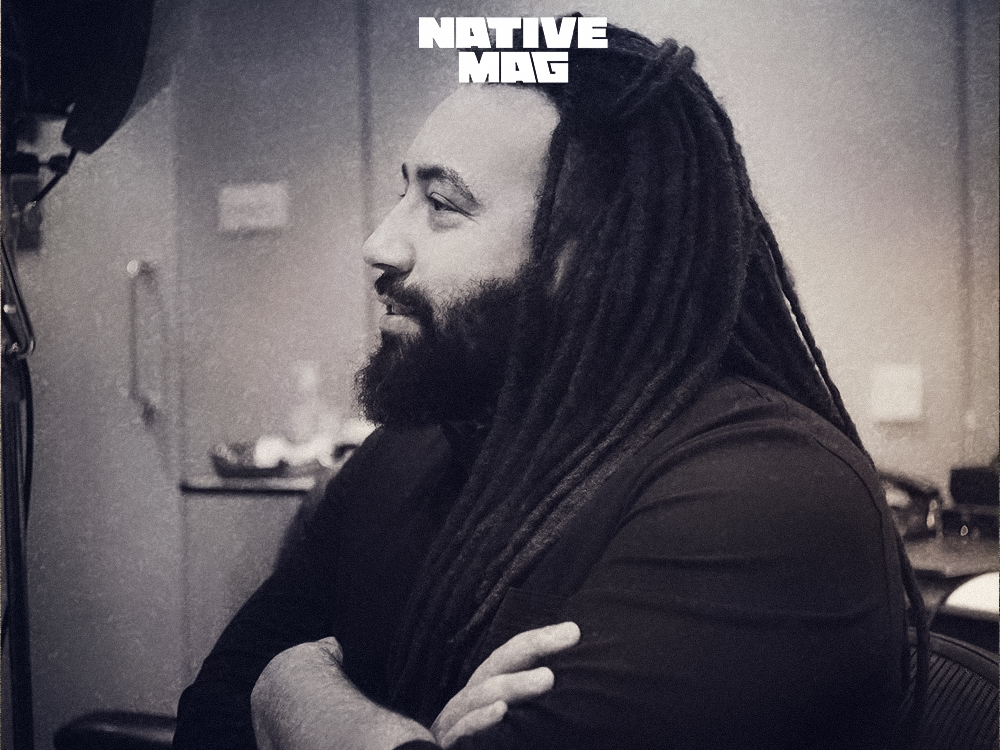
People might be more familiar with Adey’s production work but his range is unmissable whether as a producer or an artist.
Several components make Adey’s story compelling. It could be producing one of Nigeria’s biggest hit songs, “Juice,” having global production credits on Kanye West’s ‘Vultures 1,’ or showcasing his multifaceted talent as a songwriter and singer, with his most acclaimed single “Cigarettes” sitting at almost a million Spotify streams. However, the version of this story that stays with me—and perhaps best underscores his artistic prowess—comes halfway through our conversation.
As we speak over Zoom on a chilly afternoon in July, tiny raindrops sliding down my windowsill, Adey asks if he can play me some of his unreleased demos, a request I was happy to oblige. Before the demos begin blaring from his laptop speakers, I can already tell his confidence is at its highest, and I wonder if it is a trick question when he asks whether I am a fan. I withhold my response, curiously allowing him show-off his stacked private catalogue, ranging from groovy, sexy bedroom records; to a score I could have sworn was straight out of an Afro-futuristic film; to a distinctly produced song seemingly tailored for The Weeknd, Adey’s voice seamlessly floating on the beat, the lines becoming blurry as to who would have been the perfect fit for the song.
Whenever he pauses to ask if I can pick out an element or two from each record, it becomes clear that he does not just want me to listen, he wants me to be completely immersed in the music the same way he is, our excitement radiating through the screen. I realised then that even if I wasn’t already a fan, his flex as a man who is aware of his own greatness and deeply committed to his work would have been enough to convert an unbeliever. The only difference is that for Adey, this goes beyond that brief moment; there’s a decade-long body of work trailing behind him, and it certainly speaks for itself.
Most people might be more familiar with Adey’s production work than the side of him that sings, but by the end of our conversation, his range is unmissable whether as a producer or an artist. He is in complete sync with his creative alter egos and that is the magic that distinguishes him. Growing up, he was exposed to an eclectic mix of influences so varied that it is difficult to trace them back to a single source. But the most pivotal moment in his musical journey came during his second year of junior secondary school, when he discovered on Christmas Day that he could actually make music.
Ever since, he’s sunk neck deep into his craft, capitalising on his nerdy traits to be an exceptional creative genius, one who’s unafraid to challenge the status quo. His resilience and authenticity continues to drive him above all else. “I always try to learn something new every day,” he tells Native Mag. “I think you always have to strive to be better than you were yesterday. That’s one of my personal philosophies. That’s kind of how I live.”
What initially drew you to music production?
I’ve been playing piano since I was four. That’s always been the foundation. When I got to secondary school, I discovered I could actually make music. I made my first songs on a keyboard, got into digital music from there, and also played in church. That’s where it all started.
You mentioned a particular moment when you discovered you could make music. When was that?
It was a Christmas concert. I found the looping feature on a Yamaha keyboard. You could make little loops and layer things. That’s when I realized I could actually put music together, and it immediately became the most interesting thing I was doing. I didn’t revisit it until A-levels, about four years later, when the technology had caught up enough that I could get software on a laptop and start properly learning.
So let’s talk about one of your biggest records ever, “Juice,” tell me everything about it.
I had a dream about the song. I was making it for my artist at the time. I was with an A&R, caught a vibe, went on YouTube to listen to some Ghana bounce, and married that with the R&B I was doing a lot of. My artist didn’t like it because it wasn’t what was popping then. I shopped it around, YCee heard it, recorded a demo, we took the good parts and built the song. Then we spent four or five months trying to lock down a feature. Nothing concrete came back. Eventually it dropped and immediately took off.
How does it feel seeing it in rotation every year?
I have a lot of good and bad memories tied to it, so I don’t think about it much anymore. What the song was designed to do for people, it did. What it was supposed to do for us on the back end as producer and artist, it didn’t. Bittersweet. I’m happy people enjoy it, but that’s about as far as my feelings go.
Can you elaborate on what it didn’t do?
When a song grows that quickly, a lot of pressure comes with it. If you don’t have the right people around you to advise and guide you, you fail to capitalize, especially on the administrative side. For two years, I didn’t know I could claim streaming revenue or royalties. All that money was just disappearing. Some deals were cut using the song and I was cut out of them. I’m not blaming YCee at all, we’re still friends, and we still work together. But the administration around it really ruined it for me.
Let’s talk about your work with Ye. How did it come about?
Something I always teach people: it doesn’t matter who you are or what you’ve done, there are periods where you have to be quiet, listen, and learn from others. So, I sent my sister Mowalola some stuff. She liked it and asked if I could come to Italy. She has been working with Ye for close to 10 years. I never pressured her to play him my stuff. I’ve always let her build herself rather than trying to attach myself to it. This time, she was genuinely interested in getting me in front of him to see if I was useful for what he was working on. She called and I got flown out to Florence within 24 hours.
There, I met Ye and a lot of his regular collaborators. I immediately understood my role there was minuscule. My objective was to make myself as useful as possible, sometimes carrying equipment, contributing to conversations, watching others work without constantly saying “I can do this or I can do that.” I was with them for about six months, assisting here and there. I became friends with Bump J, who’s a very close friend of Ye. He loved Afrobeats, so we were always writing together. Eventually one of those songs ended up on ‘Vultures,’ I got credited for it. But that wasn’t really what I wanted to take away. It was just the first step.
What happened next?
Two years passed, then he called me again—this time to Mallorca, Spain, to work on an album. He brought me in as an engineer. The first person I met was Tony Williams, his cousin, who’s done vocals on ‘Graduation’ and ‘College Dropout’— he’d been with Kanye as long as Kanye’s been making music. I started recording with Tony, and because I’m musical, I’d give him feedback on harmonies. He noticed I wasn’t just an engineer and asked what else I did. I told him I produce. We started making stuff together and kept working.
One day Ye was having a meeting upstairs—fashion-related, I wasn’t involved. I was downstairs in the basement making something. Someone came in to close the door so nobody could hear me. Then from upstairs: “Yo, turn that shit up.” It was Kanye. He asked who was making it and told them to bring me up. I went upstairs, played him what I had. He said, “Okay, you’re no longer an engineer. You’re in production now.” That was exactly what I wanted. He immediately started repurposing the beats I was making for different projects, gave one to Christian Combs, gave one to Tony and said we should finish it together. That’s how we made a bunch of songs. One became “Souls Outro,” a Christian Combs featuring Ye record. Another became “Mission Control,” which is on Ye’s album.
Do you think more collaborations will happen?
I think so. I have to be careful. I don’t want to exploit the relationship. I want to be useful and ready when called upon, not forcing myself into things. I have to play a long waiting game, and it’s very difficult because the temptation is always there to message him directly or message his people asking if they need beats. For me, it was never about money. The real challenge is: can I meet the standard of one of the greatest producers of all time and contribute meaningfully? That’s what I’m setting myself against.
What would you say is his creative process? What stands out?
There are certain instruments he doesn’t like, and certain instruments he loves, and you have to give him more of what he loves. You figure that out over time and start skating the line between what you do well and what he wants. There’s a lot of push and pull. It’s a new challenge every time, and I always look forward to it.
As someone who’s contributed to music both locally and internationally, what separates the two soundscapes, and how do you add your own touch?
Honestly, the main thing I’ve noticed is that people here don’t listen enough. They come in with their own experiences and assume those trump yours, and it creates friction. When that happens, I mentally check out. I’ve actually stopped working with a lot of Nigerian artists because of it. I want to work with people I can learn from and who are willing to learn from me. It’s a push-pull thing. But ego is too prevalent in the industry, and it’s frustrating.
Can you break that down?
People are not willing to listen and learn and I can’t work with somebody I can’t learn from and is not willing to learn from me. I need to understand your sound, and you need to draw on my experience. If that exchange isn’t happening, I’d rather refund your money and go home. It’s happened several times this year already.
When you are in the studio, what’s your actual production process like?
I start by listening to what you’ve been doing to get a feel of your range, your vocals, and where you’re comfortable. Then I start building around that, and I’ll push the envelope a little to see how far you can go. If you can’t get there, I pull it back. I like that collaborative nature. I’m not just making beats in silence while you sing. I’m heavily involved in songwriting, melodies, and arrangement.
“Cigarettes” is approaching a million streams on Spotify, but most people only know you as a producer. How do you balance both sides?
I’m very selfish when it comes to my music. I make songs to listen to in my car, genuinely just for myself. That’s why I don’t really promote my releases. I have a bunch of songs sitting together as an EP. I don’t know yet if I’m going to drop them. I’m secretive about that side because I’m never going to perform those songs. I don’t want to. When friends come over, I play them. Last week I went to a club specifically to hear what one of the songs sounded like on a big system. Went up to the DJ, gave him 40k to play it. He loved it, and ran it back about 20 times. That’s the artist’s side of me, it’s a shadowy figure. Someone who doesn’t really exist in the physical world. Just a digital ghost trail of songs somewhere.
So far in your journey, what’s been the most challenging part, and what kept you going?
The work with Ye was definitely the hardest stretch. I was doing runner duties, getting snacks, setting things up. I’ve clearly passed that level, but it’s what I needed to do to get my foot in the door, regardless of my sister’s relationship with him. Mowalola’s relationship with Ye is not my relationship with Ye. All she could do was give me access. What I did with that access was up to me. I found myself at the bottom of the food chain and had to fight my way up. I made it. I didn’t let pride get in the way, and that was the best part.
What are some personal philosophies or quotes you live by?
I think you always have to strive to be better than you were yesterday. That’s one of my personal philosophies. I always try to learn something new every day. Your day isn’t wasted because you didn’t do anything. Your day is wasted because you didn’t learn anything. I’m very well researched. I could be watching a video about solar panels, watching a video about fridge repair. It might not be relevant to what I’m doing, but I’ve learned something new, so I feel a bit more accomplished. That’s kind of how I live.
What key changes in music production do you appreciate over the past decade, and what do you wish hadn’t changed?
I like that production is more accessible now. Tools like Splice, pre-made loops, let people without formal music knowledge sketch out ideas. Anyone can have a hit song now; there’s no real barrier to entry. I appreciate that, even though it’s a double-edged sword. The flip side is that respect for the craft gets diluted. But I can’t knock it, because I’ve seen people with no theory knowledge put loops together and make something almost as good as what someone trained for years would make. What I do wish had stayed the same is that the high barrier pushed people to really develop. Knowledge is pressure, and that pressure produces craft. Now, someone can bypass all of that and still compete, which is interesting, but also means some people overestimate themselves because of it.
What do you think music production in Nigeria will look like in a few years?
I think there’s a reset coming. The bar from audiences is currently very low, artists can go up and say almost anything over a good rhythm and it lands. I’m hoping for a reset that brings back real skill in production, writing, and delivery. More of the same isn’t what I actually want to see. I’m hoping for a shift in the soundscape.

