A Quick Primer On Yoruba Oral Genres
When rappers like Kayode make experimental sounds, they’re only following in the legacy of the very genres being sampled.

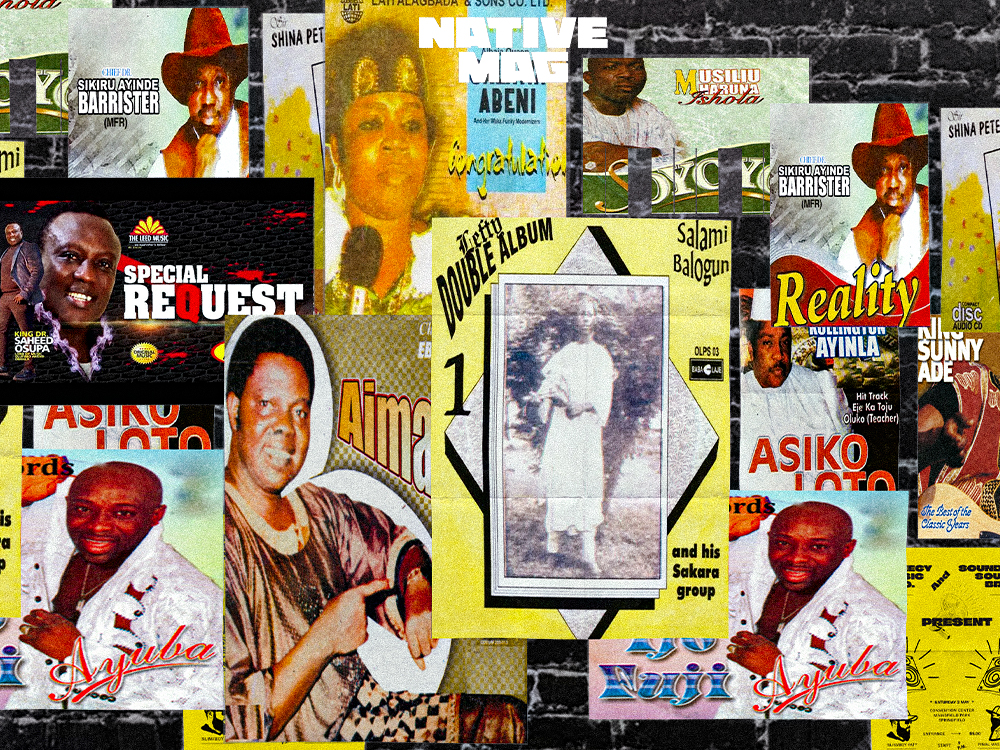
When rappers like Kayode make experimental sounds, they’re only following in the legacy of the very genres being sampled.
Sampling Apala and Fuji for Trap? Nobody quite knows what it means, but it gets the people going! And it’s not that far-fetched, when rappers like Kayode make these experimental sounds, they’re only following in the legacy of the very genres being sampled.
Many styles of Yoruba music did not make it to being recorded for mass audiences. The ones that did include Jùjú, Sákárà, Àpàlà, Ajiwére, Wákà, and of course, Fújì. So, here’s a primer on what each of the sounds means and represents.
First, a crash course on Yoruba music. Many styles of music did not make it to being recorded for mass audiences. The ones that did include Jùjú, Sákárà, Àpàlà, Ajiwére, Wákà, and of course, Fújì. So, here’s a primer on what each of the sounds means and represents.
Jújù
Juju was the first commercially successful genre of Yoruba extraction, having been recorded the earliest by Tunde King in 1935. It was inspired by the minstrel activities of 1900s Lagos, mixed with the influence of the tambourine (brought by the missionaries), the box guitar, and the samba drums popular among Brazilian returnees. Guitars would become the dominant instrument a few decades later.
Musical Style: Call and response, praise poetry, and might include church hymns and choruses.
Principal Proponents: Chief Commander Ebenezer Obey, King Sunny Ade, and Sir Shina Peters.
Sákárà
This style was created from adapting Yoruba praise singing to Islamic cadences, employing slow and mellow rhythms, as though one was reciting the Holy Quran. Sometimes, the lyrics included moral instructions, but it was mostly for praise poetry. It emerged across Yorubaland in the 1920s.
Musical Style: Call and response, praise poetry, but driven by the clay-frame drum it took its name from. The molo or goje (lute or fiddle) was added by Yusuf Olatunji.
Principal Proponents: Abibu Oluwa, Lefty Salami, and Yusuf Olatunji (both broke out from Oluwa’s band). Olatunji’s son, Abideen, continues the tradition today.
Àpàlà
Similar to the previous two, this too was created by evolving traditional music, and although many of its performers were Muslims who sometimes included their faith, the music itself is more from traditional religious groups and societies. It spread widely across the region, and it’s unclear now which exact town it was first played in.
Musical Style: Heavy percussion rhythms define Apala, along with rattles, shekere, and bells. It is at once recognizable by the deep, hoarse, almost guttural voice of its singers.
Principal Proponents: Haruna Ishola, Kasunmu Adio, and Ayinla Omowura.
Ajiwére
Born directly from Islamic tradition, Ajiwére was an activity carried out mostly by young boys who went around to rouse Muslims faithfuls during Ramadan mornings. It was a widespread activity across the region, from Ibadan to Abeokuta to Ilorin, and Lagos. In time, it became highly anticipated, and competitions were organized to discover talented youngsters. Its biggest legacy was giving birth to Fuji.
Musical Style: Fast and pacy with small drums and gongs. Performers had to sing and walk through the neighbourhoods, interspersing Quranic verses with playful tunes they made up as they went along.
Principal Proponents: Taiwo & Kehinde Oru, Dauda Epo Akara, and Sikiru Ayinde
Wákà
Wákà is similar to Wéré in the sense that it was Islamic, but it was performed exclusively by women. In any case, young girls didn’t go out with the Ajiwere boys in the predawn hours. But Wáká was sung all year round, at gatherings, services, events, and anywhere that Muslim women were gathered.
Musical Style: Call and response, led by a single vocalist. It started with no accompanying instruments but soon incorporated Sẹ́lí, a pair of metal discs with looping rings that was played by rhythmically clapping them together. This was easy for women to play. But as it became a successful genre, Wáká singers employed male drummers.
Principal Proponents: Batile Alake, Salawa Abeni, and Kuburatu Alaragbo.
Fújì
Much like Afrobeats, Fuji is a fusion of many things–most notably, preceding genres of Yoruba music and contemporary sounds that change by eras (Funk and Afrobeat in Barrister’s time and Hip-Hop in Pasuma’s). Its most dominant progenitor is Ajiwere music, as it was what Barrister excelled at and evolved into a new type of sound that was not limited by time of year (Ajiwére only came out during the annual Ramadan) or audience (non-Muslims could participate as well).
It is the most enduring traditional Yoruba music genre as it has dominated for four decades and counting. Perhaps Fuji’s superpower is its ability to evolve, embrace other genres, and always come back to its core.
Musical Style: It started out slow like Sákárà, then it sped up as Barrister tinkered with it. Kollington introduced the Bàtá drum to it. K1 De Ultimate made it “Funky”, and then “Classical”. Obesere made it risqué. Ayuba made it crossover, followed by Pasuma. Saheed Osupa oscillates between purist-type lyricism and contemporary Dance. Its most identifiable factor is the drums, and the singers’ vocal structure that constricts the vocal cords to a high pitch.
Principal Proponents: The question is, who can we leave out? Barrister, Kollington, Iyanda Sawaba, Wasiu Ayinde, Adewale Ayuba, Obesere, Pasuma Wonder, Sefiu Alao, Saheed Osupa, Remi Aluko, Taye Currency, Tiri Leather, and easily five hundred others.

