Zlatan Is Afropop’s Ultimate Symbol of Hope
Across 'Symbol of Hope,' Zlatan extends his hand to those still climbing, hoping to help them make sense of the journey.

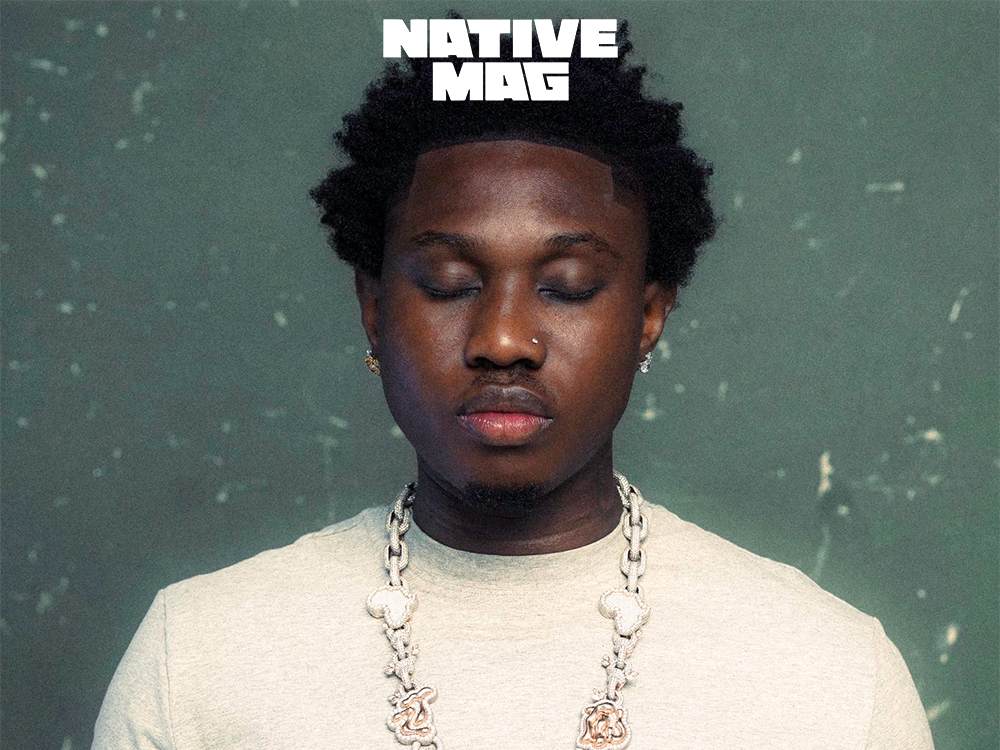
Across 'Symbol of Hope,' Zlatan extends his hand to those still climbing, hoping to help them make sense of the journey.
The rhythm of Zlatan Ibile’s life pulses with an urgency that mirrors the streets of Lagos, where dreams are forged in the crucible of hustle. His journey, propelled by raw talent and relentless determination, has carried him from the unassuming streets of Ikorodu to the epicenter of Afropop, where he first made waves with his debut album, ‘Zanku.’ With his latest, ‘Symbol of Hope,’ Zlatan is offering a beacon for those navigating their own paths through adversity. In parts, this project, his third full-length album, captures the essence of a man who has transformed personal triumphs into a universal call for resilience.
From humble beginnings, Zlatan’s entry into music felt accidental, a detour from his initial ambitions to be a footballer. He recalls stumbling into the craft without a clear map. “When I began making music, I didn’t know what I was doing,” he shares. What started as an experiment ultimately evolved into a defining journey.
His breakthrough came through a collaboration with Olamide, a moment that shifted the trajectory of his life. Expecting a fierce Hip-Hop back and forth, Zlatan was instead surprised by Olamide’s melodic ingenuity, thrown aback by a song that opened with the puzzling line, “Oh my lord, the weyrey dey my body.” That unexpected pivot guided by Olamide’s intuition became “My Body,” the master hit that broke him out. “If we had gone bar for bar, I’d probably still be in Ikorodu fighting for my life,” Zlatan admits with a reflective chuckle.
From those roots, his sound blossomed. The fast-paced Street-Pop template that defined his early work has expanded into a richer palette of stirring anthems, mid-tempo reflections, and tender love songs. “Now, I make all kinds of songs: street anthems, mid-tempo tracks, motivational songs, and even calm love songs,” he says. “My sound has definitely evolved, but people on the outside sometimes don’t see the full picture of your growth.”
It’s been four years since he last released an album, but the Zanku boss has had his hands full. The gap between his 2021 album ‘Resan’ and ‘Symbol of Hope’ was no idle pause but a season of building. “Music is just one part of my life,” he explains, noting the weight of other responsibilities. Still, he has maintained prolificity. In 2022, he released singles and featured on collaborations; his name remained a constant draw for rising artists looking to consolidate mainstream breakthroughs.
Other responsibilities have shaped his outlook on life. Fatherhood, which arrived in 2020, particularly redefined Zlatan’s world. “Becoming a father in 2020 was a game-changer,” he says. His son became both anchor and muse, tempering the wild energy that fans had come to expect from Zlatan. The “madness” that fueled his street anthems softened, making room for a grounded perspective..The balance that emerges between the chaos of performance and the quiet duties of home life infuses his music with new depth, resonating in “Symbol of Hope.”
Beyond the studio, Zlatan’s entrepreneurial spirit has thrived. His fashion brand ZTTW, launched online in 2017, grew into a physical store in Lagos a year and a half ago. Days are spent designing, and nights bleed into dawn in the studio. “I barely sleep–maybe three or four hours–because even when I’m not working, I can’t switch off,” he shares. This relentless cycle birthed tracks for the album, some recorded years ago, each a snapshot of his tireless pursuit.
The creative process of ‘Symbol of Hope’ was both a labor of love and an exercise in precise execution. Zlatan recorded endlessly, amassing hundreds of unreleased songs. “I never stop recording, I work like I’m a banker going to work every day,” he says. The album contains 15 tracks, each reflecting a distinct part of his journey and creative growth. Some songs were recorded years ago, while others were shaped in the studio as the project took form. Some creative decisions reflected his desire to reach a wider audience. He purposefully used more pidgin so listeners from every part of Nigeria and beyond could connect with the music.
Collaborations are also at the heart of the project. Qing Madi’s haunting vocals on “Demons” add emotional heft, while Shallipopi and Terry the Voice ignite “Jeserawa” with street-forged energy. “Gimme Your Love,” featuring Olamide, feels like a sacred reunion, their bond transcending music. Olamide, a mentor and brother, has shaped Zlatan’s path with lessons in humility and generosity. “He’s probably helped more artists in Nigeria than anyone else,” Zlatan notes.
For the first time in his career, Zlatan opened his creative doors to songwriters after eight years of writing every lyric himself. At first, he resisted. No one, he thought, could capture his thoughts better than he could. But he gave it a chance, and what followed surprised him. The words came alive in ways that felt eerily familiar, as if someone had reached inside his heart and rearranged his feelings into melody. “The writer just understood me,” he explains. His friend, Chinko Ekun, was present through the process, helping to complete lines that felt unfinished until they landed.
Beyond the music itself, “Symbol of Hope” represents Zlatan’s ambition to inspire a new generation of artists and fans. He sees the album as a platform to showcase the possibilities that arise when dedication and creativity merge. “Seeing Olamide’s success made me believe I could do it too; seeing Wizkid make it at such a young age made me realize that I don’t have to be thirty-five before making music,” he says. “Now, I know many people also look up to me as their symbol of hope too. Anybody can be a symbol of hope if they inspire you to be better.”.
In many ways, Street-Pop’s evolution mirrors Zlatan’s own. What began with raw, street-born energy morphed into a trailblazing sound that pushed boundaries and carried the pulse of the streets through each voice. Zlatan stands in the middle of that arc, both student and teacher. “Street music has come a long way,” he says. ”From Terry G to Olamide, Myself, Naira Marley, Shallipoppi, ODUMODUBLVCK, and Asake, change is constant,” he says.
What has seemingly defined his second arc is a willingness to collaborate across the board. Zlatan particularly embraces collaboration with younger artists because others gave him chances when he was coming up. Today, the music scene is saturated, attention spans are shorter, and artists are expected to release new material constantly. Zlatan moves through it with a patience shaped by time. He finds joy in the rise of new Street-Pop artists, seeing in them the same restless fire that once kept him awake.
Fame once came with fearful shadows. The fear of slipping back, of watching it all disappear, used to haunt him. But Zlatan learned to turn pressure into perspective. Starting his own label in 2020 was an act of gratitude, a way to give others what he once wished for. “Everyone’s on a different level, like cars in traffic,” he says quietly. “You just have to move at your own pace.” It’s a lesson he carries into every song, every night in the studio that stretches until morning. ‘Symbol of Hope’ feels like the sum of a long-winding journey, a mirror held to a boy who once failed an exam, lost a dream, and found a new dream in melody. Through it, Zlatan extends his hand to those still climbing, hoping to help them make sense of the journey.

