Two Years Later, Onyeka Onwenu Is Still An Avatar Of Nigerian Culture
The true measure of Onyeka Onwenu's legacy lies in whether future generations draw from her belief that culture can build a better society.

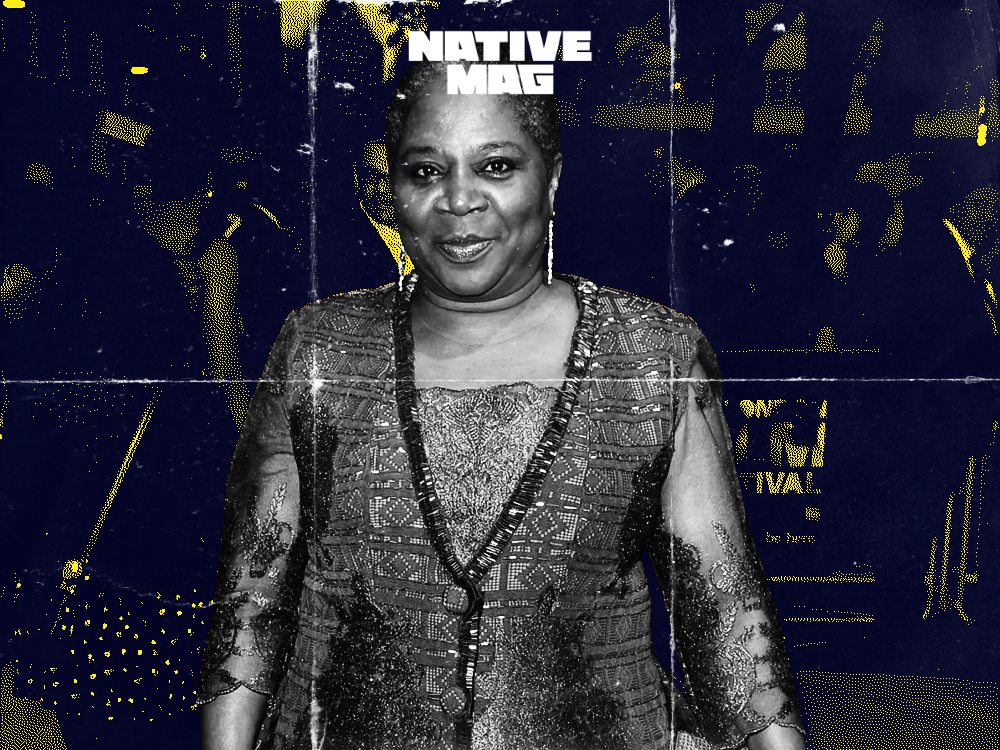
The true measure of Onyeka Onwenu's legacy lies in whether future generations draw from her belief that culture can build a better society.
There is a temptation, whenever we remember Onyeka Onwenu, to begin with the music. Perhaps it is because songs like “One Love,” “Iyogogo,” “Ekwe,” and “Wait For Me” remain embedded in the country’s cultural memory. Perhaps it is because her voice came with a peculiar warmth, elegant without tampering with her conviction. Or because music was the medium through which most Nigerians first encountered her.
Yet, reducing Onwenu to music alone does her a disservice. Two years after her passing on July 30, 2024, what lingers most consists of the expanse of her legacy and the example she embodied. Over the years, careers have become increasingly defined by specialization, but the multi-hyphenate star represented a different possibility. She worked across journalism, activism, politics, music, broadcasting, and film with unusual ease. Her impact is etched in stone as proof that art could coexist with public service and that celebrity could be wielded in pursuit of something larger than fame.
Across music, journalism, politics, and film, Onwenu treated Nigeria itself as her canvas. However, long before she became the “Elegant Stallion,” there was a young girl learning and thriving in survival and resistance. Born in 1952, Onwenu came of age in a Nigeria still defining itself. The youngest child of educationist and politician D.K. Onwenu, she lost her father at the age of four, just days before he was to assume office as Minister of Education.
The story of Onyeka Onwenu is often told through her accomplishments, but the foundations of her character were laid much earlier. As a teenager in Port Harcourt, she reportedly wrote a political opinion piece criticizing Nigeria’s involvement in Rhodesia’s affairs. The article never reached publication; her mother, fearful of possible repercussions, withdrew it before it could be printed. The impulse behind it, however, never disappeared.
During the Nigerian Civil War, Onwenu and her sisters found refuge in music. Under cocoa trees that doubled as protection from air raids, they sang songs about love, faith, loss, and hope. For a young woman navigating war, music became a succor. It went on to become a form of expression defining the rest of her life. After studying International Relations and Communications at Wellesley College in Massachusetts and earning a Master’s degree from The New School for Social Research in New York, Onwenu spent a brief period working with the United Nations before returning to Nigeria. In her memoir, ‘My Father’s Daughter,’ she described that decision as a leap into uncertainty, a return to a country she loved but one whose contradictions she could not ignore.
In the early 1980s, Onyeka Onwenu emerged as one of the country’s most fearless journalists. Her landmark documentary, ‘Nigeria: A Squandering of Riches,’ examined corruption, inequality and the failures of governance in an oil-rich nation where prosperity remained elusive for many citizens. The documentary remains one of the most significant televised critiques of Nigeria’s political establishment and helped establish Onwenu as a journalist unafraid of difficult truths.
The concerns she raised then continue to feel strikingly relevant today. It is safe to say that is why Onwenu’s activism never appeared performative. It was part and parcel of her life. Whether defending the democratic mandate of MKO Abiola after June 12, challenging the treatment of Fela Anikulapo-Kuti, advocating for women’s rights, or staging a hunger strike against the Nigerian Television Authority over unpaid royalties, she consistently aligned herself with causes that demanded courage. This powerful trait subsequently spilled into other facets of her public life.
An understanding of Onwenu’s music and rhythm demands an awareness that activism was at its core. While many remember her as a musical icon, her songs were often conversations about society. She fused Igbo Folk traditions, Highlife, Contemporary Pop, and Soul into a sound that felt distinctly Nigerian while remaining globally accessible. Albums like ‘Endless Life’ and ‘Onyeka’ produced enduring classics, but her greatest achievement may have been proving that commercially successful music could still carry a conscience.
Her songs spoke about peace, unity, health awareness, women’s empowerment, and the dignity of ordinary people. “One Love” reverberated through the continent, a sonorous argument for coexistence. “Iyogogo” celebrated culture and encouraged social consciousness while being a letter to a love interest. Even after transitioning from secular music into gospel during the 1990s, the themes remained remarkably consistent. That same mission extended beyond Nigeria’s borders.
Amid the struggles that plagued the Apartheid South Africa era, Onwenu used her platform to express solidarity with the struggle. Her song dedicated to Winnie Mandela recognized not only the anti-apartheid movement but also the resilience of African women navigating extraordinary political circumstances. She understood that songs could become statements and that artists could shape political consciousness.
However, not every chapter of her activism escaped controversy. Her participation in the 1998 Two Million Man March in support of General Sani Abacha drew criticism from many Nigerians, though Onwenu would later write that she had been deceived about the purpose of the gathering. This episode highlights how a public life as expansive as hers was never without its complexities.
The question that lingers after Onwenu’s death is whether Nigeria still produces cultural figures like her. Contemporary Nigerian artists operate within a dramatically different environment. Social media has transformed fame. Streaming platforms have globalized audiences. Yet these developments have also complicated the relationship between artists and activism. The years following #EndSARS revealed how deeply Nigerians still expect public figures to engage with social issues. At the same time, they exposed the risks that come with doing so. In that context, what Onyeka Onwenu stood for still needs active representation.
She did not separate her artistic identity from her civic responsibilities. She viewed public engagement as part of the work. This does not mean every artist must become an activist. But it does raise an important question about what society expects from its most influential voices.
In all of these, music was only one chapter. When Nollywood entered its period of rapid expansion, Onwenu reinvented herself once again. She became one of the industry’s most respected veteran performers, bringing dignity and emotional depth to roles that introduced her to a new generation. From ‘Conspiracy’ to ‘Half of a Yellow Sun’ and numerous other productions, she demonstrated the breadth of her creative prowess. Her success in film reinforced something Nigerians had already begun to understand: Onyeka Onwenu’s legacy defied categorization. She was a singer, journalist, broadcaster, actor, activist, and politician, but none of these titles fully defined her.
Even her political journey reflected that refusal to remain confined. Though unsuccessful in her attempts to become chairman of Ideato North Local Government Area, she continued serving in public roles, including as Chairperson of the Imo State Council for Arts and Culture and later as Executive Director of the National Centre for Women Development. There, her advocacy for women found institutional support.
Few public figures embodied feminism with the same clarity. The iconic vocalist never viewed women’s rights as a fashionable talking point. Her understanding of feminism was rooted in dignity, opportunity, and self-determination. She repeatedly argued that women should never have to apologize for occupying space, pursuing ambition, or making their voices heard. In many ways, that philosophy mirrors the trajectory of her own life. She entered industries dominated by men and stayed long enough to become one of their defining figures.
On the evening of July 30, 2024, news reached far and wide that Onyeka Onwenu had passed on after performing at a friend’s birthday celebration in Lagos. The image feels strangely fitting. After decades spent singing, speaking, advocating, and creating, the Elegant Stallion departed while doing what she loved most, sharing herself with others. Two years later, the true measure of Onyeka Onwenu’s legacy lies in whether future generations draw from her courage, her willingness to challenge power, her embrace of unbridled creativity, and her belief that culture can help build a better society.

