The Reality of Nepotism in Nigerian Music
Money will always buy the best cameras and the loudest PR, but in the end, consistency is the only thing that decides who stays.

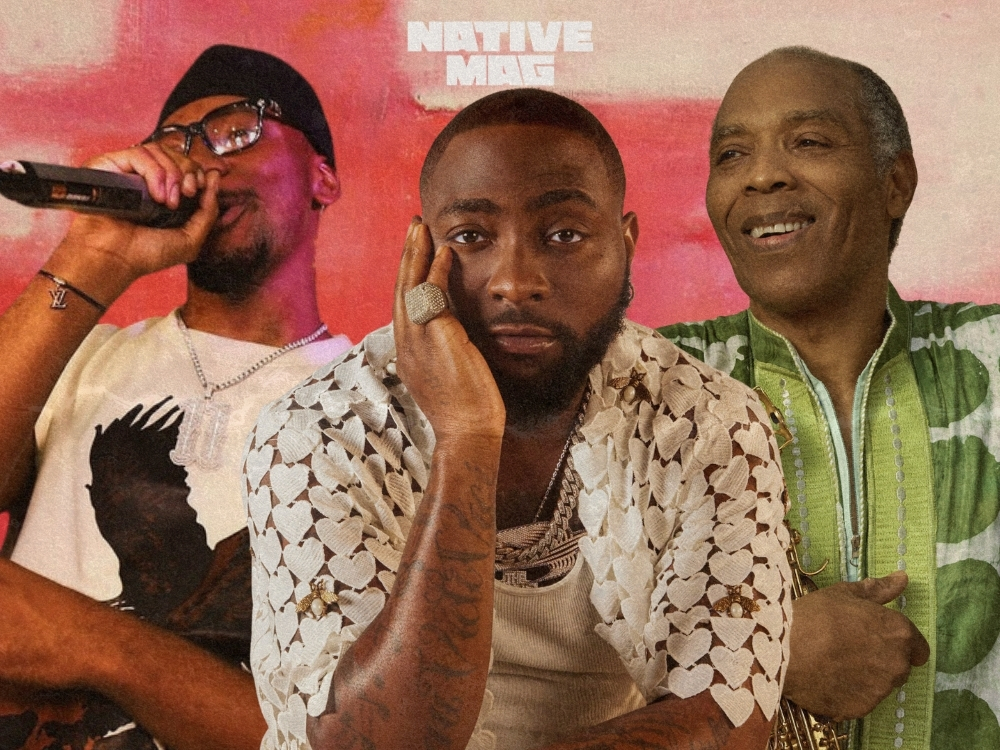
Money will always buy the best cameras and the loudest PR, but in the end, consistency is the only thing that decides who stays.
Power has always moved in circles. From politics to sports, media to film, influence tends to pass between the same hands. Favoritism sits at the center of this dynamic, and that is usually where conversations about nepotism begin. The line, however, is thinner than we admit. You don’t need to be a mogul to favor those close to you; humans are hardwired to help their own, yet music is often imagined as different. In the collective imagination, music is the great equalizer—a pure meritocracy where talent is the only currency that matters. If we are being honest, however, that is rarely how it plays out.
Considering the sheer density of the Nigerian music market, thousands of songs are uploaded to streaming platforms every week; too often, the volume of the noise is deafening. In such a saturated ecosystem, talent is merely the baseline requirement. Visibility is the real asset. So, when an artist emerges with obvious access, backed by deep pockets, high-level connections, or proximity to power, it immediately triggers a conversation. It’s not that talent is absent; it’s that access decides who gets the microphone in the first place. This is where the Nigerian conversation gets steamy: Is nepotism really the enemy, or have we fetishized “the struggle” as the only proof of legitimacy?
The music industry has never been a level playing field, but Nigerian audiences often demand hardship as a prerequisite for respect. We love a “grass-to-grace” story; the struggling narrative serving as a moral certificate. Consequently, an artist’s background becomes a litmus test. For artists from wealthy or well-connected homes, this skepticism is a heavy ceiling. They are constantly interrogated: Are they real? Did they buy their way onto the playlist? Are they using writers and PR machines to manufacture cool?
Ironically, these are industry-standard tools used by everyone, from the streets of Ojuelegba to the leafy mansions of Banana Island. But for the privileged, the use of these tools is viewed as cheating. Part of the problem is our lazy lexicon. We use the term “nepo baby” as a catch-all slur, lumping together the wealthy, the privileged, and the connected as if they are the same. They are not. To understand the current landscape, we have to view privilege as a spectrum.
There are so many types of nepotism, for example, legacy nepotism. This is being born into a name that carries heavy cultural weight. The Kuti family, Femi, Seun, and Made, operate from this end of the spectrum. They inherited not just a name, but a responsibility and a sound. Secondly, there is industry proximity. This is where the door isn’t just unlocked; the parents hold the keys. Take Mayorkun for example, his mother is the veteran actress Toyin Adewale. While she isn’t a musician, her decades in the entertainment industry provided Mayorkun with an intrinsic understanding of how the machinery works—contracts, public image, and networking. The door was closer for him, but he still had to walk through it.
Then, there is access privilege, which causes the most friction today. Artists like Mavo fall here. They aren’t necessarily industry heirs, but they are financially positioned to bypass the early gatekeepers. Studio time, high-end visuals, and marketing budgets, barriers that necessarily delay the actualization of the dreams of others are mere formalities for them. Finally, there is network privilege. In the Nigerian music industry, speed is everything. Breaking through requires brand relationships, performance slots, and festival placements. Privilege shortens this journey. It buys you time to experiment, and more importantly, it buys you room to make mistakes without starving.
To understand where we are going, we must look at where we started. The comparison between Davido and B-Red remains the ultimate case study in how privilege interacts with talent. Both entered the game under the colossal shadow of the Adeleke name. But Davido didn’t just accept his background; he weaponized it. On “Dami Duro,” he screamed Omo Baba Olowo (Son of a Rich Man) at the top of his lungs. He didn’t cosplay poverty to appeal to the streets; he sold the fantasy of wealth with such charisma that the streets bought into it anyway. He backed the flash with an insane work rate and a hit-making consistency that eventually drowned out the critics.
B-Red, despite legitimate talent, struggled to convert that same access into cultural dominance. Their diverging paths prove a vital point: Privilege gets you into the room, and it might even buy you the first round of drinks, but it cannot force the public to dance. Fast forward to 2025, and the rules of engagement are shifting again with Mavo and a loose collective of artists being tagged with the moniker “Nepopiano.” Mavo represents a generational shift. He doesn’t dodge the label; he plays with it. When he drops lines like “No more way for poor people,” it cuts through because it is blunt, provocative, and self-aware.
Instead of apologizing for his background, he acknowledges it and pivots to the music. His run as one of the most featured artist of 2025 wasn’t just about money; it was about positioning. Up-and-coming artists like No11, Siraheem, and Ayjay are moving with similar intentionality. This isn’t just about individual rich kids making beats; it’s about community. Just as lower-income artists have their crews, these artists have theirs.
We have seen precedents for this phenomenon before: Davido built his foundation at Babcock University, Cruel Santino and BOJ cultivated the Alté scene, and more recently, Mavo has leveraged the ABUAD (Afe Babalola University) connection. These artists understood that being legitimately tethered to scenes comes before stardom. They are building an ecosystem that values aesthetics, high-quality production, and a specific lifestyle brand that appeals to a Gen Z audience less obsessed with the struggle and more obsessed with the “steeze.”
Whether “Nepopiano” becomes a lasting sub-genre or remains a fleeting social media tag is unclear. What is clear, however, is that Nigerian music is entering a phase where privilege is no longer something to be hidden. It is being acknowledged, debated, and, often,turned into art. Perhaps the conversation is finally maturing as we move away from asking “Where did you come from?” and start to ask “How hard can you move now that you’re here?
Access will often decide who gets the head start. Money will always buy the best cameras and the loudest PR. But in the end, consistency is the only thing that decides who stays. You can buy the airtime, but you cannot buy the replay value. The audience still holds the ultimate power. And as history shows, they always make the final call.

