Teledalase Is Doubling Down On Her Yoruba Heritage With “SANGO, IGI NLA”
Through “SANGO, IGI NLA,” Teledalase encourages her fans to form strong opinions and reject injustice, no matter how big or small.

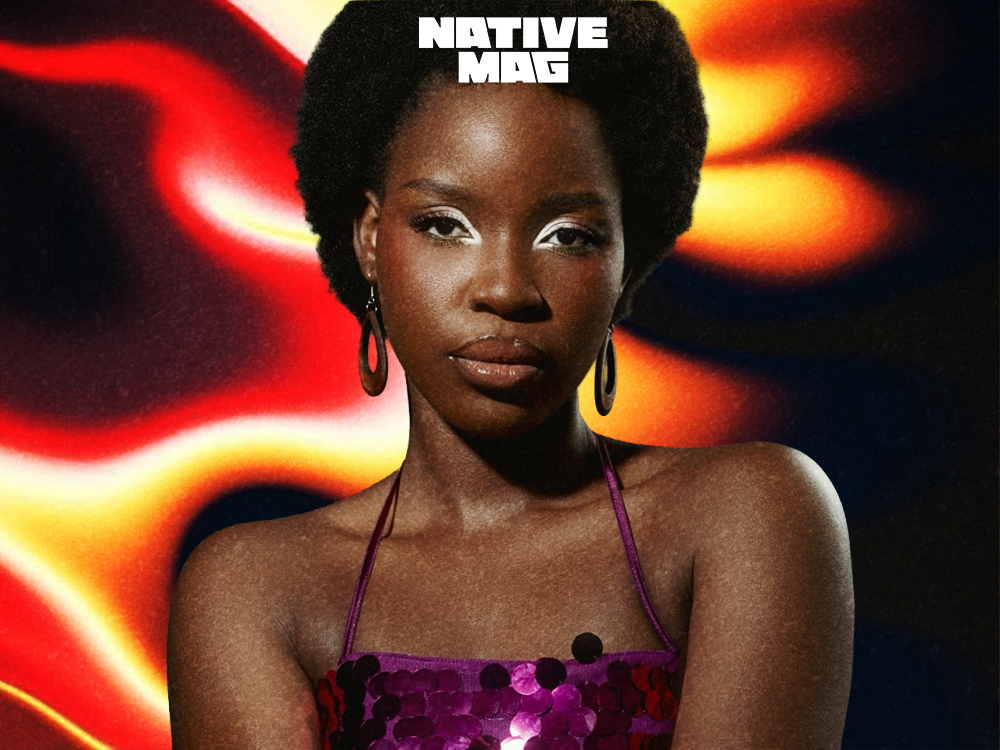
Through “SANGO, IGI NLA,” Teledalase encourages her fans to form strong opinions and reject injustice, no matter how big or small.
Throughout Teledalase’s career, she has breathed new life into Yoruba culture without diluting the essence of its stories, traditions, and people. Even before gaining wider attention following the release of the Netflix blockbuster ‘Anikulapo: The Rise of the Spectre,’ for which she served as the principal vocalist on the film’s score and earned one of her biggest songs, “Eledumare,” she had been building an ethereal Folk music universe that rightfully makes her a custodian of the language for a new generation of listeners. “I am an advocate of the preservation of the Yoruba language,” she tells Native Mag. “My ancestors had a way of interpreting and understanding life. And it is imperative for me as a Yoruba woman to pass the parts that are helpful to the next generation.”
On her latest single, “SANGO, IGI NLA,” she broadens the scope of Folk music by merging the indigenous tale of the revered Yoruba deity Sango with electrifying, Pop-inflected melodies that capture his fiery reputation. It is not Teledalase’s first rodeo with blending Yoruba mythology and Pop. In 2025, she released ‘The Bad Wife Has No Tongue,’ an experimental five-track extended play exploring womanhood and personal liberation through tracks such as “The Bad Wife,” “Agbaya,” and “Aibidi.”
“SANGO, IGI NLA” takes the singer into even more experimental spaces, with Justin Tanksley’s production fusing striking elements of the electric guitar, agogo, bata, dundun, iya ilu, and omele with Teledalase’s reverential Yoruba chants and incantations to create a Dance-inducing record. Imagine it like this: it’s midnight at a club, and bodies are swaying to spiritually-coded music. That is the beauty of the world Teledalase is building with her music.
Beneath the melodies lies a deeper intent to address the issues plaguing the world. “I felt compelled to tell this story now because of the events happening,” she says. “The rise of fascism, anti-intellectualism, and anti-immigration in different countries. The continuous decay of the systems of the world, intolerance to humanity, and the proliferation of maladaptive cultures.” Through “SANGO, IGI NLA,” Teledalase hopes to shed light on these issues while encouraging her fans to form strong opinions and reject injustice, no matter how big or small.
Your music connotes spiritual meanings while referencing folklore; how do you effectively incorporate these influences without losing your own touch?
It is quite effective for me to do this because I am not cosplaying. I am someone who is madly in love with the Yoruba language and culture. I am a student who keeps learning through books, music, movies, and word of mouth. Hence, my maddening passion shows through my music. I am simply just being myself.
What were your earliest musical influences and role models?
Mama mi (my mom), Lagbaja, Hubert Ogunde, Ajobiewe, Erugale, Eremule, King Sunny Ade, Nina Simone, and Whitney Houston. Wón pò!
Yoruba mythology is a big part of your music. Is there a particular reason you’ve stuck to retelling these indigenous stories?
I am an advocate of the preservation of the Yoruba language. My ancestors had a way of interpreting and understanding life. And it is imperative for me, as a Yoruba woman, to pass [on] the parts that are helpful to the next generation. To oversimplify my “reason,” I want to make this knowledge, this library, more accessible. I hope that this will help to prevent the extinction of our language, rhythm, and stories.
What do you hope listeners feel or take away from your songs?
I just hope my songs help somehow. Otherwise, how they feel and what they take away are subjective.
“Saworo Ilu” is one of your best records; how does it feel watching it grow year after year?
It feels great to see so many people relate to it. I am pleased with the joy that is expressed in all the videos I’ve seen on TikTok. How lovely it is to see so many gravitate towards a song that I wrote while driving down to Anne Arundel.
For ‘Anikulapo,’ what was your goal as you recorded the songs that made up the album? Would you say you achieved everything?
I finally got the chance to go beyond the peripheral level of Yoruba music and language. I took it as far as I could go. I did my research on Odu Ifa so that I could have more accurate references. I would say that I achieved just that. I have introduced some of my favorite Odu Ifa, helpful sayings, to a broader audience. Based on the feedback, more people are less scared of Isese or Ijinle Yoruba.
“Eledumare” is dear to many of your fans. Was the song inspired by any personal experiences?
Yes, I wrote it while I was dealing with postpartum depression and some other traumatic experiences. It’s a song that is dear to me and got me through such a difficult period. I am happy that others have found it useful as well.
“SANGO, IGI NLA” draws heavily from Yoruba mythology and ancestral storytelling. What do Sàngó and the symbolism of the “Igi Nla” mean to you personally, and why was this the story you felt compelled to tell now?
I memorized this saying as a child. I am a collector of Owe Yoruba. I was drawn to it because I was amazed that something was resistant to Sango, so I have referenced this saying during tough times. When an overtly racist person tries to be condescending towards me. Or when life gets hard. So, I guess I am hoping that listeners feel strengthened. I felt compelled to tell this story now because of the events happening. The rise of fascism, anti-intellectualism, and anti-immigration in different countries. The continuous decay of the systems of the world, intolerance to humanity, and the proliferation of maladaptive cultures. In summary, I had to say something.
How did you approach bringing Yoruba musical and cultural elements into your sound without losing your own artistic identity?
It’s not something I have to bring. Everything that I am is always present in my art.
What do you hope someone who may not be familiar with Yoruba culture takes away from “SANGO, IGI NLA” after listening to it?
I hope they feel undefeated. “Nothing do me!” type of reawakening or mentality. I hope they’re moved to stand up to any type of injustice. Beginning with the one right in front of them.
Listen to “SANGO, IGI NLA” here.

