Northern Nigerian Musicians Are Rewriting The Playbook
Northern musicians are carving out space on the national radar, proving that their music is both culturally resonant but commercially viable.

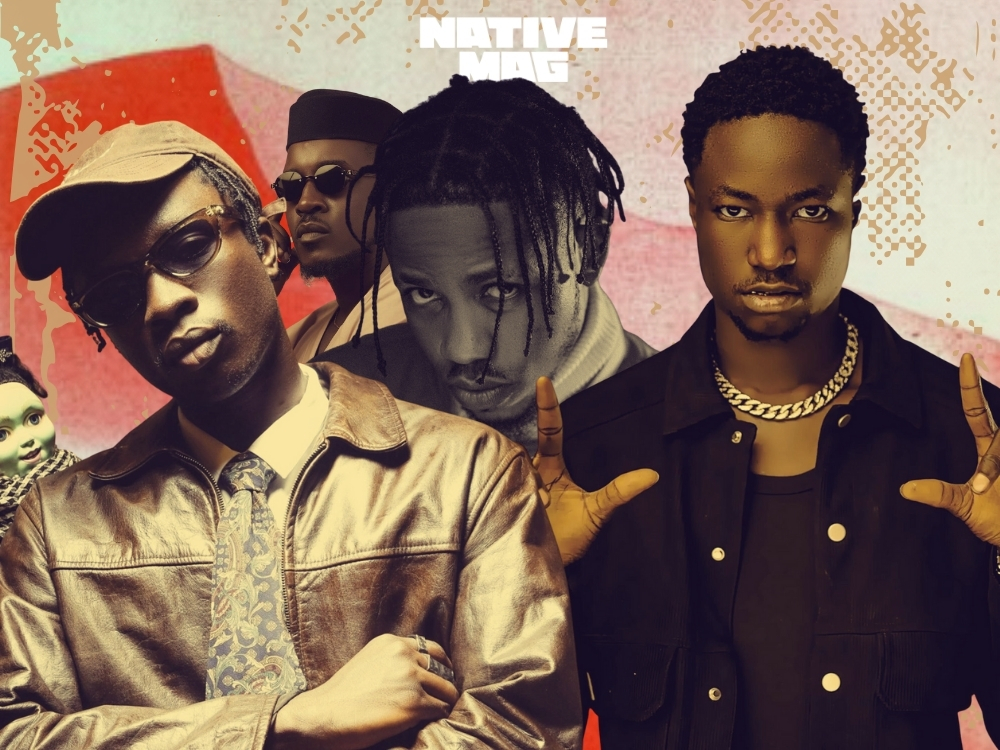
Northern musicians are carving out space on the national radar, proving that their music is both culturally resonant but commercially viable.
Contrary to what many might assume, a buzzing scene of new-gen Northern Afropop artists in Nigeria is very much alive—thriving even—though it exists, admittedly, at a slight tangent to the country’s mainstream music industry. Long insulated from the hyper-globalised churn of Nigerian popular culture, the Northern Nigerian creative ecosystem has endured in relative quiet. Yet the region’s artistic output, from Kannywood’s cinematic ambitions to its niche but resilient musical expressions, has persisted as a substantial, if chronically under-acknowledged, thread in Nigeria’s cultural fabric.
Historically, musical expression in the North has leaned towards traditional forms: devotional idioms, folk cadences, and religious genres have historically dominated the sonic terrain. This inclination is often attributed to cultural conservatism and sociopolitical realities that either keep Pop music at bay or relegate it to the margins when it does appear. Still, over the past few years, the North has begun carving out space on the national radar, and the current wave of artists is proving that its contributions are not only culturally resonant but commercially viable.
In 2023, FirstKlaz emerged as one of the few visible members of a new generation Northern Afropop acts to successfully breach the mainstream, triggering a recalibration thanks to his collaboration with the folk music group, Iliya Entertainment Music. His debut single, “Tonight,” braided Fuji and R&B into a fluid, unforced fusion. But it was his 2024 breakout trilogy—“Gen-Z Fuji,” “Gen-Z Faaji,” and “Gen-Z Arewa”—that sealed his reputation as a visionary and a sonic cartographer mapping terrains that felt unfamiliar but necessary.
The North historically boasts a deep musical archive, stretching from the courtly Hausa songs of the Sokoto Caliphate to the Islamic devotional traditions of Kano and Katsina, which offers a vast tonal and rhythmic vocabulary ripe for contemporary experimentation. What makes FirstKlaz especially electrifying is his intuitive precision: the careful placement of traditional Hausa instrumentation, such as the kalangu (talking drum) and the goje (two-stringed fiddle), within sleek pop architectures.
On tracks like “Gen-Z Arewa,” he folds the hypnotic pulse of the kalangu and plaintive, folk-leaning vocals into polished, forward-leaning beats. His lyrical nods to Hausa culture, presented with breezy insouciance, situate his work within a broader, transnational story, yielding a sound that feels rooted and futuristic. His seven-track debut EP, ‘Dejavu,’ released last year housing gems like “Soyaiya,” “Maria,” and “Lili,” further secured his footing as an essential innovator.
The buzz has been building, and it’s no longer just FirstKlaz drawing mainstream attention. By now, you’ve almost certainly heard OG Abbah’s viral “Wayyo Allah Na.” Though released in February 2025, the record detonated across social media later in the year, propelled by a video stitched together from vignettes of him cruising through his neighbourhood, visibly turnt, flanked by his crew. The bubbly, head-knocking production hits hard, shoving the track squarely into the banger zone it was made for. It’s not every day you encounter a Hausa rapper going that hard, but it’s also not without precedent.
Earlier pioneering collectives like SWAT ROOT, home to future heavyweights such as Mode 9 and Terry tha Rapman, laid critical groundwork. Their influence peaked through the uncompromising releases from the Payback Tyme Records stable, specifically with the 2001 release of Six Foot Plus’ ‘Millennium Buggin’ and the eventual arrival of Terry tha Rapman’s seminal debut, ‘Tha Rapmanifestation.’ Terry tha Rapman went on to release other landmark projects such as his 2007 debut studio album ‘Tha Rapman Beginz,’ which featured tracks like “Na Beanz.” Mode 9, who is often cited as the crew’s technical lynchpin, spent these formative years refining a style that would eventually earn him a record-breaking seven “Lyricist on the Roll” awards at the Headies.
While his earliest Payback Tyme recordings for the unreleased ‘IX Files’ (circa 2001) became the stuff of underground legend, it was the 2004 release of ‘Malcolm IX – The Lost Sessions’ that officially announced his arrival as a dominant force in Nigerian Hip-Hop. This project, along with the subsequent 2006 mixtape ‘Pentium IX,’ essentially functioned as a manifesto for lyrically dense Nigerian rap, housing Boom-Bap classics like “Elbow Room” and “419 State of Mind” that proved the Northern scene could produce lyricism capable of standing shoulder-to-shoulder with the best of Nigerian Hip-Hop’s Golden Era.
eLDee of the Trybesmen also cut his teeth in the Kaduna scene, exporting that Northern-honed grit southward to help shape the late-’90s Pop soundscape. Then came the late-2000s wave of M.I Abaga, Ice Prince, and Jesse Jagz who gave the region a formidable, visible representation, imbuing Nigerian pop with a decidedly Northern sensibility and perspective. Magnito followed closely behind.
Still, there’s something especially thrilling about the newer cohort: DJ AB, Classiq, Morell, Dap Boy, Deezell, and now OG Abbah, whose commitment to performing almost exclusively in Hausa feels unbending and forward-pushing in ways earlier generations did not fully attempt.
The sharp-tongued Rumerh has also emerged as one of the most arresting new forces, proving she can rap circles around just about anyone. Known as the “Queen Kong” of Kaduna, the Fulani artist has evolved from viral TikTok moments into a central figure in the Arewa Hip-Hop scene. For a long time, women’s names were conspicuously absent from conversations about music—especially Hip-Hop—but that absence is no longer tenable. Today’s women in music are hungry, unrelenting, and simply impossible to ignore. They are working twice as hard to cement their presence and are succeeding at it.
Rumerh first caught public attention in 2022 through open-verse challenges that showcased a flow far more seasoned than her years might suggest, as she leaned into an aggressive, modern aesthetic. “Streibullet” went viral last year, thanks to its ferocious and untamed energy. The rapper lunged at the beat with venom, hurling bars with zero hesitation and no interest in restraint. On “Beauty Sleep,” her slick flow glides across buoyant production, her bars razor-edged and breathtaking as she code-switches effortlessly between Hausa and English; her bite remains lethal regardless of the language. The remix featuring Magnito serves as a definitive co-sign from one of the scene’s established talents. Ice Prince has also lent his veteran credibility, putting his own stamp on the renaissance with a cover of OG Abbah’s “Wayyo Allah Na.”
Then there’s Princess Mufeeda, who raps in a clipped, weighty cadence guided by a no-frills, all-bars philosophy. Raised in Maiduguri, her career took shape after moving to Abuja, where she began balancing life as a recording artist and television actress. To many, she is Salma—her character on the popular series ‘Kwana Casa’in’—but in the booth, she steps into a far more forceful persona. Tracks like “Our Tears,” “Rising Star,” and “Ji Mana” rest on confrontational, drill-adjacent foundations, and she wields her voice like a calibrated instrument, delivering heavy punches packed with internal rhyme, technical sharpness, and pointed social insight.
Beyond the headliners lies a long bench of Arewa talent: Auta Waziri, Msquare Nahh, Boyskido, Feezy, Namenj—artists who are working within a self-sustaining economy and have cultivated loyal fanbases and thriving micro-scenes across the North, even as their reach remains largely niche. They champion their homeland’s sound freely, stubbornly, and relatively unbothered by mainstream expectations. They form a web of community, building careers through regional circuits, street-level credibility, and deep cultural fluency, sustaining communal scenes that continue to be influential.
The ascent of these artists signals a broader hunger within Nigeria’s music ecosystem. Beyond the unmistakable cool of OG Abbah’s “Wayyo Allah Na” visuals and the song’s sticky hook, the fervour with which it was received revealed how starved listeners were for something different. Last year, debates abounded around the idea that while the industry continues to churn out technically assured, chart-friendly records, Afropop may be eating its own tail—its spontaneity dulled, its experimental joy thinned, and its imagination running low.
Hence, the enthusiasm surrounding these Northern acts exposed a curious overlap of frustration and desire: a craving for something different, risky, and genuinely interesting again. The clamour for the new reflected a subconscious longing for a disruptive style capable of delivering the jolts of excitement that new sounds or breakout acts usually bring, and though there were sparks that eased that drag, the appetite was never fully fed and will be carried into the new year. However, for many of these Northern acts, there are harder questions about sustainability.
Nevertheless, the sense remains that the tide is irreversible. Visibility and collaboration will definitely determine how far this wave travels. But it’s not all doom and gloom; the infrastructure is stirring, with DSPs like Spotify and Audiomack seemingly always willing to lend a hand. Expanding access to digital platforms and social media has thinned the walls that long hemmed this scene in, allowing sounds, stories, and identities to circulate freely across borders. Taken together, the experimental courage and cultural grounding of these artists suggest that Northern Nigeria’s creative ecosystem is no flash-in-the-pan. It is a scene with depth and breadth just waiting to take off.

