Mbryo Is Stepping Out Of The Shadows
After penning some of Afropop's biggest hits in recent years, Mbryo is writing a new chapter in his story with the release of “My Shayla.”

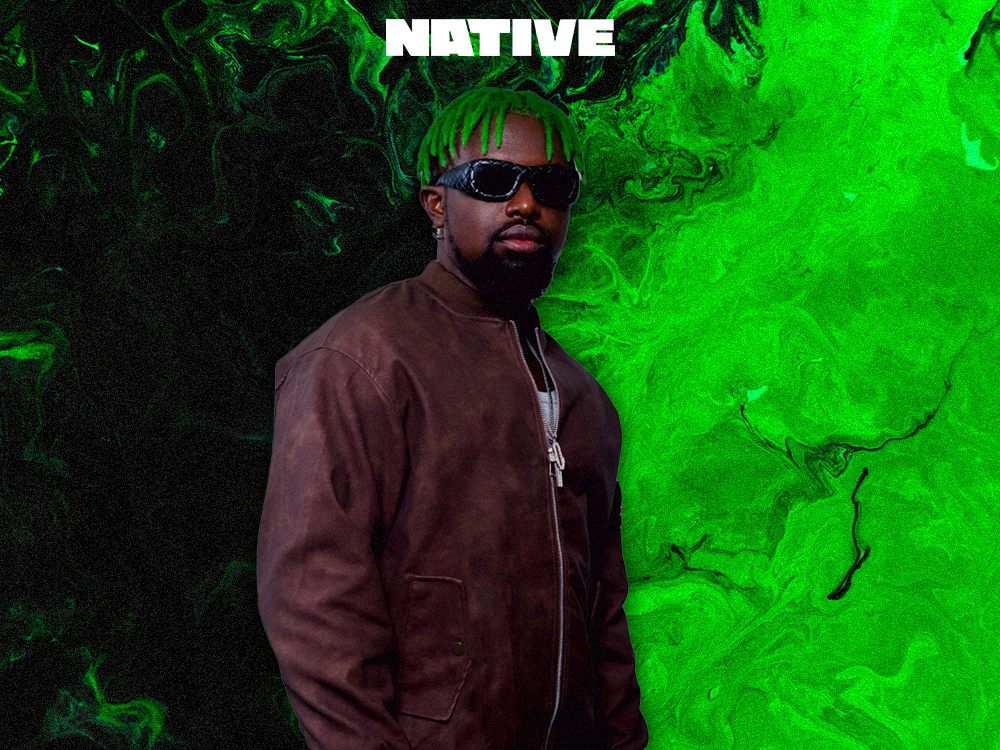
After penning some of Afropop's biggest hits in recent years, Mbryo is writing a new chapter in his story with the release of “My Shayla.”
Not many noticed what was unfolding when Mbryo quietly began shaping the sound of Afropop from the shadows. Long before he took center stage, his fingerprints were already on some of the genre’s biggest records. His pen had travelled farther than his name, and that was fine with him for a while. “I didn’t join Mavin thinking I’d be in the spotlight,” he tells The NATIVE. “I just wanted to write.”
Mbryo’s earliest memories of music are not tied to studios or stages but to language itself. “I’ve always had a thing for words, poetry, movies, stories,” he explains. Growing up, lyrics were how he made sense of the world. He found rhythm in speech, depth in simple phrases, and melodies in everyday sounds. That instinct for language soon morphed into full songs initially written in isolation, then gradually shared with friends who encouraged him to keep writing. “At first, it was just for me,” he says. “I didn’t even care if anyone heard it. It was the process I loved.”
By 2019, Mbryo was turning casual conversations into complete records. “Somebody would say something random, and I’d turn it into a hook,” he recalls. “I didn’t even care about credit at that point. I just wanted to create.” His songwriting wasn’t driven by ambition; it was an outlet, a form of expression. But that quiet passion eventually opened doors. A song he wrote, “Kayama,” landed on the DNA Twins’ ‘Gemini’ EP, an early career milestone made possible through his affiliation with White Wolf Entertainment’s Brymoor, who introduced him to Mavin Records’ A&R team.
That introduction changed everything. Mavin Records sent him beats for a new artist they were developing named Ayra Starr. The moment he heard the instrumentals, Mbryo knew exactly what to do. “There was a vibe,” he says. “I didn’t overthink it.” What came next were two of Ayra’s most defining songs: “Bloody Samaritan” and “Lonely.” “Bloody Samaritan” in particular became an anthem for defiance and self-assurance. “I just knew that line, ‘I’m feeling vibes on vibes,’ would stick. It sounded different, and it felt bold.”
That feeling crystallized when he wrote “Rush,” the global smash that launched Ayra Starr to new heights. It wasn’t planned. Mbryo had been vibing to the beat at home when a plumber came over to fix his water supply. The artisan asked, “E dey rush?” Mbryo, ever attuned to language, froze. “I was like, ‘Yo, that’s a line!’” He turned it into a lyric that millions would sing. The song earned Grammy consideration in the Best African Music Performance in 2024 and cemented Mbryo’s place as one of the most gifted penmen in contemporary Afropop. Yet even after that, he didn’t make a fuss. “I just went back to work,” he says.
Success didn’t change Mbryo. If anything, it made him more intentional about staying in the background. He didn’t chase clout or social media validation. “Every hit I wrote felt enough,” he explains. “I didn’t need the camera on me.” But the industry noticed, the artist pool he worked with started expanding, including everyone from Runtown to Tiwa Savage and Johnny Drille.
As a writer under Mavin Records, Mbryo’s method goes beyond simply stringing lyrics together. It’s almost surgical. “I try to hack the artist’s mind,” he says, describing how he immerses himself in their world to create songs that truly resonate. It’s about understanding their strengths, quirks, and untapped pockets. Sometimes, it means crafting a song that sounds like them more than they even know themselves.
Other times, he records a demo with a particular artist in mind. More often than not, it lands. “Nine times out of ten, they like it,” he explains. For Mbryo, the challenge and thrill lie in offering something the artist didn’t know they needed, songs that feel personal because they are. “I just want to do what you can’t do for yourself,” he says. “That’s the whole point.”
Before Mavin Records, Ayra, and all the accolades, Mbryo had tried his hand at recording. He featured on a few records with Ruggedman, experimenting with rap and melody, testing his voice in the frenzy of Nigeria’s underground scene. “I didn’t know myself then,” he says. “I was still figuring it out.” Writing for others offered clarity, structure, control, and a sense of quiet mastery. Performing, however, was a different kind of vulnerability: “When you sing your songs, there’s nowhere to hide,” he offers. “It’s your truth.”
“My Shayla,” his first solo track in a long time featuring Magixx, marks Mbryo’s return to the artist spotlight, but he isn’t doing it with the urgency or pressure that often fuels comebacks. For Mbryo, the question wasn’t why now? But rather why not?
“I just felt like, why not?” he says with a shrug. “I’ve got great songs, and I love to create. I’m not chasing anything or trying to prove a point. I just want to share what I’ve made.” Backed by a supportive family and grounded in a sense of peace, Mbryo sees “My Shayla” as a natural next step. “There’s no pressure. I’m living good, by the grace of God,” he says. “So I’m just letting the music speak, and whatever comes out of that, I’m good with it.”
Now, Mbryo is stepping into that reality, one record at a time. “My Shayla” showed a different side of him; the lyrics feel lived-in. “I take more risks as an artist compared to other artists,” he admits. “I am not scared to move outside of my comfort zone.” Even now, he records weekly, keeping a strict schedule. “If I don’t record once a week, I feel like that week is wasted,” he says. He also admits that he doesn’t experience writer’s block because his songwriting is deeply rooted in what’s happening in the moment.
Mbryo’s style is patient, deliberate, built on tension and release. He doesn’t force punchlines or overdecorate melodies. Every lyric is there for a reason. “Sometimes, less is more,” he says. “The hardest part of writing is knowing what not to say.” That discipline is what has made him an invaluable collaborator—not just to Ayra Starr, but to artists like Crayon, Magixx, and Bayanni, all of whom have benefited from his ability to distill complex emotion into digestible hooks.
His artistic influences speak volumes: John Mayer and John Legend. Artists who are known for a fastidious focus on their craft. “Those guys made music that made you feel something,” he says, “That’s what I want.” He’s also deeply aware of how trends come and go, but impact remains. That awareness guides his sound, a rich blend of Afropop, Soul, and R&B. “You won’t hear me shouting on a track,” he jokes. “But you’ll feel what I’m saying.”
With his own music, Mbryo is telling a story of triumph, a quiet declaration rooted in persistence, patience, and pride in a path that many overlook. In a landscape where songwriting has long been undervalued, Mbryo carved out a lane that wasn’t always respected. “A lot of artists didn’t want to admit someone helped them write their songs,” he explains. “It was like a taboo.” But over time, the space has evolved. More songwriters are stepping forward, more artists are opening up and Mbryo stands as one of the quiet forces who helped shift that narrative. “It feels good to see it becoming more fluid now,” he says.
Similarly, his own music is a statement envisioned as a celebration of the unseen grind, the overlooked skill, and the slow but steady rise to the spotlight. As our conversation winds down, he touches on the idea of being a vessel. “At the end of the day, the music isn’t really about me,” he says. “It’s about what people feel when they hear it.” That philosophy keeps him grounded.
He’s not in a rush to drop a full album or dominate airwaves. He’s building piece by piece. “There’s more to come,” he promises. “But I’m not forcing it. The music will speak when it’s ready.”

