Manifest Is Rethinking Where Lagos’ Independent Brands Can Exist
Manifest’s proposition connects brands and creators looking for temporary physical space with a curated network across Lagos.

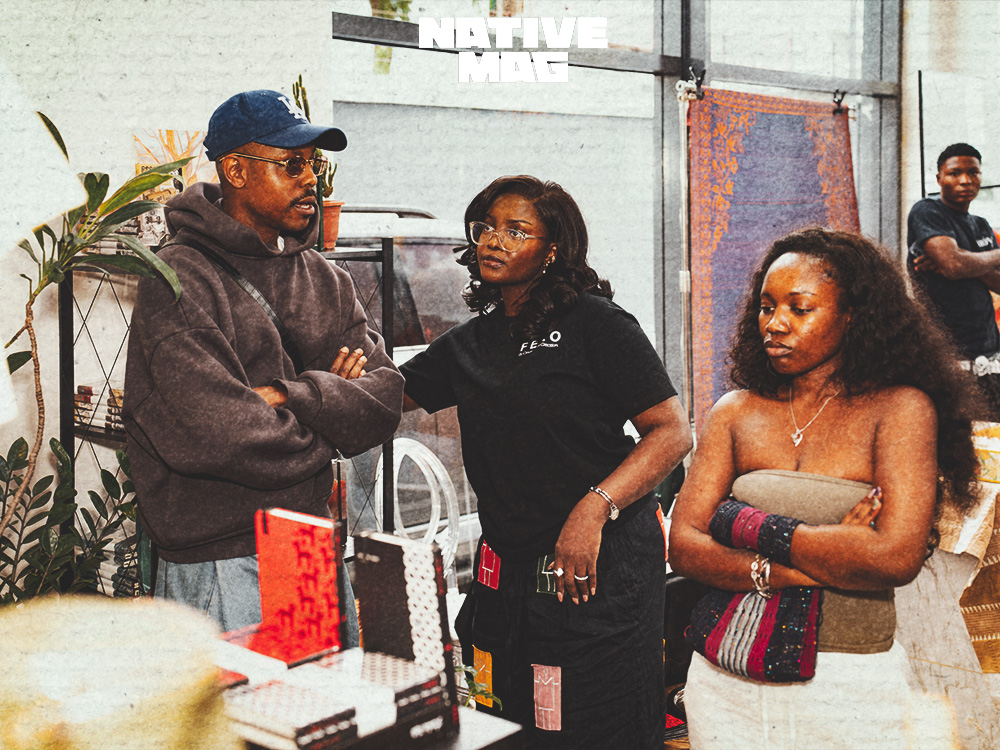
Manifest’s proposition connects brands and creators looking for temporary physical space with a curated network across Lagos.
For many of Lagos’ independent brands, Instagram has long doubled as storefront, campaign platform and community space. Many businesses are building loyal audiences without ever needing a permanent shop. But as these brands grow, there is an increasing desire to bring the worlds they have created online into physical spaces where people can experience the products and meet the communities around them.
The options for doing that have not evolved at the same pace. Permanent retail comes with significant cost and commitment, while conventional markets and multi-brand pop-ups do not always give brands enough freedom to translate their identity into a distinct physical experience. Manifest, a Lagos-based space discovery and spatial concepts platform founded by Osayomon Obaseki-Ojogwu, is interested in what can exist between those models: temporary access to spaces suited to a particular brand, audience or idea.
On July 18, that thinking took physical form with Rooted, Manifest’s first retail and culture experience, staged inside BYD’s showroom in Victoria Island. For one day, 14 Nigerian brands including NBDA, Refaini, Moyé, Saint Rufina, Liz & Co, Obida, Feko and Linen Vanille occupied the showroom.The setting was part of the point. Rooted unfolded inside the showroom while test drives continued outside, turning an automotive space into a retail and cultural destination without displacing its original function.
For Manifest, it demonstrated a wider possibility: some of the spaces Lagos’ creative businesses need may already exist, even if they have not traditionally been considered for those uses. The same curatorial thinking shaped the room. Rather than putting out an open call for vendors, Manifest selected brands with distinct identities and considered how their worlds would sit alongside one another. Each was given the freedom to create its own space rather than a uniform stall or table, creating different expressions of Nigerian craftsmanship across the showroom.
That kind of world-building has become increasingly important to independent brands. Many are developing recognisable visual languages, communities and cultural identities around what they make. Lagos’ growing pop-up culture reflects that shift, with retail increasingly about gathering and discovery as much as transaction. Rooted embodied this. Designers, artists, founders, creative professionals and customers moved between the different brand spaces. People came to shop, but stayed to talk, discover and spend time together, bringing communities that often interact through screens into the same room.
That fluidity is quintessentially Lagos. Across the city, the boundaries between fashion, food, art, music, retail and nightlife are increasingly blurred. A fashion launch can become a party; a restaurant can host an exhibition; a pop-up can become a meeting point for a wider creative community. Rooted sat within that culture while asking a practical question: what kinds of physical spaces will support its next phase?
That shift is what Manifest is responding to. “A generation of Lagos brands have built massive, highly engaged communities entirely online. They are now reaching for a physical canvas that can carry their world, but the infrastructure to help them land simply didn’t exist in an organised form. Manifest is that infrastructure,” says Osayomon Obaseki-Ojogwu.
Manifest’s proposition extends beyond its own experiences. Its platform connects brands and creators looking for temporary physical space with a curated network across Lagos, while its spatial conceptualisation work considers what those spaces could become in response to a brief. Rooted offered an early expression of that idea. For a day, an automotive showroom became a meeting point for fashion, design, retail and community. More significantly, it suggested another possibility for Nigerian brands that have already learned how to build audiences online: entering physical space does not have to begin with a permanent store. Instead, Manifest is building a more flexible model of access to space.

