Karam Gill’s ‘Wizkid: Long Live Lagos’ Is A Powerful Celebration Of Identity
‘Wizkid: Long Live Lagos’ unfolds across continents, capturing the details of the life of Wizkid.

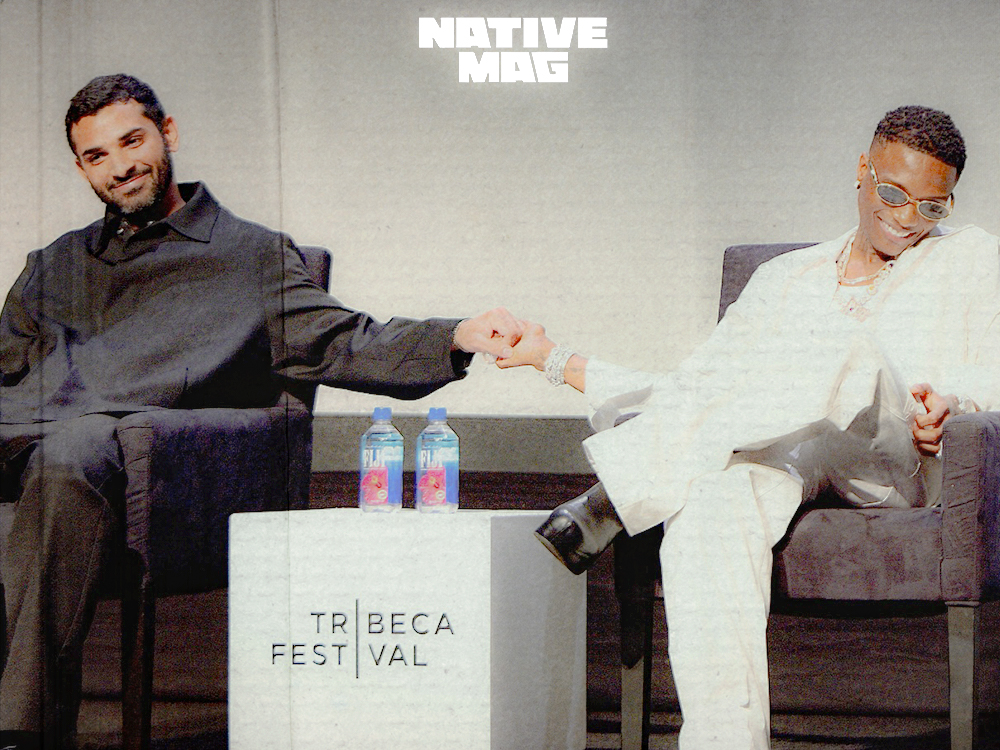
‘Wizkid: Long Live Lagos’ unfolds across continents, capturing the details of the life of Wizkid.
About halfway into ‘Wizkid: Long Live Lagos,’ the 2025 HBO documentary based on Wizkid’s stunning rise to global superstardom from a quiet upbringing in Surulere, the unrelenting toll of the singer’s life as one of the most visible faces of contemporary African music is laid bare: his mum is admitted to a London hospital, but seemingly, his much-publicised 2023 concert at the Tottenham Hotspur Stadium must go on.
It’s moments like this that made Karam Gill, the documentary’s director, realise the burden and gift of Wizkid’s existence. “I looked at it as he’s somebody who realizes he’s on this earth for a larger purpose,” the director said on a Zoom call one late weekday in December 2025. “When you see him push through and still do the show and still do everything he’s doing as his mother is being admitted, who he’s so close with, it makes you ask the question, ‘Why?’ It’s very easy at that point to just walk away. So it made you realize that there’s something bigger driving this guy.”
Released as the latest installment of HBO’s famed Music Box series created by Bill Simmons in 2021, ‘Wizkid: Long Live Lagos’ unfolds across continents, capturing the details of the life of Wizkid while balancing out that narrative with the unfettered perspective of a long-time Lagos-based Wizkid fan who makes the journey to London for the 2023 Tottenham Hotspur Stadium concert. It’s a deliberate gambit from Gill, who was keen to show Western viewers the depth of Wizkid’s popularity and followership. “You can have an interview, you can have somebody sitting in an interview and say that, but it’s far more different when you actually see it,” he explained. “I really wanted to make this more immersive and get people to understand beyond just saying it to people.”
16 years into a career defined by countless hits and several landmark moments, Wizkid’s rise still exemplifies the ingenuity of African music and its potential to shape broader public opinion, as the documentary’s guests like the legendary Femi Anikulapo-Kuti, Wiz’s manager and partner Jada Pollock, and The NATIVE’s Seni Saraki attest to on screen. It’s that chance to tell the story of an African cultural icon that drew Gill in, providing what is hopefully the first of many attempts at contextualising Wizkid’s life and career.
Our conversation with Karam Gill has been edited for clarity.
My first question is about how you got involved with the documentary.
Wizkid and I actually have the same agents at United Talents Agency (UTA), so we were introduced to each other. I met Jada as well. At the time, they were just talking about everything that was going on and some of the things that they had planned. They had this big show that they were looking to announce soon, or thinking about doing. They didn’t know if they were going to do it. The long and the short of it is, I got introduced to Wiz and Jada, and we immediately hit it off. The vibes were cool. I’ve always been a huge fan of Wizkid’s music. I just love his music. We started talking. I went to the studio a couple of times, hung out with them, and we started to figure out what we can do here. There was just so much to say and so much to explore. He’s such a legend. What’s happening right now culturally, with music coming out of Africa, specifically Nigeria, but just international music at large, just makes sense. We’re starting to see international music from different countries dominate the Western world. There’s a larger story to tell there. So we started to ideate around that. That was really the start.
Did you have a broader understanding of what was happening on the scene, or was Wizkid your touchpoint with the movement?
I’ve actually been following it. Both of my parents, coincidentally, were born in Africa. This is obviously a long time ago, but I’ve always been a huge fan of the music, especially the music that’s come out in the last 10 and 20 years. My dad introduced me to Fela way back in the day. I’ve always known about it, but just how it’s exploded in the last 10 years was incredible. This is insane. I live in Los Angeles, whether I’m in Los Angeles or New York or wherever, you’re hearing this music everywhere. It’s traveling. There’s a fascination I had. I was like, “Wow, there’s something bigger going on here.” This music also means something more to the people of these different places, whether that’s Puerto Rico and Bad Bunny, or some of the artists coming out of Asia or K-pop, or African music. Something bigger is happening. There’s something larger to say here.
Why did you think Wizkid was a perfect fit for the documentary?
We just vibed. He’s a real artist, and I respect that. He’s a real artist. You can tell when someone is a real artist and cares about creativity and craft and all of those things. You can tell when someone is not. Immediately I met Wizkid, I was, “Wow, this is no bullshit. This is a real artist.” That just made me gravitate towards him. I really just liked his energy. He felt the same way. We were like, “Yo, we need to figure something out. We don’t know what it is, but we need to figure something out.”
What was the most fascinating thing you learned about Wizkid through the process of making the doc?
The most fascinating thing I learned was, as somebody who grew up in the US, right, there’s definitely super fans, there’s super fandom, there’s superstars everywhere. Growing up, you see that Lil Wayne was huge, Taylor Swift is big, Kendrick is big. There are so many big artists out here that have big fan bases that can’t step outside without being swarmed, right? But what I was so shocked by and taken aback by what is happening with Wizkid is on another level. It’s not even comparable because people see so much pride and identity, and so much cultural pride in someone. There’s not an American out there who thinks that the hopes and dreams of American culture are absolutely in the hands of one of these random American celebrities. It’s just not the same. Whereas in places in Nigeria, the super fan culture is beautiful to see. The other thing I would say is I learned that Wiz is a real artist. He is somebody whose intentions are very pure and very real. He’s a very intentional human being who just knows that music is bigger than just music. For Wiz, he realizes that the music he’s making, while it’s beautiful and it’s a great career, he knows that it’s bigger than just music. The impact of this music travels; when it travels, it really has the power to shift perception and culture. It has so many effects beyond just the music.
You’ve worked on several documentaries. I checked out the Lil Baby one. What do you think is the biggest difference working on a project for that and one for Wizkid?
This project was very different. We had multiple units shooting at the same time across Africa and Europe, and with Wiz. This was just a different challenge because we were tracking a story unfolding very quickly in real time. It was very challenging when we were filming. Wizkid’s mother got sick and was admitted to the hospital. There were just a lot of things that I had not experienced on other projects. It was just a very intense process, because we had teams in Nigeria shooting at the same time that we had teams in London. At the same time, we had a team with Wiz, then this happened with Wiz. So there’s just a lot more going on than other projects at the same time, in different time zones. Then you have part of my team that’s based in LA. It was quite challenging.
You spoke about Wizkid’s mother getting hospitalized during the course of production. What did you learn about Wizkid as a human being, observing him at close quarters during that process?
I looked at it as he’s somebody who realizes he’s on this earth for a larger purpose. That’s what I took away from it. He knows that he’s not every other artist that’s doing it just for the money or doing it just to be famous. There’s something bigger driving him. Part of that was his mother, and seeing the impact that his music is having. His mother was a big piece of that. Wiz talks about in the film. People’s parents weren’t looking at kids doing music as a viable path forward before him. People around the world, the Western world at least, weren’t playing this type of music in the clubs, in Los Angeles, in New York. Wizkid realized, “Oh, whoa, what I’m doing is bigger than just making music that people enjoy. This is having an impact.” When you see him push through and still do the show and still do everything he’s doing as his mother is being admitted, who he’s so close with, it makes you ask the question, “Why?” It’s very easy at that point to just walk away. So, it made you realize that there’s something bigger driving this guy.
I noticed that while watching the documentary, you focused on the perspective of his fans. Why do you think that was an important part of the story?
You can sit all day long and tell Western audiences how important Wiz is, but unless you really see it, you see him spray-painted on the walls, in images of him on the yellow buses, or spend time with super fans that really feel this way, it’s different. You can have an interview, you can have somebody sitting in an interview and say that, but it’s different when you actually see it. You’re like, “Wow, this actually, this is more than I thought. This is more complex than I thought.” I really wanted to make this more immersive and get people to understand beyond just saying it to people. People really understood how much Leo Messi meant to Argentina after they won the World Cup. There were hundreds of thousands of people in the streets. You get it that this guy means more than just sports. For me, I wanted to take people there. I want people to see it. I want people to feel it. I don’t want to just tell them.
What was the most difficult part of making this documentary?
The most difficult part was really how condensed the filming schedule was, because we were leading into Tottenham, so that was a fixed date. You can’t go back and shoot stuff after. So we had to make sure that we had teams working around the clock, 24/7, across the world, in three different time zones, to bring this project to life, because every day is getting a day closer to Tottenham, which is the narrative.
My final question is about the legacy of a project. What do you think the legacy of making a documentary about Wizkid will be?
I hope there’s a sense of pride that exists coming out of this. That’s all I can hope for as a filmmaker, that people feel a sense of pride. But beyond that, the legacy of something like this is to really open people’s eyes in the US and in the West. They love dancing to this music, but they don’t really know how deep it goes. They don’t know what it means. They don’t know all these other layers. So, for me, the legacy of the project is, hopefully, that it helps make a small dent and take a small step forward for people who love the music, know what it is, and realize that it’s everywhere and hear it all the time when they go out, but gives them more context and understanding of where it comes from, why it’s important, what it means to people. Those are the bigger questions and bigger things that are just really important for people to understand. Once you understand all that, it means much more. You can really understand things more. That’s very important.
Watch ‘Wizkid: Long Live Lagos’ here.

