Kaelo Iyizoba Has A Specific Vision of What Nigerian Cinema Can Be
What began as Kaelo Iyizoba creating a slideshow for his sister has led him to a film screening at TIFF 2026.

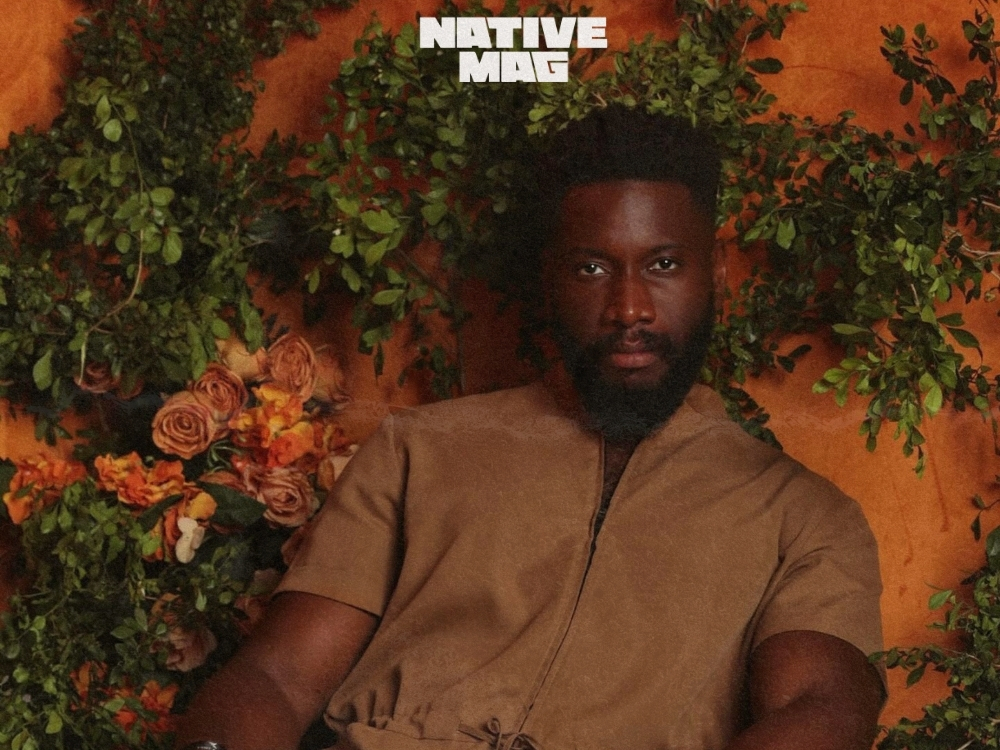
What began as Kaelo Iyizoba creating a slideshow for his sister has led him to a film screening at TIFF 2026.
“Multiply the wins by ten thousand to get the number of rejections I’ve gotten,” Kaelo Iyizoba tells me, about an hour into our call. The Nigerian-American filmmaker is two weeks away from seeing his short film, ‘The Spectacular Death of Prisca,’ screened at the Toronto International Film Festival (TIFF). Since leaving pharmacy in 2019, his filmmaking career has gathered momentum: a 2022 Arthur Krim Memorial Award from Columbia, a BAFTA Student Awards shortlist for ‘Mr. Bold’ in 2023, Berlinale Talents that same year, and, in 2025, the Tyler Perry Dream Collective and Sundance Institute’s inaugural Cultural Impact Residency.
The youngest of five children, Iyizoba grew up with the rhythms of a large Igbo family. Every Christmas, they travelled to Anambra, where cousins blurred into siblings and the house filled with the usual commotion of a family returning home. Even as a child, he seemed to be looking beyond the immediate world around him. He spent his snack money on newspapers. He had opinions, and the confidence to air them. He found himself drawn into conversations that seemed to belong to older people. He also grew up in Enugu, a city that would become as much a part of his imagination as his family. It was a warm, close-knit community, and Iyizoba came to think of himself through it.
His interest in film arrived early, though he had no particular reason to call it that yet. At 14, he made a slideshow from family photographs for his sister’s wedding, moving between pictures of his own relatives and those of his sister’s husband’s family. When his sister cried watching it, he noticed. The reaction mattered to him. He had made something from a collection of ordinary images and, somehow, made another person feel something. It would be another nine years before he returned to that feeling.
After studying pharmacy at the University of Nigeria, Nsukka, Iyizoba took an internship at a pharmacy, where he worked from 2018 to 2019. One day, on his way home, he saw the sun setting. He realized he had not seen a sunset in months. The only reason he was seeing this one was because he had been sick and left work early. So the next day, he resigned.
One of his first wins came with little formal filmmaking experience. Iyizoba applied to Columbia University’s School of the Arts for the producing program and Carnegie Mellon University’s program in entertainment industry management. He got into both. For Iyizoba, though, the turn toward filmmaking had begun much earlier.
While waiting to hear from Columbia, Iyizoba found himself on the outskirts of Abuja when he stumbled upon a village. It was only about 15 or 20 minutes from the city, but the lives there seemed to belong to another world. The discovery became ‘The Lost Village,’ a documentary released in 2020 about a community living so close to Abuja yet so far removed from its rhythms.
“We finished taking all these videos, we don’t even know what we’re making at this point. It just looked interesting,” he tells NATIVE Mag. “So I’m on my computer looking at all this footage that we took in this village and I’m cutting and piecing it together and trying to find a story in it.” The film was submitted to the Moment Film Festival, where it received a special mention and won an Audience Award worth $10,000. The money gave Iyizoba something more useful than the award itself: film equipment. With it, he made ‘Boy Meets Girl,’ the first film he would submit to TIFF, five years later. “‘Boy Meets Girl’ was actually a class writing exercise, but my professor advised me to try to shoot it when I went home for Christmas,” he says. “The way we were looking for the cast on Abuja roads, if you did not have any context, you would think we are kidnappers.”
On April 14, 2014, Boko Haram abducted 276 girls from their secondary school in Chibok, Borno State. Through the short, Iyizoba wanted to tell the story of one of the girls who never came home. The film was eventually released on YouTube in 2021 and won Outstanding Experimental Film at the Abuja International Film Festival that same year.
In ‘The Spectacular Death of Prisca,’ Rita Dominic, one of Nollywood’s most recognisable stars, plays the lead. Written and directed by Iyizoba, it began as a proof-of-concept film for ‘A Nollywood Story,’ a feature he has been writing since his first days at film school. The script had generated excitement when he showed it to people, but it also prompted a question: what would this world actually look like? Rather than keep explaining it, Iyizoba decided to show it.
“Instead of trying to explain to people, let’s just show them what this world will look and feel like,” he says. ‘Prisca’ was not meant to be a straight excerpt from the feature. Iyizoba wanted it to stand on its own while exploring some of the same ideas: a character being pulled into a new world and having to navigate it. In ‘A Nollywood Story,’ the daughter is the protagonist; ‘Prisca,’ shifts the perspective to the mother, a middle-aged woman going through what he describes as a coming-of-age story.
He remembers meeting Dominic (who played Prisca) for the first time. She had just read the script. They had never met before.“We met for lunch and she just wanted to see the crazy person who wrote the script,” he says. The film belongs to a different register from ‘Boy Meets Girl’ and ‘Before We Fall Asleep,’ (his contribution to the Zikoko Life anthology). ‘The Spectacular Death of Prisca’ is an absurdist comedy-drama, announced from its opening frames in bright colours, pinks and poppy lettering. It feels deliberately larger than everyday life, closer to the world Iyizoba calls “the old Nollywood world.” His ambitions for it are equally outsized. He is interested in spectacle, but spectacle that leaves a physical impression.
“I enjoy big worlds, stories that will make your heart pound and give you goosebumps,” he says. “My favorite TV show is ‘Game of Thrones,’ so that’s just the level of filmmaking I’m aspiring to do. There’s just something about creating these massive worlds and filling them with even bigger characters.”
But making those worlds in Lagos comes with its own constraints. Iyizoba had encountered Area Boys while making ‘Before We Fall Asleep,’ and faced the same problem while making ‘Prisca.’ “It’s kind of limiting as a filmmaker because you’re now forced to shoot inside, essentially. When it’s time to shoot outside, you have to make sure it’s an outside that you can shoot in or you budget for the Area Boys,” he says.
For Iyizoba, the older Nollywood had an unmistakable cinematic language. The films of the 1990s and 2000s were often made quickly and cheaply, distributed on video and later VCD, and defined by heightened performances, melodrama, supernatural plots and memorable characters. Their technical limitations were obvious, but so was their personality. “We shouldn’t throw away the baby with the bathwater,” he says. “Just because we now have the big camera and big budgets doesn’t mean we should throw away our style. I think that’s what I’m trying to discover by making my soon to be first feature film, ‘A Nollywood Story.’”
Some of those qualities, he argues, are the very things that defined Nigerian cinema. “Everyone’s so afraid of melodrama, but Nigerians are melodramatic. Have you seen the way our parents react to things? So why would we think that it’s not true? As long as it’s true, that’s all that matters.”
In many ways, Iyizoba has spent the years since leaving pharmacy returning to the instinct he had at 14: the pleasure of making something and watching it move another person. What began with a slideshow for his sister has led him to a film screening at TIFF, after the thousands of rejections he says came before it. What he wants from the TIFF audience is a kind of freedom: to see an African cinema that is not confined to the stories international festivals have come to expect from the continent. There can be grief and violence and political history, but there can also be absurdity, spectacle, humour and strangeness.

