Interview: Jabulile Majola’s ‘Ipasi’ Will Find You Where You’re At
If you look past the soul-searching tenderness of Jabulile Majola’s ‘Ipasi,’ it’s clear that he is writing towards the heart of uncertainty.

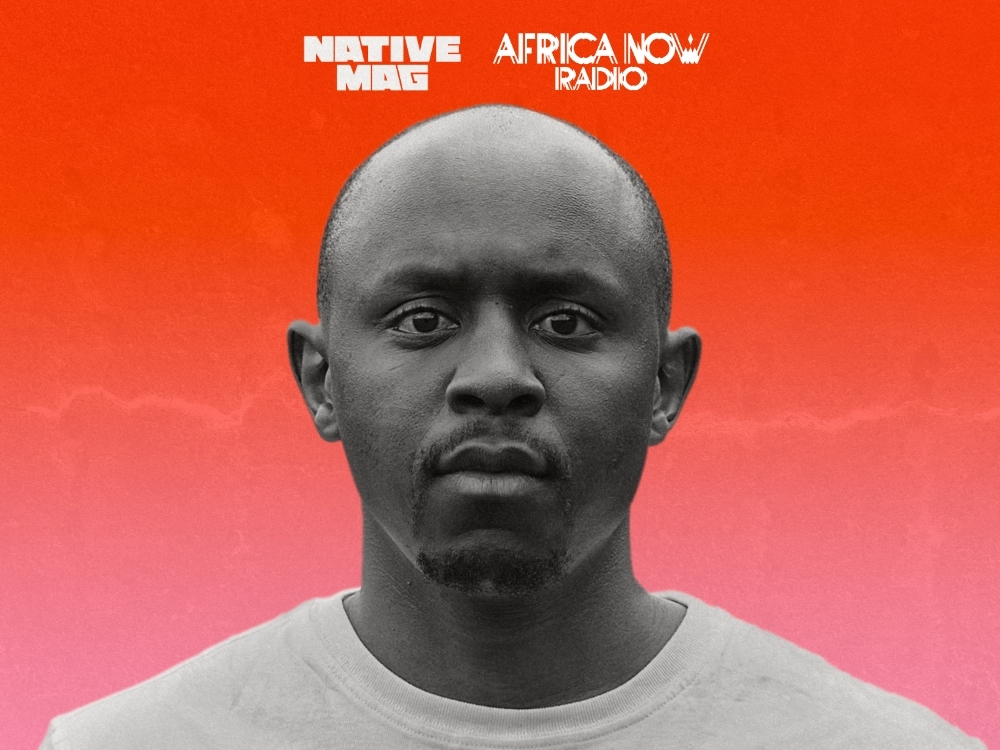
If you look past the soul-searching tenderness of Jabulile Majola’s ‘Ipasi,’ it’s clear that he is writing towards the heart of uncertainty.
If you look past the tenderness and soul-searching rumination of Jabulile Majola’s ‘Ipasi,’ it’s clear to see that the Pietermaritzburg-born musician is writing towards the heart of uncertainty. After years of doubling down on a sense of certitude that played out in his approach as a rapper, a pivot to Afro-Folk has seen him embrace life as a mysterious living thing that we don’t always have a handle on. Starting with 2025’s ‘Isitifiketi,’ Majola has been working towards a journey of endless self-discovery.
“What I’ve learned mainly is the fact that there’s certain questions that we ask, but sometimes you will never actually find the answer,” he said in an interview with Apple Music’s Africa Now Radio. “As you grow older, your perspective towards those questions will change. I think you will go through your whole life and you will never figure that out, but your perspective about what you initially asked would have changed.” Less concerned with universal truths, ‘Ipasi’ was intended to function as a document of identity, mapping out how grief, love, and passion changes the human consciousness and what comes through after these experiences.
For Majola, it was the passing of a sister that sent him down a journey with language and emotions, ultimately inspiring this orchestral suite of 11 songs that reflect the singer’s ability to bend his voice around even the most anguishing feelings, all in service of acknowledgment if not resolution. “It’s not an aspirational vibe,” he says about his sophomore album. “It must get you exactly where you’re at with your life and it must connect you to that reality. It mustn’t take you away. It mustn’t make you escape and all of those things, because there’s something that is very beautiful about staying within the tension if you are struggling.”
How did you gravitate towards music?
I was born in Pietermaritzburg, but three days after my birth my mother disappeared without a trace. Four months later, I was then adopted into a children’s home that was run by my father, whose name is Angus Buchan, and he’s an evangelist. So, I grew up in the children’s home with 26 other siblings and I think the most vivid memory I have of is when I fell in love with the music at around seven years old. At seven I already knew that this is something that I really wanted to do without a shadow of a doubt.
What role does faith play in your career?
I’d say faith was definitely an anchor. I’d say faith was also very much based on questions. When I talk about questions, I talk about asking the questions from an honest place. From a place that is willing to actually understand and change where you need to change. So, there’s a humility within believing. There’s a sense of approaching everything as opposed to arriving. Even the question of salvation or the perspective of salvation is not necessarily arriving at an answer. It’s actually the beginning of asking questions that continue to push you further and further into the likeness of Christ.
How did grief lead you back to your mother tongue?
I always knew that I could speak my mother tongue and I always knew that I could imagine it in that way as well. But what I found about the mother tongue is that, at least for a good perspective, you can’t really hide within the language. It just is what it is. There is not so much colourful language that you can dress it up with to hide that actual emotion. It’s just like you crying straight up. So, for the longest time, I stayed away because it was hard to actually be vulnerable. It was hard to actually bring out the real emotion to be yourself. With my sister’s passing, it was just this idea of like, “Okay, what else do I have to lose?” Another thing is that because of how we were raised, I know Zulu and I’m Zulu but I’m not all the way there. I don’t pretend that I’m more Zulu than I am. But the one thing that I know for sure is that it’s Zulu because I grew up around people that really spoke isiZulu the way they did. I have massive respect for the language as well, that’s why I was very intentional about how I’m gonna write the songs. I’m not gonna just use the everyday Zulu or the Joburgified Zulu. I wanted to really go as deep as possible with it.
What changes had to happen in your life in order to be able to make ‘Ipasi’?
It was how I viewed hope. It’s how I viewed myself as well. What I’ve learned mainly is the fact that there’s certain questions that we ask, but sometimes you will never actually find the answer. As you grow older, your perspective towards those questions will change. I think you will go through your whole life and you will never figure that out, but your perspective about what you initially asked would have changed. And maybe you will say to yourself, “Oh, I shouldn’t have asked that question.” Or your question by that point in your life will actually change into something else. Something that is less demanding, something that is more open to actually learning even way more than you had initially asked for, Those things for me have really shown me I’m growing. I realized another thing that changed for me is realizing that I will not figure it out. My father is almost 80 now, he’s still asking questions and figuring this life thing [out]. To me, that is scary because I’m in a position in my life where I’m like, “Yo, I haven’t figured out anything.” I thought by the time I’m 31, I would know all of these things. Sometimes we put so much pressure on ourselves and you’re like, “Yo, I can’t believe I haven’t figured all of these things out.” But then you get a person that’s almost 80 that is like, “Yo, I’m still figuring it out.” I think it’s such a reassuring thing and that’s what life is really about. Life is so beautiful because we are still children, to some degree.
How has pursuing your dreams cost you in terms of belonging?
When you pursue your dreams, one thing I noticed is the fact that you will find that there are many other people that are pursuing their dreams. Then there’s also a lot of people that are afraid to pursue their dreams. I noticed that you become a lone wolf when you pursue your dreams, honestly. Some of us wanna pursue our dreams, for various reasons, but some of us actually, are too afraid to do that. Most of the time, 90% of us will not actually go for the dreams. It’s always gonna be that 10%, and the 10%–it’s not that they become ostracized or excommunicated from the group–but it’s just that they are different from everyone else. I noticed that for me, the cost of me pursuing my dreams forced me to be disciplined. I can’t explain how the force worked when I was disciplined, I just knew that there’s certain things that I can’t do if I want to be alive to see this thing come to fruition. There’s certain routines that I started to adapt. There’s certain ways of thinking that I had to let go of because you believe in yourself when you leave school, and then life tells you with, “Hey, this whole hyper-motivation stuff where it’s like you can do anything, it’s not true.” There’s a lot of things that can stop you, actually.. You start to realize, hey, I’m gonna work hard and all of that stuff. I’m not knocking down people that work hard. But I do believe that you are also in God’s mercy, in that not everybody will get to that point where they realize everything they’ve ever dreamed.
Some of us live 10% of our dreams. It doesn’t make it less, it’s just that’s what God allowed. That’s what God allotted. You are paying rent too. So, like, there’s certain things that are gonna happen that are beyond your control, whether you like it or not. That is the cost of following your dream. It’s knowing, some of us, we pursue the dream, and just the night before we reach that dream, we die. It doesn’t mean that your life was meaningless. It just means that was your lot. That’s what the beauty of life is. That’s what equalizes everybody. I think the cost for me was knowing that I might never reach my dream, and I need to be okay with it. That’s the cost. Now that I’m growing older, that’s why I have a problem with hyper-motivation where it’s like, “Nothing can stop you. You can do it, you can get there.” I think to myself, “I can think of many things that can stop you.” The point is the fact that there’s a divine agency that has given us our lot in terms of what we get to live. At the end of the day, we are not so independent and fully in control. Once we realize that, I think we pursue our dreams humbly, where we’re like, “You know what? I have this dream, hopefully it can link with God’s will for my life, and that’s where I get to live my dream.”
Do you go with the flow and how does that affect your songwriting?
I was talking to someone yesterday, and then I was saying to them that the most difficult part of recording the album was the fact that there’s certain songs that I thought I hated, but it’s not because I hated them, it’s the fact that I wasn’t content with it. I had written the song. I had the initial feeling that I love this song. But now I’m like, “I’m an artist. I’m supposed to be writing five songs a day.” Then I neglect the very song that came from a pure place because I feel like I need to be doing so much. I’m not even enjoying what I’ve just done. We rob ourselves of these moments to actually be so connected and be present with what we’re actually doing because we feel like there’s more that I still need to do.
If ‘Ipasi’ were a film, who is the man we meet in the opening scene and who is he in the final scene?
In the beginning of the album, “Umuzo Okhanyayo (Libo),” basically is a song [about] a blind man speaking. A blind man obviously can be a sailor as well who’s lost at sea and all of that stuff. There’s a part of the song where it’s from the scripture where Jesus spits on the ground and then takes the soil and puts on the blind man’s eyes and all of that. It’s basically talking about how the first person the blind man saw was the person who loved him enough to make him see. I don’t ever want to be a person that says, “I can see,” yet I’m blind or “I am not sick,” yet I literally need the doctor. I think that’s the most dangerous place that we can be. We used to do this in class, because we didn’t want to be looked at as dumb, where the teacher’s like, “You understand?” You’re like, “Yes, ma’am.”
You will never get help and that comes from pride actually. It is pride. It’s ego, it’s pride. So, the first song is like a humble thing where I know I can see physically, but I can’t see. Help me see because I have questions. It’s also about asking the questions honestly enough. Throughout the album, I’m going through the album as this person that is seeking, and this is the crazy thing. At the end of the album “Ububele Bakho (Nala),” I’m basically saying, “I have found love.” I’m talking about what this love has done to me. In the beginning, I was seeking for this love, I was seeking for this hope, I was seeking for comfort, I was seeking for direction. At the end of the album, I’m saying, “I have found kindness. I have found kindness.” There’s a part where I say, “I have found kindness that has opened the doors of my heart. I have found kindness that has extinguished the year, my years of famine.” It’s brought abundance in my life. It took me from the dirt, it took me from the dirt and made me a human being.
How do you navigate identity and change?
The reason why I went from ‘Istifiketi’ to ‘IPasi’ is because it’s still the same person, but he’s changing. He’s growing, his perspective is expanding, and all of that. I feel closer to becoming, but I know that I’m okay with where I’m at. You have to be because you don’t know what the future holds. I think if I’ve become very comfortable, oh, I feel like I’m becoming something. I do believe that you can become something, and everything that you become gets tested. I’m okay with where I’m at and whatever change comes in my life. When the tides change and I’m shaped in a different way, then I have to be okay with that because I don’t govern that process as well.
What do you hope ‘IPasi’ achieves?
Someone asked me what I would like to achieve with this album and all of those things, and I didn’t have an answer for a while, but what I realized is that I really would like this project to get to people exactly where they’re at in their lives. It’s not an aspirational vibe. It must get you exactly where you’re at with your life and it must connect you to that reality. It mustn’t take you away. It mustn’t make you escape and all of those things, because there’s something that is very beautiful about staying within the tension if you are struggling. For me, it’s like [I want] this album to find you where you are and keep you there so that when you come out, you are a different person than you were when you went in there.

