Interview: BabyDaiz Is Reclaiming His Roots On ‘KINDOKI’
On his debut album, BabyDaiz brings his roots, global influences and growing sense of self into the same world.

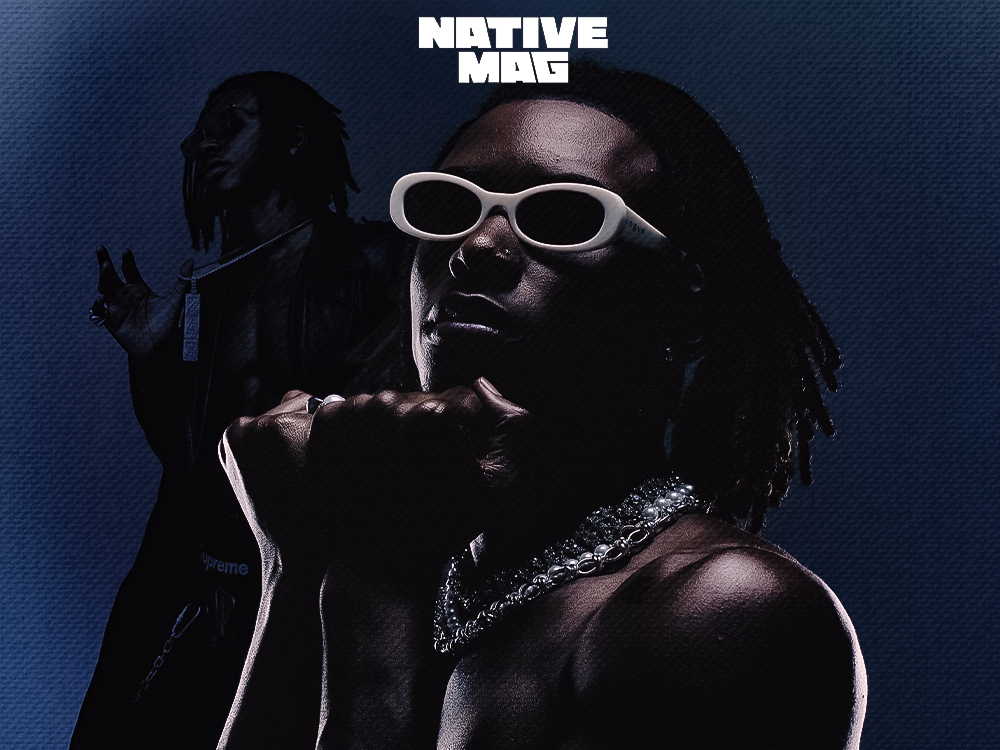
On his debut album, BabyDaiz brings his roots, global influences and growing sense of self into the same world.
BabyDaiz has spent much of his life moving between identities. Rooted in Congo but raised largely in South Africa, he belongs to a generation for whom African identity is rarely confined to a single place. Hip-Hop, African rhythms such as Rumba and Amapiano, as well as the music he encountered across different parts of the world, like Hip-Hop and R&B, have shaped his artistic language rather than become competing influences.
That versatility has increasingly worked in his favour. Songs like “Enemies,” “Allez Tobina” and “Allonsy” have expanded his audience and boosted momentum, while his ability to move across sonic styles has positioned him deftly within an increasingly borderless African music landscape. For BabyDaiz, 2026 has primarily been about something more personal: becoming more comfortable with exactly who he is. “I think the most important thing was just tapping into my roots and combining my influences,” he tells NATIVE Mag. “I decided that I’m going to do this music thing, give it my all and be true to myself. I’m fully locked in.”
That journey sits at the centre of ‘KINDOKI,’ his debut album. In Congolese culture, kindoki has traditionally carried associations with witchcraft and supernatural forces. Within BabyDaiz’s project, however, the idea is reclaimed as something internal: the ability to overcome circumstance, challenge expectations and achieve what others might consider impossible. His Congolese identity— something he struggled to fully embrace while growing up in South Africa—now forms one of the foundations of the project.
This conversation has been edited for length and clarity.
2026 seems to have been an important year for you. What changed?
The music is doing really well, and I’m super happy. Obviously, I’m never satisfied because I know where I want my career to go, but I’m happy that people are accepting me for myself and not for somebody I’m not. I think the most important thing was tapping into my roots and combining my influences. Even personally, I decided that I’m going to do this music thing, give it my all, stay true to myself, and keep God first. Instead of being young and thinking I have time, I decided to work hard now, lock in, and actually achieve something great with my life. I feel like I have the potential and God blessed me with these abilities, so I might as well use them.
For somebody discovering you through this album, how would you describe BabyDaiz?
I see myself as a glitch in the matrix. I always say I’m like the first new day of a new Africa. I’ve had the opportunity to understand different cultures and speak to different audiences because of the languages I know and the places I’ve experienced. I’ve seen so many sides of African culture and also experienced things outside of Africa. That has given me a different perspective on what my music can be.
You were already making music before 2020. What happened around that period that made you decide to take it seriously?
I was always making music. Around 2018 or 2019, I released a song that got around 3,000 views, which was a lot to me at the time. Then COVID happened. I had to find a way to keep my name alive, so I started doing TikTok. I was dancing, making content, doing the pretty-boy stuff, and it started getting a lot of views and followers. I was making good money from content creation too. At some point, I realised I was making everybody else famous. People were dancing to other artists’ music while I knew I could make music myself. I was becoming known, but not for what I actually wanted to be known for. I could have become a content creator or streamer, but I wanted something real. When I’m gone one day, I don’t want people to remember me because I looked good on TikTok. Music was always that fire inside me. So,I decided I was going to take it seriously, however long it took. I also stayed independent for a long time because I didn’t want a label telling me what type of artist to be while I was still figuring out who I was.
You were born Congolese but grew up largely in South Africa. How do those two identities exist together in your music?
I grew up most of my life in South Africa. I left Congo when I was around nine. For a long time, I knew more about South Africa than I did Congo. Now I’m educating myself more about Congo because it’s where I come from. Musically, you can hear both. You hear African sounds, you hear South African energy in the production and the backing vocals, and then you have the people I collaborate with. I’m also always connected to what is happening in Congo. I still have friends there; I’ve made new friends there, and I follow the new artists and the new sounds. I read and educate myself. My original fanbase was South African. Then it became Congolese and South African, and then Nigerians started connecting with it. Now, hopefully, it becomes French people too. It keeps expanding.
What artists shaped you while you were figuring out your own sound?
There were different periods. When I was younger, I was listening to Bruno Mars, Lil Wayne, and Chris Brown. Then in high school, I started listening heavily to Lil Baby, Future, Carti, and the Atlanta scene. At the same time, there was African music around me, and now I listen to everybody—Burna Boy, Asake, Wizkid, Rema. The American artists were probably what I gravitated towards most initially, but now everything comes together.
You’ve described ‘KINDOKI‘ as another level of evolution for you. What does this album represent personally?
Funny enough, I wasn’t even going to call it an album. I had this idea that for my first album I needed to have all the money to create exactly what I imagined. Then I realised I can’t keep running away from the word “album.” I can make many more albums. For me, this project represents reaching another level of evolution in my life and career. It’s also about bringing Congolese music to the forefront from a different perspective and giving it a different image. I’m telling the story of a kid who grew up in South Africa, and I don’t think that story has really been told in this way before. The more people understand me—the good and the bad—the more they’ll understand how unique that story is. It is also about bringing different parts of African music together with some of my American influences. I wanted that perfect blend.
The album feels geographically broad too. What did the actual creative process look like?
It didn’t necessarily take me a very long time to record because I record all the time and already had a lot of songs. At first I was going to release an EP after “Allonsy,” but things started getting bigger. I started meeting more people and travelling more. I came to Paris and met new producers and artists. I went to Nigeria. I was in Congo. Obviously, I was working in South Africa too. I probably moved through four or five countries while completing the project. It was really about travelling, hearing different beats, meeting different artists and engineers, and absorbing ideas from everybody. The longest part was probably finding the sound.
There are a lot of features and sounds across the project. Is there any genre where you feel most comfortable?
I love melodies, but I don’t really have a genre. As long as the music speaks to me, I’m there. I could drop a Rock project next if that’s how I’m evolving as a human being. Even with this album, I feel like people haven’t heard anything yet. I have music that I genuinely believe can fill the O2 Arena. I have that vision. I want to perform at the [NFL] halftime show one day and be the first African to do it. I already think about music for those kinds of stages.‘
If you had to choose one song from ‘KINDOKI’ purely because you enjoy listening to it, what would you pick?
Probably the song with Rafa Pabón. I think that song is crazy because you have this Puerto Rican element, the beat has South African influence mixed with other things, and then I’m coming in using Lingala, English, and French. It just makes you want to dance. We actually made this song in Paris. He was in the studio; I heard his music, and we caught a vibe. We basically decided, “Let’s make something fresh, something with a different bounce.” I showed the producer some of my music, and he understood it immediately. That’s what I like about collaborations. The energy needs to be right. It shouldn’t just happen because the world wants two artists together. The artists themselves need to genuinely want to make that song.
You’re now at a stage where younger artists might look at your journey for advice. What would you tell them?
The most important thing is to stay true to yourself. People always say “be yourself,” but being yourself isn’t easy because first you have to discover who you are. You absorb everything around you. You become different versions of things until you eventually figure out what is really you. Stay true to your roots and stand for something. If you don’t stand for anything, it’s difficult for people to connect with you. I’m still figuring that out myself, but I know I’m on the right path.
After ‘KINDOKI,’ what should people expect from BabyDaiz?
Expect great music. Expect experimental music. Expect something you’ve never heard from me before. Never expect me to keep giving you exactly what I already dropped. Expect evolution. I feel like the way my mind is evolving, even I don’t know exactly where it is going, and that’s the exciting part. I know sometimes artists get money and lose their hunger. I genuinely think I’m going to become even hungrier because I know what I want to do in this world. I’m not going anywhere. This is the only place I know.
Listen to ‘KINDOKI’ here.

