How Francophone Afropop Became A Diasporic Force
Whether it is the rhythms or the language, one thing about the rising sound is clear: Francophone Afropop is here to stay.

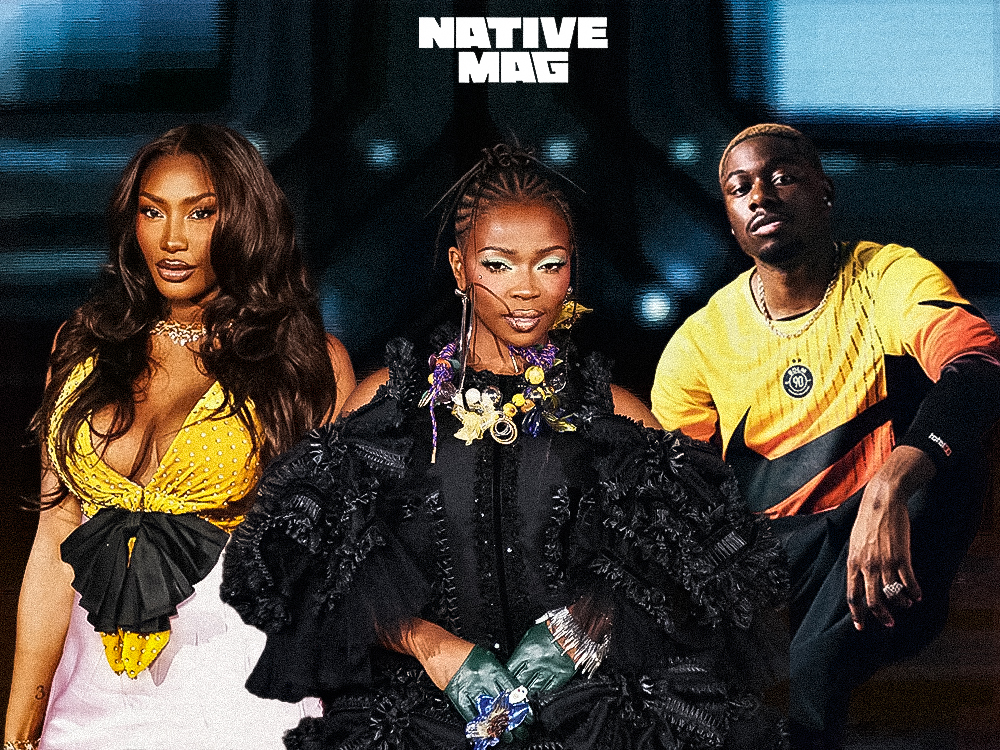
Whether it is the rhythms or the language, one thing about the rising sound is clear: Francophone Afropop is here to stay.
As African music continues expanding its global reach, a new diasporic sound is on the rise, contributing to this vital momentum. Francophone Afropop, a sonic blend of Congolese Rumba, Caribbean Zouk, and Western genres, has quietly dominated the French music charts over the past two decades.
As the world becomes more digitalised, niche groups that were once isolated due to language barriers and geography can now reach a wider audience. Consequently, after the surge of Afrobeats in the early 2020s, and later on amplified by the Amapiano scene in South Africa, the Francophone African community has followed suit. In recent years, key Francophone artists, from the likes of the Native cover star Theodora, to chart heavyweights Aya Nakamura, Tayc, and Tiakola, have been able to cross over to the Anglophone global market, popularizing the subgenre beyond its core French audience.
Once a niche diasporic subculture rooted in the late 2000s, Francophone Afropop has evolved into a reputable force in today’s mainstream music. In this particular article, we’ll take a closer look at its background, spotlight pioneering acts still adored today, and unpack some of the genre’s most iconic lyrics.
If you were paying attention in the late 2000s, you surely came across the viral 2009 hit song “Confidence” by Kim, a Zouk slow-dance anthem infused with R&B elements, which tells a romantic tale between lovers. Its hypnotic hook that partially translates into: “I feel it/He’s the man of my life/His sweet voice never fails to sweep me off my feet” can mesmerise any listener with soft hip movements.
The French-Martinican artist first rose to prominence in Paris when she released her album ‘Premiers pas,’ though Kim’s humble beginnings trace back to 2004, when she debuted at the well-known Parisian street parties Fête de la Musique. Now, almost 17 years later, the once-celebrated song that resonated with a young Francophone Caribbean and African crowd has found new life, taken over by TikTok reels and slick hip moves.
A pivotal shift came when French-Guadeloupean Colonel Reyel introduced “Celui.” Released in 2011, the Dancehall-infused riddim, layered with elements of Hip-Hop, drew in both young listeners and adults, inviting them to connect with their deeper emotions. Through serenading lyrics, he sings, “Let me be the one who shares your life/the one that you can confide in.” Sounds familiar? That’s because, over time, many of the biggest French Afropop hits leaned heavily into themes of romance.
Colonel Reyel is no exception. First appearing on the scene in 2004 as part of the group Septentrional Crew, it was after a visit to the Caribbean that the group disbanded, prompting him to pursue a solo career. His 2011 hits singles, including “Toutes les Nuits,” “Aurélie,” and “Celui,” catapulted him to stardom, topping the French charts for several weeks. Although he is no longer a central figure in the scene, his contributions span timeless classics that French music enthusiasts continue to revisit.
The Francophone Afropop movement truly began to take shape when African influences entered the mix–largely propelled by the 2010 megahit “Elle Danse Sexy” by LOGOBI GT. Its simple yet infectious refrain, translating to “She dances sexy for you/but she breaks your heart every time/if it’s her you love, tell me/I’m alone without you,” echoed across school halls and parties alike, becoming a defining soundtrack of its time.
Comprised of Sisi-K (Central African Republic), Cézar (Congo), Lassa Gabana (Ivory Coast), Norton (Congo), Sylja (Guadeloupe), and Jordane–alongside two former Cape Verdean members–LOGOBI reached new heights previously unseen. From “Gâter le Koin” to “Sucré Salé,” the group never truly resonated with the mainstream French music industry; however, across Caribbean and African diasporic communities, their impact was undeniable. What LOGOBI GT represented was the subculture at its peak, seamlessly blending Coupé Décalé with Zouk influences and trendy Ivorian dance moves.
One of the most influential French rap groups to emerge was Sexion D’Assaut, whose 2011 breakout single “Désolé” marked a turning point for the Hip-Hop scene. By this stage, themes of love, rooted in its Zouk origins, had become central; however, through the delivery of French-Congolese artist Gims, the track offered a different perspective. As he sings, “I had to mingle in the street/Step by step, I kept telling myself this ain’t real/Dad, mom, dudes, sorry/I have this urge to isolate myself,” listeners were introduced to a more introspective side of Francophone Afropop.
Originally 20 rappers from Paris, during its final years, the group consisted of rappers, singers and a DJ, namely Lefa, Black M, Muska, JR O Crom, Pétrodollars, DJ HCUE, Barack Adama and Gims (Formerly Maitre Gims). Solo endeavours aside, what the collective managed to build, the imprint they left behind changed both the Rap game and Afropop forever. Whereas in the past, Caribbean music such as Zouk and Dancehall helped French Afropop to form its own identity, the growing presence of Congolese singers within the subculture, such as Gims, whose father was a vocalist for the late Congolese legend Papa Wemba, permitted Congolese influence, like Rumba, to prevail and ultimately elevate the sound to a larger Francophone audience–the largest French-speaking country, which is the Democratic Republic of Congo.
The lyrics were raw, its content layered with substance, and the legendary crew went on to dominate not only the French Hip-Hop game, but the broader Francophone music landscape as a whole. Following their disbandment in 2013, Gims embarked on a solo career that evolved into nearly a decade-long reign of success, earning him the moniker King of French Afropop.
One artist who persistently provided Afropop bangers was the French-Congolese singer Singuila. This late in his career, he had already been active for over a decade; however, when “Rossignol” dropped in 2014, few could have predicted it would become such a timeless piece. With lyrics like, “I cling to you, cling, cling, cling/You have everything, you have everything I need,” the track captures the charming yet playful energy that Singuila embodies, effortlessly reinforcing his status as a heartthrob.
When a young French-Congolese up-and-coming artist, Tiakola, joined 4Keus in 2015, an ambitious rap group consisting of Bné, Djeffi Jack, HK, Pekenio, LeBlack and Tiakola, it didn’t come as a surprise that the collective is signed to Wati-B. The same legendary label that represented Sexion D’Assaut over its prime years. During Tayc’s Red Bull Symphonic concert last December, one of the guests and artists he praised was Barack Adama, a key figure who acted as a mentor and producer in the development of his career and signature sound, Afrolove.
Aya Nakamura’s debut album ‘Journal Intime’ in 2017 received immense support from the community, featuring the likes of well-established acts MHD, KeBlack, Gradur, and even Dadju, better known as the little brother of Gims. At the Victoires de la Musique, during her Album of the Year acceptance speech, Theodora thanked Aya Nakamura and Tiakola for paving the way, which ultimately enabled her own project to be recognised.
Whether it is the rhythms or the language, one thing about the rising sound is clear: Francophone Afropop is a movement, and it is here to stay. Whereas in the past, the subculture with roots in France primarily resonated with Francophone diasporic communities, it has now transcended into global markets, helping to push African music onto the world stage.

