Gyakie Finds Light In The Dark
More than just a time of the day, ‘After Midnight’ is a mindset and a safe place for Gyakie, who often has to shut the world out.

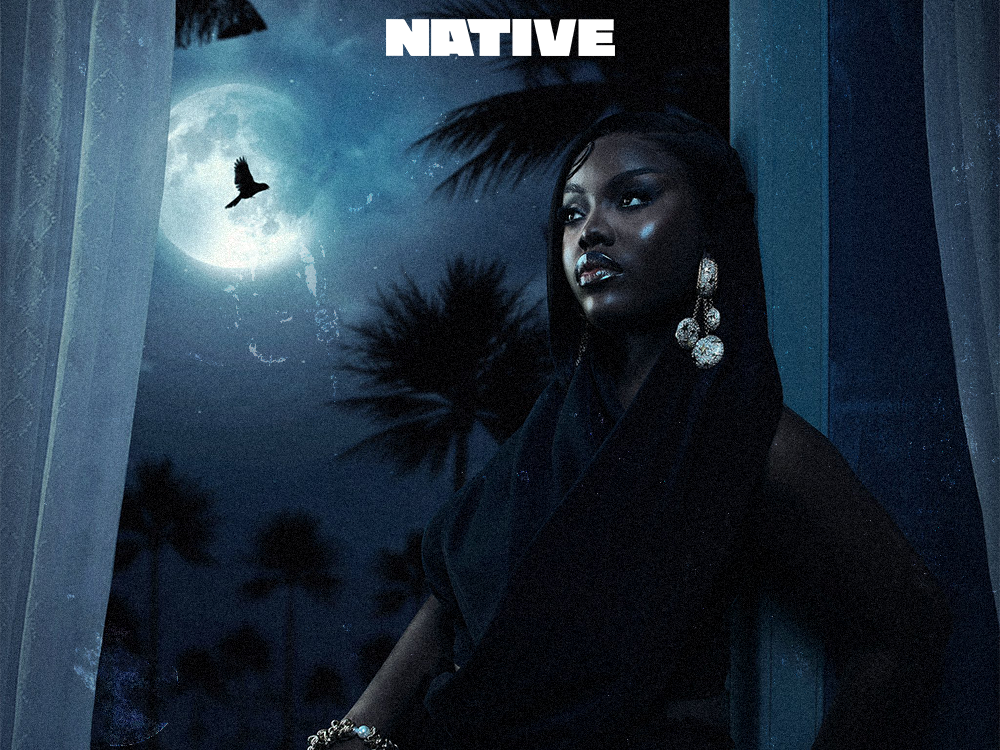
More than just a time of the day, ‘After Midnight’ is a mindset and a safe place for Gyakie, who often has to shut the world out.
Gyakie’s day is running a little late. An interview earlier in the day had lasted longer than it should have, delaying the shoots she had scheduled for late afternoon, and subsequently pushing back our meeting by a couple of hours. When we finally get to talk, it’s past 7 p.m. in Lagos, an hour earlier in Accra, and Gyakie is seated comfortably in a long-sleeved mock neck top, the tiredness of the day occasionally slipping into her voice and shadowing her eyes, but otherwise looking very much relaxed and content.
It is eight days before her debut album, ‘After Midnight,’ arrives, and she is caught in the gruelling stretch just before a project release—consisting of interviews with people all over the world, hours spent in studios shooting promotional material, multiple strategy meetings, and listening sessions. Like any true artist, she doesn’t particularly relish this stage of the cycle—more business than music—but she endures it. “One of the big ways to get yourself out there in the world right now is really to market yourself,” she admits.
Now six years since she made her debut, Gyakie is no longer the wide-eyed university student who recorded “Forever” as part of a semi-serious debut EP and saw it soar beyond her wildest dreams. She is now every inch the professional artist, and ‘After Midnight,’ her long-awaited debut album, carries an unmistakable air of maturity and intentionality. If it does spawn another world-conquering track, it would be a more deliberate, foreseeable outcome, and this time, she would be even better prepared to handle it.
Gyakie recalls the period immediately following that burst of fame, as a university student on campus, watching as the world around her—on social media, on the radio, even in real life—grooved to her music under the lonesome blanket of the COVID-19 pandemic. She also remembers the less-talked-about stretch afterwards, when that brightness slowly faded into gloom.
Gyakie is acutely aware of the downsides to fame. Being an artist who can express herself through music and have millions of people enjoy it is one thing. Being a celebrity and having to succeed and stumble in the public eye is another. Online commentators were not always kind to her in the period that followed her introduction to fame.“I would go on the internet and I would see people asking, ‘What am I doing?’ I’m not getting in there. I’m not doing anything,” she says. “Meanwhile, you don’t know that I’m actually working behind the scenes. So all of that just sometimes reduces your motivation to even work because people just say anything. Sometimes it gets tiring. Sometimes you kind of want to put everything down and then just leave it.”
Her new album, ‘After Midnight,’ is named for Gyakie’s favourite time of the day. It’s the time when the noises recede and she is left alone with her thoughts and music. The bulk of the songs on her debut album were written or recorded in moments like these, and Gyakie recounts dragging sleepy-eyed producers to studio sessions at odd hours of the day, but she insists that nearly everyone ended up loving the routine.
More than just a time of the day, ‘After Midnight’ is a mindset and a safe place for Gyakie, who often has to shut the world out to listen to herself. She has emerged with an album that is as rounded and multifaceted as she is, one that brilliantly captures her music and story in the last half-decade. It’s bold in its exploration of both Gyakie’s highest and lowest moments, and keen to show the 25-year-old as open and transparent as she can be seen.
The album’s main vehicle is love—mostly for romantic interests, but also for herself and God—and with it she takes laps around the genres you would expect, like Afropop and Dancehall, but also those you might not, like Hip-Hop. A lot of the album’s genius lies in striking a balance: musically, where it can embrace Pop elements while remaining incontrovertibly African; and thematically, where it circles love without any of its 17 tracks sounding too similar. Gyakie tells me this second feat was achieved with careful precision. “We really had to find what would be unique and distinct and what would fit the theme of the project. So, if we have two songs that we are finding difficult to choose from, we just try and look at the theme of the album and the message they’re trying to get, and then that would be a reason why one of the songs would drop.”
Up until weeks before its release, ‘After Midnight’ was billed as a 16-part album. The difference? “Sankofa,” the Afrolektra-produced number, which went from last-minute addition to first single. The track’s title draws from the Adinkra symbols of the Akan tribe. Sankofa, one of these symbols, which is often represented with a mythical bird or a heart, means to “go back and get something from the past.” “When I say, ‘Sankofa dier yɛnpɛ,’ I’m saying we do not like Sankofa,” she explains, “I am literally saying, or the person is telling her love interest, to treat them right so they don’t have to go back to an ex-relationship.”
Not all the experiences on ‘After Midnight’ are directly Gyakie’s, but she enjoyed imagining storylines that the audience could relate to. It’s why she’s releasing a love-themed album while currently single, and why she can bend her vision of love to fit into a wide range of situations. To bring these stories to life, she is joined by a diverse selection of male guest stars: British Drill heavyweight Headie One, Ghana’s Dancehall frontman Shatta Wale, Afropop star Young Jonn, Alternative R&B singer 6lack, UK-Ghanaian rapper-poet Kojey Radical, and Ghanaian rapper Omar Sterling, who is one half of the iconic duo R2Bees. Each artist brings their own flair in delivery and songwriting, but ultimately provides a foil for Gyakie’s romantic storylines.
When she isn’t extending these emotions to a romantic partner, she directs them at the woman in the mirror. “no one” and “is it worth it?” are a pair of songs born out of some of Gyakie’s lowest moments, and they hold the parts of her that are most vulnerable and delicate. ““is it worth it?’ has a lot of soul in it because of the ambience of the studio at the time,” she says. “I scheduled a studio session with the producer [Sosawavegod], but before the session, we were having a conversation about life. After all this hustling and working ourselves out, to what end? So, the room became very moody, and when I was writing the song, most of the things we spoke about were exactly what I put in the lyrics. So, that one is really, extremely personal.”
As you might have surmised, Gyakie has a deteriorating relationship with the internet and social media, and it keeps getting worse. When she wins, her online community—about 600,000 followers on X and nearly three times that on Instagram—cheers loudly, but in her bleaker spells, she has to endure people going out of their way to leave mean comments.
“The internet space, unfortunately, is not the same anymore,” she says.“So anytime I have to go online, I don’t have the same happiness as I used to. Somebody will wake up, and they just want to say something bad so that they will feel okay. Everything is also more calculated. Everybody is trying to pretend. Everybody, everything is fake.” It is one of her biggest downsides to fame, having to perfect every bit of herself to pass the scrutiny of social media, where commenters notice everything, from outfits to hair to even earrings.
But what she really resents about fame is the distance it has brought, both literal and metaphorical, to those closest to her. “When I got into music and it started really taking off, my communication with my family changed,” she admits. “There was a point in my life where I didn’t see my mom in over seven months.” Gyakie comes from a close-knit, strict family, with a childhood mostly spent indoors, and outside activities consisted chiefly of school and church. Now much older, Gyakie still possesses many traits persisting from her indoor upbringing. Her favourite vacation destination is her bed. “I watch movies, read books. Just spend time with myself because I don’t get to spend time with myself. Whenever I get any free time, I spend it with myself.
Or perhaps her reclusion is an inherited trait from her parents, much like she suspects her music is. Gyakie’s father, Highlife great Nana Acheampong, was one of her earliest and biggest musical inspirations, while her mother nudged her into music long before she recognised her own talent, often coaxing a young Gyakie to give impromptu performances to visiting friends.
Gyakie recalls these memories with warmth. Those were the times before passion became profession, and the weight of expectation threatened to drain the joy that fueled it in the first place. Today, she speaks about her new album with the same warmth: “I would say I have really found peace of mind and I think that’s what has got me writing so many positive things.” For Gyakie, ‘After Midnight’ is at once a reflection of the darkness she has endured and a hopeful first step toward a radiant future.
Listen to ‘After Midnight’ here.

