Afropop Is Losing Touch With Love
If earlier Afropop reflected a society rooted in emotional vulnerability, today’s genre exists in a world shaped by hyperaccessibility.

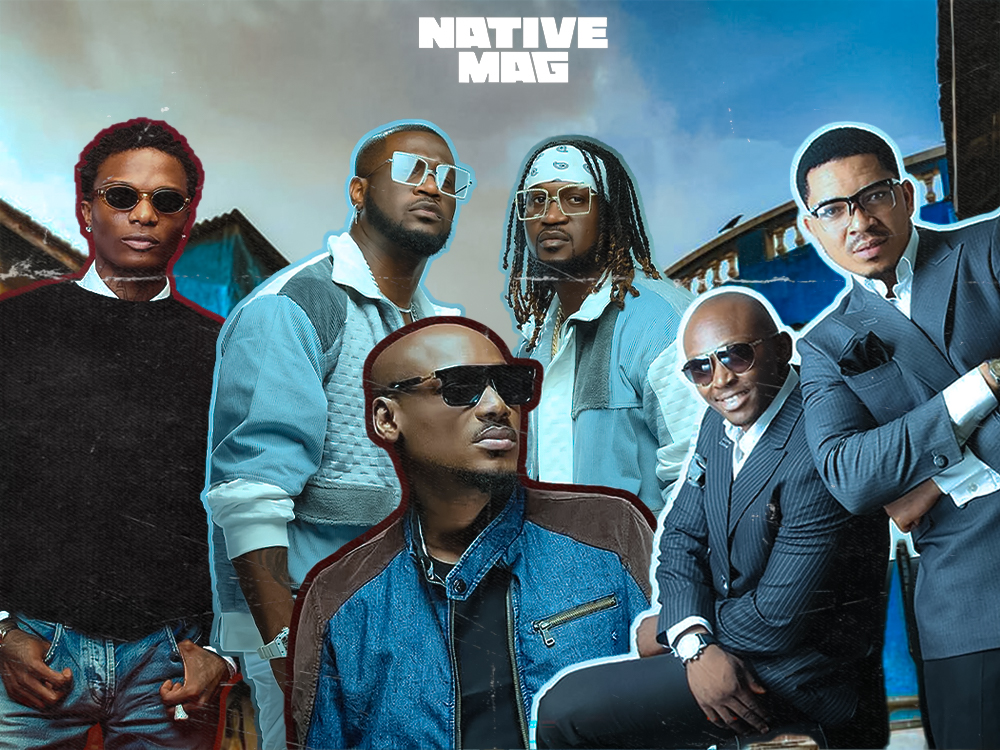
If earlier Afropop reflected a society rooted in emotional vulnerability, today’s genre exists in a world shaped by hyperaccessibility.
If you’ve been paying attention to the Afropop scene right now, it almost feels like love is forgotten. It is surprising considering that just two decades ago, it was basically all we heard. For me, it didn’t fully register until I read Billboard’s list of the top 50 Afrobeats songs of all time in 2025.
Unsurprisingly, 2Baba’s “African Queen” topped that list, described as a “syrupy ballad that revolutionized Afrobeats” and a “love letter to a generation of women from the continent.” In my opinion, this was a perfect choice because the 2004 song encapsulates everything Afropop used to be. Songs like “Fall in Love,” “No One Like You,” and “Yori Yori” paint a vivid picture of longing and devotion through their lyrical intimacy and expressive vocal delivery, effortlessly conveying what it feels like to be enamored with another person.
Today, things have shifted. The intimacy that was once felt in Afropop has been lost and seemingly traded in for sexualized lyrics that compare women’s bodies to pastries. In conversations with a wide range of creatives from across the industry, everyone had their own unique perspectives, but there was one thing we all agreed on: things have definitely changed. This is not to claim that this shift is absolute. When I spoke with Taves, an artist who stands out because of his vulnerable lyrics and emotional storytelling, he pointed out that there are still artists “keeping yearning alive, telling it how it is, how bad it gets, and how deep it gets.”
Amaeya, another artist who is also recognized for their heartfelt and authentic approach to songwriting, agreed with Taves. “Love is still there, it’s just expressed differently now,” she says. “I see many of my fellow up-and-coming artists singing about love most beautifully, but we just don’t get to hear it because it is not mainstream.”
In other words, love hasn’t vanished; it has just been redefined throughout the years. Reflecting more than just an obvious change in the music but also a change in the people making and consuming it. Music commentator Elsie Ahachi summed it up perfectly, saying, “Art reflects the times. This newer generation has a problem with commitment, and you actually see that reflecting in the music.”
Early Afropop Was All Heart
The music that came out in the earlier days of Afropop was real and raw. There was magic in the way artists could take a concept so foreign and make it instantly familiar through songwriting. In some sense, this reveals a broader truth about music, which is that it is not a standalone entity, and what gives it meaning is the relationship it holds with people.
With love being the most universal feeling in existence, it made sense that artists used this as a central theme in their music, giving listeners everywhere the ability to relate to someone they’ve never met. Both Taves and culture commentator Aisha bring up “Olufunmi” by Styl Plus as a staple example of the emotional vulnerability that defined early Afropop. “In earlier times, we had artists like Styl Plus crying on a song about a girl called Olufunmi, begging her not to leave him alone,” Taves started, “Like crying-in-the-rain type shit… that’s what we’re missing these days.”
Styl Plus’ approach to love songs reflected a more conservative era, where affection was articulated with softness. “When speaking about women and heterosexual relationships, it was a lot more romanticized and respectful,” Aisha says. “I don’t think themes of sex were hypervisible in music. Styl Plus gave me that R&B, loved-up feeling.”
Back then, loving loudly was the norm. With no dominant online dating apps and limited digital communication, most relationships unfolded in person, in public, and within communal spaces. The media that did exist at the time only reinforced this emotional openness. For example, Nigerian radio stations such as Metro FM, 96.9 Cool FM, and Rhythm FM would often feature popular relationship-themed segments that would cover a variety of topics, from heartbreak to romantic advice, and even matchmaking. This cultivated a shared vulnerability amongst listeners, allowing everyone who tuned in to feel as though they were a part of the same story.
However, this openness had limits. While public expressions of love were normalized, music that ventured into overtly sexual themes faced censorship and social judgment. “Quite a few of them were censored by the Nigerian government, and communities and parents would side-eye anyone listening to them,” Aisha says. “Society was a lot more critical of that kind of music, and engaging with it was sometimes seen as devious.”
This moral scrutiny upheld a cultural framework that positioned marriage as the ultimate end goal. So consequently, it made sense that the bulk of Afropop at the time centered on themes that aligned with the socially-sanctioned ideals of love, such as adoration, commitment, and heartfelt expression
Why Is Gen Z Struggling with Love?
If earlier Afropop was a reflection of a society rooted in commitment and emotional vulnerability, then today’s Afropop exists within a world shaped by hypervisibility, hyperaccessibility, hyperindependence, and an extreme form of digital attachment. This environment has shaped a generation that is a lot more cautious in how it chooses to express love. Taves keeps it blunt, saying that the internet has “done a lot of damage,” giving young people unprecedented access to each other’s lives. “Everything is more accessible, and there is more exposure now,” he admits. You can talk to anybody and be anybody you want.”
Social media has created a false sense of endless options for our generation, making it feel as though we can always find someone “better” with little effort. That mindset has entrenched dating trends like situationships and friends-with-benefits. As these dynamics have taken hold, relationships themselves have shifted.
Expanding on this, Aisha explained that, “Relationships have changed from that conservative model we were used to in the past, to now being a lot more liberal.” With this shift, she notes, comes a lack of clear boundaries, something that is increasingly reflected in the music. Still, she resists placing the responsibility solely on Gen Z. When it comes to hypersexuality in media and art, she argues that Gen Z are not the “original creators.” Instead, she points to millennials as the trendsetters, with Gen Z simply taking it to the next level.
The shift in societal values is only part of the story. The influence of digital streaming and social media on music consumption has been just as significant. Platforms like TikTok have become key tools for artists, allowing music to circulate globally without the barriers that once defined the industry. Amaeya speaks candidly about the role it played in building her career. “TikTok is definitely one of the biggest tools for PR because of how wide social media is,” she says. “I always say TikTok is what helped my career. When I dropped my first song, I was just posting every day, and one day I made a random video with my song, and that video went viral.”
That same ecosystem not only determines how music travels. It also shapes what kind of music rises. Songs that perform well today tend to be short and easily digestible. Elsie notes that artists have begun to “dumb down songs for the audience,” attributing this shift to shrinking attention spans. “People don’t have that patience for a song to build up,” she explains, “Or to have a story being told and to follow intricate songwriting.”
A glance at the charts reflects Elsie’s observation. A lot of the current top-charting songs feed into what has come to be known as vibe culture, music that prioritizes atmosphere over introspection. Money, designer, babes, parties, and pleasure are quintessential factors while vulnerability remains largely absent. That ephemeral quality of modern Afropop points to something deeper, which is the desire to escape reality through music.
Elise situates vibe culture within a broader context, particularly in Nigeria, where daily life has become increasingly difficult for the everyday person. “When a lot is going on,” she explains, “Human beings have this tendency to want to escape.” In moments like these, she notes, there is often an “uptick in music that’s like, forget your worries, let’s just jam all night.”
As audiences lean further into escapism, vulnerability becomes less central to what sells. Aisha observes that “artists have no need to be vulnerable because at the end of the day, that’s not really what’s gonna sell much. Afropop is music people play at functions, something people can catch a vibe to. So, like, vulnerability, what’s the need?”
Despite this, some artists continue to prioritise emotional honesty. Amaeya describes her approach to vulnerability as one rooted in sincerity, saying she wants her music to be “real to her and connect with people.” Still, that openness comes with caution. As Aisha points out, “vulnerability as a concept is wrapped up in a lot of psychological things.” It’s a reality Amaeya feels acutely. As a woman in a male-dominated industry, she admits she is often conscious of how her emotions will be received. “Guys can do whatever they want and get away with it,” she says, highlighting the uneven stakes of being openly expressive.
Taves’ relationship with vulnerability unfolds under different conditions. “I don’t think that I have ever felt pressure to be like anybody else and to be something other than very raw in my music, only because of the people that gave me inspiration,” he says. He credits artists like Asa, known for her soulful and introspective approach to love, as well as BNXN for shaping his understanding of sincerity and honesty in songwriting.
What Is The Future Of Love In Afropop?
As Afropop continues to cement itself as one of the world’s fastest-growing genres, and societal and digital trends continue to redefine what we once knew, we are led to the inevitable question: where is Afropop headed in terms of expressing romance? Taves is confident that love will make a return. “Everything goes in a circle,” he says. “We will definitely go back to that point where it’s cool to be vulnerable and genuine in a song again.” Just as he once looked up to songwriters who were open and real, he believes that “the new artists coming up will be the same way, because they couldn’t do it any other way than being real.”
Aisha and Elsie are more critical about the future, especially regarding society’s role. Aisha explains that she doesn’t see the state of Afropop shifting unless there is “a societal shift around love and relationships.” She also points to the Global North’s influence in shaping trends, noting that “whatever’s happening there is co-opted and transplanted back to Nigeria and West Africa.” It’s a crucial consideration as Afropop becomes a global phenomenon.
Elsie agrees with Aisha’s point, suggesting that the only way to understand where Afropop is going is by studying our “collective minds as a culture.” She pushes the conversation further, theorizing that Generation Alpha might lean into being more vulnerable. “I feel like every generation tries to do the opposite of what came before them,” she says.
Even if it feels lost for now, love has not been forgotten in Afropop. The way it appears in the music reflects how society values and experiences love at any given moment. When love returns to the forefront of culture, Afropop will respond instinctively, expressing genuine feelings. In the meantime, the genre will continue to evolve alongside a generation still understanding what love means to them.

