Tobe Nwigwe’s Naija-Houston Journey to ‘The Bridge’
Nearly a decade since committing to rap, Tobe Nwigwe is centering his Igbo heritage with his new album, ‘THE BRIDGE.’

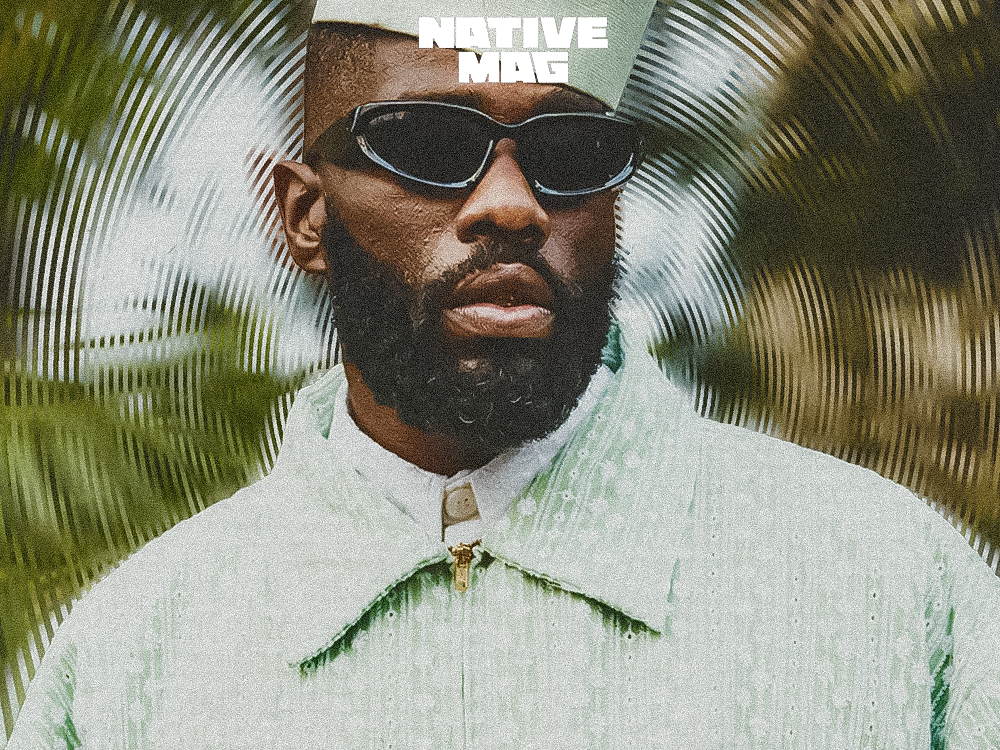
Nearly a decade since committing to rap, Tobe Nwigwe is centering his Igbo heritage with his new album, ‘THE BRIDGE.’
Tobe Nwigwe has a theory for why Houston, Texas saw a significant number of Nigerian immigrants in the 1980s: In 1980, basketball deity Hakeem Olajuwon made his way to the U.S. for a chance to play at the University of Houston.
Olajuwon had switched to basketball a few years before he travelled, and it was the prompting of a scout that helped secure a tryout with the university’s coach and eventually a successful college career. In 1984, Olajuwon declared for the NBA draft after his third official year in college, and he was selected as the number one pick by the Houston Rockets, ensuring that he stayed in the same city he first landed in.
According to Tobe, Olajuwon’s high-profile as a rising star in Houston spurred the many Nigerians that landed in Houston and other cities in Texas. On the day Tobe was born, March 7, 1987, Olajuwon scored a measly 12 points in a blowout loss for the Rockets, but the basketball star had already been to the NBA finals and was in the early stages of curating a dream of a career.
Tobechukwu Dubem Nwigwe was raised in the suburban hood of Alief, Texas—affectionately referred to as SWAT (short for South West, Alief, Texas) by locals. The Nwigwes had a Houston address, in the Winfield apartment complexes, but Tobe and his siblings were raised in a quintessentially Nigerian household. Parental directions were delivered in Igbo and Pidgin English, jollof rice and fufu with different soups were eaten regularly, and his parents didn’t take no shit.
Outside, it was different. By the 1980s, Alief had transformed from being a predominantly white rural area decades earlier, into a multicultural suburb and, consequently, one of the poorer parts of Houston. Tobe grew up trying to assimilate into this American society, surrounded by some kids who had easier contexts than him because their families were of the land, as well as some who were like him: a second generation immigrant balancing two cultures, one at home and another outside.
Mainly composed of working class families, most of them people of colour, poverty wasn’t uncommon in SWAT. This naturally meant navigating a town with its fair share of perils, a place where illicit street hustles and turf wars were staples. A place where “intense crime rates had bodies sitting sideways,” a searing portrait he shared on “From the SWAT.”
Tobe also had to navigate questions of identity, not just being black in America but also being African, with traceable roots to Uturu and Awka, southeast Nigeria. Initially, he tried to fit in as another black kid but he started to learn about America’s history of slavery and how it severed ancestral ties for generations of black people. That led to an increased embrace of his Nigerian heritage as high school education wore on.
“It was a blessing to know where you come from, who your people are, what your culture is, and I started taking pride in being Nigerian,” Tobe said in 2017 to Houstonia. By the time of this interview, he was an intriguing post-blog era sensation, laying the foundational bricks of what is now a successful Rap career.
Rap wasn’t always the priority for Tobe Nwigwe. Initially, it was American football. At the University of North Texas, he was a solid middle linebacker on a rather shitty team. During his junior year, he had the defining moment of his college career. In a game against Western Kentucky, he returned an interception 97 yards for a game-sealing touchdown that snapped an eight-game losing streak. His team was a sorry one, but “NFL scouts [saw] him as one of the few players on the UNT Roster that [had] flashed NFL talent.”
The dream of going pro was cut short by a career-altering mid-foot injury in the middle of his senior season. He entered the 2010 draft, with some franchises showing interest in his six-foot-one, 245-pound frame, but he ultimately went undrafted. Shortly after, he had a brief stint with the Hartford Colonials in the now-defunct United Football League (UFL), but it became evident that any hopes of playing American football on a professional level were pretty much done.
Uncertainty set in, with Tobe trying to figure out what next. Raised by Nigerian parents who were Catholic, Tobe scarcely had any choice but to be deeply reverent of God, and he attributes his next moves to divine direction. He recalls a voice he attributes to God telling him that his mission is “to help others find their purpose.” That led to the founding of a non-profit organisation, TeamGINI, a name derived from “Gini bu nkpa gi?”—Igbo for “What’s your purpose?”
With TeamGINI, Tobe began hosting events at schools, organized holiday drives, learnt how to raise money and manage resources, as well as building connections with people that could help optimize the impact of his organization. For one of TeamGINI’s events, he convinced popular preacher and speaker Eric Thomas to come participate, beginning a fruitful relationship. It was Thomas who, seeing Tobe’s charisma and oratory at events, helped convince him to try his voice at rapping, and even signed him as the first artist on ETA Records—Thomas’ then-new label.
In 2014, Tobe Nwigwe dropped his first project, ‘Pardon My Lateness,’ a rudimentary outline of the artist he could become. The proper starting point didn’t come until 2016 when he hopped a challenge that required people to rap over the 2003 hit “So Gone” by American R&B singer Monica. In his entry, Tobe rapped with an infectious southern twang while his then-girlfriend and now-wife Martica “Fat” Nwigwe twisted his hair. Not only did that garner a lot of positive reactions, but it also created the template for the series that began to raise his notoriety.
In 2017, Tobe and Fat started #GetTwistedSundays, a freestyle series with the former ripping through jacked beats and the latter twisting his hair. Aside from garnering new listeners, the series allowed Tobe to workshop his abilities as a lyricist, flaunting the technical leaps he had made since his debut project. By the time he dropped ‘Tobe From The SWAT’ in late 2017, it was evident that he was a better realized artist.
Then, as it is now, there’s a distinct southernness to Tobe’s music. A hyperregionality that comes from expressing his immediate surroundings and proudly embracing the heritage of Houston’s Rap canon. On project standout “Houston Tribute 2,” he pays homage to forebears like Pimp C and DJ Screw, stating that “they half of the reason I got the hardest rap.” The other half, he attributes to his Igbo heritage.
Nearly a decade since effectively committing to rap, Tobe Nwigwe is putting that Igbo heritage at the center of his music with the new album, ‘THE BRIDGE.’ Reverence for the Nigerian side of his heritage has cropped up sporadically across his catalogue, whether it’s mentioning his full name on several tracks, or the Jazzy Igbo folk composition that colours “Love Song,” or repeating a Pidgin phrase on “Round One.” It’s also worth inferring that his trademark green colour, usually in mint or sea foam shades, could be a reference to his Nigerian identity. “The Bridge isn’t a place,” Tobe wrote in the announcement note for the album. “It’s what happens when you stop choosing between parts of yourself and realize they’ve been connected all along.”
‘THE BRIDGE’ is primed to be Tobe’s most ambitious effort yet, which is saying something for a hyper-prolific artist that never seems to run out of ideas, like making an urban gospel album with spare use of drums and hella features from secular artists. Two singles in and you can hear the outline of an album that embodies his hybrid cultural identity. The Labrinth-assisted “All or Nothing” is straightforward, a mid-tempo jam that fits into the Nigerian Pop soundscape. The new single, “Perfection,” is where it gets even more exciting, a slapper that blends Nigerian Funk with southern Crunk and Blues. Flavour sings the vibrant hook, C.S. Armstrong reaches to the heavens with his raspy vocals, while Tobe raps the first verse and sings the second.
Like several of his previous projects, the new album is stuffed with collaborations, several of them Nigerian. ODUMODUBLVCK and Adekunle Gold make their second appearance on a Tobe Nwigwe project, after their features on 2024’s ‘HOOD HYMNS.’ Firstklaz and The Cavemen., contributors to three songs, round out the project’s Nigerian supporting cast. The south is also prominent, with features from Scarface, Paul Wall, Jay Electronica and Clipse’s Malice.
Tobe recently shared that he used to feel “too Naija for Houston and too Houston for Naija.” In some fashion, ‘THE BRIDGE’ is meant to be an expression of how assured of his identity he is, that there’s no dissonance in him being an Igbo man raised in the city that embraced Hakeem Olajuwon, in a hood that helped him better appreciate where his family is from. Tobe Nwigwe is an independent Rap star because of the Nigerian upbringing that gave him resilience, faith and dignity. He took the long route, but it’s led him here, to making music that is as Nigerian as it is Houston.

