The Tix Index 2026: Nigerians Are Actively Combating The Olodo Uprising
According to the Tix Index 2026, educational events averaged the highest prices of about ₦69,906 in the entire events economy in 2025.

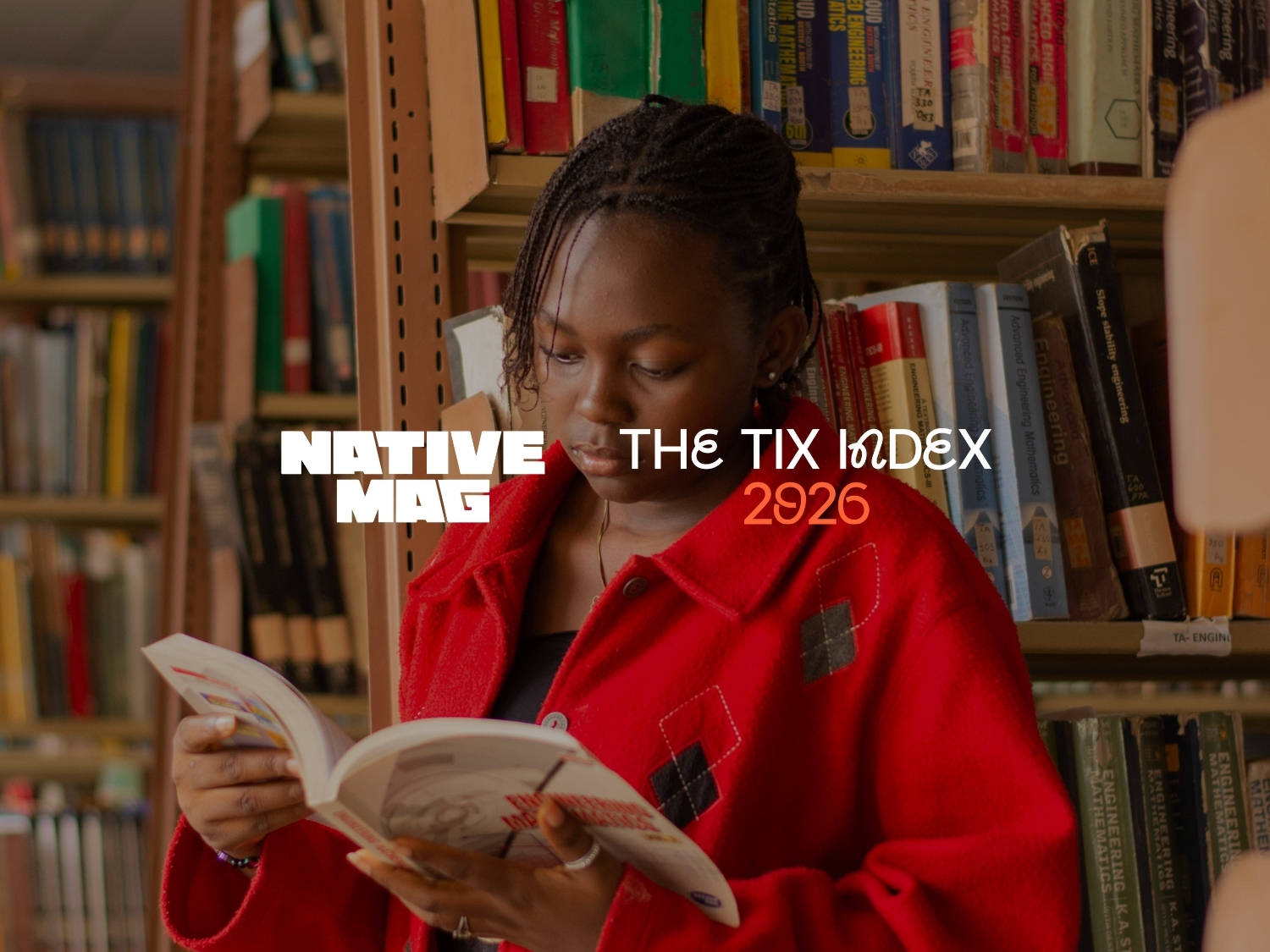
According to the Tix Index 2026, educational events averaged the highest prices of about ₦69,906 in the entire events economy in 2025.
Following the release of his album, ‘OUT OF SIGHT – OUT OF MIND: VOLUME 1,’ in June 2026, YCee appeared on the Afropolitan podcast. During the episode, the rapper went on to spotlight what has been the centre of major internet discourse in Nigeria ever since; the olodo uprising. In a viral video, YCee talked about an olodo uprising, a phase to describe the rise of anti-intellectualism in Nigeria. Anti-intellectualism here refers to the subtle numbing of knowledge or critical thinking in Nigerian popular culture.
Per the rapper, the olodo uprising was triggered by the nation’s leaders not prioritising important matters, such as education, alongside the inability of our society to recognize academic excellence, instead choosing to pay more attention to short-form or brainrot content. This argument by YCee sparked major debates about the state of education and literacy in Nigeria.
An olodo is a Yoruba word that refers to an individual of low intelligence or reasoning. In essence, the olodo uprising is the prominence and preference of lowbrow discussions and content, especially those regularly seen on social media platforms such as TikTok, YouTube and Instagram. Some examples include random TikTok challenges and livestreams that show off crass behaviour. Although this discourse gained significant traction in June, this is not an evergreen matter. It has always been a systemic issue, with its roots buried deep in Nigerian society.
There are a multitude of reasons for this phenomenon. The most blatant one is the “It’s not that deep” mentality that a lot of Nigerians have. When confronted with serious issues that require critical thinking and discourse, it’s often brushed to the side and deemed unimportant. This is also connected to the constant desire for entertainment mostly in the class of short-form content. Some argued that it was caused by Nigeria’s failing educational system while others said that in an economy that doesn’t always value those with degrees, making entertainment content is one of the only ways to get by.
When the Afropolitan podcast episode with YCee went viral, it was expected that it would bring about intellectual conversations. While it did, there were also some people that made it clear that there truly is an olodo uprising. Rather than challenging his point of view, they instead chose to compare his net worth to Peller, a Nigerian streamer who YCee mentioned as one of the forerunners of the olodo uprising in its present iteration. This not only goes to show how Nigerians often have misplaced priorities, but also how there’s an infatuation with wealth. The hustle mentality is a major aspect of Nigeria’s societal culture. In a country where the majority of its population, around 63% as of 2022, are multidimensionally poor, the people are forced to find any means to survive.
The government has a big role to play in the olodo uprising. In 2026, the Nigerian government allocated 6.1% of its budget to education, which doesn’t even come close to the 15-20% benchmark set by UNESCO. In a country where ludicrous amounts of money is set aside for personal luxuries for our leaders, the educational system is barely an afterthought. It’s not only evident in the system itself, but also the state of our infrastructure. Poorly equipped classrooms hinder the learning experience, teachers are constantly going on strike and millions of children are out of school.
There’s also the reality of what exactly we deem worthy of recognition in Nigeria. In an ideal country, stellar academic performance and intelligence will yield employment and financial security, but Nigeria is far from ideal. Instead, short-form content on social media is praised as the best way to make it big. It can only be described as a systemic failure when those who put in the work during their school years are unable to sustain themselves whilst being an internet sensation is more likely to get you millions.
Despite all this, there seems to be a glimmer of hope. According to the Tix Index 2026, educational events averaged the highest prices of about ₦69,906 in the entire events economy in 2025. This reflects a shift in purchasing behaviour of the average event goer. When compared to music & performance events, it’s clear that they’re also leaning towards events that support learning, growth and the value they attain from them, not just entertainment.
One of such events is the Education Career Summit 2.0. It’s geared towards equipping students with the necessary skills, knowledge and connections needed for success in their learning institutions and professional endeavours. There’s also the Digital Higher Education Africa Summit, this event aims to incorporate learning institutions with technology that can transform how people learn in Africa.
The growth emergence in technology & science event listings also shows a motivation to attend programmes based on their purpose, not just prices. They’ve seen an order surge of 414% in recent years. One of such events is the Arewa Tech Fest taking place in Lagos on October 21. This programme aims to accelerate the interconnectivity of Nigeria’s innovative and tech-based landscape, providing a platform that allows for networking and long term partnership.
The growth in educational events alongside tech programmes not only shows a shift toward more purpose- and connection-driven events despite the cost, but also creates the space for learning and the development of Nigeria’s technological ecosystem to flourish. They may not be able to rival the dominance of the top events alone but together they’re making a real difference.
Although this shift is a positive sign for Nigeria’s intellectual landscape, we’re still a ways off from making significant progress. The olodo uprising isn’t restricted to social media; it, in fact, takes on many forms. It occurs when there’s a refusal to challenge our own societal norms and way of thinking because it’s just people catching cruise; when voters choose to elect candidates based on tribal sentiments and not merit; and when we choose to harbour the mindset of “It’s not that deep” which only fail to help our society progress.
Although the olodo uprising may be seen as a coping mechanism that helps people ignore Nigeria’s hardships, it can only relieve us for so long. Conscious ignorance among Nigerians does more harm in the long run than comfort. However, the gradual rise of the aforementioned educational events across the country offers a glimpse into a better future and perhaps renewed hopes for the condition of our failing system.

