The Shuffle: Musiliu Haruna Ishola’s ‘Soyoyo’ Revived A Storied Yoruba Oral Genre
26 years later, ‘Soyoyo’ is a time capsule of Apala in its most propulsive 21st century re-imagination.

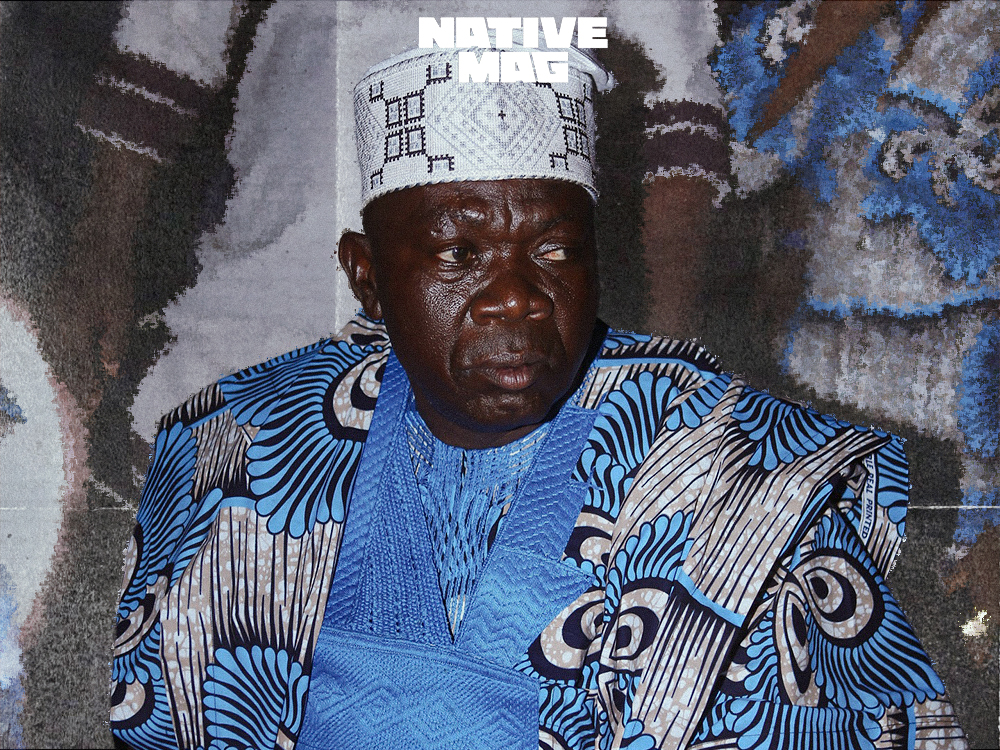
26 years later, ‘Soyoyo’ is a time capsule of Apala in its most propulsive 21st century re-imagination.
No one quite knows what makes a genre live on or what forces conspire to make a style of music timeless and forever influential to the memory of the people it serves. For a while after the legendary Haruna Ishola died in November 1983, Apala, the dense and grungy percussion-led style of Yoruba oral music that held sway in the 1960s and 1970s, was at real risk of fizzling out due to a lack of ready heirs. The legend’s son, Musiliu Haruna Ishola, had long served as a driver and tour manager for his father but had not really dabbled wholeheartedly into the music at the point of his father’s passing, further exacerbating the succession crisis within Apala.
As history has gone on to prove, there was nothing to worry about. Just one month after his father’s passing, Musiliu Haruna Ishola would call on the sons of his father’s bandmembers, forming his own band and committing to carry on the legacy of his father’s music through Apala. For the next 13 years, Musiliu Haruna Ishola and his band toiled endlessly, trying to revive Apala in the consciousness of a country that was undergoing waves of critical socio-economic, cultural, and political evolutions. A debut album, ‘Apala Resurrection,’ arrived in 1996 to mild commercial success; still, it didn’t provide the breakthrough moment that the genre and Musiliu Haruna Ishola were quite waiting for .
That moment would arrive four years later with the release of ‘Soyoyo,’ a richly textured album that had all the hallmarks of a classic Apala album, balancing Ishola’s vocal calisthenics with a raspy drumming style that matched his drawn-out delivery style without hollowing out the weight of his words. Recorded on a whim after a trip to Abeokuta where he met a promoter who owned Jooat Records, ‘Soyoyo’ was a callback to a line from his father’s iconic single “Ina Ran”, off a 1974 album of the same name. Just by the virtue of its title and the legacy of its creator, ‘Soyoyo’ existed as a doorway between generations. It gestured towards the rich history of Apala as an aural archive of a people’s narratives, joys, and attitude while bringing that nostalgic sheen into the future for a new generation of listeners.
Despite some critics railing against the release as a pastiche of his father’s best works, Musiliu was undoubted and it also helped that the music and delivery on ‘Soyoyo’ was seriously good, melding the allegorical essence of Apala with a forward-facing sensibility that softened–and broadened–the genre’s appeal. Opening the album with his deep baritone, Musiliu declares that, “Ise oluwa ko seni toye” over engrossing drum loops that loosen over the course of the track. Translating to “God’s work is a mystery,” the track declares the primacy of God as indisputable and supreme over the invocation and individual ideological leanings of pastors and imams. It sets the stage for him to declare himself the leading Apala performer of his generation, deliriously singing, “B’orin ba dùn, bi o dun, ẹni gbó wo lo mi a wi/ Àwa ní bàbà e yẹ ma ṣ’agídí.”
Traditionally, Yoruba oral music was recorded in one long go, and that wasn’t quite suited to the Western style of sequencing that prioritised easily identifiable start-and-stop points and suave transitions that would double as sleight of the hand. ‘Soyoyo’ stayed tethered to the fundamentals of its predecessors, recorded as a series of inner monologues played out for public consumption. As such, the album’s streaming version does not have the slick transitions that have become de jure in Afropop, instead what we get is often abrupt ends in one place and Musiliu’s voice rising with the force of an ocean wave on another track as the sync between “Ise Oluwa Ko Seni To Ye” and “Opon Apala Ti Sun” exemplify.
“Opon Apala Ti Sun” is listed as a different song but it operates on the same wavelength as its predecessor, promoting the idea of Musiliu Haruna Ishola as the undisputed leader of Apala in the country with lines like “Musiliu, awa lalapala gidi” and “Mo ti so tele tele pe Tunde Ishola ni president fun awon alapala” further entrenching that position. Where his delivery on “Ise Oluwa Ko Seni To Ye” was mellow and reverential in turns, his flow on “Opon Apala Ti Sun” is decidedly magisterial, embodying the essence of his lyrics as the leading Apala practitioner of his age at a time when the genre was locked in a battle for its continued survival.
Respect for elders is an important part of the Yoruba cosmogony and, for all of his belligerent posturing on the opening stretch of ‘Soyoyo,’ Musiliu Haruna Ishola is adept at putting his elders on a pedestal while requesting for their goodwill as he does on “Eyin Agba.” Over shakers, claves, and agogo bells, the fourth generation Apala singer sings about placing himself at the mercy of the elders and requesting their blessings while admitting, “Omo yin l’aje ogbon o de bi kan.” It is often believed that elders have insight into the metaphysical and when he sings, “Eyin Eyin agba o, o-ay/ Eyin agba t’e ba ri pe a ṣe yín/ E ma ro’jo wa s’ibi t’o ṣoro,” Musiliu is requesting that that supposed access to the metaphysical is not weaponised against him.
Much of what makes Apala so celebrated is the interplay between its lyrical rigour and the instrumentation that provides structure for what is being said. ‘Soyoyo’ benefits from some serious instrumental work. The percussion on “Akoko Olute Lorin Wa” rises and falls with Musiliu Ishola’s enunciation, displaying supreme chemistry between the singer and his band. “Ba O Ri Igun Ao Gbodo Sebo” also benefits from that imperious beatwork, platforming the singer’s voice over steely percussion. For the length of their existence, Yoruba oral genres have always reflected what was going on around them and, released in 2000, ‘Soyoyo’ paints a vivid, if patronistic image of southwest Nigeria’s Nigeria’s post-1999 political space and its power players, referencing political leaders and monarchs while urging them to deliver for their constituents.
In 1971, Haruna Ishola released his most acclaimed album, ‘Oroki Social Club,’ named after a popular club in Osogbo, Osun state he frequented with his band. 29 years later, Musliu Haruna Ishola would borrow a leaf from his father’s book and name a track on his album “Fadaka Club,” riffing off his father’s flow for a dedication to the Mushin-based social club that name-dropped some of the club’s most prominent members. As with most Yoruba oral genres, praise-singing remains a central tenet of Apala, and ‘Soyoyo’ finds Musliu Haruna Ishola paying homage to some well-known Yoruba figures from the late 1990s such as Mrs Lydia Fasewe and Gbenga Adeboye as well as President Olusegun Obasanjo and his vice president, Atiku Abubakar.
‘Soyoyo’ didn’t necessarily catch fire upon release. In an interview with Punch, Musliu Haruna Ishola admitted that the album didn’t make sales months after its release until a turning point nine months later. When it did rise to prominence, ‘Soyoyo’ became inescapable, soundtracking naming ceremonies, wedding parties, and burial celebrations with a fervid clamour that was unheard of for Apala at that time. 26 years later, ‘Soyoyo’ is a time capsule of Apala in its most propulsive 21st century re-imagination. Even then, Musiliu was handing down notes on how to adapt the genre for generations to come as the Hip-Hop-inflected “My Dear (Apala Remix)” would prove. By virtue of its success and acceptance, ‘Soyoyo’ ensured that Apala endured for another generation rather than being confined to the annals of history as a fossil of music’s hybridization. For that, we can thank Musiliu Haruna Ishola everytime a favourite from ‘Soyoyo’ comes on at parties.

