The P-Square Saga & Afropop’s Sketchy Relationship With Legacy
For the past decade, P Square have been locked in a roundabout tug-of-war, one with implications stretching from the legal to the familial.

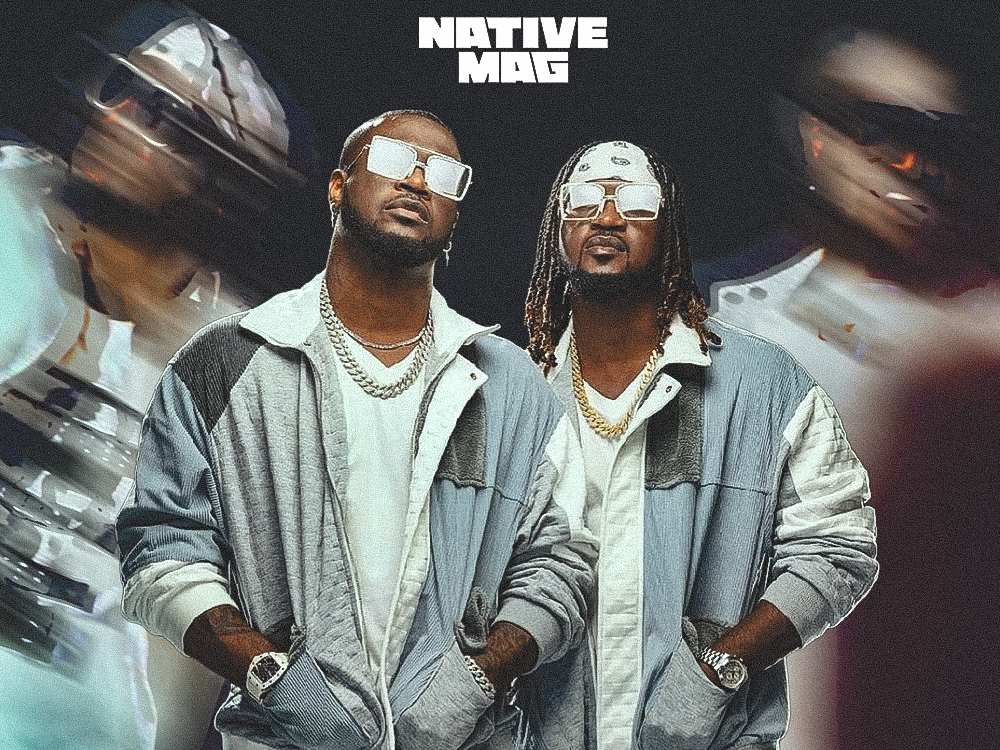
For the past decade, P Square have been locked in a roundabout tug-of-war, one with implications stretching from the legal to the familial.
“What’s better than one billionaire? Two / ‘Specially if they’re from the same hue as you” – JAY-Z
Whether one likes it to admit it or not, Africa’s cultural history has been influenced by Paul and Peter Okoye. So much has been said and written about these twin brothers that anything new seems prone to redundance. Yet we can’t cast these gems out of our sight, more so now that the invasive machinery of social media has amplified their woes into communal significance. For the past decade, this duo which makes up the legendary P Square have been in a roundabout tug-of-war, one with implications which stretch across the legal to the familial.
Why do we care? Surely, it’s common for disagreements to arise between family members, celebrities though they might be. To this inference, it’s important to once again refresh the memory, though it’s almost impossible to forget this particular duo. Not when they ruled the 2000s (Afrobeats’ foundational decade) with synth-heavy bangers and emotive love records of such potency we haven’t seen before and seldom after. In trying not to rehash old arguments, one must move beyond the quality of their music and what they offer as brand powerhouses.
The first time I saw P Square on-screen, what was most evident was the strong sense of individuality. Although they’d sing “Peter and Paul, dem be one no be two,” they were indeed two, a sleight of sight that was amplified by them looking the same. That’s what being identical twins means after all, however they made this personality illusion even more powerful by adopting distinct characters within the group. The dreadlocked Paul was more outwards-facing, usually leading the video scenes and answering the questions in interviews. Suave Peter brought the performance; the ladies’ man, he often maintained an elusive aura that made him even more sought after. This was a good mix of attributes, one so innocently perceived no one could have predicted its eventual role in the group’s dissolution.
For a while, P Square was the embodiment of Afropop’s innate ability to transform any stage. From Nigeria to the rest of Africa and the world, performing albums like ‘Game Over’ and ‘Danger’ birthed scenes that were visibly Michael Jackson-esque in its effusive sense of adulation: massive crowds of people, long lines of ambulance vans, ladies fainting after seeing the duo. It wasn’t just the music and dancing that appealed so much; it was also their delicate crafting of myth. Watching P Square often came with the sense of beholding something greater than oneself, perhaps even greater than any crowd. They belonged to the Black world.
This might be the reason why initial cracks of a breakup were thought to be a publicity stunt. Who in their logical sense would think to destroy a building of such domineering magnificence? It’s even more disappointing following their trending back-and-forth to know that the issues stretch back more than a decade. Depending on who you ask, this was all avoidable or inevitable. It was avoidable because any issues between them both and their manager Jude ‘Engees’ Okoye couldn’t possibly have been worth sacrificing their legacy; yet, going off the information we’ve gotten in the past week, it’s now clearer that their dissolution veered towards inevitable closer than we ever thought of.
If there’s been any positive from this whole ugly affair, it has been the deliberate projection of the foundational era of Nigerian Pop. Across different media channels, a family saga has transformed into a sort of archive, birthing stories that have been rather diminished amidst the cache of contemporary abundance. We know the name P Square, but do we remember how big they were, the feats they accomplished? And placed side by side with them, how does the similarly gigantic 2Baba stand?
Memory is a tricky affair, especially in a nuanced subject like music. How does the brain register importance? It’s somewhat unfair to put as rivals these artists who made “Possibility (Remix)” together, but even music cannot cast away the bangles of competition. Away from these aspersions as to who was number in 2007 or 2009, whose music moved the pulse of culture the most, I have loved particularly the consecration of these classic artists into social media. It’s refreshing to watch that sun-suffused video of “Ole” just a tweet away from a writer musing on the requirements of good craft.
Even this is spurred by temporary nostalgia, it bears a striking resonance to the note we must strike, which is the usefulness of the past. Since no art form is built on a vacuum, so must its practitioners and enthusiasts constantly seek to view the old in light of the new, if not the new in light of the old. What I mean is that there’s a constant interplay between every artist who has ever transformed thought into form. P Square’s form in particular carries a cherry mark that bore on songs like “No One Like You” and “Forever”; a melancholic edge that enlivened “Senorita” and “Am I Still That Special Man.” Their videos were homely and engaged the whole family. Quite simply, they are memory itself.
But even memory doesn’t sit still. Trouble is life’s old friend. Now the case is in court, stories are being told, and the world has been invited to bear audience to this… strange tumble between twins. Yet we look at the past and present, and it points us to the optimistic future; a hope that the universe will again inspire art of such brilliance that will move us to such extremes. It would be a lesson in the revelatory powers of collaboration, even as we brim with all the weaknesses that make us human.

