The Locales That Shaped Our Favourite Afropop Stars
Markers of those places inevitably show up in the music of our favorite stars, enriching our soundscape and furthering our cultural memory.

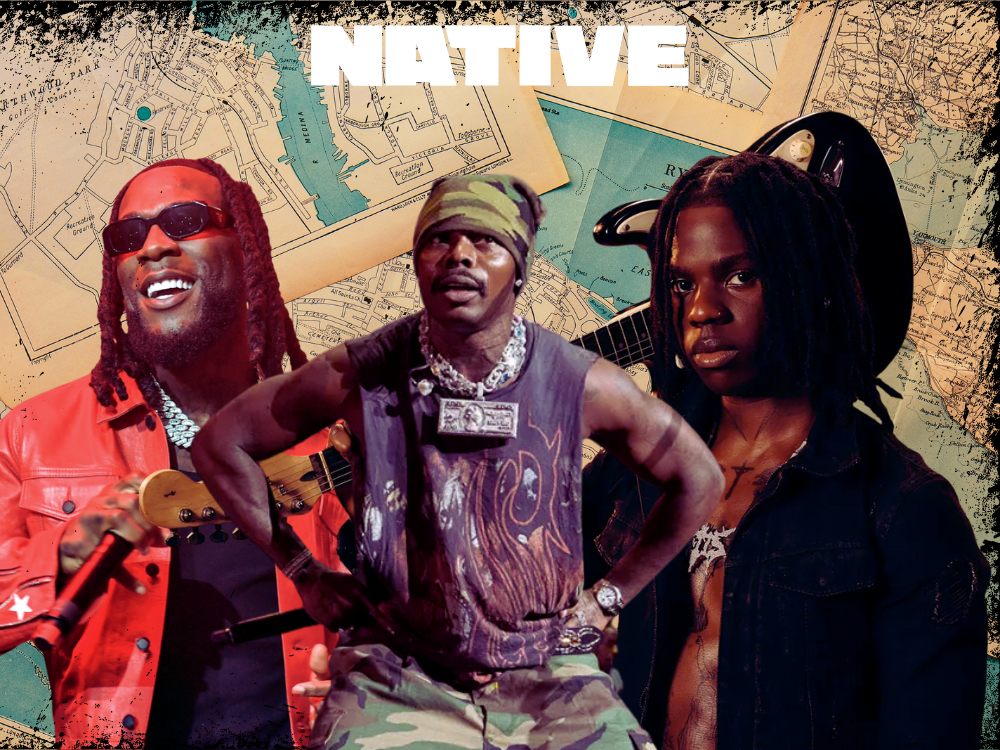
Markers of those places inevitably show up in the music of our favorite stars, enriching our soundscape and furthering our cultural memory.
The concept of origin and heritage has never been more important in Afropop than right now. As the edges of the sound broaden and influences spring forth from all over, artists are increasingly taking on ambassadorial roles that see them represent the people, attitude, and ideals of where they hail from. Whether by birth or upbringing, artists are intrinsically tied to and influenced by these places where they have spent significant time socialising and soaking up influences. The markers of those places inevitably show up in their music, enriching our soundscape and furthering our collective cultural memory.
Whether it is Olamide putting on for Bariga on “Oga Nla 1” in tandem with Alhaji Wasiu Alabi Pasuma and Lil Kesh or Burna Boy beautifying Port Harcourt on “City Vibration,” we get a glimpse into these places beyond run-of-the-mill news that doesn’t offer a rounded perspective on the inner workings of the community. We are at once witnesses to communal struggles and pain via these artists’ perspectives, as well as willful participants in their ascension to musical superstardom while doing their best to hold on to their communities.
We compiled a list of some artists whose rise and continued success pay homage to the communities that raised them.
Wizkid, Ojuelegba, Surulere
It’s pretty befitting that the quintessential Wizkid song is “Ojuelegba,” a cut from his 2014 sophomore studio album, ‘Ayo’. While the singer has paid homage to his birthplace on a few previous occasions, no song venerates the Lagos suburb quite like “Ojuelegba.” Even as he made the smooth transition from national hero to global superstar shortly after the release of ‘Ayo,’ the album’s standout track continued to serve as a melodious autobiography that helps establish his roots for those unfamiliar. The song’s accompanying music video also captures the suburb’s bustling energy, as well as the unforgiving conditions that produced him. – B.A
Burna Boy, Port Harcourt
One of the many things that Burna Boy speaks with pride about is his native Port Harcourt. He constantly ensures that his city is at the forefront of his craft, dedicating songs that either narrate his experiences in the Garden City or highlight some of the social and political issues plaguing his home city. Songs like “Where I’m From” and “Ph City Vibration,” highlights from his third studio album ‘Outside,’ double as sturdy deep cuts and brief history lessons about Port Harcourt. In late 2022, the pop star also released a short documentary for “Whiskey,” detailing the environmental crisis in his birthplace. – B.A
Olamide, Bariga
No Nigerian artist is as representative of mainland Lagos as Olamide Baddo. Still, even the mainland is not a monolith, as different areas have their quirks and unique colorations. Bariga, Olamide’s neck of the woods, has been an ever-present in his music from the very beginning of his career, providing inspiration and grounding for the street-pop juggernaut who references the lessons learned and tales handed down in his hood. “Money,” the opening track from his sophomore album, ‘YBNL,’ features a bus conductor calling out for passengers to Ladilak, Bariga, forever immortalising the Lagos hood on wax. On “Rep Adugbo” from his incendiary ‘Baddest Guy Ever Liveth,’ he’s similarly unabashed about his dedication to Bariga, its inhabitants, and authority figures. Even superstardom hasn’t dulled those representative instincts: on “Supplier,” from his 2023 album, ‘Unruly,’ he’s keen to remind anyone listening that he carries Bariga with him everywhere he goes. – W.O
Asake, Lagos Island
Asake could only have emerged from the crucible of Lagos Island. There’s something about his carriage that undoubtedly suggests an upbringing in the oldest part of Lagos, and even though he doesn’t always directly reference Lagos Island, the seeds of its influence are in the margin of his work. The back and forth between Islamic and Christian motifs in his work is a legacy of the religiously tolerant culture of Lagos Island, and his slang usage reflects a stint living in the ocean-side community. Perhaps the clearest sign of his connection to Lagos Island came on his third studio album, ‘Lungu Boy,’ a detailing of his come-up story from Lagos Island hopeful to global superstar. On “Uhh Yeahh,” he sings, “Beere mi ni Kakawa,” directly shouting out the popular street in Lagos Island. Visual elements of his tour dates from 2024 also heavily featured and celebrated the streets of Lagos Island as the singer leaned into his heritage. Places like Adeniji Adele, Freedom Park, and Marina were featured, letting the world know that Asake has not forgotten his roots. – W.O
Zlatan, Ikorodu
Zlatan Ibile takes great pride in giving game to ambitious young hustlers looking to move beyond the current situation of their lives. His rise from Ikorodu hoodrat to Nigerian Hip-Hop royalty is the stuff of legend, but the stories of his woes, troubles, and sufferings in Ikorodu keenly display the relentlessness and dogged determination that saw Zlatan make a name for himself. He’s keen to reminisce on those days from time to time. On “Elevated,” off SuperWozzy’s 2021 ‘Light Of The Trenches,’ he sings, “Won fe k’enu mi gbe seh, biti church rat/ Mo moyan pupo n’Ikorodu ton ti te Shoprite,” reflecting on the lack that plagues huge swathes of Ikorodu. It’s a similar impulse that births his verse on Ajebo Hustlers’ “Dreams II,” which features a reference to his mischievous streak growing in Ikorodu. – W.O
Rema, Ekenhuan Road, Benin
If the syrupy trap-adjacent flow Rema employed on his introductory project or his incursions into diverse genres on several occasions since then have fooled you, his 2023 album, ‘HEIS,’ was a defiant reclamation of his identity as a Benin boy. To be fair, ‘HEIS’ didn’t just drop out of the blues; the Mavin singer had been preparing his audience for that home-leaning lurch since he stepped on stage adorned in a replica of the iconic mask of storied Benin royal, Queen Idia, during his first sold-out concert at the O2 Arena in London.
Reminding his audience of the painful history of British incursion in Benin, Rema set the stage for ‘HEIS,’ an album steeped in Benin-specific lore and acts of remembrance. “BENIN BOYS,” his blockbuster collaboration with Shallipopi, could not have passed the message of his origin better. Featuring a shoutout to his old neighbourhood, Ekenhuan Road, and an urge to the Oba to award him a medal, “BENIN BOYS” is a larger-than-life celebration of his city. Taken together with the rage-inducing “OZEBA,” it was a spiritual return home for one of Benin’s most iconic sons that showcased his identity for the world to see. – W.O
Seyi Vibez, Ikorodu
No one puts on for Ikorodu quite like Seyi Vibez. While the singer was originally born in Ketu, it’s in Ikorodu that he honed his craft as a skilled musician. He’s referenced his upbringing and Ikorodu specifically in a lot of his earlier interviews and songs, and it’s in that same administrative division that he put together his first show that pulled a crowd of about 200 people. The singer returned in 2023 for a free homecoming concert as a way to celebrate and give back to the community that helped kickstart and support his musical journey. He’s continued to rep Ikorodu even in recent times, most notably on his hit record “Shaolin.” – B.A
Mohbad, Ikorodu
Mohbad was one of Ikorodu’s crown jewels. In August 2023, just about a month before his passing, the singer posted a video of himself on Instagram visiting his old neighbourhood in Ikorodu. He went around distributing gifts and reconciling with longtime friends without any security, interacting organically with a community that regarded him as one of their own. He put on for his community just as much as they did for him. After his unfortunate passing, the youth rallies that were organised in Ikorodu to commemorate and demand justice for his death highlighted just how important he was to one of Lagos’s most populous hubs. – B.A
Shallipopi, Sapele Road, Benin
Even if his golden drawl and sonorous pidgin didn’t betray his Benin heritage, Shallipopi wouldn’t pretend to be from anywhere else but his hometown. That Benin heritage is in how Shallipopi perceives the world, the way he talks, and, particularly, how he approaches his music. “Obapluto,” the standout on his debut project, ‘Planet Pluto,’ features a prominent sample of Pa Monday Edo’s “Ogbaisi,” an homage to the Oba of Benin. It’s a trick he repeated on “ASAP,” off his sophomore album, ‘Shakespopi,’ sampling Alhaji Waziri Oshomah’s “Ikwekiame Nedumhe.” The chorus of his 2025 hit single is almost entirely sung in Bini, displaying the reverence that Shallipopi has for Benin – W.O.
Omah Lay, Port Harcourt
On the opener of Omah Lay’s critically acclaimed debut album ‘Boy Alone,’ he’s unequivocal about where he’s from. ‘All of the way from Port Harcourt/Water Side,’ he sings proudly, emphasising the city that shaped his music and creative voice. Throughout the album, he makes multiple other references to his background, whether it’s singing in his native Ikweere language or name-dropping neighbourhoods like the Marine Base area. In a Hypebeast interview from 2022, the singer spoke about his city with similar pride. “Port Harcourt is different from the rest of Nigeria in the way that we talk, eat– everything. It’s really different. All of that definitely influenced my music so much because it was really tough growing up in Port Harcourt, but that experience made me who I am today. I’ll never forget that or stop repping my city.” – B.A

