Knucks Wants You To Know That He’s ‘A Fine African Man’
Knucks' second studio album, ‘A Fine African Man,’ represents a continued and deeper exploration of identity.

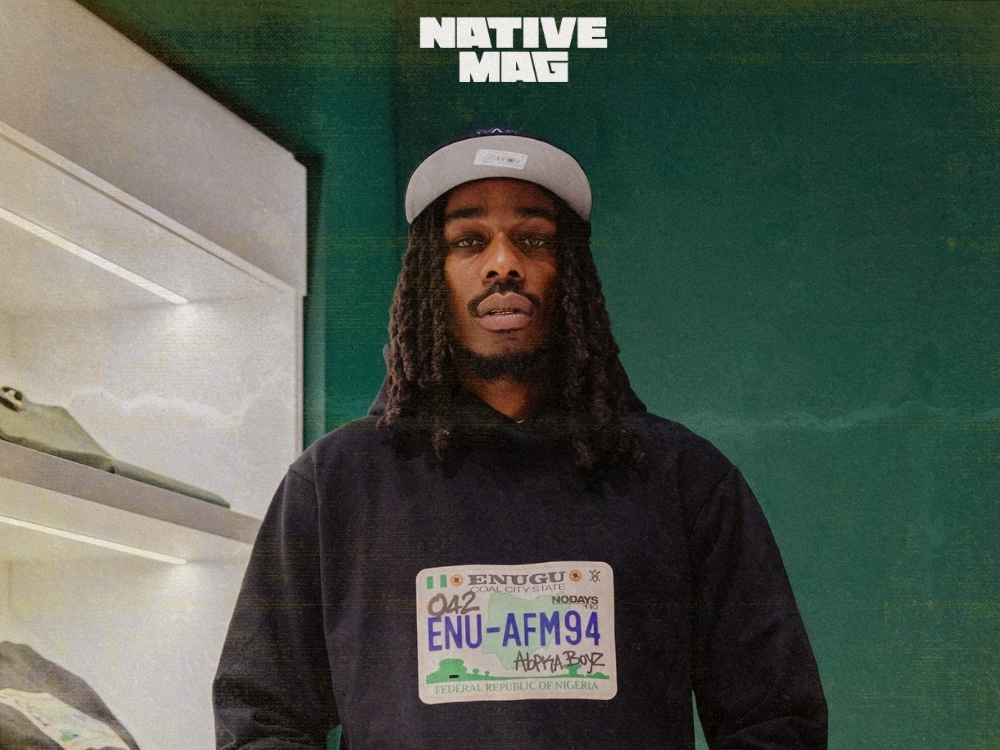
Knucks' second studio album, ‘A Fine African Man,’ represents a continued and deeper exploration of identity.
‘Alpha Place’ marked a definitive breakthrough for Knucks. Though the British rapper had steadily built up his credentials as a smooth, razor-sharp lyricist on his debut mixtape ‘Killmatic,’ a clever portmanteau of his hometown Kilburn and Nas’ legendary debut, and two follow-up EPs, it was his 2021 release that truly helped put him on the map. Reminiscing over Jazz-inflected beats, the rapper, born Ashley Nwachukwu, offered a vivid homage to his origins in South Kilburn, London, recalling childhood memories, neighbourhood vignettes, and the lived experiences that shaped his artistic identity.
The album was lauded for its cinematic detail, strong, consistent production, and, more notably, Knuck’s ability to blend classic Hip-Hop aesthetics with a distinctly British sensibility. Its commercial success was spearheaded by the lead single, “Los Pollos Hermanos,” a track inspired by the fictional restaurant of the same name, which has amassed hundreds of millions of streams across various DSPs and solidified Knucks’ status as a formidable voice in the UK Rap landscape.
Building on this foundation, his second studio album, ‘A Fine African Man,’ released in late October 2025, represents a continued and deeper exploration of identity, as the rapper pivots to examine his Nigerian heritage. ‘I’ve been telling myself before anything else, I’m an African man / I’ve been to the village, I know all my kin like the back of my hand,’ he raps calmly on the album’s opening seconds, a firm declaration and cultural grounding that guides the narrative that unfolds across the project’s 34-minute runtime.
Cuts like the anecdotal “YAM PORRIDGE,” “CUT KNUCKLES,” the Fimiguerrero-assisted “NKITA” and “CONTAINER” highlight his characteristic wit and observational clarity as well as his desire to experiment with his production a little more. To enrich the album’s cultural narrative, he includes different sentimental soundbites and enlists a complementary guest list that includes legacy Igbo acts like Kcee and Phyno, both of whom add layers of authenticity to Knuck’s overall vision.
A couple of weeks after the album’s release, the 31-year-old caught up with NATIVE Mag to discuss the new project, the inspiration behind it, how he settled on the collaborations and a moving story that inspired one of the album’s standout tracks.
Your new album, ‘A Fine African Man,’ has been out for a few weeks now. Can you describe how you feel post-release and what the reception has been like?
I feel a lot of relief that the album is finally out. When you have art that you’ve held on to for so long, you just want to see other people’s reaction to it. See how they take it in, how they experience it, how they live with it. These last few weeks of people living with it have shown me that the things I tried to accomplish on the album have been successful. People have come back to me to say that they feel the things I’ve set out for them to feel. It’s a good feeling.
You’re British-born with Nigerian heritage. What was it like growing up in an African home in the UK?
London is a cesspool of different cultures. Growing up, I had neighbours who were Jamaican, Somalian and Indian. It was a mix of different cultures growing up, so it was down to your parents to instil your culture in you so you know where you’re from. Thankfully, my parents used to speak some Igbo around the house, and they’ll cook Nigerian food.
You’ve previously spoken about spending a year in boarding school here in Nigeria. How was that experience, and did you enjoy your time there?
I cried when my parents first told me I was going to Nigeria. Coming here was a culture shock for me. Everything was so different. Academically, especially, but even just the entire lifestyle. I had to do everything myself, and that wasn’t something I was used to. But I think that experience made me mature very early. I had to navigate that unusual experience on my own, and I was only 11 or 12 at the time.
You’ve also mentioned that Nas’ ‘Illmatic’ inspired you to make your own music. Were there any musicians you liked or listened to during your time here in boarding school?
I liked Flavour. “N’abania” and “Nwa Baby” were really popular around the time I was here, and I really liked those. I also liked Psquare and Timaya.
When did you start working on ‘A Fine African Man’?
I started working on it in 2022.
Was there a specific thing or moment that inspired you to make this album?
Initially, I was working on an album with a music producer from LA called Kenny Beats. I was back and forth from LA for almost a year. Then I had a meeting with my manager, which changed my focus. They had observed where music was at the time, and a lot of what was popular were African songs. So they wanted me to make an album in that direction. I thought about it, and I realised it could be a good opportunity to carry on from where my last album left off. On “Three Musketeers,” one of the last songs on ‘Alpha Place,’ I talked about going to Nigeria, but I never went in-depth, so I thought I could continue that story with this album.
How did you decide on the collaborations for the album?
A lot of the collaborations were by design. Anytime I’m making an album, everything has to align, and it has to thematically make sense. Once I decided I wanted to make an album dedicated to where I’m from, I felt like it was important to feature Nigerian, and more specifically, Igbo artists. It just gave more authenticity to what I was making.
I’m curious about the track “YAM PORRIDGE.” It seemed like it was inspired by your experience back here in boarding school. Can you tell me a bit more about that song?
The song is inspired by a cook who used to work at the boarding school I attended. She’s from my village, and she knows my dad. I guess before I moved here, my dad must have spoken to her to look after me. So she was basically the only person close to family that I knew in the school. Anytime I was ill or wanted to speak to my parents, I would go to her, and she would look after me.
A couple of years later, when I had started making music, my dad mentioned that he wanted to send some money back to Nigeria, and I randomly thought to also send money to the cook just to make sure she was alright. A couple of weeks after sending the money, my dad reached out and said that when they delivered the money to the cook, she was really ill, and the money was timely. When I think back to why my experience with that woman was so memorable, it was partly because of her Yam porridge. So I made that song wanting to tell that story, but I didn’t want to be the focal point. I asked my dad about some more details about her, so I started the story from when she was young and then built it up. First verse, she’s a young girl, second verse, she’s a young woman, and then the third verse, she’s a grown woman. Only at the end do I mention myself.
Do you have any special moments from making this album?
I went on a trip to Jamaica, and it was definitely a high point of making the album. I made “MASQUERADE,” “FRIENDS,” and “PALM WINE” on that trip. Before I went to Jamaica, I was struggling with writer’s block. I was finding it difficult to continue with the album, but that trip seemed to unlock something in me, and that enabled me to make some of the most powerful songs on the album.
If there’s one thing you would love your fans or listeners to take away from the album, what would it be?
That I’m a fine African man. Every project I drop is another way to know me a bit more. I’m not too sociable online. The only way you’ll know about me is through my music. So I think it’s important for me to be honest and authentic in my music.
Listen to ‘A Fine African Man’ here.

