June Freedom Finds Clarity On ‘Casa Mira Mar’
‘Casa Mira Mar’ is a tightly-knit collection of tracks fitting the Cape Verdean singer's expansive view of global Black music.

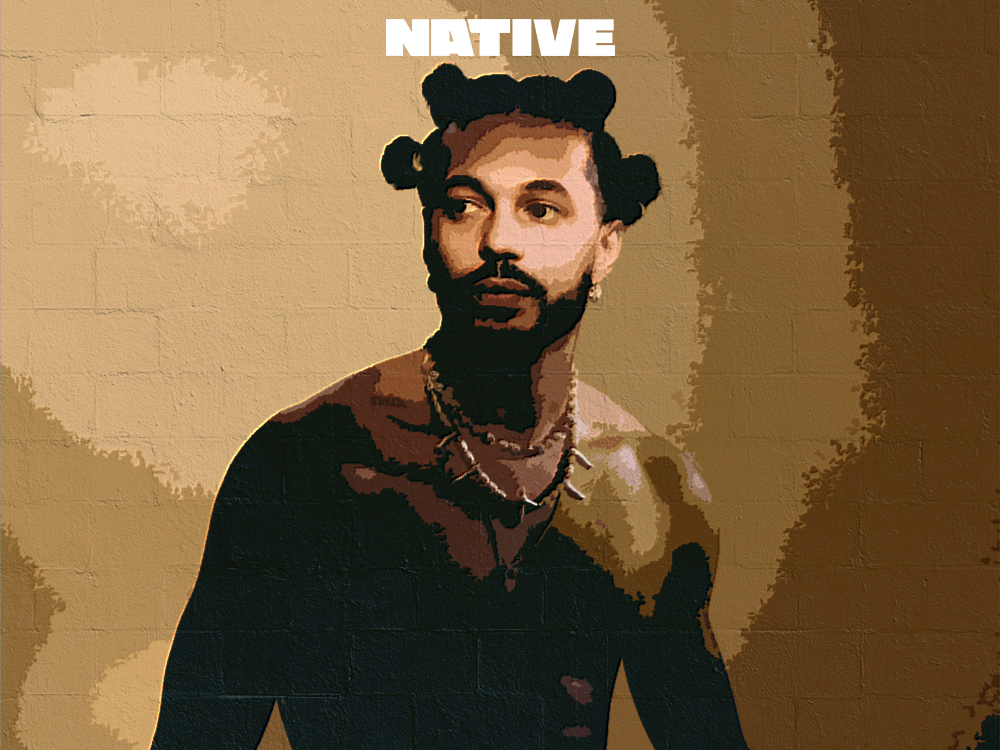
‘Casa Mira Mar’ is a tightly-knit collection of tracks fitting the Cape Verdean singer's expansive view of global Black music.
June Freedom is at peace, and he wants you to feel it, too, through his new album ‘Casa Mira Mar.’
Expansive in scope and light on its feet, the buoyancy of Casa Mira Mar is framed with a through-line of healing, reflecting an artist being centered. But this ease was only made possible through the stillness that he found in a pilgrimage home.
Forged across continents, June’s sound is an itinerant synthesis of Afro-Latin rhythms, Alt-Pop, and R&B. However, after a 10-city tour in Europe backing his sophomore album, ‘7 SEAS,’ left him adrift, he found his focus by narrowing his field of vision. Thus, Casa Mira Mar—meaning “house with an ocean view”—is named after his grandfather’s store in São Filipe on Fogo Island, Cape Verde, and is a record conceived from his conscious retreat to that tranquil place.
Born in Boston, but raised on the island of Fogo, June Freedom grew up surrounded by live music: his mother’s restaurant hosted bands every weekend, and his teenage years were spent representing Cape Verde in small inter‑island competitions. Moving to the United States at 15 brought new sounds fully into his orbit: R&B, Pop, and Hip-Hop, all without dulling his fundamental ties to Cape Verde’s musical bedrock.
Distilling all these influences, ‘Casa Mira Mar’ is a collection of tracks fitting his expansive view of global Black music. His first full-length project since 2023, the record marries the Cape Verdean genres of Coladeira, Funaná, Kizomba, and Batuku with modern R&B and Pop templates. Featuring a cosmopolitan group of collaborators including Nigerian artist Cheque, Cape Verdean singers Djodje and Éllàh, Ghanaian-Dutch vocalist Nana Fofie, Spanish-Brazilian artist Lua de Santana, and Dutch singer-songwriter SABRI, it reflects the serendipity and openness that June envisions for his career.
We sat down with June Freedom to discuss making ‘Casa Mira Mar’ as a love letter to home, exploring the full range of his transatlantic identity on the album, and his excitement at being a vessel for carrying Cape Verde’s sound into new territories.
You’ve said the album began taking shape after you returned to your grandfather’s home in Cape Verde. What was it about that trip that grounded you enough to make this project happen?
It’s the house I grew up in. When I moved from Cape Verde to the US at 15, I always wanted to experience something faster. Back home, everything is on ‘Island time,’ it’s really slow, and at a certain point, I felt like I needed more. Now, with the world feeling so fast and active, going back there always makes me think, “Ah, this is what life is supposed to feel like.” It’s a pace that matches where I’m at in life. Given everything I’ve been through, every time I return, I feel peace and calm. The way of life there is different; it gives me perspective. It shapes the way I think about tempo, about balance, even about my creative process. I find myself coming back with new ideas, but also with a clearer head. It’s a place where I can decompress and take it all in. It’s always good to go back home. I’m planning a trip there in a few weeks.
Having such a colorful musical childhood and then returning home for the record, how nostalgic was it? Have you revisited sounds from your childhood?
I always try, especially when it comes to sampling, to go back to chords and sounds that remind me of the music I started making. When I was younger, it was Coladeira and other genres from Cape Verde. For this record, I began with very specific chord progressions and guitar loops that instantly brought me back there. The album is full of those references; it has a lot of home in it. There’s a familiarity in the sound, but it’s still experimental and forward-looking, with strong R&B influences and elements from the West as well. It’s very much a blend. In Cape Verde, our main traditional genres are Coladeira, Funaná, Txabeta, and Batuku. We have Kizomba too. Although the Angolans will say Kizomba is from Angola, we’ve made our version of it. You’ll hear these different tempos in a lot of the songs on the album. If you enjoy this record, I think you’d also connect with a lot of the music from back home.
If you hadn’t felt burnt out after the ‘7 SEAS’ tour and gone home to recharge, what kind of album might you have made instead?
I would have made a completely different album. Who knows? It could have ended up as a trap record, maybe even drill. I mean, it’s funny because the Afrobeats genre as a whole is just now becoming popular globally—in the West and Europe—whereas for us in some parts of Africa, it has always been popular. My sound is specifically Afrobeats, but it’s even more niche because of other things happening, from the language I use to different kinds of musical bounce. I feel like the Afro space still has so much room to grow. I want to keep exploring as much as I can, using drums from across Africa, chords inspired by different indigenous traditions, and influences from across the diaspora. There’s still so much ground to cover, so many rhythms, textures, and ideas waiting to be discovered. There’s just so much left to explore, and I’m excited about the potential.
The album’s soundscape is curated with a recurring softness, but what themes does ‘Casa Mira Mar’ reach toward?
I think a lot about how certain sounds can affect you, and I wanted this album to offer moments of escapism, to create a place that pulls you away from all the chaos happening around us. The album has layers. Each song highlights different things we experience in this day and age: the way the world is shifting, how certain things are getting darker, and how social media is constantly in our faces. There’s a track called “Are You Still You?” that opens the album. Even though it’s built on an Afro-Swing rhythm, there’s real substance in what’s being said. From there, the record moves into songs that heal, grooves that feel good, but also carry intentional frequencies and hertz in the production. It does a bit of everything. There are different messages woven through the songs. The record also moves across languages—English, Kriolu (Cape Verdean Creole), Spanish, Portuguese—and plays with different rhythmic swings. It’s meant to feel like a journey, with something familiar but also something unexpected at every turn.
“Are You Still You?” is an exceptional opener, and Cheque does a great job. I love that the album has a wide cast of talented collaborators. How did those features come together?
Many of the collaborations on the album were spontaneous, though some were intentional. For example, when I knew a specific song needed a female vocalist. Most of the time, the features came together through random, in-the-moment connections. The main focus was on the theme of the album, but the artists themselves came from unexpected encounters. For example, Éllàh, who’s on “Fé” just happened to be in Rotterdam at the same time that I was. She’s Cape Verdean but lives in Lisbon, and she was passing through the city. She came by the studio, and we ended up creating all kinds of different vibes. We dug deep on that one, and the hook she came up with was so strong it had to make the record. Nana Fofie also happened to be in Rotterdam during my camp there. She came to a show of mine in Madrid and was just there to support. Six months later, we followed each other on social media. I discovered she was an artist, sent her a song, and she sent back a verse. The feature with Cheque was similar. I had met him a few years back and thought, “This song needs something from him.”
.
Who are some other artists you would like to collaborate with in the future?
Mayra Andrade. Check out her music, you’ll love it. She’s amazing. I’d also love to work with Tems, she’s incredible. Tyler, the Creator is doing innovative work. Yeah, those are a few of the artists I’d be excited to collaborate with sometime in the future.
Earlier, you said the record moves between English, Portuguese, Spanish, and Kriolu. During songwriting, what typically comes first: the language or the melody?
It depends. The beat talks to me, the mood, the place, the time, how it starts. It never happens the same way twice. It just comes when it comes, and I try to leave space for a beat to tell me where to go. It’s all intuitive. There’s no fixed process. Sometimes it starts with a melody, sometimes with something I’ve written down, sometimes with a beat someone sends me, and other times I’ll just pick up a guitar. It can begin in any way. When it’s specifically from my Cape Verdean producer friends, it often depends on the chords. If they’re super romantic, I’ll usually sing in Creole or Portuguese. If the beat leans more toward Afro or R&B, I tend to write in English. Growing up in the US, I wrote for a lot of artists, which helped me understand Pop and R&B better. That background is something I naturally fuse with my Cape Verdean influences, so the process always shifts depending on what the music calls for.
You often talk about representing Cape Verde globally. Why does that matter to you in the context of Africa’s current music scene?
We’re small. We’ve got about 500,000 people back home. We’re a small nation, just 50 years into our independence. That’s why being able to represent Cape Verde on a platform like this means so much. But even though we’re small, the music back home is incredible. I’m not just talking about the popular music we put out now; we’ve always taken different genres and made them our own. Nigerians are amazing at that, too. blend styles and make it pop. But within every culture, there’s traditional music at the core. I’ve always gravitated toward that, to “the real stuff,” not just the Pop side. If you go back and listen to the traditional music from different regions, you’ll find so much richness. Cape Verde has a deep musical history, especially in the decades after independence. The 1960s, 70s, 80s, and 90s were a golden period; we made some of our best music during those years. Some of the music being made today makes me wonder what happened to that sound. We’ve got to go back to that, to pull from those sounds, those feelings. That’s the space I try to create from.
Of course, it’s not easy. We don’t have the same visibility as larger countries or a huge diaspora to back us. But in these past few years, I’ve seen growth, and it makes me proud. I can’t wait to keep bringing our music to more people, and most importantly, to bring it to life on stage.
I think you’re doing a good job. In making this album, did reconnecting with your roots also prompt you to reconsider your general direction as an artist?
I’m trying to live in a place where I remember why I do this. We always want more, especially once you’re established, or at least starting to cement yourself. It takes your whole life to make your first tape, but after that first project, you’ve got to keep the consistency, the hype, the build-up. You can lose yourself in that, looking at numbers and thinking about how we need money for promotion, for marketing, for everything. It’s not easy as an independent act, especially now when everything is so saturated. So I’m trying to remember that I’m not in it for that, and to stay in the moment. That’s what I’m trying to live with these days, because it’s hard. We want it all.
Listen to ‘Casa Mira Mar’ here.

