Review: Tiwa Savage’s ‘This One Is Personal’
Tiwa Savage has crafted a body of work that is not just personal. It offers a soundtrack for anyone navigating heartbreak and self-love.

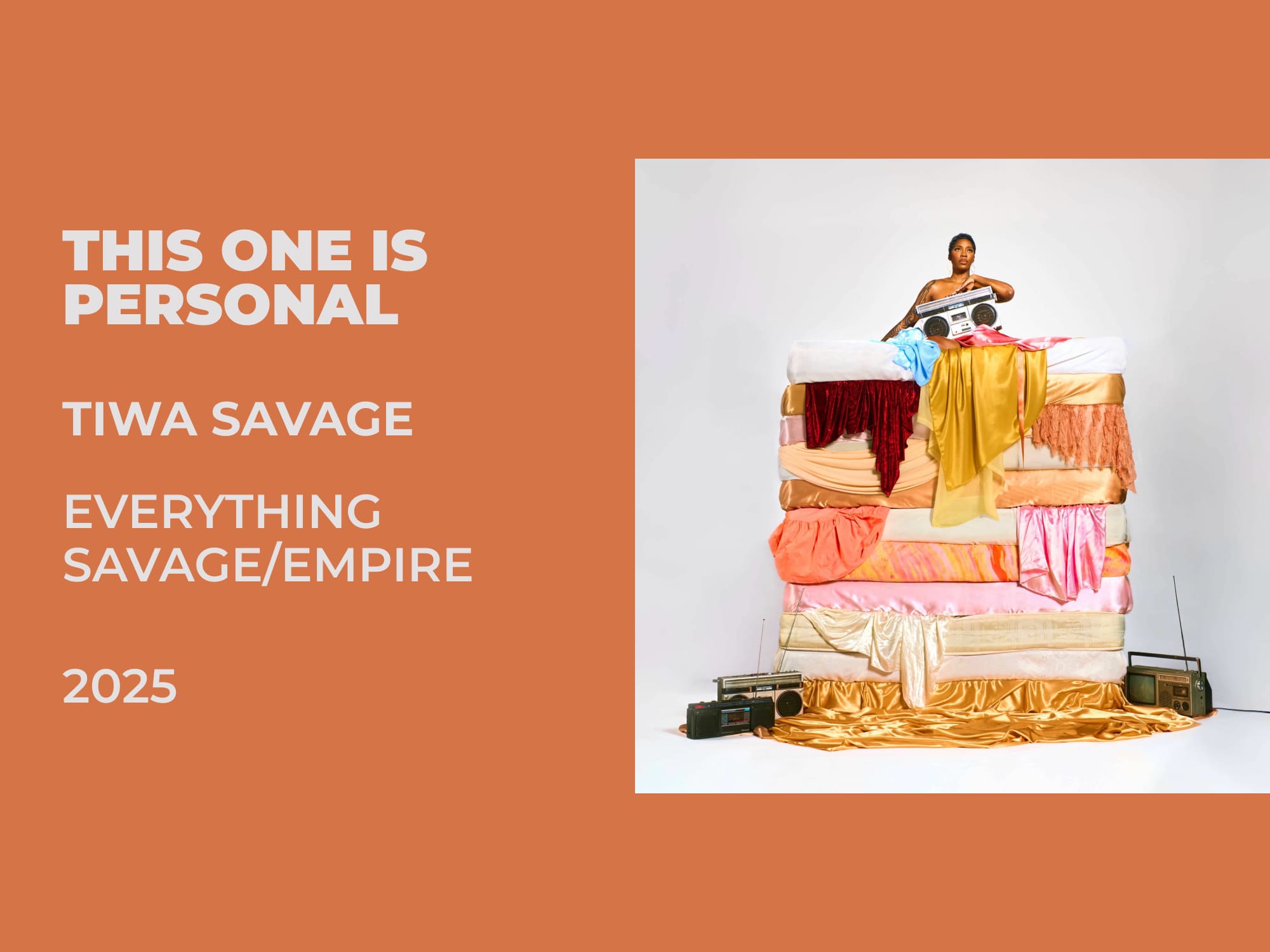
Tiwa Savage has crafted a body of work that is not just personal. It offers a soundtrack for anyone navigating heartbreak and self-love.

For over a decade, Tiwa Savage has helped shape the fabric of Nigerian pop, laying down the blueprint for soft power in a male-dominated genre, all while maintaining her own blend of sensuality, vulnerability, and steely resolve. Tiwa Savage didn’t just help redefine what it meant to be a Nigerian woman in mainstream music; she carved a lane so wide that a new generation of women found freedom in her blueprint.
Where her previous albums found her building thrones–‘Once Upon A Time’ provided a solid origin story, ‘R.E.D’ documented her journey through emotional turbulence, and Celia undoubtedly cemented her global status–‘This One Is Personal’ finds her stepping away from the spotlight, not in retreat, but rather in service of reflection. It’s all about honesty.
The 45-year-old singer has called it her “most vulnerable work,” and from the first notes of “I’m Done,” you’re inclined to believe her. “I’m Done” opens the project with stark piano keys and Tiwa’s voice, weary but clear-eyed. That opening line, “Every time I feel like I found the one //They always let me down,” lands like a deep exhale. It sets the tone for the rest of the project. Raw, reflective, and stripped of ego. The heaviness that opens ‘This One Is Personal’ doesn’t lift much across the album’s 15 tracks; instead, its manifestations and modes of expression evolve.
From there, Savage lets the emotions spill at their own pace. On “Angel Dust,” she sings of a love that feels like a high but leaves her emptier each time. The line, “I never felt so dangerous, dangerous / Dangerous, scandalous,” encapsulates the heady rush of falling in love; it’s the kind of rush that clouds judgment, making the fall both euphoric and inevitable. The addictive, reckless side of this type of love is undeniable, and Tiwa’s delivery amplifies the danger of falling into something that can’t be sustained.
On “Twisted,” Ms. Savage comes to terms with the messiness of a relationship that feels good until it doesn’t. “We be twisted but I like it, baby / We be twisted but I’m with it,” she sings. The line encapsulates the magnetic pull of a connection that is both intense and messy. Despite the emotional chaos, she feels preternaturally drawn to it, navigating the blurred lines between love and frustration. “You love it when I put up a fight / ‘Cause I kiss it better every time” reveals a deeper layer of this push-and-pull dynamic. Sonically, the track nods heavily to Marvin Gaye’s “Sexual Healing,” not just in its sultry, slow-burning groove, but in the way it wraps emotional pain in sensuality–it’s a recurring theme across ‘This One Is Personal.’
Savage manages to sketch out the specifics that define the tension between longing and self-protection on “Scared of Love.” The track embodies that fragile state where the desire for love is at odds with the fear of getting hurt again. It’s one of the album’s most emotionally direct moments, prioritising brutal honesty and constituting a triumph of replicating the high-stakes theatre of emotional floundering on wax.
Emotional heaviness aside, Ms. Savage’s power and resilience shine through. “Holding It Down” is a moment of quiet strength, the type that doesn’t shout but resonates with clarity and conviction. The upbeat tempo and assertive lyrics serve as a counterbalance to the album’s more introspective moments, providing a sense of grounded empowerment. On this track, Savage isn’t just surviving. She’s standing firm, every line reflecting an awareness of the emotional undercurrents around her; still, there’s an undeniable confidence in her delivery. It’s a reminder that, even at her most vulnerable, the singer is still in control.
Even when she’s emoting about the emotional landmines around her, Tiwa Savage still knows how to orchestrate the moods.“10%” stands out not just for what it says, but how it sounds. It’s coated in dusty drums, steely bass, and mellow chords, setting up a sultry vibe. “You4Me” is perhaps the album’s most accessible track, a glossy, groove-led reinterpretation of Tamia’s “So Into You.” It is hypnotic and alluring. Where Tamia’s original was about the dizzying newness of love, Tiwa’s version feels like remembering what it used to feel like. It’s a reminder of the bittersweet feeling of love that once was, a central tenet of the ‘This One Is Personal’ listening experience.
Even the album’s sequencing feels like the emotional rhythm of healing. First comes rage, ache, stillness, and then, something that approaches clarity. On “Will I Run Again,” Tiwa ponders if she can ever truly open herself up to love again. It’s an acknowledgment of the hesitation that comes with reentering vulnerable spaces. Still, in its margins, there’s the faint hope that there’s room for new connections. The vulnerability she evokes in her voice is palpable, adding a sense of rawness that makes the journey feel real and relatable
In other places, Savage is keen to continue exploring themes of fleeting connections as she does adroitly on “For One Night,” where she contemplates the temporary escape that comes with a one-night stand. The track’s sensual nature is underscored by a deeper yearning for something more, despite the ephemeral nature of the encounter. It’s a rare moment of pure physicality on the album, but it still carries that emotional weight of seeking something more substantial. The presence of log drums on the track adds a quintessential Afropop pulse, rooting the track in the rhythmic tradition of the soundscape that helped elevate the singer’s profile.
She keeps features minimal with Skepta, taves, and James Fauntleroy carefully deployed across the length of the project. Skepta slides into “On The Low” with a measured cool, the type of grown knowing of interpersonal dynamics that matches Tiwa’s restraint. The chemistry between them creates a vibe of understated intimacy. Fauntleroy’s appearance on “Change” is a standout for its unexpected shift in pace. While much of the album features slower, more reflective tracks, the track introduces a faster tempo and a more dynamic energy. Fauntleroy, known for his rich, emotive voice, brings a sense of hope and emotional release to the song, which is perfectly aligned with the track’s theme of personal growth and transformation. On “Addicted,” newcomer taves delivers a warm, melancholic contribution that blends seamlessly into Tiwa’s emotional landscape. Together, they trade verses that carry the weight of temptation and emotional residue. taves’ addition elevates the track, making it a thrilling addition to the album.
There’s a weary elegance to how Tiwa sings throughout this record that’s brave and groundbreaking. It’s born of the kind of space we rarely afford mega stars, especially in Afropop. The production mirrors this vulnerability. It’s lean, atmospheric, and intimate. While it may not have the highs of ‘Celia’ or ‘Once Upon A Time,’ This One Is Personal delivers something deeper: clarity. The album’s quiet moments, especially on tracks like “Pray No More,” where she steps into spiritual surrender, and the reflective “This One Is Personal” (Interlude)” captures the delicate process of emotional healing.
The album comes to a head with “You’re Not The First (You’re Just The Worst),” a defiant declaration of independence. Here, Tiwa rejects a lover who has mistreated her, asserting that they’re not special in their wrongdoings; they’re simply the worst of the bunch. It’s a moment of catharsis and strength, a last attempt at reclaiming her narrative and emotional power.
At its core, ‘This One Is Personal’ is about choosing yourself, even through the stumbling and indecisiveness. There’s a stillness in this project that feels like healing in real time. ‘This One Is Personal’ is an intimate journey of emotional growth, healing, and self-discovery. It is an album less concerned about the motions of building a throne and more about sitting on it as one comes to terms with the landscape of their life. In doing so, Savage has crafted a body of work that is not just personal. It’s universally relatable, offering a soundtrack for anyone navigating the complexities of love, heartbreak, and self-love.
Listen to ‘This One Is Personal’ here.

