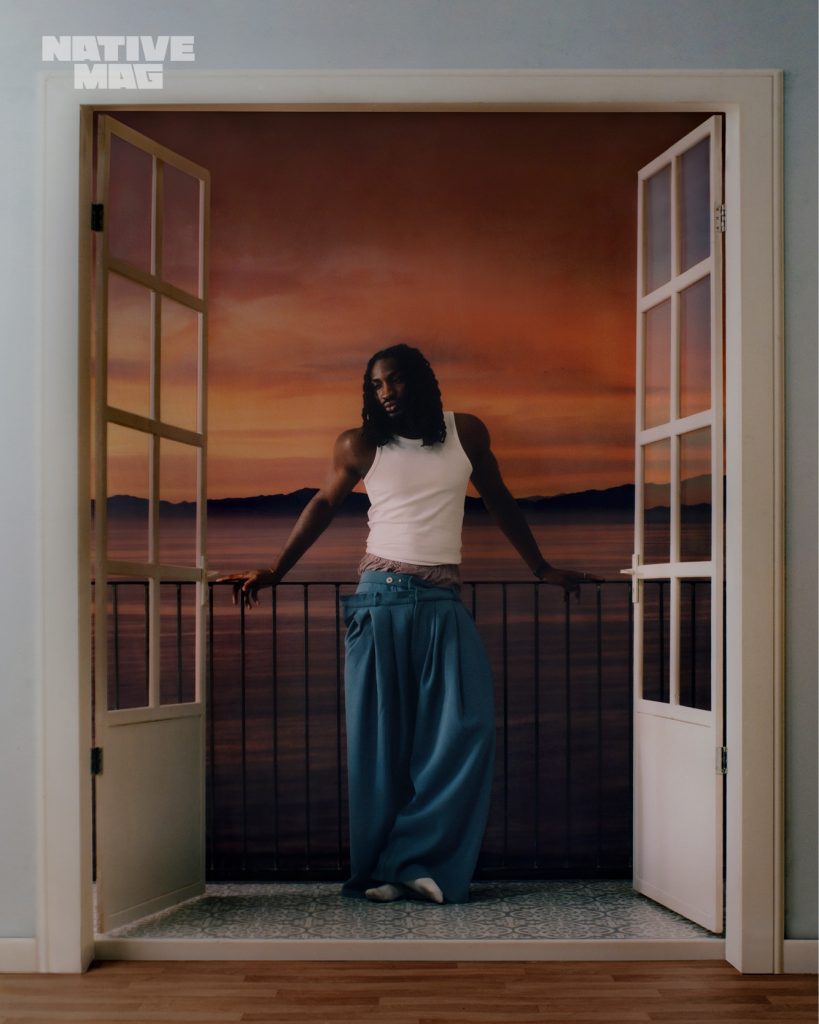
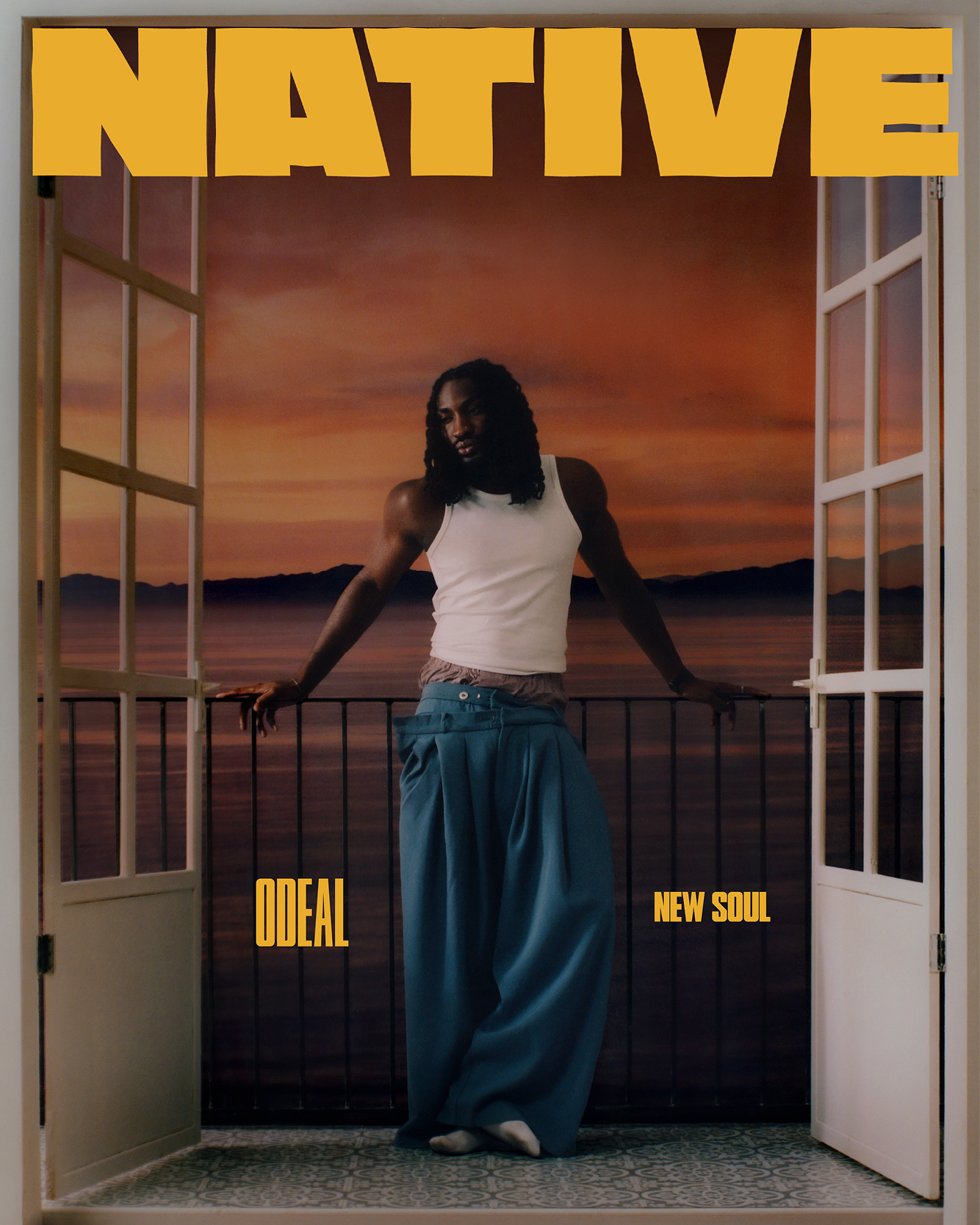
Credits
Words by Seni Saraki
Photographer/Creative Director: Elliot Hensford
Creative Director: Tj Saw
Head Of Brand: Damilola Animashaun
Managing Editor: Wale Oloworekende
Head Of Digital: Shina Ladipo
Content Lead: Melony Akpoghene
Production Company: Marvellous Last Night
Executive Producer: Max Alan
Creative Producer: Tj Saw
Production Manager: Anthony Idahosa
Production Coordinator: Isaac Tapiki
Art Director: Mariana Jaguite
Art Assistant: Frankie Mann
Art Assistant: Poppy Whitehorn
Art Assistant: Anthony Hetherstone
Stylist: Elshy Nyagodzi
Stylist Assistant: Yodit Tzegai
Lighting Tech: George Robson
Camera Assistant: Otto Saner
Makeup Artist: Racheal Adedigba
Hairstylist: Kreszend Sackey
BTS Video: Kevin Oseinho
Retouch: Nadia Selander
Post Prod: Econe Lab
Post Prod: Dc Handprints
Model: Bria-Renée
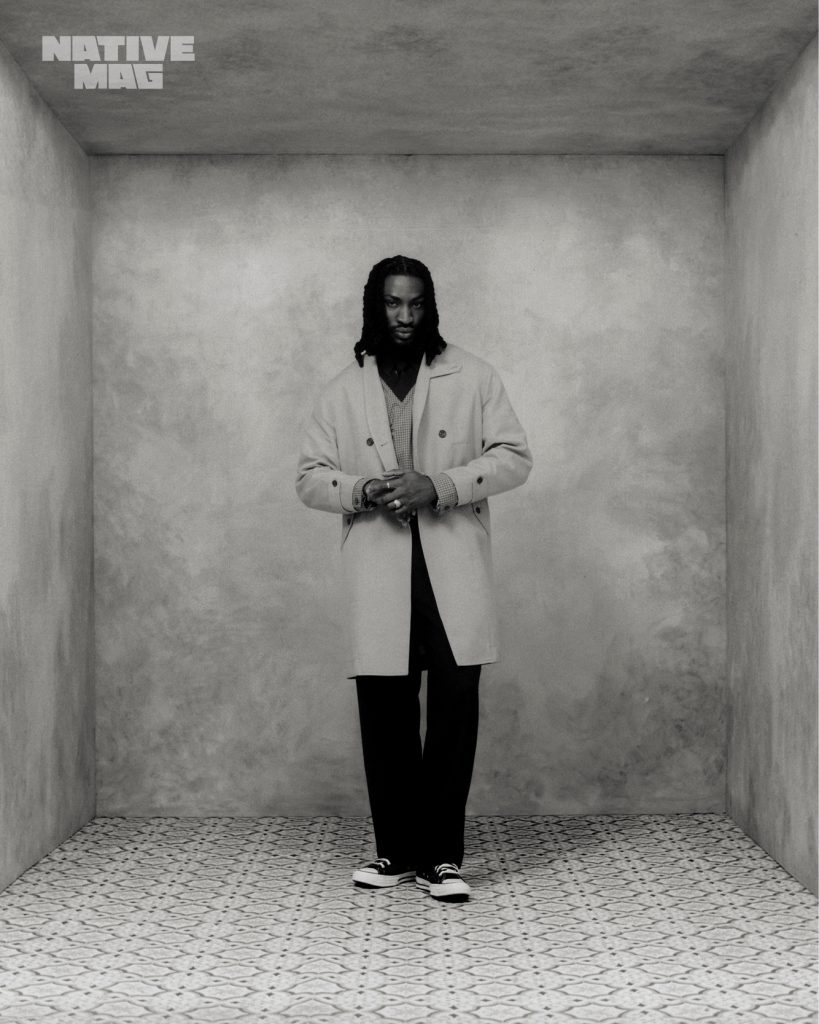
It’s creeping up to 9PM on a brisk December’s night in London. Tucked away in an Islington studio, creative director and photographer duo TJ Saw & Elliot Hensford direct the traffic of the final few shots of NATIVE Magazine’s long-awaited return to print. “And that’s a wrap!”TJ bellows. As cameras stopped clicking, and the film slowed to a halt, the crew congratulated each other on a successful day’s work. Dressed in an all-white ensemble, earthed by beige Chuck Taylor All Stars, the subject of the day swiftly rises from his seat, quietly floating through the room, shaking hands and thanking every person on set for their time. There was authenticity to the gratuity on display that seemed symbolic of the man’s rise from a nomadic songwriter who was striving to find his clan, to the next great British-Nigerian Soul singer, poised for superstardom.
Odeal, born Hillary Dennis Udanoh, undoubtedly took the scenic route to get here. Before his rhythms soundtracked the summers of the most tasteful people on your feed, the artist known to many friends simply as “O” had spent formative years in the UK, Nigeria, Germany & Spain, to name but a few. Speaking to him from the UAE in the weeks following the shoot, he tells me how this constant movement went beyond just shaping his musical palette.
“From young, we’ve been able to go to different places, and that opened up my mind to other ways of communication, and other styles of living. How people operate and communicate with each other – different languages, dialects. How people connect with each other and even how music connects with people, so I feel like, as I’ve grown up, living in London has allowed me to be able to adapt to different people around me. The music I make is not just for London, it’s for the world. All the different influences I’ve had growing up definitely helped allow my music to transcend past whatever geographical location I’m in physically.”
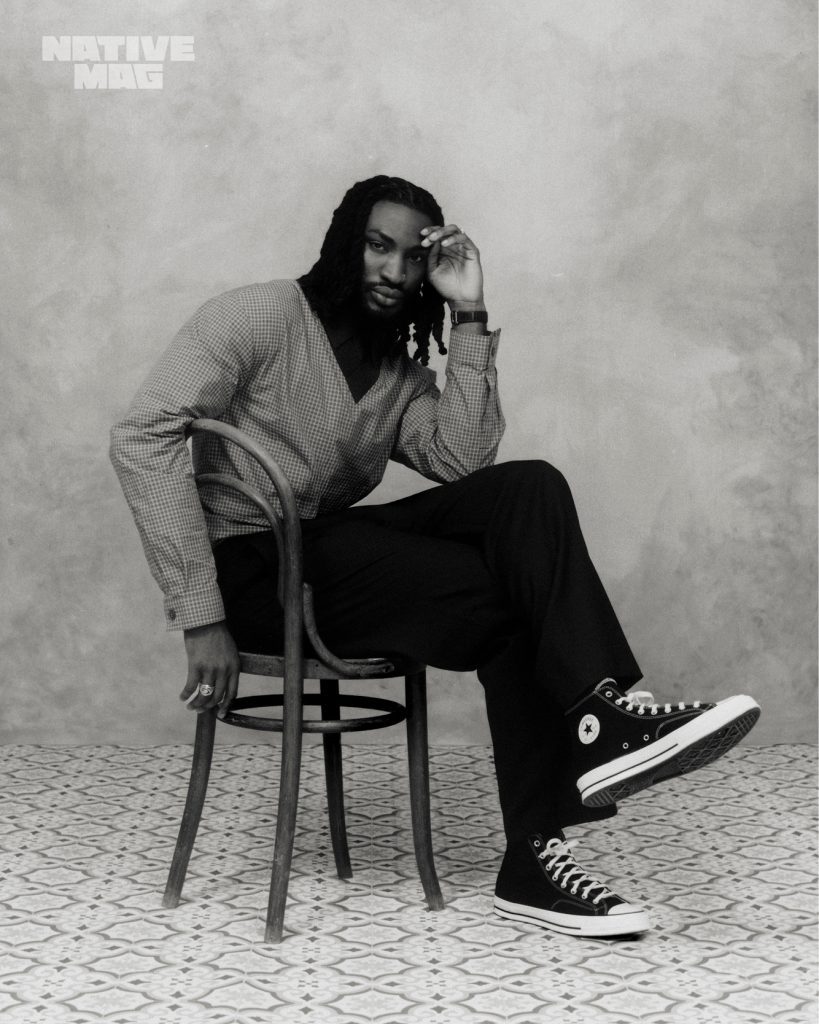
And transcend it has. When we speak over the phone, Odeal is winding down on holiday with his family, coming off yet another groundbreaking year. Kicking off in February with a foreshadowing double at the MOBOs for “Best Newcomer” and “Best R&B/Soul Act,” Odeal would go on to release two seminal projects in ‘The Summer That Saved Me’ and ‘The Fall That Saved Us,’ respectively; play a string of shows and festivals in the US and Europe; get into the studio with legendary producers from DJ Maphorisa to Jermaine Dupri; and this is all before returning home to the motherland, where he has headlining festivals in Ethiopia and South Africa.
Odeal confirms he still very much still lives in London, but there is a palpable excitement in his voice when we discuss his forthcoming return to Nigeria for December. Odeal spent two separate periods in Nigeria in what he sees as his formative years–attending primary school at Chrisland Schools in Lekki, before later returning to British Spring College, a secondary school in Awka, Anambra State.
“You know, one thing about my family is that we always moved around innit, so I was always happy and ready to up and leave at any time,” he tells me of his return to Nigeria in 2013 for secondary school. “When I got there, it was reminiscent of the early times when I went to school there as a child, but different. We were not allowed to use our phones; it was pretty strict. There was a bit of leniency because it was an international school, so very Westernised to a certain degree, but it was great, the curriculum was tougher which allowed me to push ahead of what we were doing in the UK, so by the time I got back, I was already ready to do my GCSEs.”
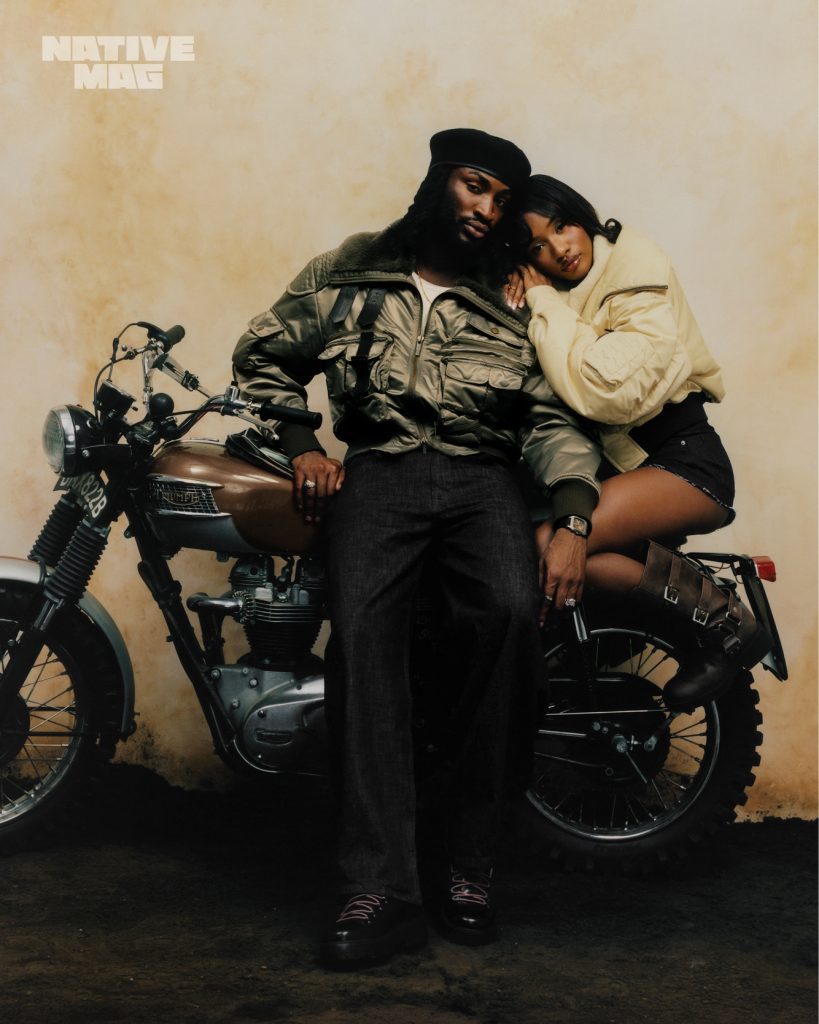
While a young Hillary struggled with the seemingly tougher education system, the competitive spirit that would go on to define Odeal’s musical career kicked in. “One thing about me is that I’m quite competitive, so as I’m seeing my name at the bottom of everything, I’m like bro, I don’t come last,” he says. Odeal would go on to lock in with a quiet boy named Nwachukwu and study together out of class to improve his grades. Connecting over a shared appreciation for underground UK Rap artist Loyle Carner, they fostered a friendship that Odeal credits as crucial to helping him acclimatise to a somewhat new environment.
In the summers, Odeal would travel down to Lagos with one simple goal: to make it. “My dad would say, ‘What are you doing in Lagos?’” he recounts. “I told him, “If I really make music, I need to go to the heart of where music is getting exported. People in Lagos weren’t really listening to music coming out of the East, unless you’re Flavour.”
With his father’s blessing, O travelled to a studio in Lagos with his cousin and began recording music, but there was a disconnect. “My first ever recorded song that I’ve put out would probably be 2014–recorded it in a studio in Nigeria, in Lagos, but because I did a lot of R&B at the time, they were like, ‘This is not going to make any sense here,’” he remembers. “So they made me sit down and watch everybody who came in and out of the studio.”
Ever the learner, and ready to embrace new environments, the foundations were forming of an artist who was not content with thinking in the confines of a studio. Odeal would return to Lagos on a research trip, seeking ways to reach new audiences. A friend of the family would tell him about the infamous Alaba Market, which in its heyday of the noughties was an unofficial, unforgiving distribution behemoth, simultaneously propping up and draining the Nigerian music industry. Artists would take their albums to Alaba, and strike a one-off, all-cash, upfront deal for their music to be physically distributed nationwide. While this led to near instant exposure and unprecedented levels of fame, it was ultimately built on a structure of rampant piracy, leaving artists shortchanged in the long run.
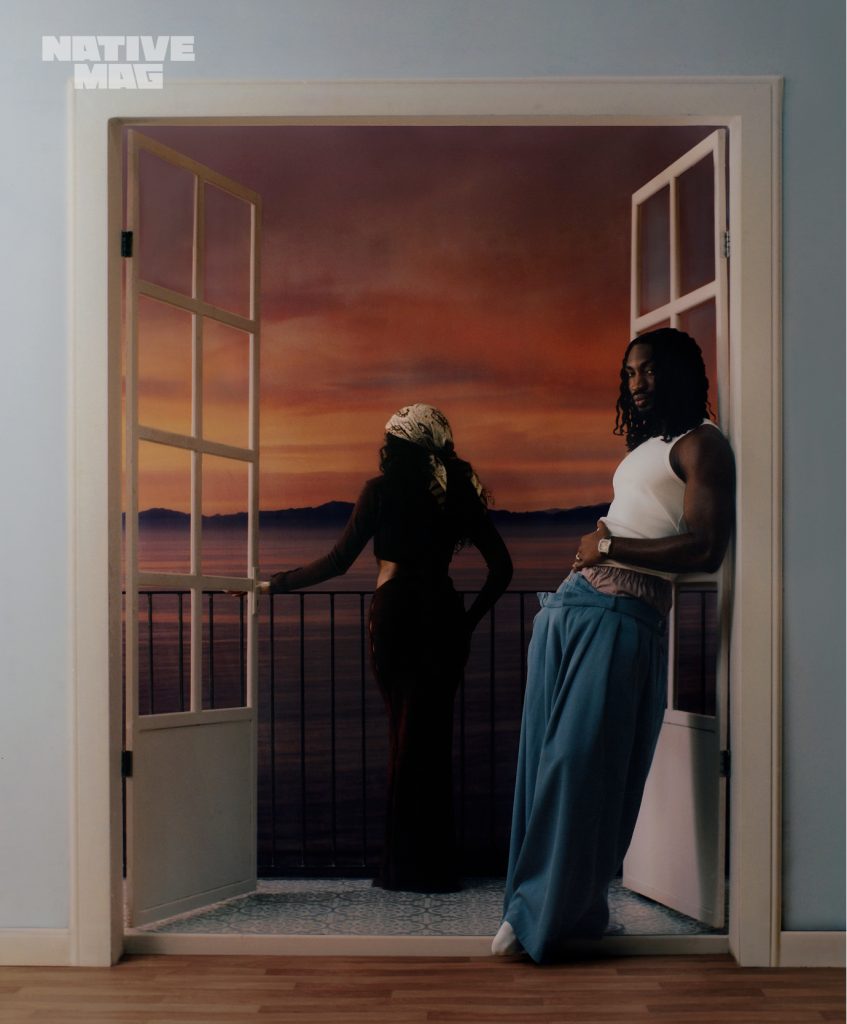
Nevertheless, the future founder of his own label OVMBR had an idea: he would distribute his first handful of songs via Alaba to all of the buses across Nigeria. It seemed simple: these buses go everywhere, so his music, in turn, would be heard in every corner of the country. “That didn’t go anywhere, it didn’t work,” he recounts with a laugh. “I realised it’s a game of money, and I didn’t have no money, but those were really just the early signs of me being hungry for it.”
That hunger would go on to become a defining feature of not just Odeal the artist, but Odeal the executive. As much as he was influenced by Wizkid, Flavour and the Afropop artists that soundtracked his school days, Odeal’s time in Europe introduced him to the legendary catalogues of artists like Whitney Houston, Celine Dion and Michael Jackson. “I took a liking to R&B; there was something that spoke to me,” he explains. “The first song I ever put out on YouTube was a cover of Frank Ocean’s ‘Thinkin Bout U’.”
Back in Lagos, however, O was told in no uncertain terms that there was no place for his R&B influences, if he wanted a real shot at success. “My dad would be like, ‘You need to do Afrobeats, you need to do Afrobeats; nobody is going to listen to you singing all of this stuff,’” Odeal recalls the elder Mr Udanoh telling him at the time.
Respectful as always, O flirted with some more traditional Afropop sounds, remixing popular hits from Runtown and Burna Boy and uploading them to his SoundCloud page, but quietly, he wasn’t entirely convinced that Udanoh Sr. had it all figured out on this one. “People in Nigeria, in Africa in general, have been put in a box, so yeah, everyone likes Afrobeats,” he starts. “But I realised we’re just a continent that likes soul, we like anything that is made with soul. When you can really sing, and you can make a good song, regardless of what genre it is, there’s a pocket for it, there are people that actually want to hear it.”
Returning to London after his time in Awka, Odeal was vindicated by the rise and far-reaching impact of the Alté movement from 2016 and beyond, which acted as a platform for artists who would go on to be global stars like Tems, while influencing and inspiring a plethora of talent from Wizkid to Rema, Burna Boy and more.
“I saw a group of Nigerians listening, expressing themselves, and it’s like you can’t call that straight-up Afrobeats,” he starts. “Alte is a bunch of people, a bunch of creators, a bunch of artists that have influences from all different genres. That thing that makes them unique is that they’re from Nigeria or they’re from Ghana, so there’s a little bit of a twang, there’s a little bit of something different. People like Nonso Amadi started cutting through. [People like] Santi, Odunsi–these were the stars of it. So I was like, ‘This is my movement, these are my people.’ So I was there in London looking at them like, ‘I can’t wait to get back to Naij, these are going to be my people.’”
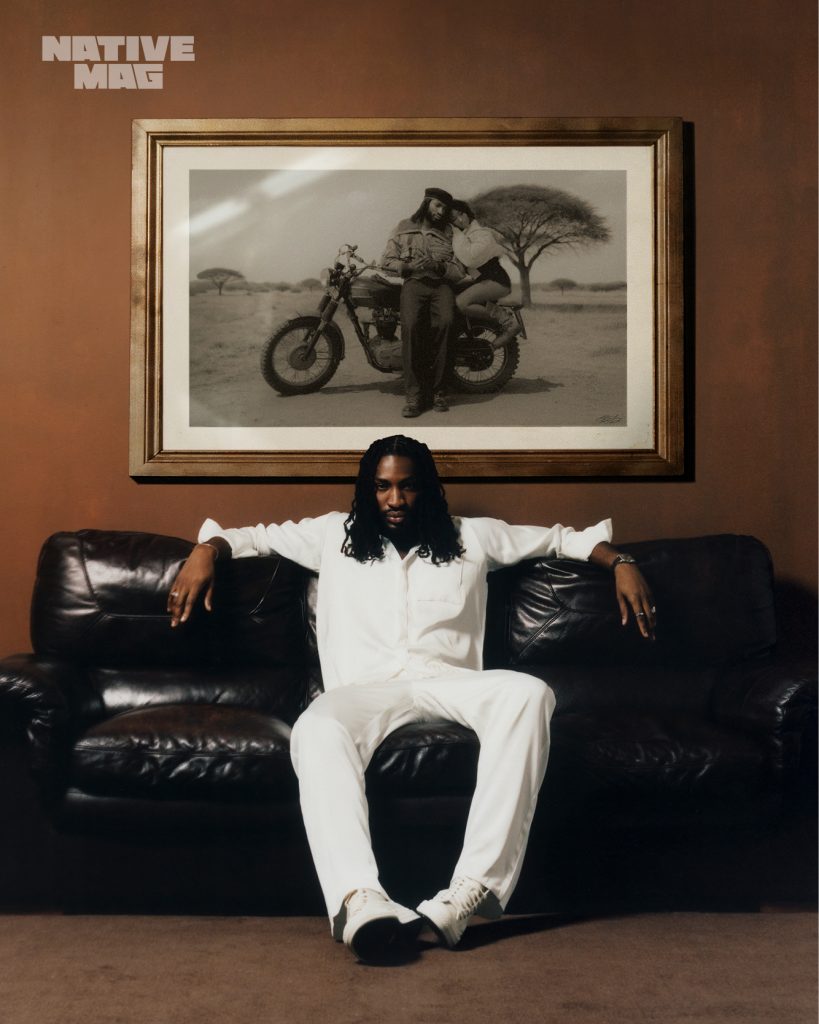
For some reason, Odeal didn’t make it back to Lagos during this pivotal moment in the Nigerian music industry, but it gave him all the vindication he needed for what was to be an equally important period for him, too. “I was on the other side of the world, and I still had to cater to my people,” he says. “I was finding different ways to do things that made me make music that made me feel good; it just gave me reassurance that what I was doing was good.”
Speaking to any member of Odeal’s OVMBR team, you quickly realise that this isn’t a regular artist crew. This is a handcrafted, battle-tested machine, working to a singular vision which is spearheaded by the man himself. Coming out of an ill-fitting record deal towards the end of the COVID-enforced lockdowns, Odeal knew something had to change.
“As soon as I left my deal, I wanted to build a team around me that serviced my music and believed in the vision,” he says. “And that’s what I did, as soon as I left, I linked up with my manager. My new manager started as my engineer. I love the fact that he understood the sound. Then we started adding more people until I had a team that all focused on me, so now this team is working as hard as I’m working. marketing, A&R, everything. So we did that, and I started releasing, and we started getting distribution, which was a first shift; it gave me a bit more fluidity in the way that I could release.”
This freedom allowed Odeal to experiment with sounds, like on his first breakout hit “Be Easy,” which he credits the production as being inspired by his Alté kinfolk. But beyond sonics, this newfound freedom enabled him, supported by his managers, Charles and Hanz, as well as his A&R, Abraham, to begin laying down a new blueprint for breaking an artist globally.
Leaning into his Gulliverian upbringing, they touched all the cities where Odeal had listeners: London, Lagos, Amsterdam, Paris, Los Angeles, and Cape Town, amongst others. Through their eponymous OVMBR parties, where Odeal would occasionally make appearances as a guest DJ, they were fostering a community one city at a time. So while the music industry was shocked at the near instant virality of his Summer ’24 Afropop hit, “Soh-Soh,” anyone paying attention could tell you it was a testament to a carefully constructed network of believers, who had also keyed into the vision of the young man from Chrisland.
Collaborations have also helped along the way, helping the singer to bring his vision to life. “Having partners that believe in you no matter what is incredibly important; it’s not just about visibility but about alignment,” he says. “My goal with my music and OVMBR has always been to build something global, intentional and authentic, not rushed or reactive to trends.”
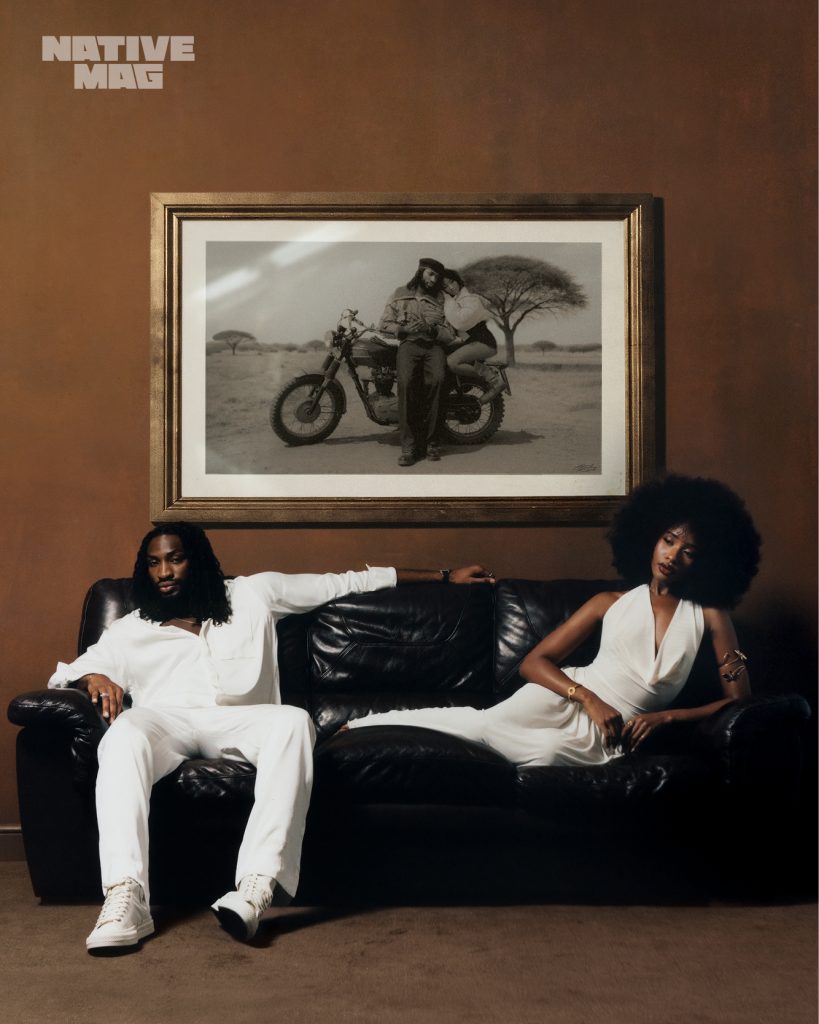
His partnership with Converse has been predicated on mutual respect and a desire to stamp his imprint on wider culture. “Converse saw that vision early, and when a brand understands the journey from day one, they don’t try to shape the artist in something else, they’re amplifying what’s already there,” he explains. “Playing carnival was all about being present in a cultural moment that has a significant meaning to audiences, and I wanted to share that with people. That’s shared vision and shared ambition, and it’s the support system I’ve always wanted to have around me.”
Businesswise, linking with LVRN is another extension of his knack for choosing what works best for him. Signing with the American company has not dulled Odeal’s instincts for what works best for him. Months after the success of ‘Sunday At Zuri’s,’ he felt possessed to make another project to capture the frigid tension of winter. “They were like, ‘But you just had “Soh-Soh,” we still need to work that,’” he says. Unperturbed, he continued to work on songs for another project, sensing a shift in his mindset. “I knew I needed to drop for the winter, so I got the songs together, and I ended up doing ‘Lustropolis,’ that became its own thing and took a life of its own.”
The success of ‘Sunday At Zuri’s’ and ‘Lustropolis’ continued in the tradition of the singer sharing his music based on intuition; it also set the stage for further success in 2025 with two new projects, ‘The Summer That Saved Me’ and ‘The Fall That Saved Us,’ advancing his beguiling take on R&B steeped in Afropop lingo and cadence. Perhaps more importantly, both projects from 2025 lay bare the duality at the core of Odeal’s work, with ‘The Summer That Saved Me’ functioning as an idealised reflection of the singer’s utopian dreams while ‘The Fall That Saved Us’ grapples with entanglements from the past that slink their way back to the present.
Going back and forth between both poles doesn’t bother the singer, and he’s keen for fans to be open-minded about going on these journeys with him. “People really say, ‘Can you make a song like this?’ And I’m like, “The reason you like that song is because it’s that song. Go and replay it,” he explains. “It’s a one-of-one situation; it’s about how I feel in the moment, and I’m going to release that. And the next time, if I do something like that, it will be an updated version. You might not like it, but it’s for someone.”
When the conversation turns to him being an ambassador for a specific type of Nigerian who is showing that the country’s musical identity should not be limited to one style of music, Odeal is quick to offer his thoughts. “I feel like people need to be able to operate on a world stage,” he says. “I feel like right now, I just want to open doors for people to be like, I can make the music that I love, and I know that the world is going to accept this and not just brand this as Afrobeats.”
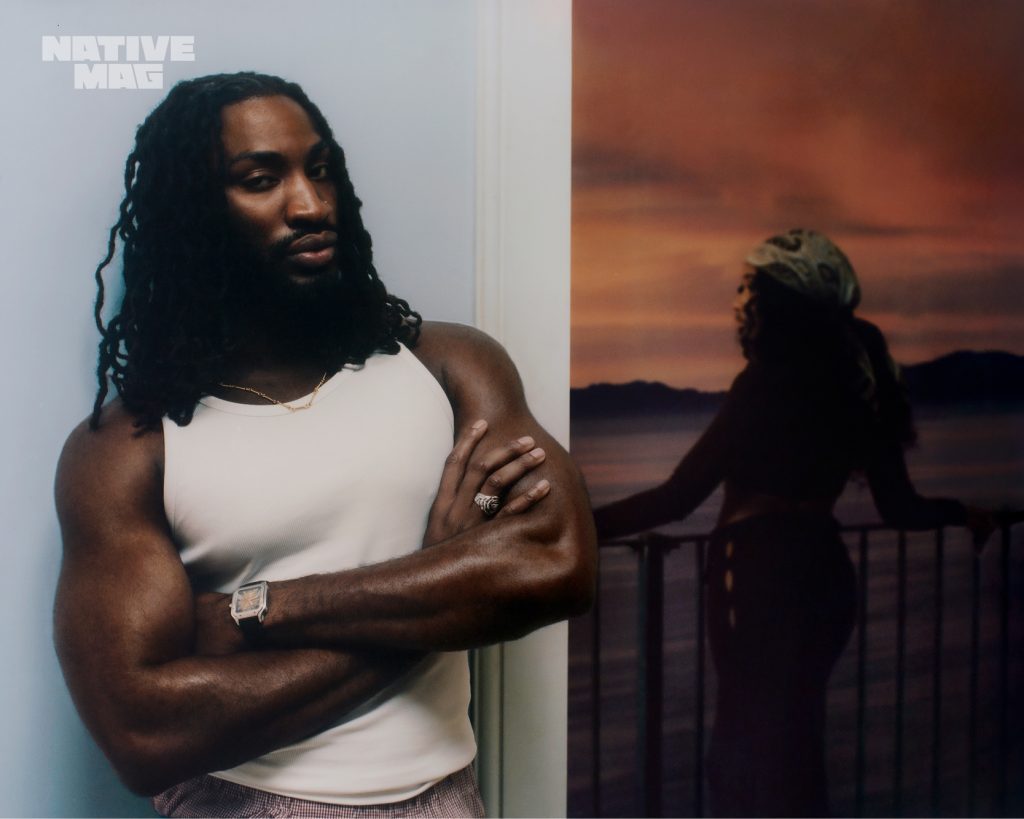
Going further, he adds: “Afrobeats is incredible, and that’s a genre of its own, but there are a bunch of kids from Nigeria who just want to make the kind of music they want, and they can call it what they want to call it, but it doesn’t have to be Afrobeats.”
He’s keen to keep exploring what it means to be a British-Nigerian operating in an American-pioneered musical style, even if people are still unsure about what the results might turn up. “My main goal is freedom,” he says. “I want to be able to work with anyone I want to work with, and the music can come out whenever.” An example of this free-flowing approach to collaboration is “Miami,” a highlight from ‘The Summer That Saved Me’ that featured American star Leon Thomas. “Even me working with Leon Thomas, people were like, ‘Really, they don’t know how that’s going to sound,’” he says. “Then we’ve worked together, and we’ve made something beautiful. Now the worlds are merging.”
The coming together of worlds that Odeal is speaking of was much more evident to the singer as he spent more time in the United States of America over the last year. “African Americans are–Americans in general–are just very, very expressive,” he shares. “When they love something, they love something. If they hate it, they’ll say they hate it. They really helped propel my career because they’ve been very loud about how much they love my music. The melody is R&B, but I’m dancing, and that’s something I’ll do to an Afrobeats song. So it’s the merging of the two worlds; it’s really in America where people like it without knowing what it is.”
His travels across the world have also taken him to South Africa, where he was amazed by the breathtaking leaps they’re making culturally. “South Africa is still moving the needle when it comes to sound and movement and stuff,” he says. “As soon as I got there, they showed man mad love, they showed man crazy love.” Despite some South Africans being surprised by his familiarity with their culture, Odeal, ever respectful, approached his time there with a delicate inquisitiveness. “If you do it because you genuinely care, you get the most out of a culture because you actually go there and take in what they’re doing.”
While many experiencing the exponential success that Odeal is having would be tempted to go all in on whatever deals are in front of them, the singer is taking his time to build with intention and longevity in mind. “A lot of the time, people have a big moment, a big song, and the song becomes bigger than them,” he says. “For me, I want to be the best I can be, and I know that takes time, so every day I’m chipping away and I know that one day I will get to where I want to be, but for right now, just being the best version of yourself, constantly chipping away and making sure you’re the best version of yourself so that when that opportunity comes you’re ready.”
The opportunities have kept presenting themselves for the singer, who’s finally touring after years of trying to figure out the mechanics of bringing his music to the people who love his art. Earlier this month, he shared dates for his ‘The Shows That Saved Us Tour,’ announcing upgrades across venues due to increasing demand for tickets.
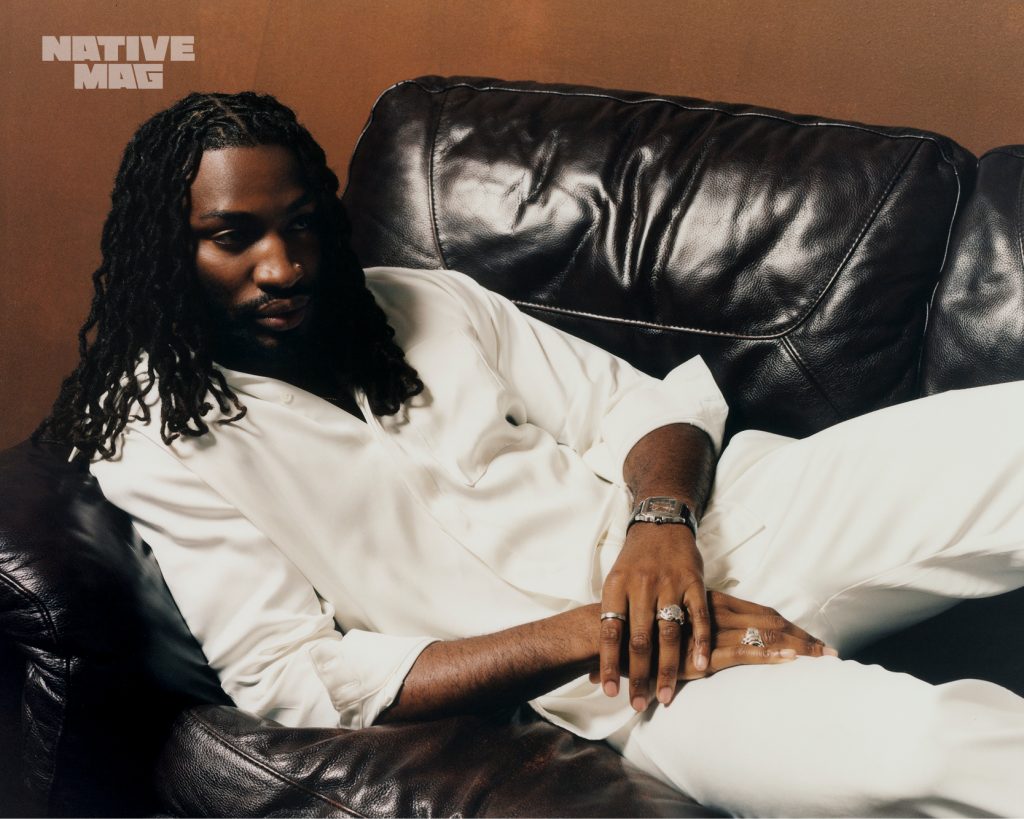
The night of March 26 in particular is sure to be an emotional affair for the singer, who will be headlining the O2 Brixton in his home city. Could he have gone bigger? “I think it’s more of growth, and also Brixton is an iconic space,” he says. “It’s like ends, the closest thing to the O2 in ends is Brixton O2.”
Whatever happens, the singer is gearing up for an emotional homecoming that taps into the multicultural ethos of London. “It’s a rite of passage, and everyone from all ends is there, and people from around the world who want to experience what a show feels like in London are going to fly to ends,” he explains. “It’s a melting point of loads of different people, people who grew up here, people from all over the world, and then people from around the UK and London, in that one space. That’s home. That’s the idea behind it. We see how that turns out, then we move on to the next.”
Even though he’s carrying his grind and wins graciously, Odeal is under no illusions about the work required to hit the next level in his unfolding career. “It’s hard work, like anything. I’m just confident in the fact that I’m definitely moving in the way God intended, and I’m hoping that it inspires loads of other people to just work hard and have faith,” he starts. “A lot of the stuff we’ve done is just off intuition and just believing in this vision.” Whatever happens next, Odeal is writing his name in history as part of the long genealogy of the musical conversation between the United Kingdom and Nigeria, carrying forward the legacy of acts like the peerless Sade Adu and the iconoclastic Seal. It is a lot to take in at 26, but Odeal is pretty zen about it all.
“Life comes at you fast, bare stuff comes at you fast, and I have managers as well who are like, ‘We can chill,’” he says. “Let’s just take this easy and make sure that every experience that we give to people is a quality experience as opposed to just huge, so we can make all the money. How you treat people is very important in itself. At every stage, making sure everything is curated properly is very important [to me].”
A constant theme that the singer returns to time and time again, over the course of our conversation, is the power of finding one’s time and operating with the flow of it. Years of navigating the developmental pipeline in Nigeria and London have readied Odeal for this moment. Now, he’s all out in search of the crowning moments on the horizon. “Obviously, I’m religious as well, so that’s a part of it,” he says about what grounds him. “Also, I’ve seen many cycles, because I’ve been making music for over ten years, so I’ve seen certain cycles just play out all the time. So I’m like, ‘Okay, cool, today nobody knows you, but at some point the world is going to know you.”
Say what you will about the boy from Chrisland, he’s always been in the zone for all that’s coming his way. “I know that the time is going to come; I just need to be ready.”