Credits
Words by Yasmine Mady
Editor In Chief: Seni Saraki
Photographer & Creative Director: Elliot Hensford
Creative Director : Tj Saw
Head Of Brand: Damilola Animashaun
Managing Editor: Wale Oloworekende
Head Of Digital: Shina Ladipo
Content Lead: Melony Akpoghene
Production Company: Vanta
Executive Producer: Emile Sarda
Line Producer: Léna Debray
Production Coordinator: Kiara Payet Descombes
Production assistant: Eloïse Grébil
1st light assistant: George Robson
2nd light assistant: Drew Elliot
Director: Aymane Alhamid
Director of photography: Thomas Cazottes
Art Director: Mariana Jaguite & Frederick Asseo
Art Assistant: Baptiste Malgoire
Art Assistant: Sinclair Bourrec
Art Assistant: Lancelot Prat
Painter: Louise Pisselet
Stylist: Janice Mahenge
Assistant:
Ines Benmansour
Sabri Yahiaoui
Axelle Randriamiandriosa
Casting director: Nesrine Benayad
Makeup Artist: Arnaud Swan
Hairstylist: Ushka
Nail Artist: Ines Okaci
Photography post-production
Retouch: Lucy B
Post Production: Econe Lab & David Chaney
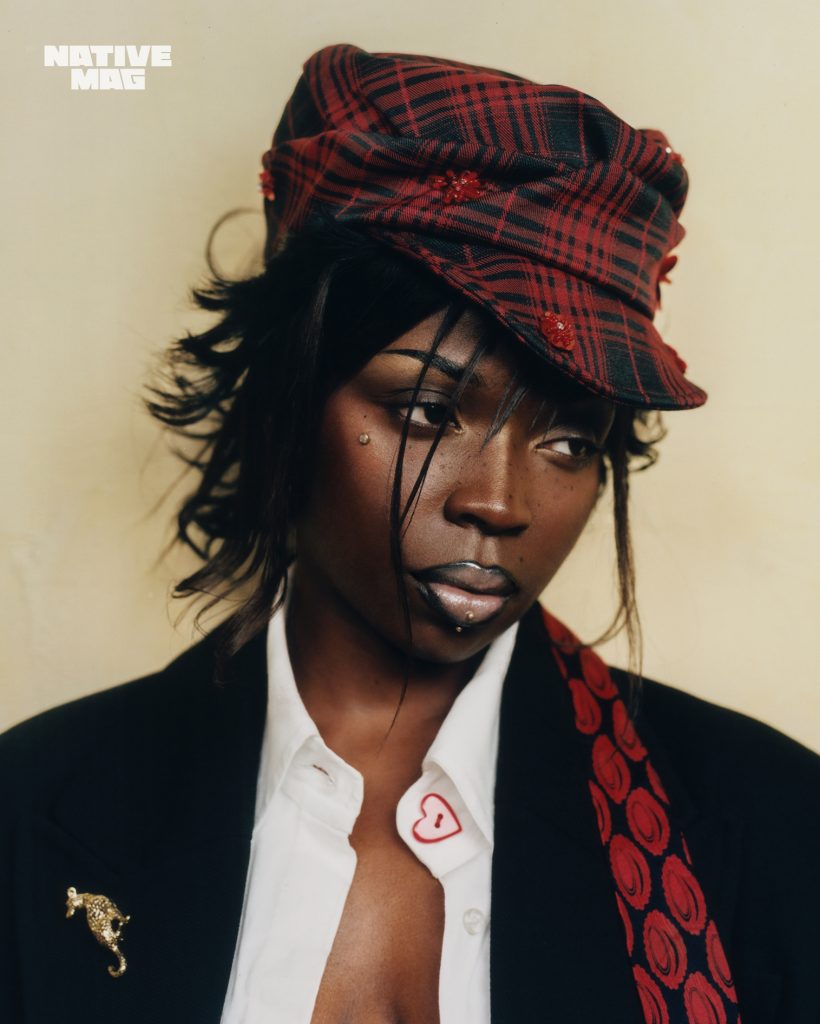
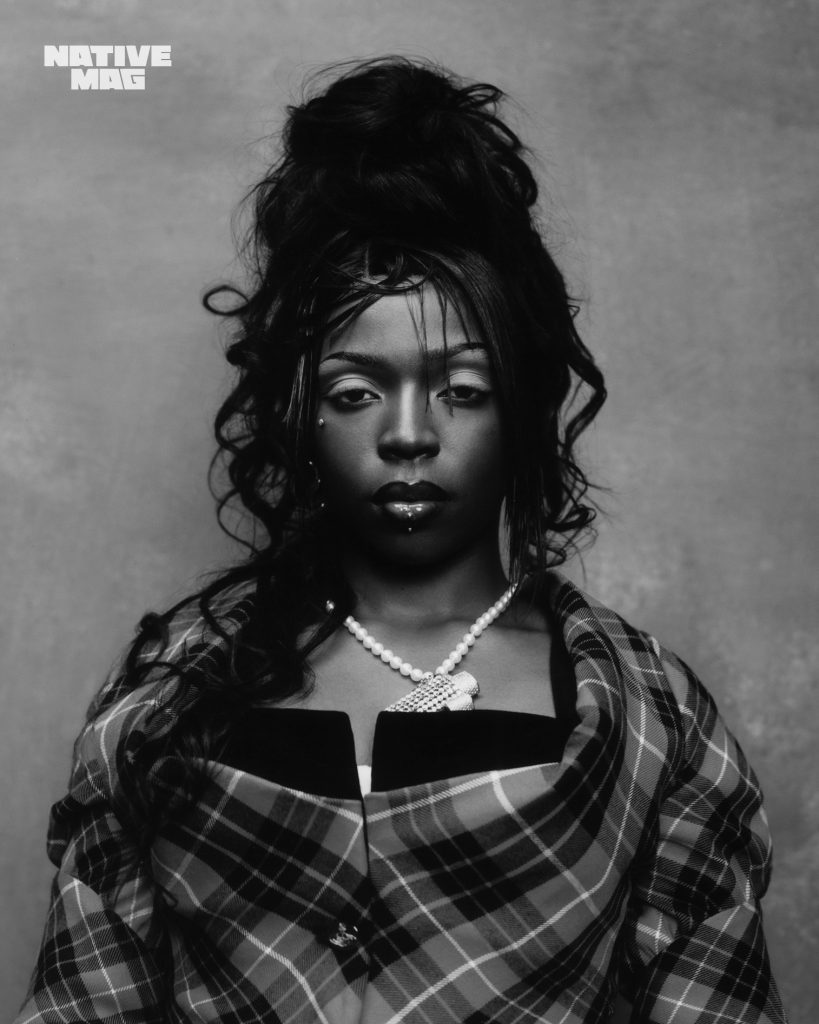
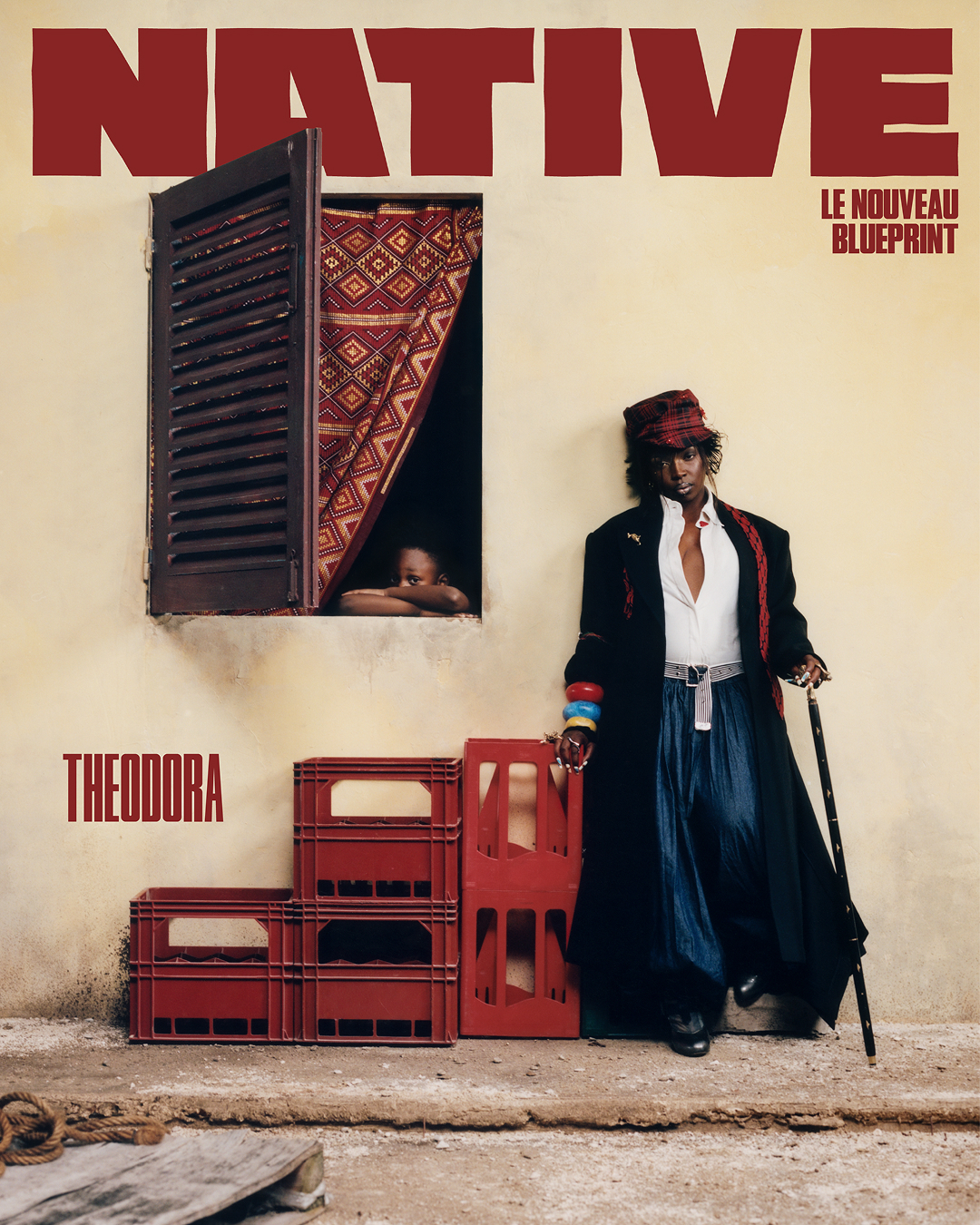
There is something about Theodora that feels transcendental: she embodies a disobedient groove, anchored by an infinite, unapologetic freedom that animates her work. In just a few years, she has come to represent a vigorous disruption of the very idea of legitimacy and respectability, especially in France, at a moment when misogynoir is sadly once again on the rise. When asked “Who is Theodora?” she defiantly defines the artist as “Sexy, Ghetto, Africky et Mal Polie.” The latter two descriptors are especially grin-inducing– “Africky,” a mash-up of ‘African’ and ‘freaky,’ while Mal Polie translates to “badly-mannered.”
Through her attitude, her uninhibited aesthetic, and her career choices, the singer embodies a deeply Gen Z vision of success rooted in self-determination, joy, and the freedom to exist loudly, powerfully, and visibly. She does not dim her light for the industry, but instead rewrites the rules, operating on her own terms.
The interview for this cover story is also a conversation between two Black women from the French African diaspora, both rooted in popular cultures. And this is not insignificant. It is a disposition that allows resonance and an understanding of what doesn’t always need to be over-explained to be accurately reflected. It creates a space where shared references and lived experiences are felt and carried through the conversation. A space where conversation can also be light and healing, at a time when France feels increasingly suffocating, and where the true experiences of Black women are so often buried and manipulated.
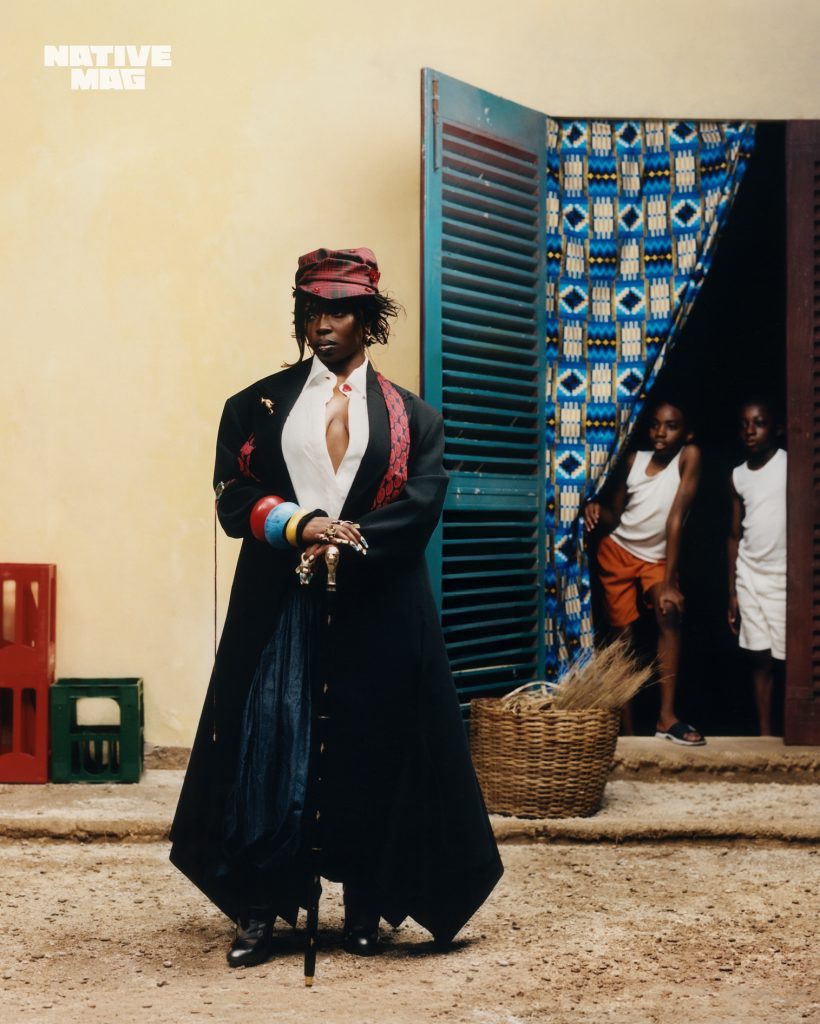
On the day of the interview, Theodora was in the middle of a photoshoot, fully immersing herself in the routine of getting shots of herself. The energy surrounding her reflected the momentum she’s currently in: she is taking it all in, she is claiming her moment. Fully aware of the scale of what is happening to her and around her. The charts she is topping, the magazine covers she is landing, the “boss-lady” position she is increasingly stepping into. And yet, in the middle of a chaotic schedule, she takes the time to answer every question with striking wisdom and humility.
“My name is Theodora,” she says when asked how she likes to introduce herself these days. “You can’t call me Theo, but you can call me Dora. My real first name is Théodora, but that’s reserved for my close ones.” A lot of the opening stretch of our conversation is spent trying to gain a foothold in the singer’s world, in an attempt to understand how Theodora builds her universe, what it reveals about her, and what it says about the world around her. But most of all, how she presents herself with firmness, confidence, and honesty as she conquers the world.
“I introduce myself as a young woman in the making,” she explains. “Not as an excuse to do stupid things, but rather to show how much my music follows the entire thinking process of a woman who’s building herself. There are things I said in songs a year ago that I can already critique today. Because, honestly, the essence of my music is young.”
Theodora might just be twenty-two, but she already carries herself like an icon. Originally of Congolese descent, she had a nomadic upbringing, growing up between Congo, Greece, La Réunion, and the Parisian banlieue. That diasporic journey explains a lot about her music and her pluralistic inspirations. She can be eclectic, elusive, and almost impossible to fit into a single box. You can call it Afropop, but even that barely scratches the surface of a sound that moves fluidly between Bouyon, Hip-Hop, and Pop.
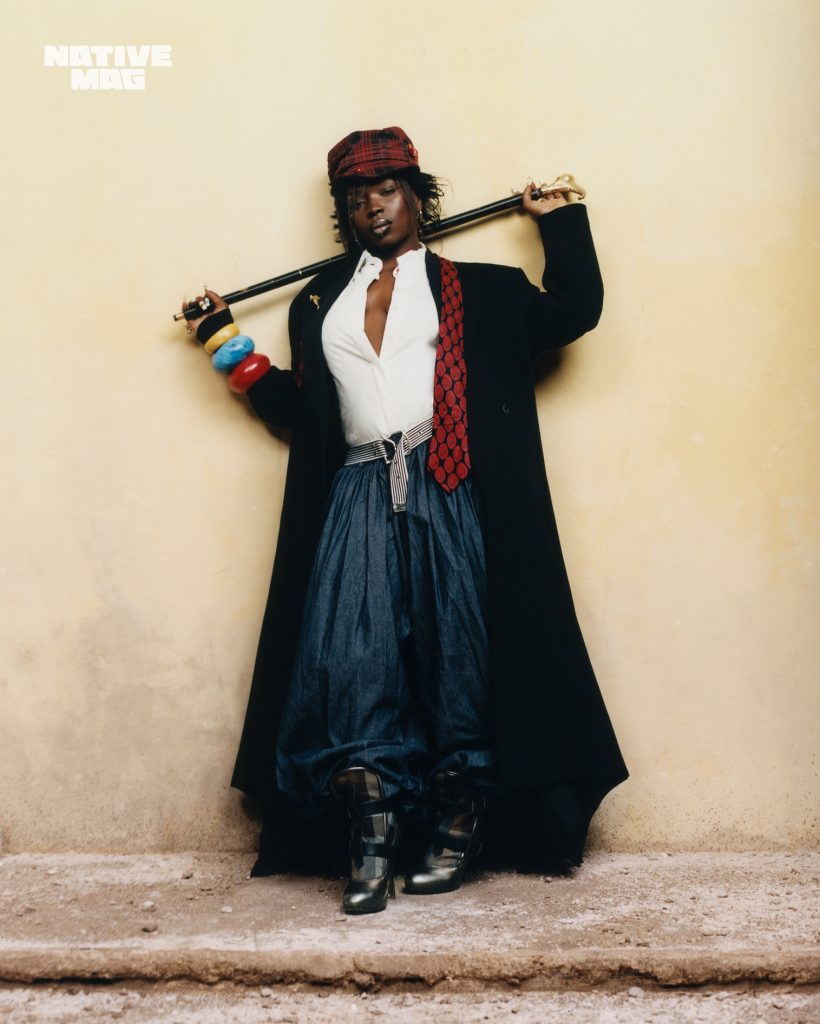
Theodora builds bridges between lands and people historically kept apart. She is what happens when you are a true child of the African diaspora, allowing yourself to absorb everything with intention, without ever betraying who you are. “My music represents something global, but also deeply tied to being from the diaspora,” she starts, “You can hear it in the way I blend genres, and in my inspirations too. My Pop and variety icons are very well-known icons because my parents didn’t have that much access to niche French music culture. I struggle to introduce myself concisely, but I’d say I’m eclectic, and you can feel that in my music.”
While she has consistently and proudly repped her African roots, she’s also keen to present a full version of her story and what she represents. “I’m a French woman from the Congolese diaspora, and the full sentence matters,” she says very matter-of-factly. “You can’t just tell me I’m French without taking in the entire baggage that explains why I’m here. Or only tell me I’m Congolese, because then you lose part of my story, and you also won’t understand why I am the way I am. I grew up with that double culture.”
The complexities of her origin and lived experiences have shaped a career that has seen her rise through the ranks quickly. In 2024, she reached a new level of ubiquity with her global hit, “KONGOLESE SOUS BBL,” a viral track and club staple that broke streaming records, while crossing borders with no translation necessary. It was a seminal moment in terms of her commercial viability in France, winning over the hearts of millions, as she scaled from theatres to arenas.
The signs around her don’t lie: her male rapping counterparts are queuing up for verses, from Gims to Guy2Bezbar. During Fashion Week, she’s cosying up with Ravyn Lenae and FKA twigs. Continental Afropop stars like Ayra Starr and Rema adore her, with the latter bringing her out at his sold-out headline show last summer. Theodora moves across scenes, styles, and spaces with a rare kind of ease.
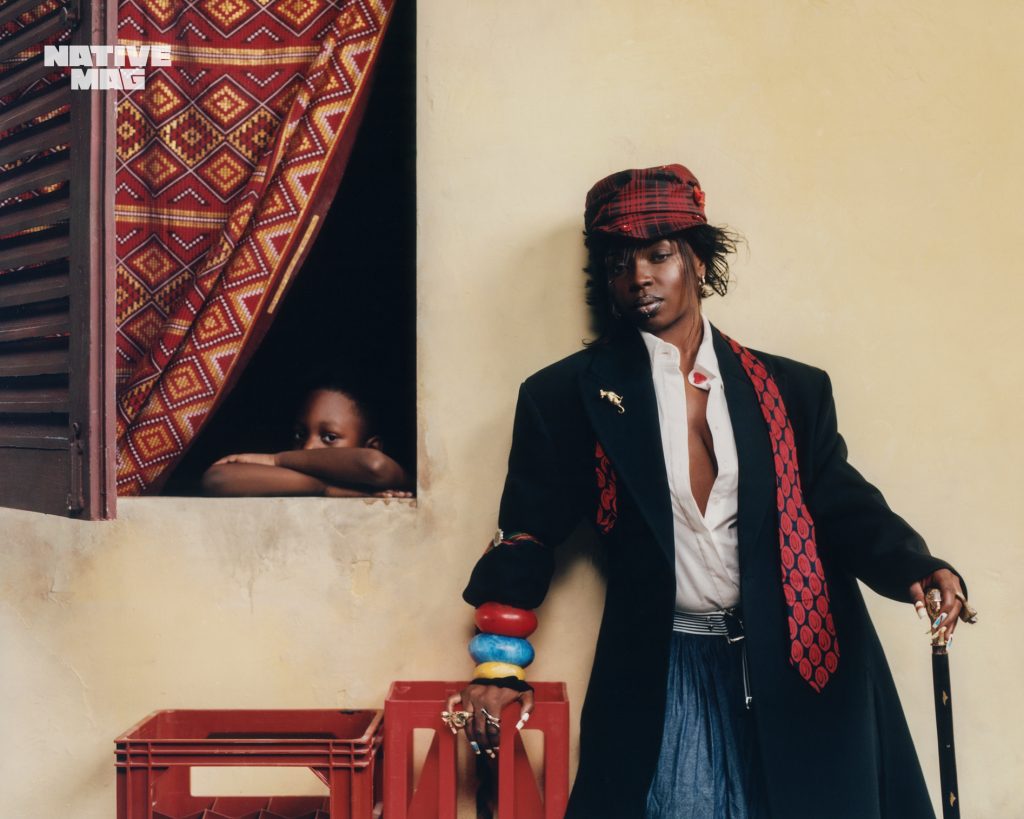
Still, reducing Theodora to her commercial heft would mean missing the essential components of what makes her the perfect star of the moment. When she says she’s doing this for “All the weird little Black girls,” she names a void, then she fills it. She opens a door for those who don’t recognise themselves in polished archetypes, narrow narratives, or singular representations. Those who feel like too much, out of place, misunderstood, and who are still trying, anyway, to live out loud.
In France, where access to culture is deeply tied to class, Theodora’s rise is reflective of the precocious ability of children of the African diaspora to transcend liminal barriers. Historically, they have managed to bypass these limitations by turning popular and diasporic music into a central cultural force, a creative lung from which some of today’s most important and influential talents emerge. Theodora is one of them. But transcending determinism comes at a cost: the constant fight for legitimacy and the ever-present impostor syndrome, especially when you’re a young Black woman.
“I feel like I find my legitimacy in the sincerity I have about my level of knowledge,” she admits. “[Previously] I really struggled to realise that I’m fully legitimate, but in reality, I’ve consumed a lot of Rap, for example, and today I understand that I am legitimate to talk about it. Before, every time I had to have a conversation about Rap, I would think, ‘But I’m not a rapper, so I don’t feel legitimate enough.’
“But I ended up losing that impostor syndrome when I saw people’s real level of Rap knowledge in the industry. I quickly realised that people don’t listen to as much Rap as they claim. One day, you talk to someone, and you realise they don’t even know Chief Keef! I also think my legitimacy comes from the fact that I had to defend myself. And in defending myself, naturally, I spoke about what I knew.”
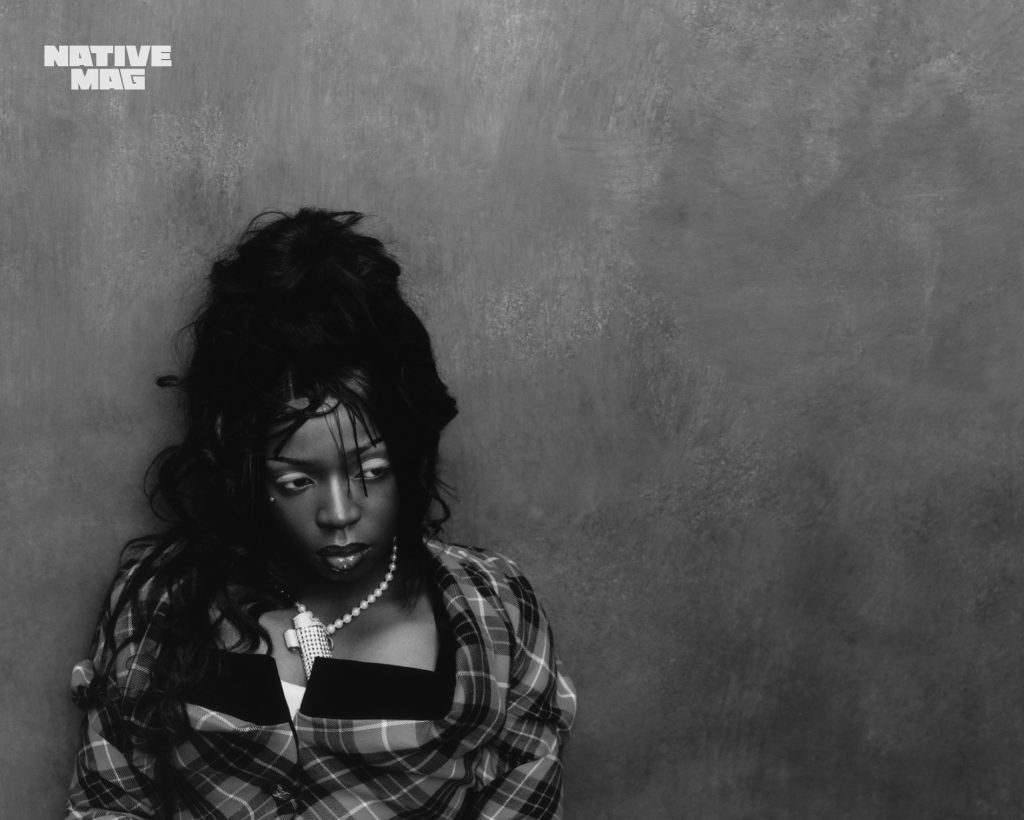
She is the moment.
Dora credits a lot of her earliest musical obsessions to records introduced to her by her brother, Jeez Suave, who gave her a crash course in Hip-Hop. “I loved Hamza,” she says of the Belgian rapper. “I listened to Gradur a lot too, because I have family in Roubaix and they introduced me to him. I listened hard to La Fouine because he sang a lot and I loved the mix of his very rap verses with more sung choruses. He always had a Pop link in his hooks and melodies. I [also] grew up a lot with Rihanna,” she says of the Barbadian Pop Icon. “She’s really the international artist I’ve followed the most since I was very young.”” She says, genuinely proud to share her earliest influences.
“And then I was an unbelievable fan of Indila,” she recounts of the mercurial Parisian singer-songwriter, whose cult following remains to this day, despite years out of the spotlight. “Indila was my first ever concert. I saw her back then when I was on vacation in Lille; she came for a free concert. I had even made a sign, but they threw it away because signs weren’t allowed.”
This sonic education has enabled Theodora to exist at the intersection of multiple musical genres that make up her story: African rhythms, Caribbean music, Pop, and French variety all intermingle in her world. She can easily collaborate with Meryl on Shatta-infused music, move into French variety with Juliette Armanet, explore new Pop territories with Disiz, Luidji, and Gims, or step into Hip-Hop with Guy2Bezbar or Jul, and the list could go on.
This plurality makes her almost impossible to categorise. Yet it is through the term Afropop that the Theodora sound seems to resonate most clearly. “I think the term ‘Afropop’ makes sense for my music,” she says. “In France, there isn’t that same effervescence around the term yet, and it makes less sense here because it makes people think of artists who have no link with what I do. But when Rolling Stone wrote ‘Afropop,’ I thought, ‘Oh, that’s exactly it.’ But I’m very eclectic, and even though, in reality, my music isn’t gendered, and everyone listens to me, I also feel like I’m very girly. When I was little, my dream was to be a dancer for Koffi (without knowing how horrible it was). I think that’s where the first construction of my musical culture happened. That’s what my parents passed on to me. Congolese music is my foundation.”
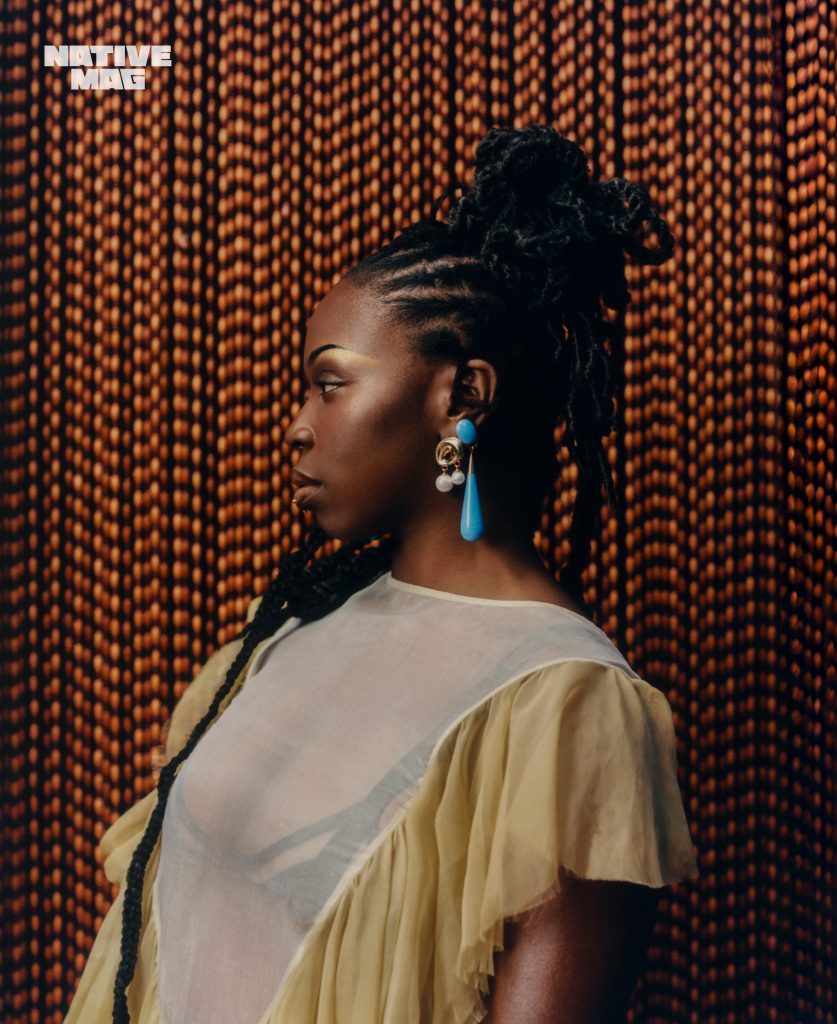
While she’s not really concerned about following any blueprints, her vision is informed by all the music she’s taken in across her life. When she released ‘Bad Boy Love Story’ in November 2024, followed a few months later by ‘Mega BBL,’ something shifted. Not only for her, but also seemingly in the way people listen to music in France. The project disrupted the landscape, breaking codes with deliberate disobedience. “‘Mega BBL’ was a lot of research,” she says. “There are many tracks I didn’t keep. Not because they weren’t good, but because it wasn’t the vibe I wanted to show. When I made ‘BBL,’ I wanted my first long project to be a business card for my music. That’s how I thought about it, and that’s why I loved making ‘Mega BBL’ afterwards, because the first one was too short to tell my whole story.”
‘Mega BBL’ also marked a new introduction to the wider public, rooted in a much more affirmed truth. A leap of faith where Theodora devoted herself entirely to her art. An art that had to save her, at all costs. “I wanted it to be a statement of my truth,” she says. “When I say ‘Africky Mal Polie,’ I’m really re-introducing myself because it’s something I tried so hard to smooth out. And there, I wanted people to have an accurate image of me. At that time, I had dropped out, my parents weren’t speaking to me anymore, and I had no money. I was with my brother in Saint-Denis in the 93, in a kind of unhealthy apartment because we were doing what we could. That’s why I talk about city rats in the song ‘Le paradis se trouve dans le 93.’
“So, when I made BBL, I told myself that on this project, I couldn’t pretend. I had to be honest with people and give 100%. Honesty has a price. That price is owning it. How far are you ready to devote yourself to your music? Okay, I talked about sex in my track, but am I then ready to be devoted enough to sing those lyrics on stage in front of people I don’t know, parents, et cetera, when culturally I have a certain modesty around elders and parents? But yes, I wanted to devote myself to this project, and I wanted people to know who I am. I wanted to give myself to my work. It had to work. I had no choice.”
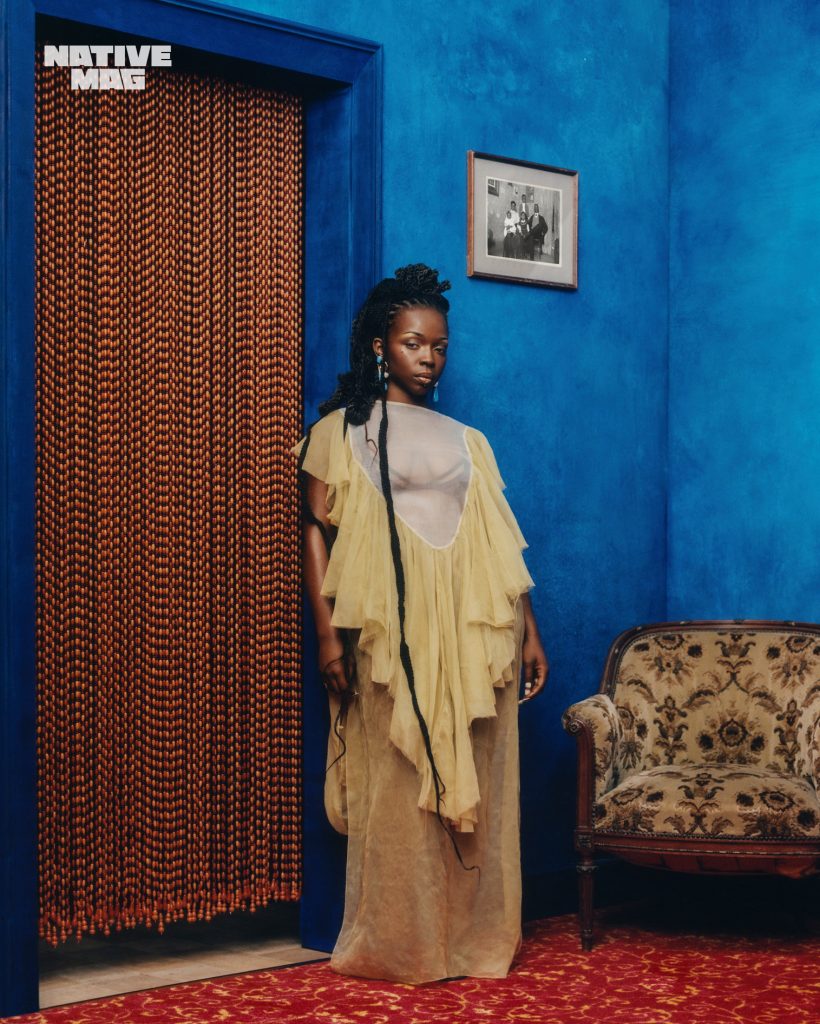
This project is a radical encounter with herself, one that demands a similar reaction from the audience as well. Perhaps that’s why it transformed so many people. The more truth you embody, the more you become a mirror. At Les Flammes Awards in 2025, when Theodora won Revelation of the Year, she moved France with a shoutout “to all the weird little Black girls.” It was a moment that deeply resonated with thousands of young girls across the country. Months later, a debate erupted online around the lack of representation of Black women’s plurality in media, especially beyond the “baddie” archetype, a conversation Dora resonated with deeply.
“I followed that debate closely,” she says. “I have many little sisters. And even if my brother and I are similar, with my sisters, we’re very different. My first little sister is really a ‘weird little Black girl’ who dreams of becoming a mangaka. Another one of my little sisters is a ‘nana de Paris,’ full baddie mode. So I find the debate interesting, and I’m glad it takes up so much space because it means we matter, and it allows our little sisters to ask themselves questions.”
“When I was younger, I just felt different and weird. I didn’t question others. I only questioned myself. Today, I’m happy to be another umbrella for Black girls, but I still think I’m a polished umbrella. I’m privileged because I have a strong link with this ‘baddies’ culture. But at the same time, I think this debate is very internet. Because in real life, in the office, nobody expects Black women to be baddies with Atlanta contouring. In real life, people expect baddies to have slicked-down hair, a straight black wig, and not too much makeup, because otherwise they quickly become ‘vulgar.’ So I think the debate matters, but it’s poorly contextualised.”
In her hit “KONGOLESE SOUS BBL,” Theodora popularised the phrase “sexy, ghetto appelle-moi africky, mal polie.” A sequence that flips stigmas while affirming her disobedience and stance. “I’m so happy you’re talking about ‘Africky Mal Polie,’ people never talk about it,” she says when I bring the subject up. “That’s the thing that describes my music the most. Inside it, there’s ‘African’ and ‘freaky.’ Africky is really my music. It’s also a ‘fuck you’ to all the people I wanted to say fuck you to with that project. To my parents, and they know it. By the way, my dad seeing me twerk in my video didn’t bother him. What bothered him was the fact that I started the video holding a big joint in my hands.”
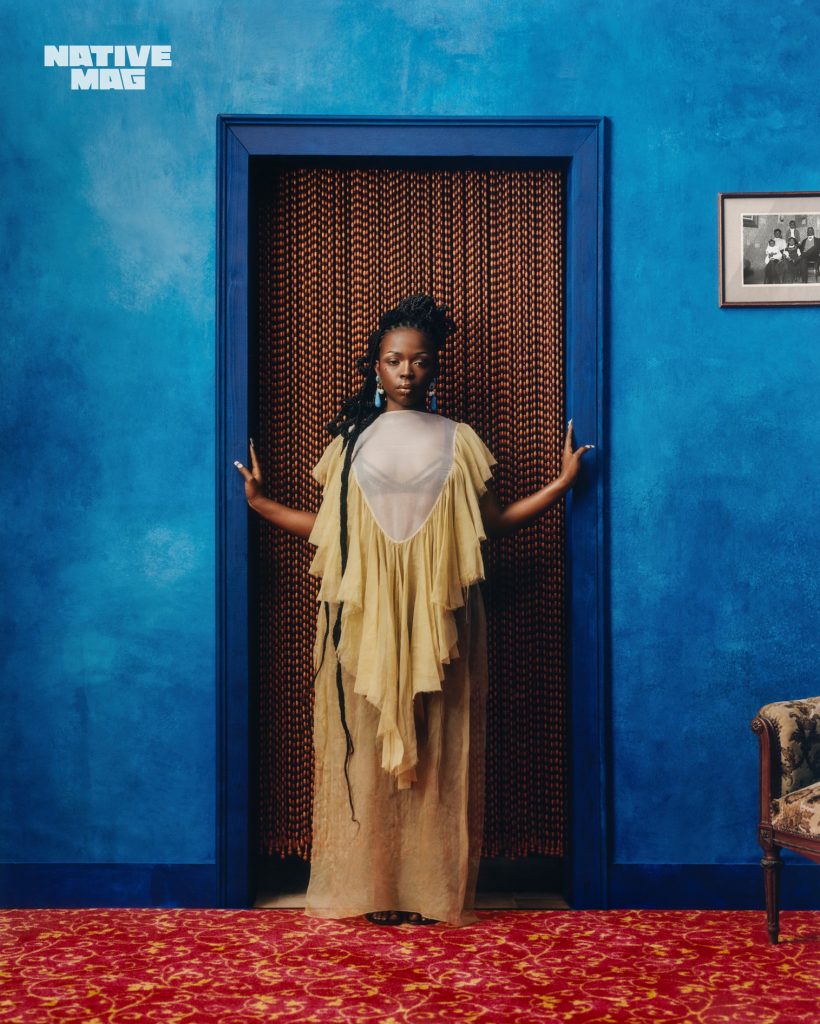
“But the ‘ghetto, africky, mal polie,’ that’s me. I was tired of being smooth. I wanted to be real. It was also a fuck you to my boyfriend at the time, a fuck you to boys in general. A fuck you to so many sectors rooted in patriarchy. Family, boys, the industry too, ultimately. I didn’t realise how much I was smoothing myself in my creativity because I kept telling myself: ‘In France, we don’t do that.’”
The way Theodora exists, moves, and claims space inevitably confronts dominant ideas of success for Black women in France. This confrontation is conscious. It’s not accidental, nor naive. It comes from repeatedly pushing against doors that still resist opening. “It’s sad because I’m only a baby of what I’ve consumed,” she muses. “But am I in a sector where people don’t expect a Black woman to be? Do they let me fully enter it? When I do Pop, do they let me define myself as a Pop artist?” We both know the answer to this question. “No,” she says, without missing a beat.
“Some of my tracks today are in Pop playlists, because they see Valérie, a 45-year-old white woman, listening to ‘Mélodrama,’ so they think, ‘Oh yeah, it’s Pop.’ That’s why I’m going to keep forcing doors even if people tell me, ‘Yeah, you shouldn’t go there.’ I’ll go. And they’re going to treat me like shit. But I’ll go. So that it becomes easier for the girl who goes after me, and so on. I’ll keep doing it, within the limits of my mental health, to change things.”
The word “icon” keeps coming back when people speak about Theodora. It’s not a label she reaches for, but as something that emerges on its own. And when she’s asked whether she sees herself as an icon, she answers as a true student of the game: “The reality of being an icon is this: because it’s pop culture material, it’s the one question you’re not allowed to answer, because it’s a title people give you. But people put that title on me a lot today, so I guess it’s true. It puts pressure on me, but it pushes me to look for better. To be an icon, you need to find things that haven’t been seen yet. So you’re forced to be in constant research, absorbing new signals, cultures, etc. And today I do it much more consciously. I know I have to do it to be better and to propose new things. I have to keep feeding my brain.”
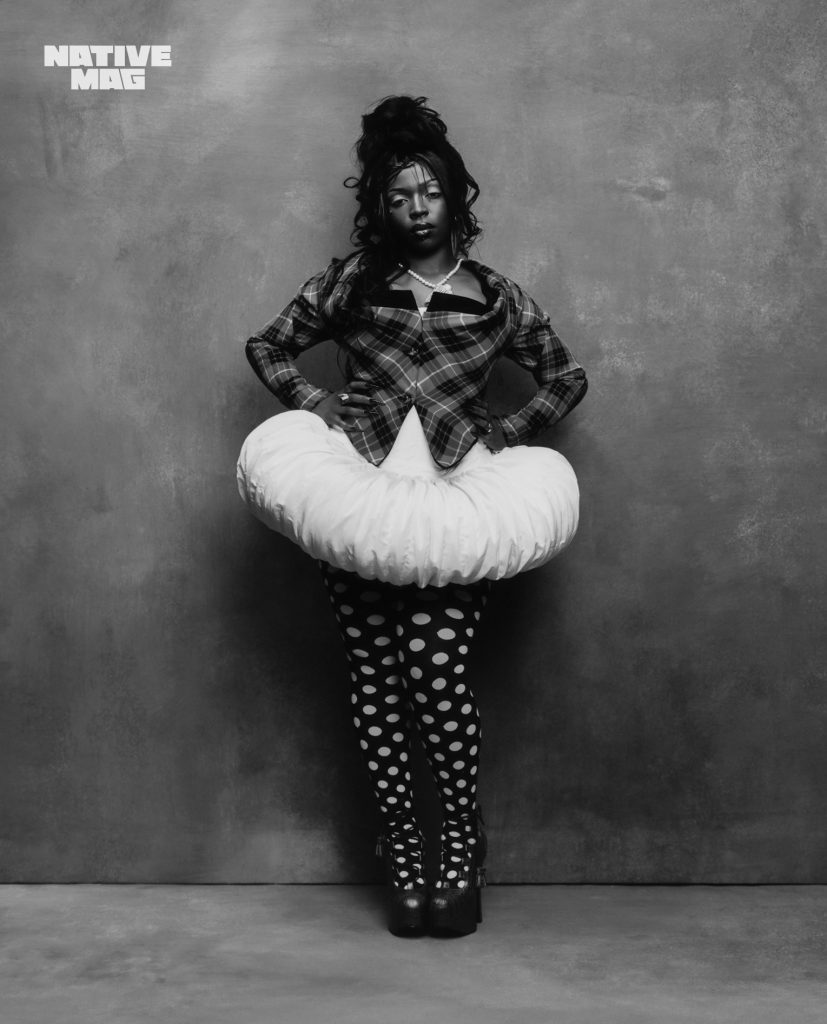
What defines Theodora isn’t a posture, but a rhythm. A disobedient groove, driven by curiosity, constantly expanding, and carrying a revolutionary scope. Theodora is part of a politically and socially aware generation that sees, understands, and feels the urgency to align itself and to use its voice and platform to assert its positions. Last December, when a far-right political figure used her music during one of his rallies, she did not hesitate to speak out loudly, publicly asserting her disalignment. “I’ve always wanted that disobedient groove,” she asserts. “Thanks to my mother. My mother is such a rebel. She went back to school multiple times at 42, and it’s very inspiring for me to see her rebuild herself. My mother wanted, at all costs, to raise a daughter who wouldn’t fall into society’s logical traps. She did everything to raise someone rather rebellious,” she says proudly.
“I feel like we’re in a different generation. Even if there’s no obligation to be politically engaged, it’s a necessity. We need to make information a collective tool. We need to make disobedience a collective tool. And as artists, we are vectors of propagation, so it becomes necessary.”
In a music landscape and an industry still obsessed with labels and clear-cut models, Theodora is writing a new script. One that is liberated, not to be constrained by expectations and norms. Her path isn’t about fitting into existing frames, but about expanding them.
What comes next is still in motion: the possibility of a first album, the desire to keep experimenting, and the slow unveiling of the pieces that make up her blueprint.
It is a process that she is embracing in real time, without shortcuts, allowing the story to unfold as it should–a disobedient groove.