Charles Onyeabor Is Preserving A Generational Legacy
With three full-length projects in the last three years, Charles Onyeabor’s catalogue feels like a wholesome musical chapbook

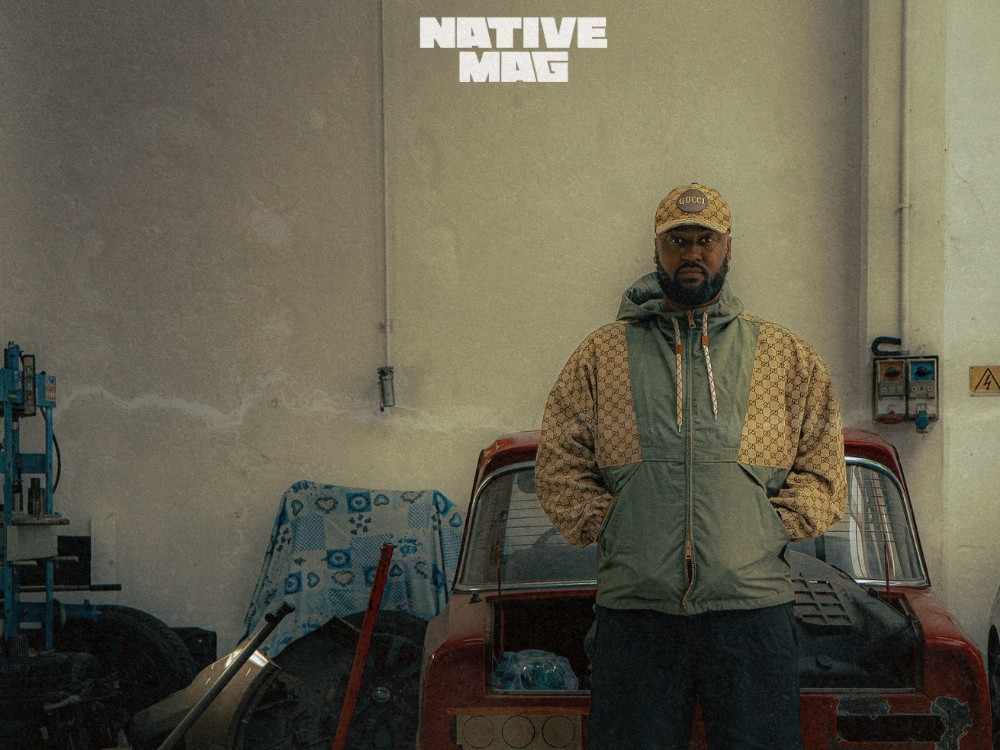
With three full-length projects in the last three years, Charles Onyeabor’s catalogue feels like a wholesome musical chapbook
Charles Onyeabor’s latest release, “You Can’t Tell Me Nothing,” arrives with the urgency of a budding superstar eager to extend a generational legacy. The young troubadour, who is the son of the late electro Afro funk inventor William Onyeabor, continues his fusion-driven journey, which took off in 2020 as a unique exploration of Funk, Afrobeats, and Highlife.
Growing up between Nigeria and Italy, Charles Onyeabor began his music career three years after his father’s passing in 2017. As Williams’ eldest son, Charles had the most intimate exposure to his father’s expansive artistry, an experience that would redefine his music career as a torch carrying a generational flame. Unlike many children of popular music icons, Charles Onyeabor is not shying away from his father’s legacy, despite building his own unique sound. For him, it’s his holy grail of purpose, a paternal instinct to protect his father’s legacy while building his own.
His earliest records, including his 2020 debut, “They Can’t Pull Us Down” featuring Italian songstress Miriam Taylor, and “We All Need More Love” featuring Italian-Nigerian singer Evry, carry the weight of his mission to create expansive but accessible music. Those records introduced Onyeabor to a close-knit community of fans who cherished his inspiring messages and fluid sonics.
Two years later, he clinched the Africa’s Diaspora Artist award at the Scream African Women Award. By 2023, his fanbase kept soaring, especially after key live performances in Germany and Italy. To unite his fanbases in Nigeria and Europe, he released his debut album, Like Father, Like Son, a 23-tracker spin that fully established his sonic identity and heritage-driven artistry in 2023.
He followed up with a 10-tracker LP in 2024, dubbed ‘Onyekachi,’ which gave a more intimate peek into Charles’ paradigms, personal stories, and cultural musings. Then, in 2025, he released his third project, an extended playlist titled ‘Ifenkili,’ which celebrated his Igbo heritage, while boldly showcasing his sonority. Just before the year ended, he released an Amapiano-charged song, “Akanchawa”, which closed curtains on doubts surrounding his sonic fluidity.
“I am building a sound that lives at the intersection of heritage and futurism,” he tells Native Mag when asked about the framework of his sonic blueprint. “It carries the spirit of African rhythm and analog warmth, but it’s framed through modern production, global grooves, and storytelling that speaks to today’s world. My goal is for listeners to feel something familiar yet forward-thinking music that honors where we come from while imagining where we can go.”
Much of Charles’ artistic growth also stems from lessons he gleaned from his father: “My father taught the importance of originality, fearlessness, and building a sonic world of your own,” he says. “I don’t try to recreate his sound. He did his thing his own way. But I carry his spirit of experimentation and independence. Just the same way music listeners are free to listen to any genre of music they want, I am free and independent to create and experiment with any genre I feel like working on.”
With three full-length projects in the last three years, Charles Onyeabor’s catalogue feels like a wholesome musical chapbook of sorts, with love, identity, and legacy central to his storytelling. “Love is always present, but I’m also drawn to spirituality and purpose,” he says about his music. “I want my songs to feel like mirrors and bridges at the same time. The idea that music can be both personal healing and collective memory.”
Charles’ artistic upbringing witnessed his father channel the best analog recording gear in his time. However, while digital recording tools have somewhat peaked in today’s hyper-innovative tech scene, Charles Onyeabor still believes in the sacredness of live instrumentation to a recording. “Live instrumentation brings humanity into the record,” he explains. “Digital tools are powerful, but live bass, guitars, and keys add imperfections that make music breathe. I see it as a balance. Even when I use DAW software, I aim to preserve that organic feel. Today, live instrumentation is sadly fading away, and with the invention of AI tools, only God knows where we are heading.”
While William Onyeabor famously never performed his music during his lifetime and eventually quit his career to become a full-time entrepreneur, Charles actually takes the stage to heart. In fact, he was a contestant at the Uno Voce Per San Marino talent show in Italy in 2022, and he hosted his own sold-out concert at the Hard Rock Cafe in Florence, Italy, last year, a reality that is largely obscure from his late father’s legacy.
Another interesting ripple effect of being Charles Onyeabor is having such a distinctively tuned ear for sounds. “I didn’t even realize it until people started telling me,” he notes. “For me, it was just normal. My producers were also surprised. Early exposure to my father’s music helped me understand groove as a living thing. Not just timing, but emotion, space, and movement. You learn to feel rhythm before you analyze it, and harmony becomes instinctive rather than theoretical.”
With his still-unfolding career defined by a soundscape that feels generational yet genuine, Charles Onyeabor’s sojourn continues with his most pristine quests. “I’m excited to push my music further into experimental territories,” he says, admittedly. “I’m interested in projects that challenge expectations and expand what African-rooted music can sound like in the future.”
That eye on the future is largely trained by what has come before but Onyeabor is determined to stretch its scope effortlessly. “I see my music as part of the bridge between generations,” he says. “There’s a renaissance happening where African sounds are no longer seen as niche; they’re shaping global music. I aim to contribute to that evolution by honoring traditional textures while presenting them in ways that resonate with the rest of the world.”
Listen to “You Can’t Tell Me Nothing” here.

